
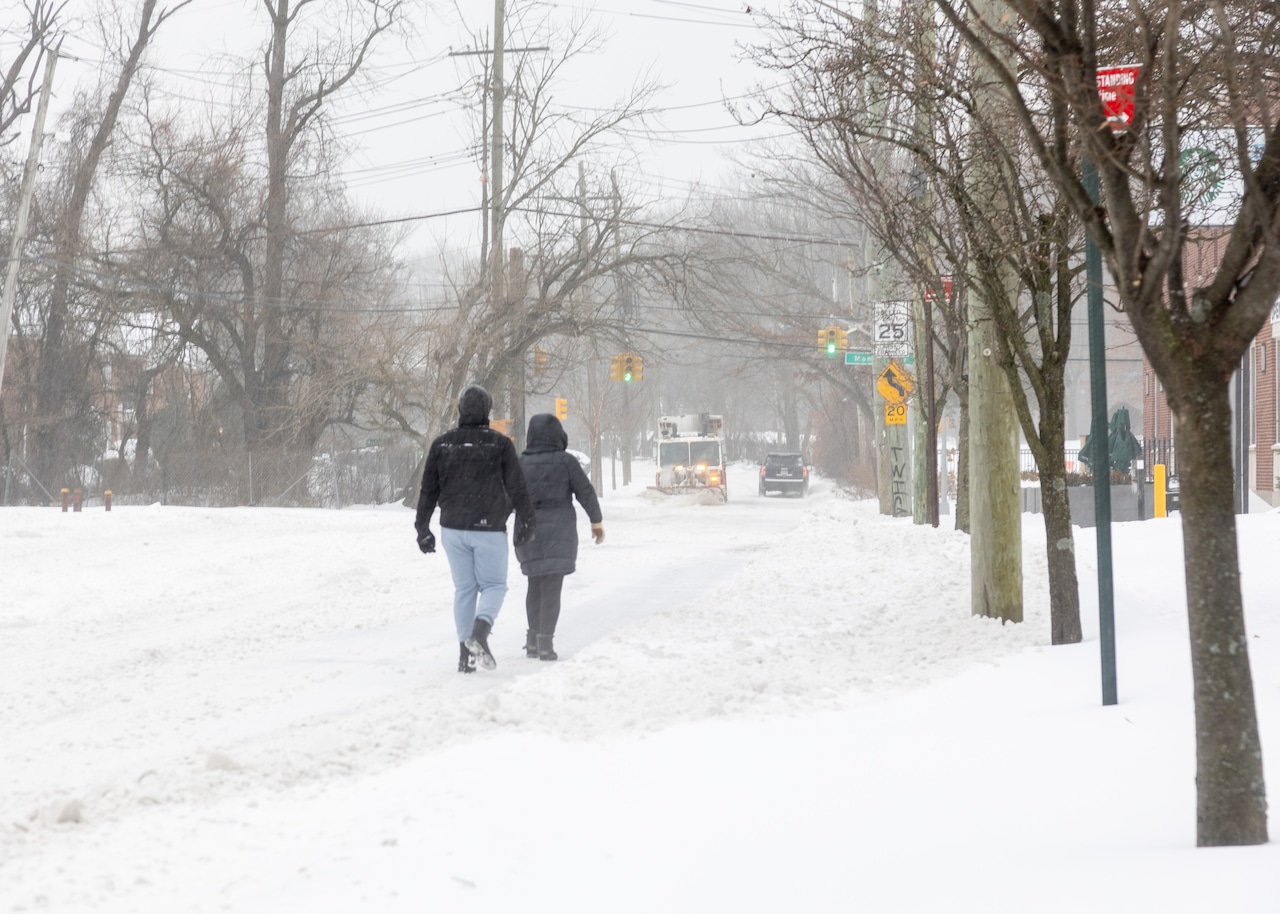
STATEN ISLAND, N.Y. — A nor’easter will bring snow to New York City this weekend.
The five boroughs will generally receive between 1 and 3 inches of snow and wind gusts of up to 45 mph one week after Winter Storm Fern brought the city to a halt.
Snow will begin to arrive sometime early Sunday morning and continue into Sunday evening before ending around 8 p.m., according to AccuWeather Senior Meteorologist Tyler Roys.
“The farther west you go, the less [snowfall] amounts you’re going to see,” Roys said.
However, those farther east in Long Island could potentially receive over 6 inches of snow, he added.
“Any shift, any small shift — could be 10, 20 mile shift — in the track that we’re looking at, will lead to a change in snow amounts,” Roys told the Advance/SILive.com.
Staten Island and northern New Jersey are among the locations where snowfall amounts could change the most, according to Roys.
Unlike Winter Storm Fern, which brought over a foot of snow to Staten Island, this nor’easter will not bring a mix of precipitation to the five boroughs.
In addition to snow and high winds, those along the coast may want to prepare for potential coastal flooding, as the storm will coincide with the full moon and astronomical high tide this weekend.
Previously, the Advance/SILive.com reported that the “powerful low” off the southern coast could take one of two tracks. Either the storm could track towards Bermuda, which would spare the city from any significant precipitation, or it could track towards Cape Cod, which would bring greater impacts to the city.
As of Wednesday morning, it looks as though the nor’easter will take a path between the two.
A “kicker low” emerging from the Midwest is pushing the storm away from the city, but not far enough for the system to be negligible.
The nor’easter comes amid an extended cold snap for the city. Saturday’s high will remain in the teens and the low will dip to around 11 degrees Fahrenheit. Sunday will see temperatures in the lower 20s. On Monday, the daily high will climb into the upper 20s, according to Roys.