
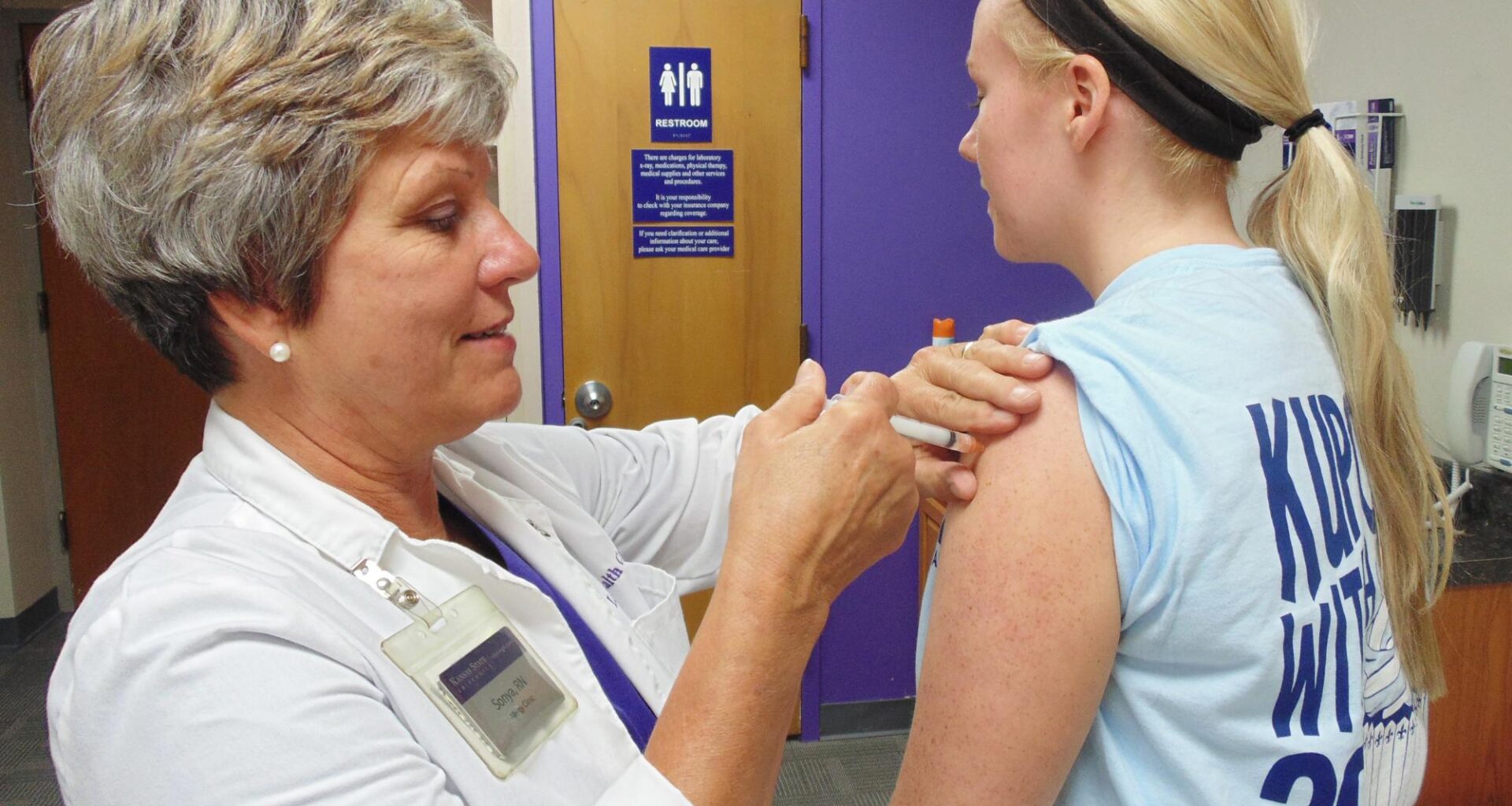
A new strain of influenza has rippled through the United States, with Kansas being one of the highest-risk states, according to the Centers for Disease Control. Classified as subclade K, this new strain is affecting people nationwide.
According to Lafene Medical Director Michael Campbell, this has been one of the highest years of influenza activity in 10-20 years. The increase is the result of both the new strain and fewer people getting vaccinated compared to past years.
“If you look nationwide, cases have started to go down a little bit, but Kansas has remained very high,” Campbell said. “Our cases at Lafene have hit a peak in the middle of February for the last two years, so even if people start to see rates going down nationally, we know that our peak is really coming in the middle of February due to the virus taking some time to spread after students come back to campus.”
Subclade K is a highly mutated variant of the influenza A H3N2 virus that has spread rapidly throughout the country, though it is not considered much more threatening than other strains, according to Stanford Medicine.
“It has not made it more severe, and it doesn’t necessarily mean that somebody is going to get sicker from having it, but this mutation has made it harder for our immune system to defend against getting sick,” Campbell said.
The mutation has caused subclade K to mismatch with the current flu vaccine.
“The flu changes every year; that’s how it survives,” Riley County Health Department director Diane Creek said. “So sometimes the virus and the vaccine don’t exactly match up.”
Regardless of the virus and the vaccine not being a perfect match this year, Creek said it is highly recommended to get a flu shot.
“You can get the flu shot at any time because it always helps,” Creek said. “This flu shot doesn’t protect against this exact strain of flu, but it will make it a much less severe case. It is never too late to get a flu shot.”
Campbell said vaccination is especially important for those at higher risk.
“We certainly would recommend getting the vaccine right now, by coming to Lafene or making an appointment online or on the phone with us,” Campbell said. “For people that are immunosuppressed, have a low immune system or any respiratory problems, we strongly recommend that they get a flu shot.”
Campbell said symptoms to watch for include a high fever, headaches, body aches, muscle aches and fatigue.
“People can come in and we can test them at Lafene, or you can get a combination COVID and flu home test from any pharmacy as well,” Campbell said.
Creek said people should follow similar precautions to what was practiced during the COVID outbreak, including keeping distance from others, wearing a mask if you are high-risk, covering your mouth and nose when sneezing or coughing and frequently washing your hands.
“The flu and COVID are transmitted the same,” Creek said. “It’s all respiratory, so it’s the same guidance that was given during COVID because that works for viruses like the flu. Try to keep the body as healthy as possible by getting plenty of sleep, eating healthily and getting fresh air if possible.”