
There are some careers that you go into, not because they promise a lot of money, but because you have a passion.
Archaeology is one of them — there’s a lot of competition for relatively few jobs, and a lot of the work is grant or project-based. In today’s North Country at Work story, we follow one woman’s journey to preserve historical objects while having a steady job.
NCPR NewsNorthern Light, 01/29/2026
When New York State is building something like a new highway, they need bulldozers, engineers and construction workers. But sometimes, they also need archaeologists — people to look out for the past and protect it.
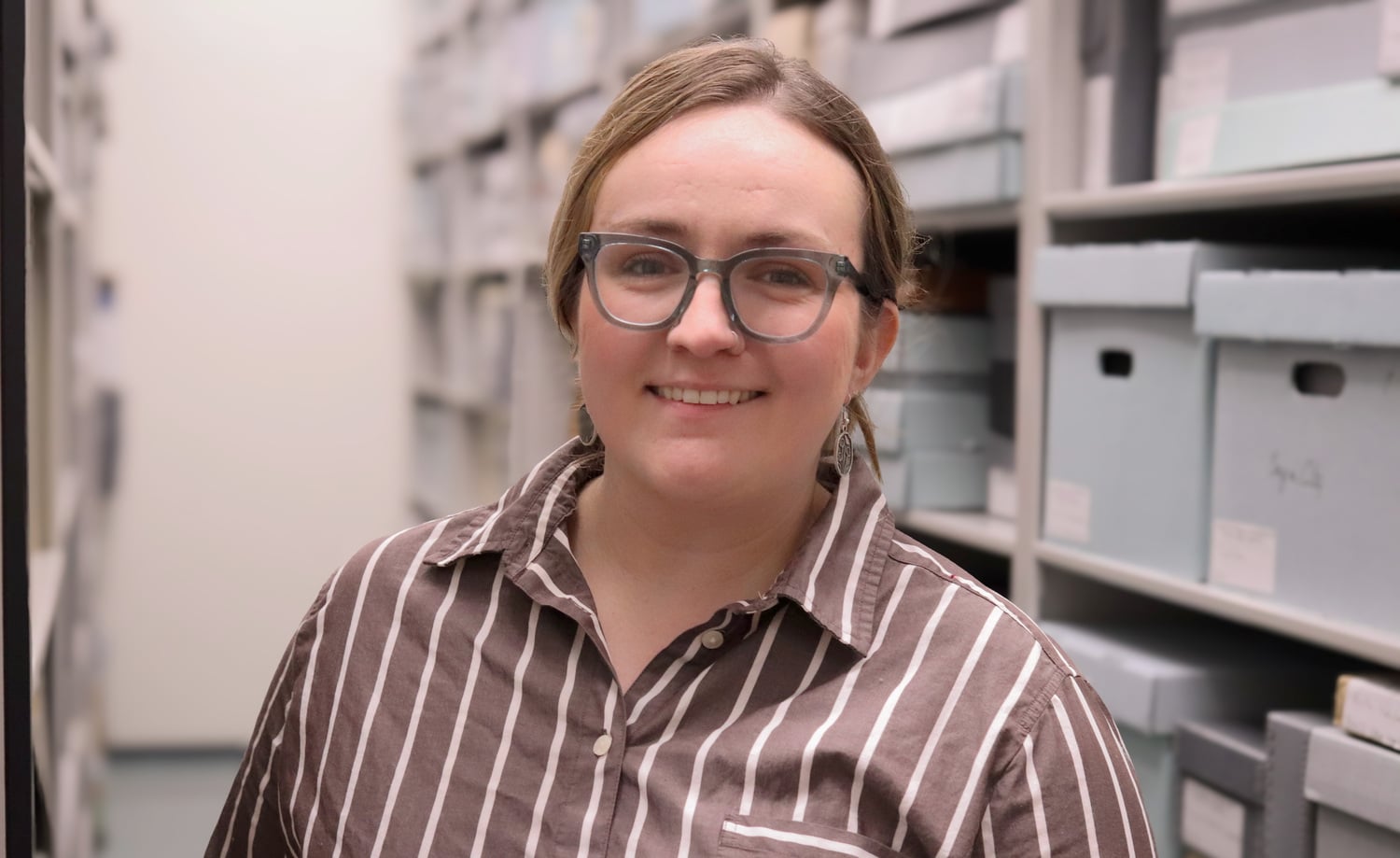
Amanda Franzoni is from central New York and now lives in Glens Falls. For a few years, she was one of those archaeologists.

Amanda Franzoni (top right) works on an excavation at Monticello, Thomas Jefferson’s Virginia plantation. Photo courtesy of Amanda Franzoni.
“Sometimes, there’s actual excavation that happens at the site so that you get out anything sensitive before construction starts,” Franzoni explains.
“Then, there’s an end monitoring phase where archaeologists are on the construction site to make sure that nothing else important is hit.”
Franzoni worked on a site in Utica where the Department of Transportation was rerouting the Thruway. They were putting in huge pylons to hold up Thruway ramps, dug deep into the ground.
“Anytime they’re digging up stuff like that, they’re disturbing the ground there,” said Franzoni. “And it ran through just like one of the oldest areas of Utica, where there was a lot of industry. It was also a pretty busy residential area.”
When they started digging, archeologists could see the outline of an old canal. They found remnants of its locks and channels, plus traces of everyday human life.
“We could see evidence of people’s backyard trash deposits and privies and things like that,” says Franzoni.
On another road construction project, Franzoni worked right next to a Revolutionary War-era cemetery. She dug shovel test pits — lines of meter-deep holes to make sure construction workers didn’t hit any human remains.
“Basically, the archaeologists are there doing it in a controlled way before they come in with backhoes and things and start hitting things that you don’t want to hit.”
Here’s the thing about working in archaeology: it can be kind of piecemeal. A lot of the work is project or grant based – or grant-based, not very stable as a long-term plan. It’s also tough on the body. After a few years in the field, Franzoni said she got tired of “chasing projects and having bad knees.”
She switched to working in museum collections. That solved the bad knees, but it still took time — and a Master’s degree — to find something more steady.
Franzoni said people would always ask her, “What would you do long-term working in museums? Isn’t that all grant-based?” But she knew it was where she wanted to be. “So, it was really just about finding out a way to make myself most useful and most permanent in that field.”
“And like, I’ve been really lucky too,” says Franzoni. “I realize that’s a big part of it.”
Today, Franzoni works at the Crandall Public Library in Glens Falls. They house an archive and special collections that she manages. The job has given her the chance to work with archival materials, with perks like job security and benefits.
“I feel pretty lucky to be doing this type of work in a public library,” says Franzoni. “It feels a little bit safer and more stable.”
A lot of Franzoni’s job now is helping patrons and researchers access the collections she manages. She’s had people come from as far as out West to do research or trace their family’s genealogy.
Franzoni recalls all the different files she dug out for a recent visitor — she says sometimes, they’re the only place that has a specific document.

Photo courtesy of Amanda Franzoni.
“We have old church and cemetery records. We have genealogical collections in the back that I was able to pull out for her,” said Franzoni.
“She was able to find some marriage records that existed before the state was actually collecting official marriage records. So things like that, where you really have to find kind of a niche place.”
Franzoni got into archaeology because she liked working with objects — taking care of physical stuff. And that’s still a big part of what she does, but now, she gets to take it a step further.
Franzoni connects those objects with people who interact with them and learn from them. She says it’s fulfilling to see that end stage, too — it’s the whole point of preserving this stuff!
Major support for North Country at Work comes from the Adirondack Community Foundation.
 Find scores of work stories and thousands of work photos at http://ncpr.org/work