
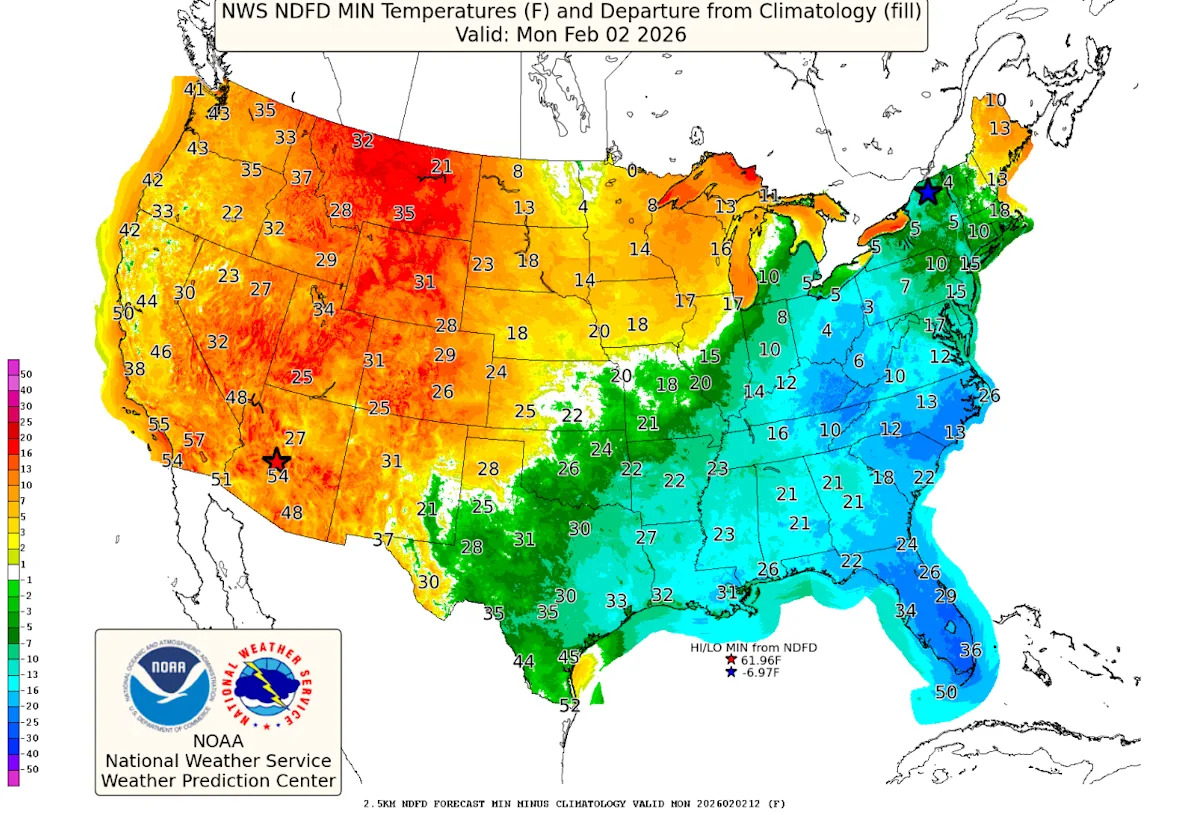
Severe temperatures are expected to dominate most of the country in the coming days, with single-digit temperatures forecast for parts of the Northeast.
Overall, temperatures will begin to warm in the western U.S., but the East Coast is expected to remain under severe cold conditions until around mid-February thanks to the polar vortex.
Washington, D.C., Maryland, Delaware, New Jersey, the New York City metro area, the Philadelphia metro area, Connecticut, and Rhode Island are especially likely to continue seeing freezing temperatures, forecasters say.
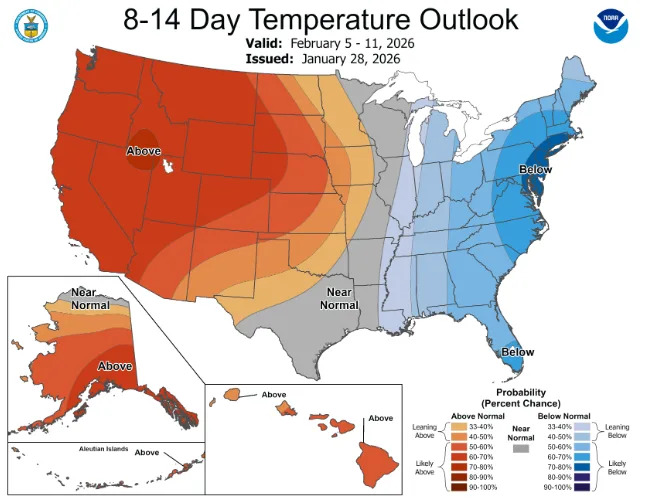
Temperatures below normal for this time of year are expected along the East Coast and in parts of the eastern Midwest and the South. The area between Washington, D.C., and Connecticut, including Rhode Island, is even more likely to continue seeing freezing temperatures.
What is a polar vortex?
Cold, Arctic air is severe. Fortunately, year-round, that air is usually kept tightly contained in the North Pole.
Arctic wind patterns create a sort of wall around the pole that prevents frigid air from trickling southward. That wall that keeps cold air contained is called polar vortex.
Commonly, though, people refer to polar vortex when that retaining wall breaks or weakens and Arctic air slips out of the pole and into other regions.
Polar vortices happen in both, the North and the South Pole.
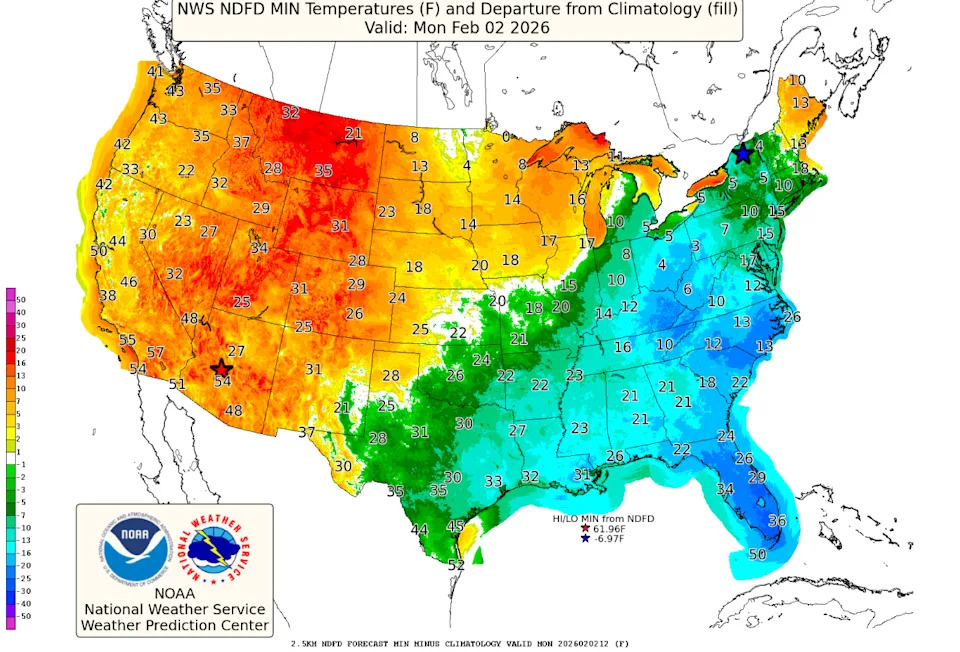
Temperatures below 20 are still in store for most of the Northeast.
What causes the polar vortex to collapse and let cold air move?
The two main causes area sudden warming of the Earth’s stratosphere, and lack of strong wind activity around the pole.
Strong polar winds creates a strong vortex which keeps cold air trapped at the pole. And weak polar winds weakens the vortex which allows cold air to spill southward.
When that happens, Arctic air chills temperatures in other regions.
Juan Carlos Castillo is a New Jersey-based trending reporter for the USA Today Network. Find him on Twitter at _JCCastillo.
This article originally appeared on NorthJersey.com: Polar vortex, what is it and what does it mean when it collapse