
As New York City enters a new mayoral administration, the opportunity for ambitious urban transformation is immense and the new City leadership has set innovative goals for the future of our city.
Across the five boroughs, communities are calling for safer and more people-oriented streets, climate resilience that centers environmental justice, affordable housing for families, civic infrastructure to enable youth to thrive, and equitable job generation to provide access to resilient livelihoods that reflects the needs of today – not the legacy of yesterday. From waterfronts to transit corridors, from civic spaces to historic districts, the city is poised for a new era of people-centered planning.
With new leadership in City Hall and galvanized New Yorkers, we have a dynamic opportunity to align policy, investment, and design around a shared vision: one that prioritizes affordability, environmental justice, green jobs, sustainable transportation, and public space for all New Yorkers. At Buro Happold, we believe this moment demands bold ideas – and implementable action.
 f
f
What we wish for:
Public spaces and transit that prioritize people
New York is an innovator in taking back the streets for people. With congestion pricing demonstrating great success, we can transform our streets for transit, walking and biking. Since 2014, Buro Happold has been deeply engaged in diagnosing and reimagining the public realm in Lower Manhattan. Through our work on the Make Way for Lower Manhattan initiative, we led a multidisciplinary team to quantify the pressures on the colonial street grid – pressures driven by a doubling of residential and tourism numbers, a fourfold increase in hotel rooms, and a surge in creative industries. Our findings, shaped by extensive stakeholder engagement and presented to city officials, laid the groundwork for the “Make Way” plan and continue to inform pilot projects aimed at decongesting and reconnecting the district.
This approach – combining spatial analysis, community input, and design strategy – is applicable across the city, wherever outdated infrastructure limits mobility and livability.
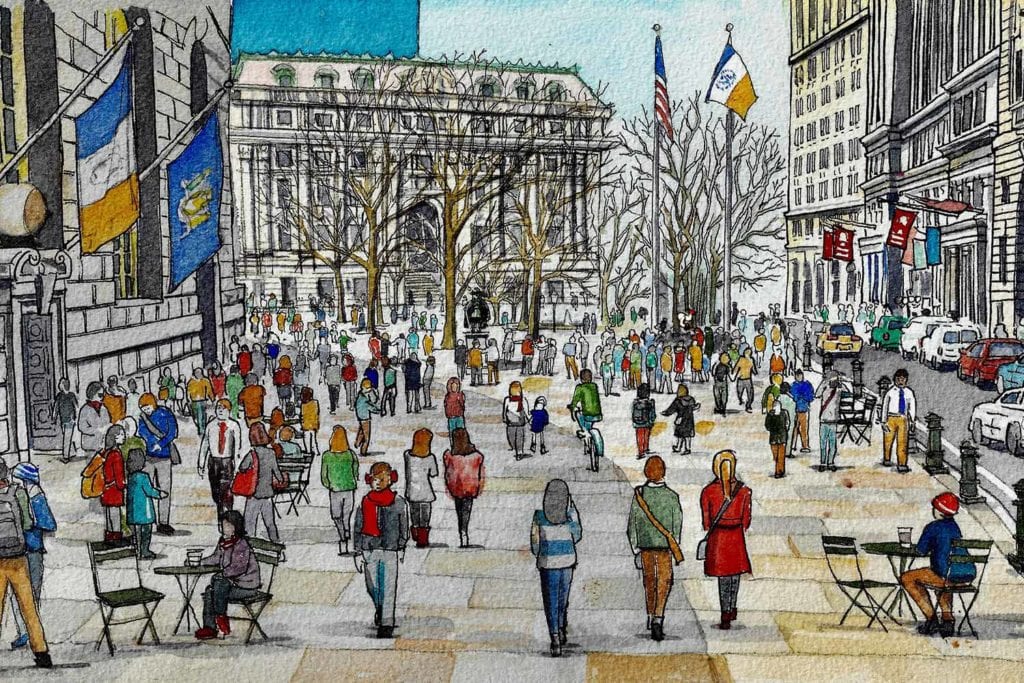 Make Way for Lower Manhattan. Image: Financial District Neighborhood Association (FDNA)
Climate action grounded in environmental justice
NYC is not only a frontrunner in climate adaptation strategies, but a city that centers environmental justice in its climate strategies. Buro Happold’s work with the Mayor’s Office on the EJNYC Environmental Justice Report and Mapping Tool has helped the city identify communities most vulnerable to climate and environmental risks. This tool is a critical resource for ensuring that future resilience investments are equitable and data-driven. In Battery Park City, our collaboration on the Climate Action Plan has demonstrated how sustainability and livability can be integrated into waterfront neighborhoods, offering a model for future resilience planning citywide.
Equitable jobs through the green economy and working waterfronts
Our climate sectors and working waterfronts are the backbone of the city’s past and future – and a massive opportunity for good green jobs. We’ve helped shape the city’s Green Economy Action Plan, working with NYCEDC and the Mayor’s Office to identify pathways for growing green industries and jobs. Our advisory role in this effort reflects a commitment to economic equity and climate innovation – principles that are especially relevant to underutilized waterfront spaces across the five boroughs. Projects like the New York Climate Exchange on Governors Island further demonstrate our ability to connect climate research, workforce development, and urban design. Our work at Hunts Point, Brooklyn Army Terminal (BAT), and Brooklyn Marine Terminal (BMT) continues to support the transformation of waterfront infrastructure into engines of equitable economic growth.
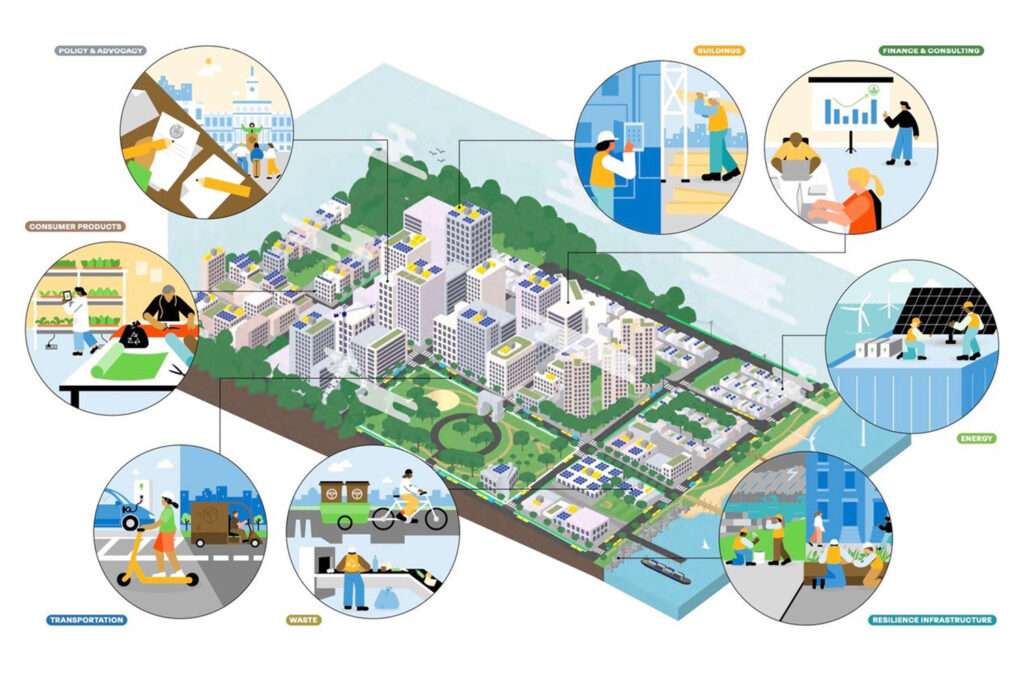 New York City’s Green Economy plan. Image: Buro Happold.
Affordable and sustainable housing for all New Yorkers
The housing crisis is NYC’s biggest challenge. Not only are we in a catalytic moment to build consensus towards our affordability goals, we also positioned to deliver on our energy goals through new sustainable housing. As New York grapples with housing affordability and zoning reform, Buro Happold has contributed to strategic planning efforts like the Where We Live NYC study, the Manhattan Plan, and the City of Yes zoning advisory. These initiatives support inclusive growth and transit-oriented development, including along corridors like the proposed Interborough Express (IBX) – a vital link for equitable housing expansion.
Circular and low-emission buildings
The City is the industry catalyst to shift our building stock from business-as-usual to innovative sustainable construction. The public sector building portfolio is primed to be the incubator for these technologies with schools and civic facilities as key opportunities. In the realm of building decarbonization, our work on the Empire State Building retrofit and the SPARC sustainability hub showcases our leadership in circular and low-emission design. These projects prove that even the most iconic and complex buildings can be transformed to meet the city’s climate goals, and they offer replicable models for aging building stock citywide.
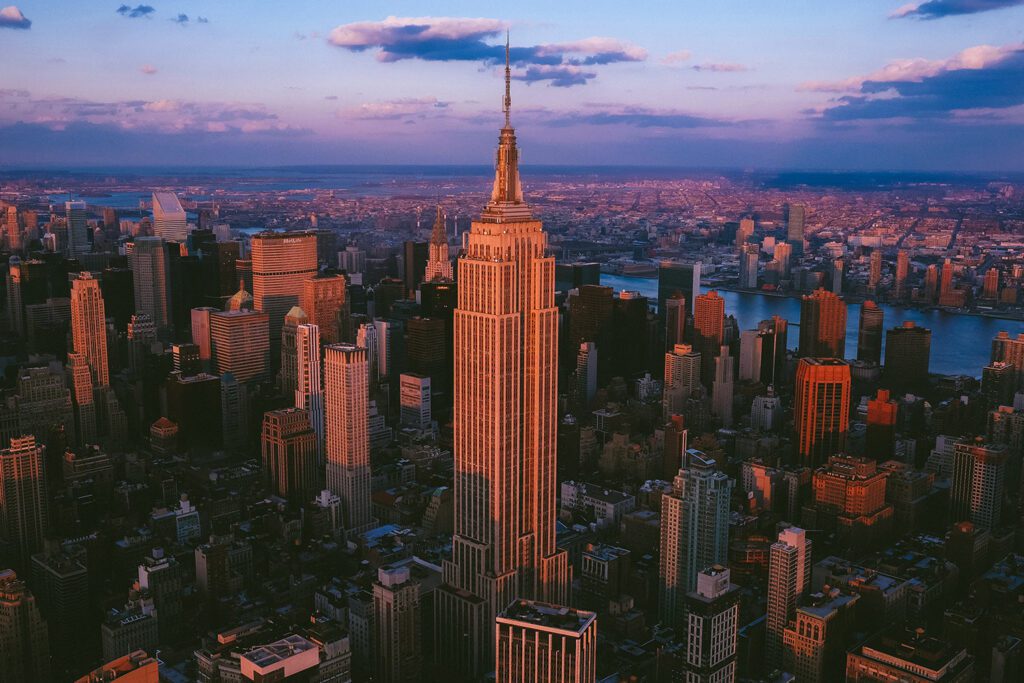 Empire State Building. Image: Buro Happold.
Climate resilient neighborhoods and adaptive waterfronts
Our city is at the vanguard of climate adaptation and reimagining our waterfronts. Resilience approaches are opportunities for all neighborhoods across NYC. While our qualifications in coastal resilience stem from earlier work – such as the Jamaica Bay Great Urban Park and the Reimagine Canals Strategy for Erie Canal – they remain relevant as New York prepares for a new wave of climate adaptation projects. These efforts underscore the importance of long-term planning and community engagement in protecting vulnerable waterfronts.
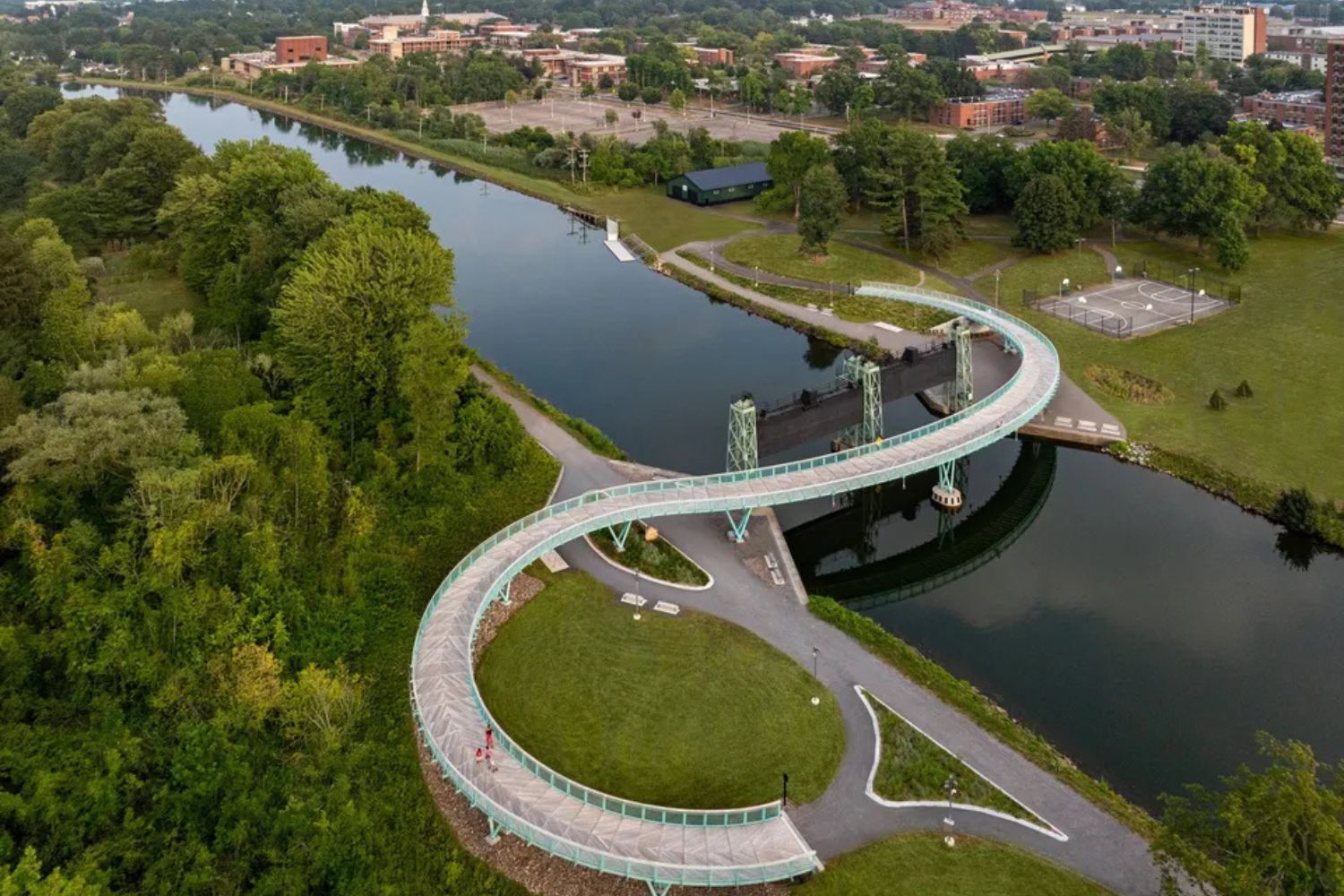 Brockport Pedestrian Bridge. Image: Barrett Doherty.
Education assets as hubs of sustainability and resilience
Schools and childcare are core to enabling a multi-generational New York. These sites are the hubs of our communities and can be the locus for many intersecting benefits including climate resilience and decarbonization. Though we have not yet contributed directly to childcare infrastructure, we recognize its growing importance – especially as universal childcare becomes a policy priority. We support the administration’s focus to integrate youth-centered design into future urban planning efforts.
Accessible civic infrastructure, food ecosystems, and cultural assets
Our civic ecosystems are the lifeblood of our city – what draws people here and enriches their lives once they are New Yorkers. Strategies to ensure our civic, food and cultural infrastructure are woven into the lives and livelihoods of our city are essential. Civic infrastructure – libraries, community centers, and public spaces – must be part of the conversation. If New York is to become a truly livable city for all, it needs more than plazas and pedestrian zones; it needs places for people to gather, learn, and grow. We welcome opportunities to support these efforts.
A call to action
The new Mamdani administration has a chance to make history – not just by fixing what’s broken, but by building something visionary. Let’s set the stage for a new kind of New York – a New Era that puts people first, and sets a global standard for inclusive, resilient urban design. The time for action is now!