
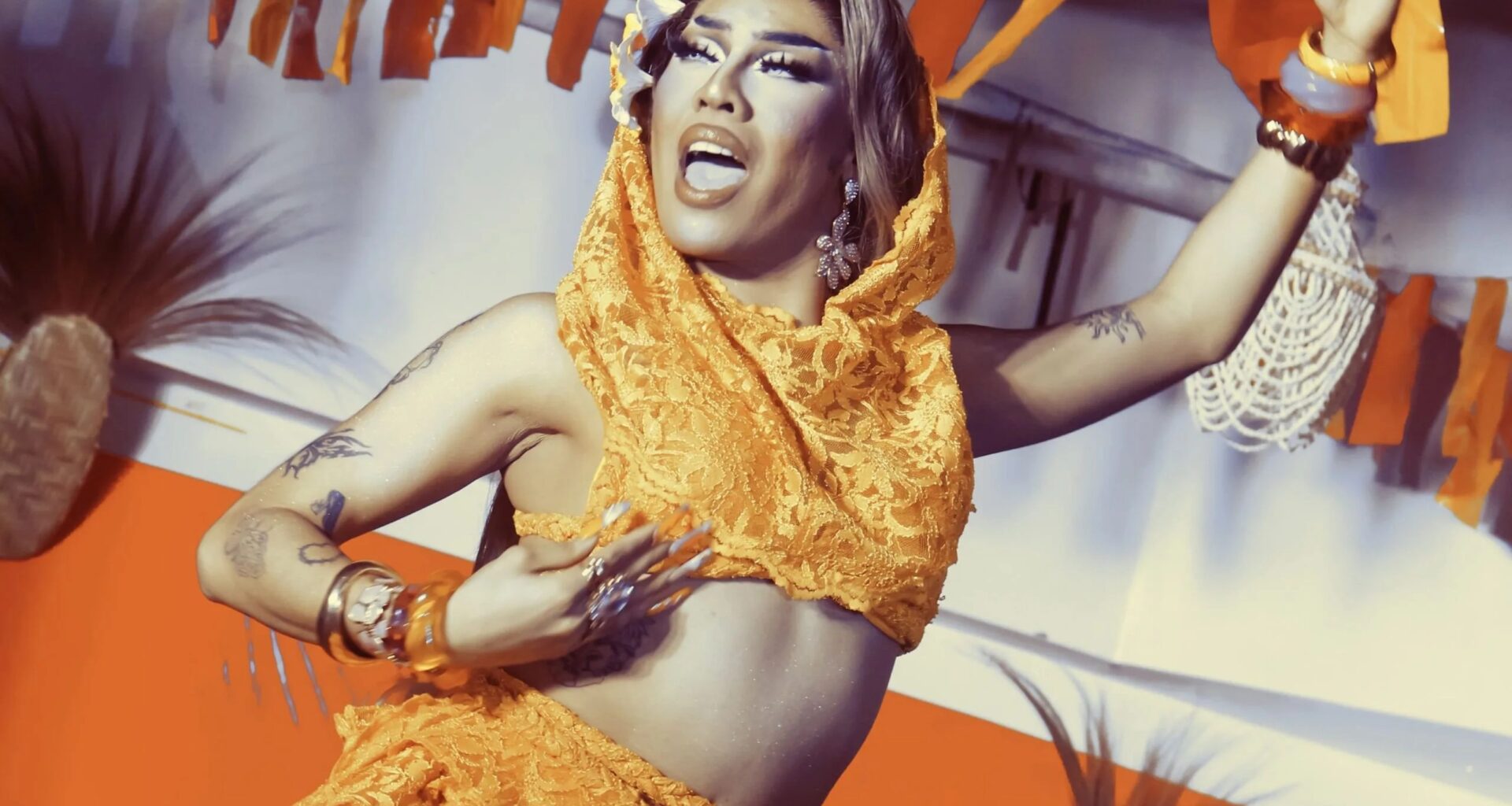
For the drag queens who took part this year in celebrations for one of the largest Catholic festivals in the Philippines, their participation was not about provocation. It was about presence.
The festival of Sinulog, celebrated every January, marks the arrival of Catholicism to the Philippines in the 16th century through Spanish explorers. A major focus of the festival are activities which commemorate the Spaniards’ presentation of a Santo Niño (Holy Child) statue to the native queen of the Philippines at the time. The present-day festival includes parades, prayer services, parties, and performances.
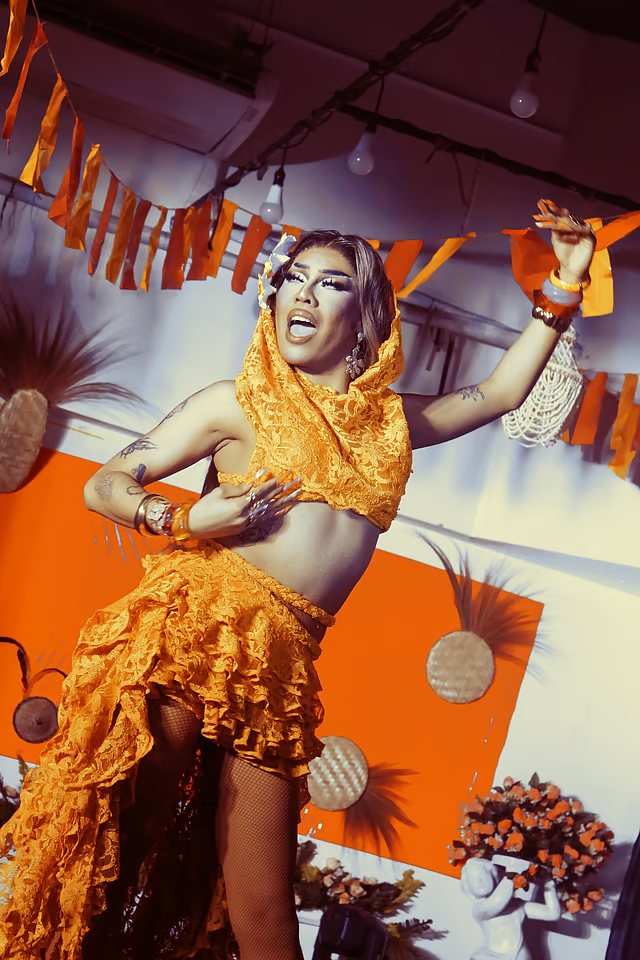
A drag artist performs at a Sinulog event this year.
In a Rappler.com, article about this year’s event, one drag performer recalled attending Sinulog every year growing up, watching dancers move through the streets while clutching a Santo Niño statue of their own. “I learned devotion before I learned drag,” they say. “So when people tell me I don’t belong here, I don’t know what to do with that. This festival raised me.”
Stepping into Sinulog as a drag artist means carrying both memory and risk. Several performers describe the tension of preparing their looks while wondering how they would be received by the crowd, by churchgoers, by strangers who might see drag as an insult to faith rather than an expression of it. “You’re celebrating something sacred,” one drag queen explained, “but you’re also aware that people think you are the problem.”
For many, drag became a way to reconcile identities that were often forced apart. One performer says drag allowed them to bring together their queerness and their Catholic upbringing without apology. “I didn’t stop believing just because I’m queer. I stopped hiding,” they say. Performing at Sinulog felt like an extension of that refusal to disappear.
Another queen described drag not as mockery, but as storytelling. “Filipino culture is exaggerated. Our festivals are loud, colorful, and emotional. Drag fits that naturally,” they say. “If anything, drag understands devotion because it’s about giving everything, not holding back.”
Yet visibility can come with unease. Several performers were clear-eyed about the limits of acceptance. While some spectators cheered and took photos, others watched in silence. “You can feel it when people are uncomfortable,” one drag artist said. “But silence is still different from being chased away. Even that small shift matters.”
The performers shared the awareness that no one had invited them officially, making their participation more courageous. “We weren’t endorsed. We weren’t protected,” one drag artist says. “We showed up because Sinulog is ours too.” That decision, they emphasize, came with fear, but also pride. “If we keep waiting to be welcomed, we’ll never arrive.”
Several queens spoke about the emotional weight of performing in a Catholic space because religion had often been used to shame them. One remembers being told as a child that being queer was sinful. “So to stand there now, in drag, during Sinulog, it felt like healing something old,” they say. “Not because the Church changed, but because I did.”
None of the performers claimed that Drag Sinulog signals broad institutional acceptance. If anything, they are wary of reading too much into one moment. “Tomorrow, they could still turn on us,” one queen admits. “But today, we existed fully. That counts.”
For these drag queens, Sinulog was not about challenging faith, but expanding its image. Their stories point to a deeper truth: Catholic tradition, like culture itself, is not static. It is shaped by those who keep showing up, even when they are told they do not belong.
“We didn’t come to be tolerated,” one performer says quietly. “We came because this is our festival too. We’ve always been here; people are just finally seeing us.”
Like this:
Like Loading…