
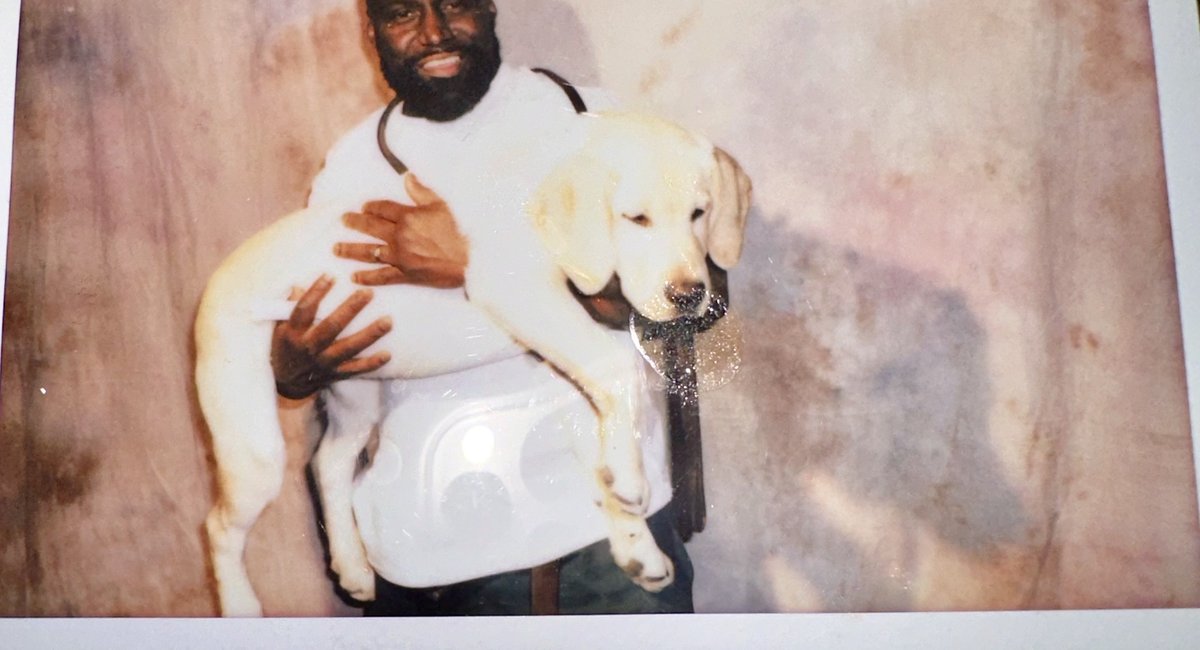
A state judge on Friday overturned the double murder conviction of a Queens man who has been in prison for more than three decades, ruling prosecutors improperly withheld key evidence from his 1995 trial.
Judge Michelle Johnson’s order from the bench released Allen Porter, 53, on $400,000 bond while the Queens district attorney’s office decides whether to hold a new trial. Porter was arrested on April 23, 1992 in connection with the drug-related murders of Charles Bland and Sherrie Walker at the Woodside Houses.
Johnson wrote that prosecutors had suppressed key evidence in Porter’s trial, including the a witness statement identifying another suspect as the gunman, as well as the names of five witnesses that were never shared with the defense.
“By any account, the amount of evidence that was withheld is nothing short of substantial and even alarming,” Johnson said from the bench.
“It is not just the amount of undisclosed evidence that is alarming, it is the people’s continued attempts to justify it and explain it away. … The cumulative violations cannot be understated.”
The reversal is the result of a remarkable friendship between Porter and investigator Jabbar Collins, which began around 1998 at Green Haven Correctional Facility when both were incarcerated. Collins was exonerated of his own murder conviction and released in 2010. The men embraced after the hearing, before Porter was taken for processing ahead of his release.
The ruling in Porter’s case represents another blemish for the legacy of late Queens DA Richard Brown, who served from 1991 to 2019. Over the past decade, a series of murder convictions have been overturned due to his office’s failure to turn over exculpatory evidence and other improper actions, costing taxpayers tens of millions in lawsuit settlements.
“Allen Porter’s case confirms everything that has come out in other cases, that this is how business was done under Brown, that this was not an anomaly,” said Karen Newirth, one of Porter’s lawyers.
In her decision, Johnson cited a range of other evidence helpful to the defense that the Queens DA’s office failed to turn over.
Indeed, the volume of undisclosed evidence was so great, Porter’s legal team had get his original trial lawyer Edward Schulman to sign five sworn statements from 2021 to 2025 confirming he hadn’t previously seen newly disclosed notes, prosecution memos and other records.
In addition, the lone eyewitness to identify Porter as the shooter, Jacqueline Aviles, recanted in 2021, saying she had been coerced by detectives, court records show.
“The record now before this court shows that Mr. Porter’s trial was built on false testimony, withheld evidence and a pattern of concealment,” Newirth said during a hearing in the case in December. “At every critical point the prosecution sought to win, not to do justice.”
Queens DA spokesperson Brendan Brosh said the office was reviewing the judge’s decision.
The judge’s decision capped Porter’s decadeslong campaign to prove his innocence with Collins’ help. The two were regular worshippers in the chapel of Green Haven Correctional Facility and became friends.
When Collins won his release for his own wrongful conviction in Brooklyn in 2010, he promised Porter and Porter’s mother he “would not forget him,” Collins recalled.
“Allen Porter lost most of his life due to a conviction built on coercion, concealment, and constitutional violations,” said Collins, who is now president of a private investigations company, Horizon Research Services. “Today he walks free, but the injustice done to him cannot be undone.”
In 1991, Porter was 19 years old and a small-time drug dealer in a Woodside Houses crew led by Ernest Jarvis.
The two victims were found riddled with bullets in a car during a grim two-year stretch in the housing development that saw five homicides as warring drug gangs struggled for control.
Porter was arrested four months after the murders but not brought to trial for four years.
The evidence relied heavily on a lone 17-year-old eyewitness, as well as two other witnesses, who claimed Porter plotted the killings.
Porter was convicted and sentenced to 45 years to life. He landed at Green Haven, where he met Collins.
As he worked to get his own conviction overturned, Collins became a skilled litigant in prison and began assisting other prisoners.
Once he was out, Collins filed lawsuits starting in 2013 against the NYPD and the DA’s office seeking Porter case records. In 2018, the DA’s office finally turned over 2,500 pages of documents.
The lone eyewitness said she’d been coerced by detectives.
It emerged that one witness who said Porter planned the murders only decided to cooperate with authorities after being threatened with a charge of accessory to murder. And another witness would have discredited that person’s account.
Further disclosures revealed the nickname of a new possible suspect, and five previously unknown witnesses, including a man who had said he “saw it [the shooting], didn’t see Al [Porter] there.”
“It’s a crystal clear Brady violation,” said Charles Linehan, another of Porter’s lawyers and the former head of the Brooklyn DA’s Conviction Review Unit. “On its face, it is exculpatory material and certainly should have been turned over.”
Johnson then ordered an evidentiary hearing — essentially a trial of the trial — which stretched from Oct. 31 to Dec. 10.
Porter’s mother, Lula Ward-Brewer, eagerly awaited her son’s release after the hearing.
“It’s a beautiful, beautiful day. I have been waiting 34 years for this day. I am relieved and grateful I can take him home with me,” she said.