
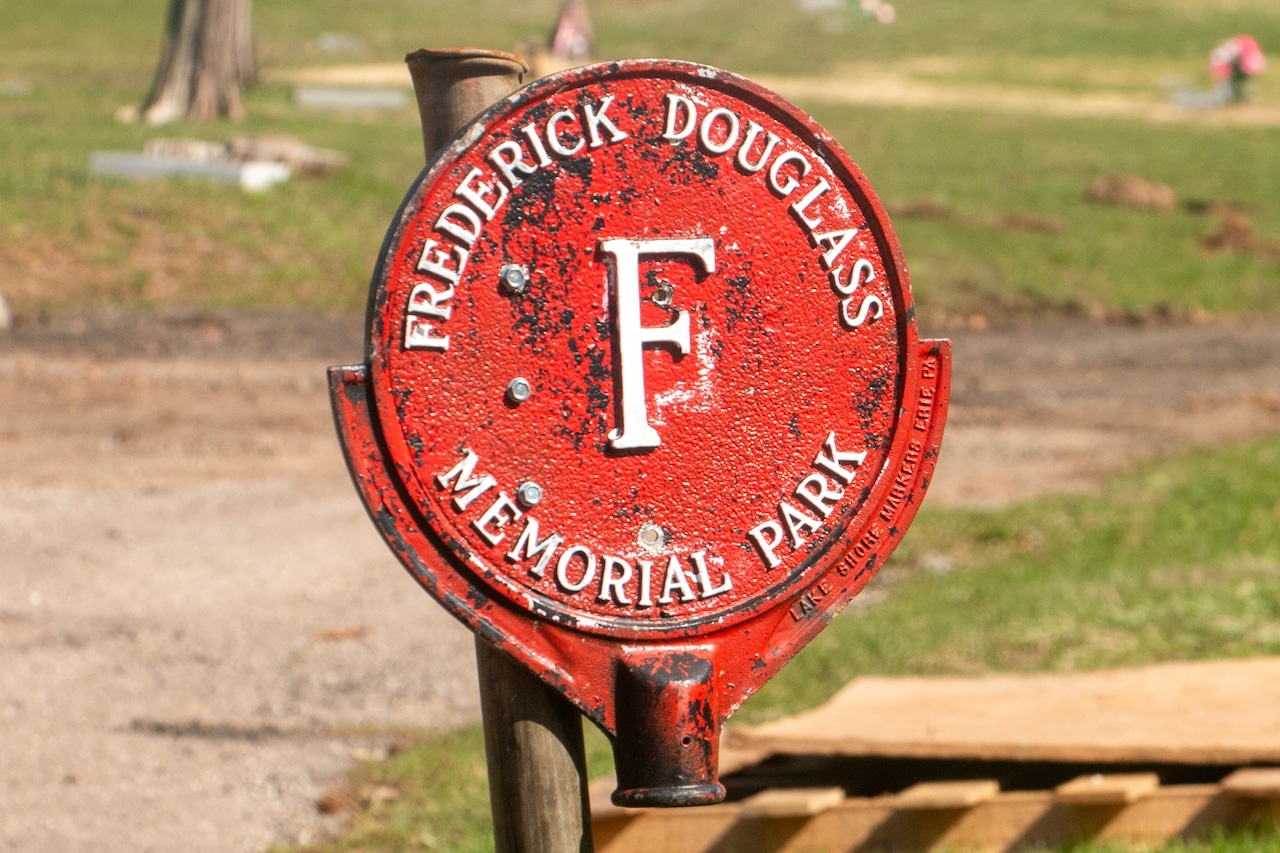
STATEN ISLAND, NY– Oakwood’s Frederick Douglass Memorial Park, the only African American cemetery in New York City, is set to receive ongoing support through the New York City Landmarks Preservation Commission (LPC).
The commission announced earlier this week that it had awarded the landmark a grant through its Historic Preservation Grant Program, which provides critical funding for homeowners and non-profit organizations looking to repair and restore landmark properties.
“LPC’s Historic Preservation Grant Program reflects the commission’s ongoing commitment to investing in New York City’s historic resources and helping property owners preserve their buildings,” said Lisa Kersavage, the Landmarks Preservation Commission executive director. “We are thrilled to build on this legacy of success with our newest recipients in Brooklyn and Staten Island and look forward to the lasting impact the grant-funded restoration work will have for those landmark sites.”
The $35,000 grant will be allocated to partial roof replacement work required at the 92-year-old cemetery.
Two other properties—one in the Cambria Heights-222nd Street Historic District in Queens and another in the Crown Heights North Historic District in Brooklyn—were also awarded thousands of dollars in grants to help support their renovations and preservation.
“We are deeply grateful to the LPC Historic Preservation Grant Program for supporting the restoration of the Frederick Douglass Memorial Park chapel roof,” said Lynn Cuffee, the Frederick Douglass Memorial Park Board Secretary. “This investment ensures the protection of a landmark that honors African American history and community heritage for generations to come.”
Frederick Douglass Memorial Park is a special place for New York City’s Black community.
Harlem funeral director Rodney Dade founded the cemetery in 1933 after witnessing the bigotry Black families faced when burying their loved ones. According to Mary Ann Hurley, who petitioned the city for the park’s landmark status, other city cemeteries had often segregated Black deceased to undesirable areas on their grounds.
Named for the 19th-century abolitionist and statesman, the park began burials in 1935 and became the resting place for prominent figures including blues singer Mamie Smith and Negro League baseball players Elias “Country Brown” Bryant and King Solomon “Sol” White.
“As a Staten Island resident, I’m particularly proud that our borough’s most recently designated landmark is among the recipients,” said Angie Master, Landmarks Preservation Commission vice chair. “Frederick Douglass Memorial Park stands as a testament to the strength and resilience of New York’s Black community in overcoming historical discrimination, and this grant not only supports critical preservation work – it also honors the deep cultural and historical significance of the site as an African American cemetery, both for Staten Island and New York City as a whole.”
The park faced a period of decline and was in danger of becoming abandoned, as reported by the Advance/SILive.com in 2008. The current board, many of whom have family interred at the site, aims to move past that history.
Board member Debbie-Ann Paige said the goal is to return to the original vision for the site. “It really is designed as a park,” she said. “That’s why they called it Memorial Park, because Black people tend to celebrate (the dead). It was a place that folks could come and be with their people.”
In 2024, the site was deemed a New York City landmark by Mayor Eric Adams, who announced the status in an early celebration of Juneteenth, a holiday that marks the end of slavery in the U.S.
“On the day before Juneteenth, New York City remembers our shared history by shining a light on a memorial park that opened its doors when others turned Black New Yorkers away,” Adams said at the announcement. “Frederick Douglass Memorial Park offered a dignified and dedicated space for the Black community to honor those who transitioned.”
Today, the 14.88-acre cemetery remains active, conducting burials for people of all races and denominations and serving the Richmond County Public Administrator’s Burial Program.
If you purchase a product or register for an account through a link on our site, we may receive compensation. By using this site, you consent to our User Agreement and agree that your clicks, interactions, and personal information may be collected, recorded, and/or stored by us and social media and other third-party partners in accordance with our Privacy Policy.