
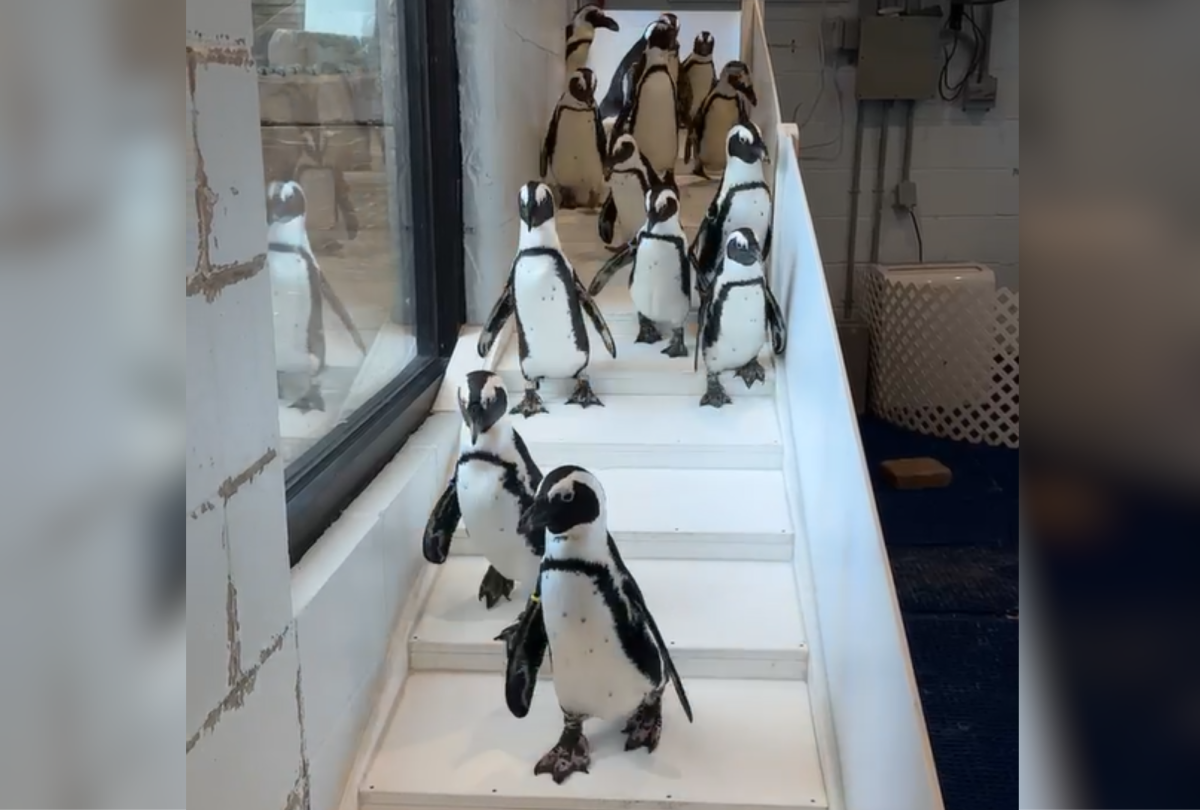
The Long Island Aquarium has brought 20 penguins inside after temperatures dropped drastically in Riverhead, making it too cold even for penguins!
The coastal town in New York State has reached lows of 20 degrees below zero as part of a strong stretch of Arctic cold that will continue to bring freezing temperatures across New York City and the Tri-State area all through the weekend.
The U.S. National Weather Service has issued a cold weather advisory starting at midnight on Friday end ending at 10 a.m. EST on Saturday morning, warning that the cold wind chills could result in hypothermia if precautions are not taken.
A spokesperson for the Long Island Aquarium told Newsweek: “Our colony of South African, black-footed penguins are beach bums! This species (like most penguin species) are not adapted to cold weather conditions, so when it gets under 30 degrees outside (any time of the year), we bring them inside.
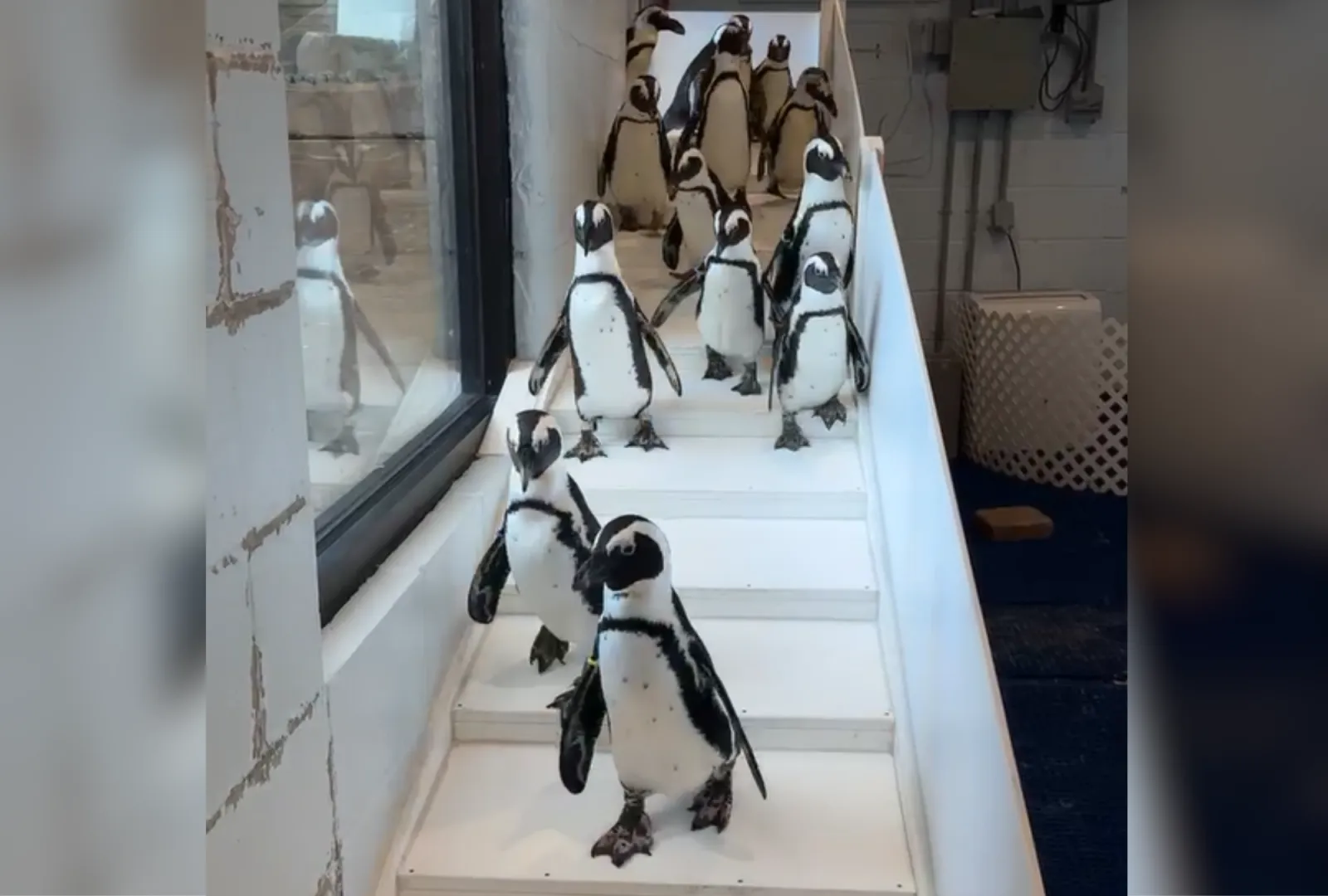
She added that the penguins actually spend every night inside, so they are very familiar with the routine and the indoor habitat.
“Our amazing animal caregivers provide extra enrichment items and spend extra time with them when they do stay in, but they have their nesting boxes and a swimming pool inside, so they are very comfortable and happy (and I’m sure happy to be out of the cold!). I like to say it’s like indoor recess! When the temperatures go over 30, they’ll go back outside for the day to their traditional habitat.
“Our guests can still see our colony while they are inside and we do offer a Penguin Encounter and Penguin Selfie programs where our guests can get up close to them.
This penguin species is a small, flightless seabird native to the coastal islands and beaches of southwestern Africa, where it lives in large, social colonies.
Built for the water, it has a streamlined body, stiff flippers, webbed feet, heavy bones for diving, dense waterproof feathers, and a layer of fat for insulation, allowing it to swim long distances, dive for several minutes, and hunt fish such as sardines and anchovies in the cold ocean currents.
Its black back, white belly marked with a curved black band and unique spots, and a pink patch above the eyes that helps release excess heat are key physical traits.
These penguins communicate loudly, using calls and displays to find mates, defend nests, and stay connected with partners, often forming long-term pair bonds. Breeding pairs share the work of incubating two eggs and raising the chicks, which grow in groups before heading out to the sea for one to two years and later returning as adults.
In the wild, African penguins face predators on land and in the ocean and typically live about 15 to 20 years.
A storm is expected this weekend he greatest effects felt on eastern Long Island, where snowfall totals of about 1 to 3 inches are possible along with gusty winds, rough seas, and minor coastal flooding.
Do you have funny and adorable videos or pictures of your pet you want to share? Send them to life@newsweek.com with some details about your best friend and they could appear in our Pet of the Week lineup.