
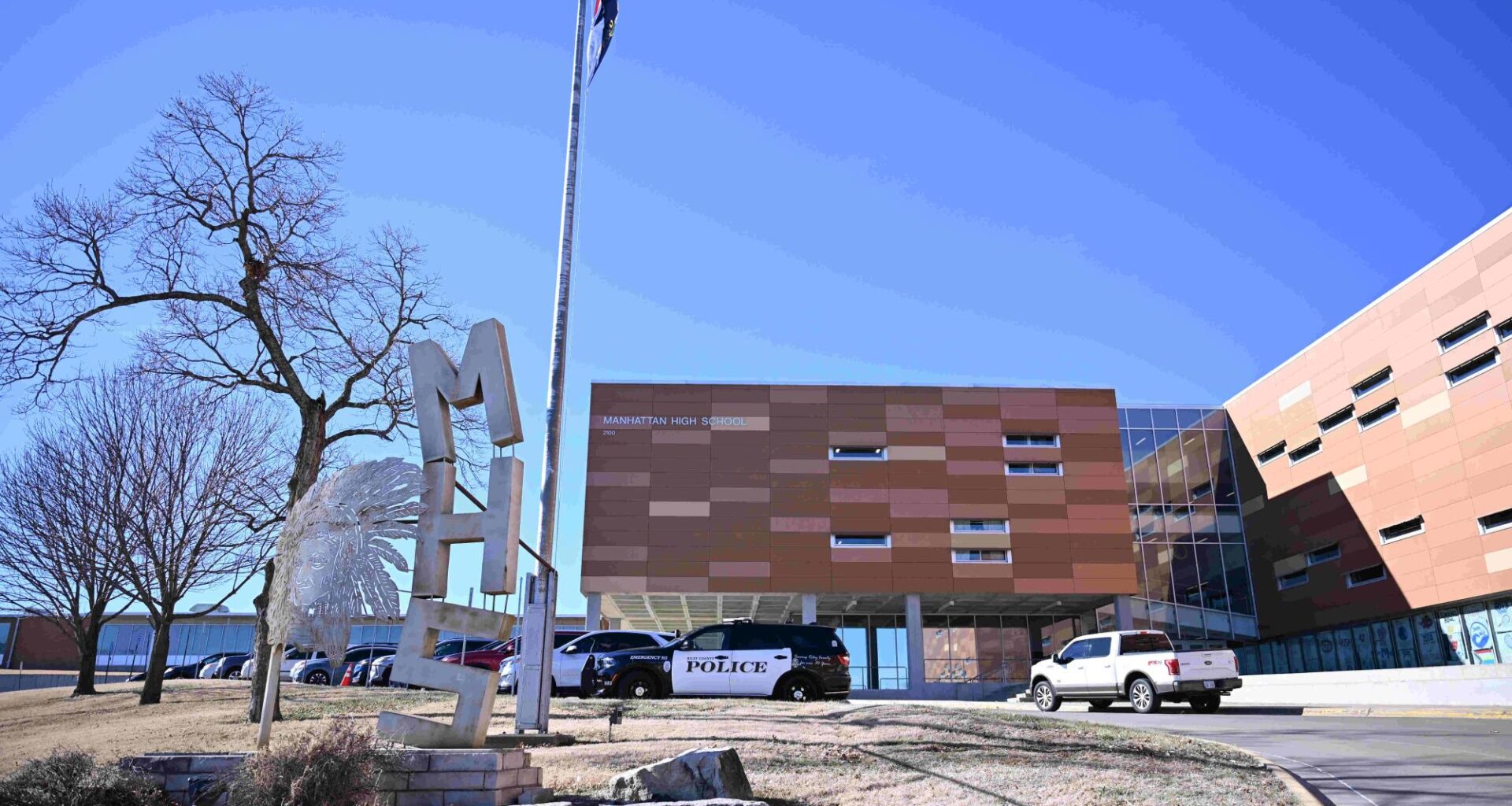
The Manhattan-Ogden School District is currently being confronted with a major shortage of substitute teachers. According to Proximity Learning Team, Kansas had over 1,600 teaching vacancies in 2022-2023 with 10% of educators exiting the field altogether annually, ranking it #2 for teacher attrition nationwide. As a result, schools have resorted to emergency tactics, including principals and other building administrators stepping in to teach classes.
Abby Bowen, director of Human Resources for USD 383, said principals having to teach is “not out of the ordinary” when the district is lacking available substitutes.
“The buildings will have to use what available resources they have, so a principal might do this,” Bowen said. “So imagine you find out a teacher has to go home five minutes before a class starts because their kid got sick, you don’t have enough time to find a sub. Then you have to think, ‘What are my resources in the school?’ and the principals always have the license to do the teachings in the classroom.”
The issue of teacher absences typically ranges from 40-100 times, depending on the day. Many of the absences are known by building leadership in advance, which allows the district to reach a strong fulfillment rate that often exceeds 90%. Problems arise, however, when the absences become last-minute.
“Understandably, employees (or their young children) may become ill overnight or early in the morning, which significantly shortens the window for substitutes to see and accept those openings,” Bowen said.
Since substitute teaching is considered on-call, flexible employment, last-minute absences result in challenges within the district to fill classrooms on those given days.
“As I often explain, it is uncommon for a substitute to wake up already prepared for the day and then begin looking for an available assignment at 6:30 a.m.,” Bowen said. “They like advanced notice and time to prepare, just like the rest of us.”
As a result of the flexible employment, schools face issues when substitutes do not notify the district when they relocate or accept full-time employment elsewhere that prevents them from continuing to substitute. The lack of communication can lead to the district’s substitute roster being misleading, causing further issues.
In order to address the substitute shortage, the district is implementing new strategies to make substitute teaching more accessible to those seeking employment. Firstly, new sub applicants must complete two separate applications: a district application and an application for a Kansas substitute teaching license. Additionally, the HR Office is now offering fingerprinting (if required) to be completed by appointment, making the application process easier.
“As long as an individual has an application on file to substitute in our district, we waive that convenience fee and submit the fingerprints to KSDE on the applicant’s behalf,” Bowen said. “They still are responsible for the license processing fee.”
To apply for an emergency substitute license, applicants must be individuals who have completed a total of 60 semester credit hours from a college or university.
“Additionally, we have established longevity pay increases for substitutes who accept long-term assignments, such as covering for teachers on extended leave,” Bowen said.