
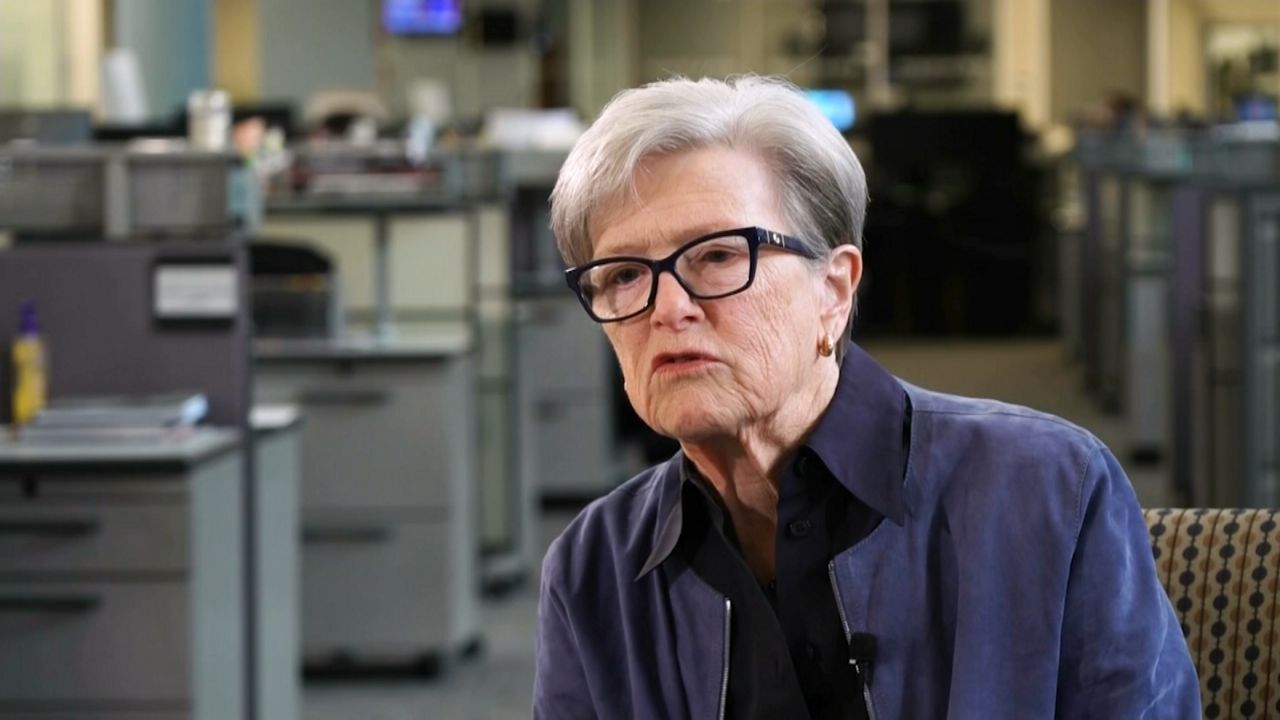
Spending over two decades as an advocate for many of New York’s business leaders, Kathryn Wylde retired from her position as CEO of the influential Partnership for New York City last month.
She has been a key advisor to mayors and governors alike and, most recently, has served as a sounding board for Mayor Zohran Mamdani.
What You Need To Know
Spending over two decades as an advocate for many of New York’s business leaders, Kathryn Wylde retired from her position as CEO of the influential Partnership for New York City last month
She has been a key advisor to mayors and governors alike and, most recently, has served as a sounding board for Mayor Zohran Mamdani
Wylde’s ascent to power can be traced back to humble beginnings as a community organizer for a Brooklyn hospital
Wylde’s ascent to power can be traced back to humble beginnings as a community organizer for a Brooklyn hospital.
Marked by a special lighting of the Empire State Building and a massive reception inside Rockefeller Center’s Rainbow Room, full of the biggest movers and shakers in New York.
“How do you get global leaders of business to care about your local issues? Your local city? How do you do that? I say: It’s in their genes,” Wylde said to the group on Tuesday, Jan. 27.
“She opened up doors for me back in 2011. And I am one person who never forgets those who help me on my way up,” Gov. Kathy Hochul said to the crowd, crediting Wylde with introducing her to Big Apple power players and donors.
Before her retirement last month, Wylde was CEO of the Partnership for New York City since 2000, and a member of the group since 1982.
Some might be surprised to hear how she got her start in politics.
“I had fallen in love with the city during the summer of ‘66 when I was here and I was offered a job at a broken-down Hospital in Brooklyn, then Lutheran Medical Center, today revitalized and revamped as NYU Brooklyn,” she told NY1.
“In the 1970s, as the middle class moved out of the city, corporations, we lost half our fortune 500 companies in about five years, and the tax base imploded,” Wylde recalled.
“It really fell to the not-for-profit sector, community-based, not-for-profit sector and the private sector and our nonprofit institutions, universities, hospitals, where the hospital where I worked to kind of take up the slack and deal with the urgency of the moment,” she added.
Pointing to that time as invaluable to her career. Wylde also credited her ascent to the vision of and later her association with notable New Yorkers, including a legendary billionaire.
“Then the big move was when David Rockefeller, thanks to introductions from Harry Van Arsdale, from the union leaders. David Rockefeller gave me the opportunity and the imprimatur to work with him. And he was, at the time, New York royalty. He could convene anyone,” she said. “They loved New York City, many of them born and raised and engaged here, on the boards of many nonprofit organizations. They wanted to see the city thrive, and they put their all into it, and I had no compromise in going to work for them, because they understood that with power and wealth, it’s your obligation to. To create a better society for all, and that was I was just very lucky to go to work for people who had power and wealth and had those values.”
Since then, she’s been sought after by mayors and governors.
Wylde has supported issues on both sides of the political aisle. Wylde was a key promoter of congestion pricing and universal child care.
And has served as a bridge to the business class for Mamdani, “I’m hoping… [Mamdani] is going to take advantage of the resources and the commitment of the business community to help solve these problems, because I think we’ll be able to work together to do things better, faster, cheaper,” she told NY1.
But warned about the perils of viewing the city’s challenges through a narrow lens.
“We’re full of people that are willing to sit down at the table and work together. And I think that’s the challenge going forward, when we have a situation, the democratic socialists that brought Mayor Mamdani so much of his political support tend to demonize the corporate sector,” Wylde explained.
“I think that’s the biggest threat to the city right now. We need to be together. We need to be together in fighting the federal funding cuts, in fighting for immigration and the rights of immigrants and a much better way of dealing with them than we’re seeing at the moment,” she continued.
Asked how she explains her career start and where she ended up, Wylde said: “I never saw my work in community as different [from] what I do today. In other words, it was always trying to figure out how to find the resources needed to solve problems.”
Wylde’s replacement is Steven Fulop, the former Democratic mayor of Jersey City, New Jersey.