
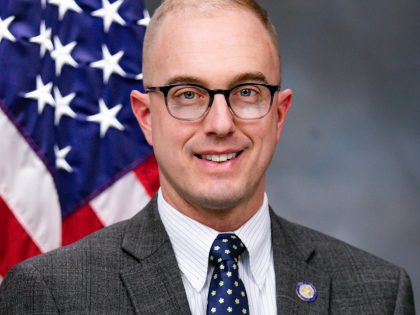
State Sen. Mark Walczyk raised safety concerns over battery storage facilities in upstate New York during the Joint Legislative Public Hearing on the 2026 Executive Budget Proposal. Sen. Walczyk’s comments came in response to testimony from William Acker, executive director of the New York Battery and Energy Storage Technology Consortium (NY-BEST), who insisted battery fires are rare, despite a history of incidents in New York.
READ MORE: First utility-sized battery storage system approved for Adirondack Park
“New York has already seen four battery storage facilities catch fire, including one in Lyme in 2023, one in East Hampton in 2023 and two in Warwick—one in 2023 and another most recently in December 2025,” Sen. Walczyk stated. “These incidents endanger our communities and disrupt lives. When battery facilities catch fire due to thermal runaway, they unleash a catastrophic array of toxic chemicals into the air, including hydrogen fluoride, hydrogen cyanide, carbon monoxide, hydrogen chloride, sulfur dioxide, methane and ethylene. The CDC warns that hydrogen fluoride is lethal at just 30 parts per million, and it can cause severe lung damage and even death before anyone can smell or taste it. “
Sen. Walczyk highlighted the inadequacies of local fire departments in managing the perilous hazards posed by battery storage facilities. While Acker said new codes would ensure effective emergency response plans and that “monitoring detected no harmful levels for humans of any of the emissions” during previous fires, Sen. Walczyk raised concerns about monitoring equipment.
“If we don’t have the monitoring equipment in place to identify these toxic emissions when they occur, how can we be confident our communities are safe,” Sen. Walczyk asked.
“Our communities are simply not prepared to handle these potentially deadly threats. What might work in the sprawling landscape of Texas cannot be recklessly applied to our densely populated areas. We need a comprehensive strategy that specifically addresses the unique challenges we face. This is not just about energy expansion; it’s about safeguarding the lives of our residents,” Sen. Walczyk said.