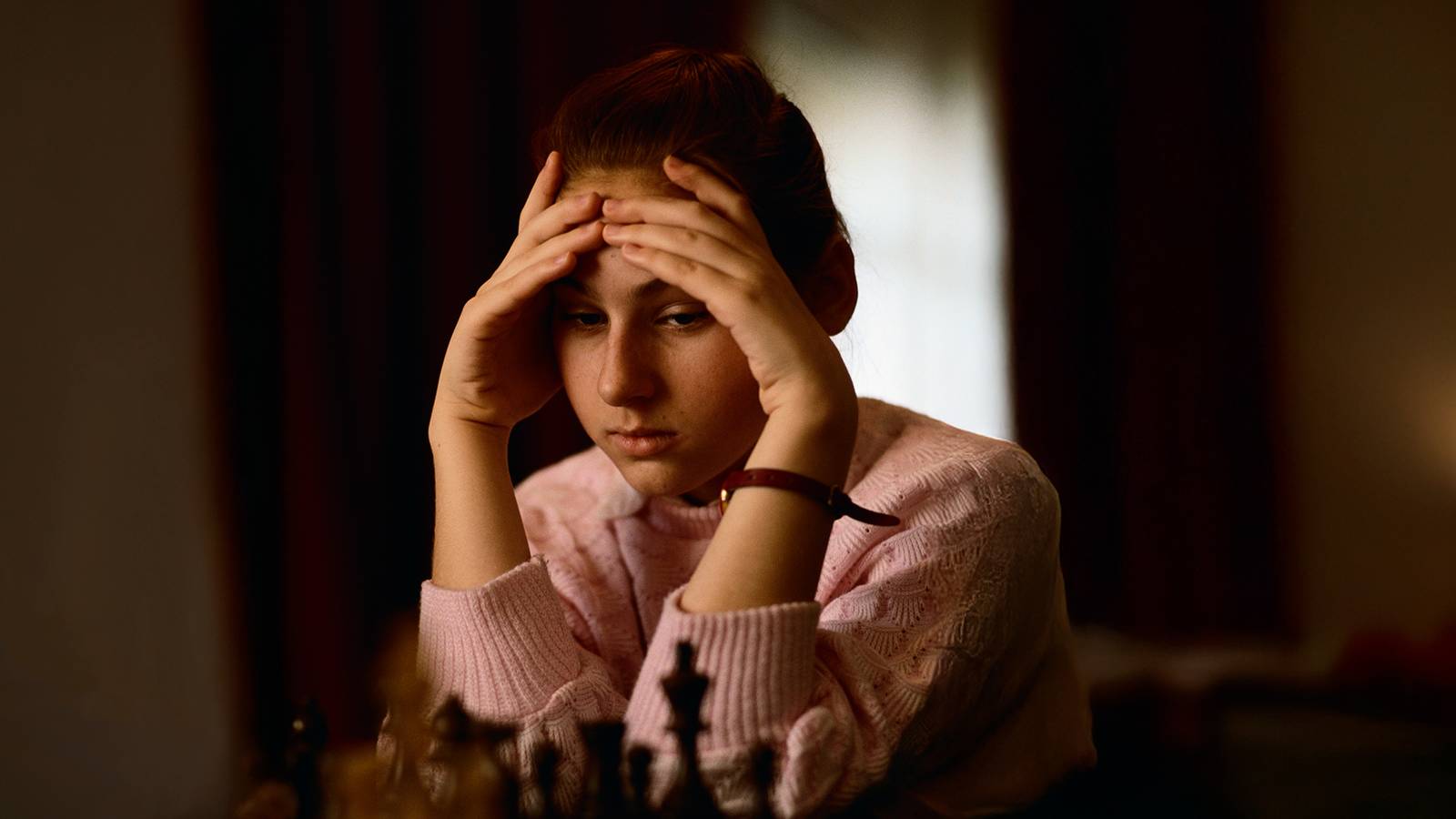
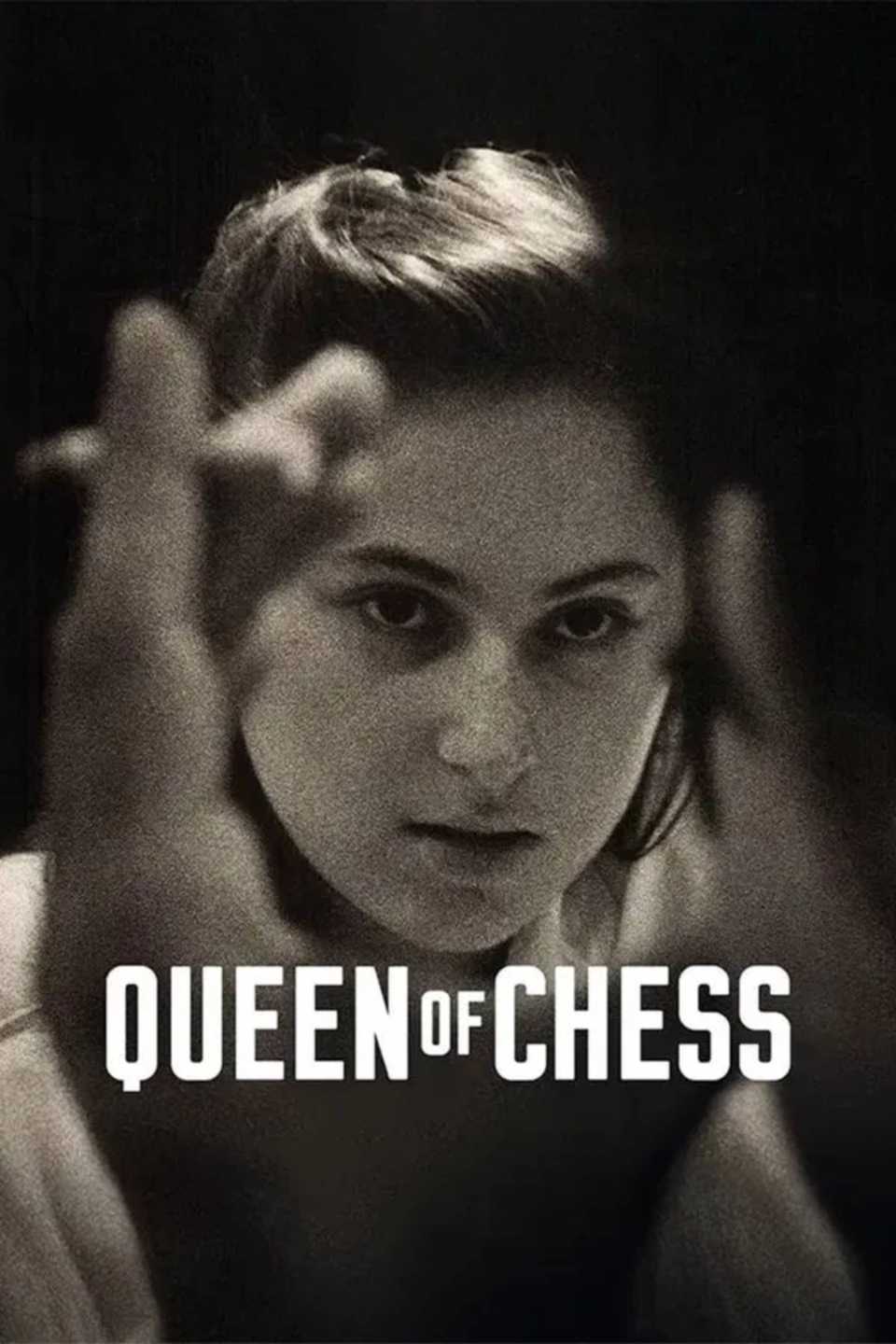
Chess is the type of sport that should lend itself easily to cinema. It’s a game which naturally builds in tension as moves escalate towards the match’s denouement, exercising both psychological and tactical prowess. It’s the reason why The Queen’s Gambit and Queen of Katwe worked so well, and perhaps why veteran documentarian Rory Kennedy was drawn to make Queen of Chess for Netflix, about Hungarian grandmaster Judit Polgár.
Of course, all three of these texts are also portraits of trailblazing women in a field dominated by men. One might think that, since chess is not a competition dependent on physical acumen, it might be an area where gender is not a prohibitive factor. Yet, the truth seems to be the opposite: a game which tests a competitor’s intellectual force unfortunately leaves room for sexist men to tout regressive attitudes about the relative intelligence of men over women.
Frustratingly, Queen of Chess doesn’t delve into either the inherent tension of the game nor the lifetime of sexual discrimination Polgár has faced with nearly enough rigor, instead zeroing in on, bizarrely, and in a way that reifies said sexism, the chess master’s lifetime pursuit of trying to beat the Russian chess icon Garry Kasparov. True, the two faced each other at least seventeen times, but the touchstone of this head-to-head battle inadvertently frames Polgár’s majestic career as a quest to prove she can hang with her male counterparts, as if beating Magnus Carlsen, Anatoly Karpov or any other world champion was insignificant. Few of those exploits made the final cut.
Queen of Chess Is Endemic of Netflix’s Bog-Standard ‘Documentary of the Week’ Aestheticism
The major problem with Kennedy’s fluff piece is that it is, for lack of a better term, very Netflixian. Though the film premiered at the 2026 Sundance Film Festival, it feels inextricably tied to its streaming distributor. It is structured like every other bog-standard docu-portrait on the platform, utilizing archival footage and talking head interviews to give a rounded look at its main subject, but never in a way that delves deep enough into the surrounding circumstances of her life, nor the world from which she came.
Most of the many juicy contextual questions which surround Polgár’s rise to become the first (and only) female chess player to crack the top ten and break the 2700 rating barrier are given short shrift. There is only passing mention of her childhood in the poverty-stricken communist Hungary of the 1970s. There is zero mention of her Jewish faith (which she coincidentally shares with Kasparov). There is only casual talk of the borderline abuse she experienced at the hand of her overbearing father, which is crammed into the film’s final minutes.
The lack of in-depth discussion of these and other topics keeps Queen of Chess at arm’s length. It belongs to that sub-category of streaming films which may be dubbed podcast cinema, or PowerPoint cinema, a class of films which use the bare minimum of visual cues to elevate it from forms that do not require cinematic language. Which is a shame considering just how powerful and trailblazing Polgár really is.
… it’s frustrating that nothing is illuminated which couldn’t be gleaned from reading a Wikipedia entry.
Appreciably, Kennedy does spend a lot of time framing Polgár’s exceptional skill in the context of significant misogyny. Even though the former prodigy became the fastest to reach grandmaster status at the startling age of fifteen years and four months, beating a thirty-three-year-old record held by Bobby Fischer, she almost never acquired the respect of the scores of men she beat. Fischer himself is seen on television suggesting that women aren’t smart enough to be truly great at chess; another male player says that her run of victories is due to being “lucky all the time”; Viktor Kochnoi claims he “wasn’t interested” in playing on the day Polgár cleaned his clock.
To make Polgár’s ascension indelible, Kennedy includes a number of punk rock needle drops to disrupt the otherwise classical music score. It’s a nice, innovative touch that much of the film sorely lacks. But, considering her subject’s impact, an impact that is in direct opposition to much of the problems she faced, it’s frustrating that nothing is illuminated which couldn’t be gleaned from reading a Wikipedia entry. It may be a net positive that Polgár’s story will be made available for more of the world to know, but to truly understand her and her achievements, we could’ve used a few more chess moves to get to checkmate.
Queen of Chess screened at the 2026 Sundance Film Festival and will be released on Netflix on February 6th.
Release Date
February 6, 2026
Runtime
93 Minutes
Director
Rory Kennedy
Writers
Mark Bailey, Keven McAlester
Producers
Rory Kennedy, Keven McAlester, Mark Bailey
Cast