
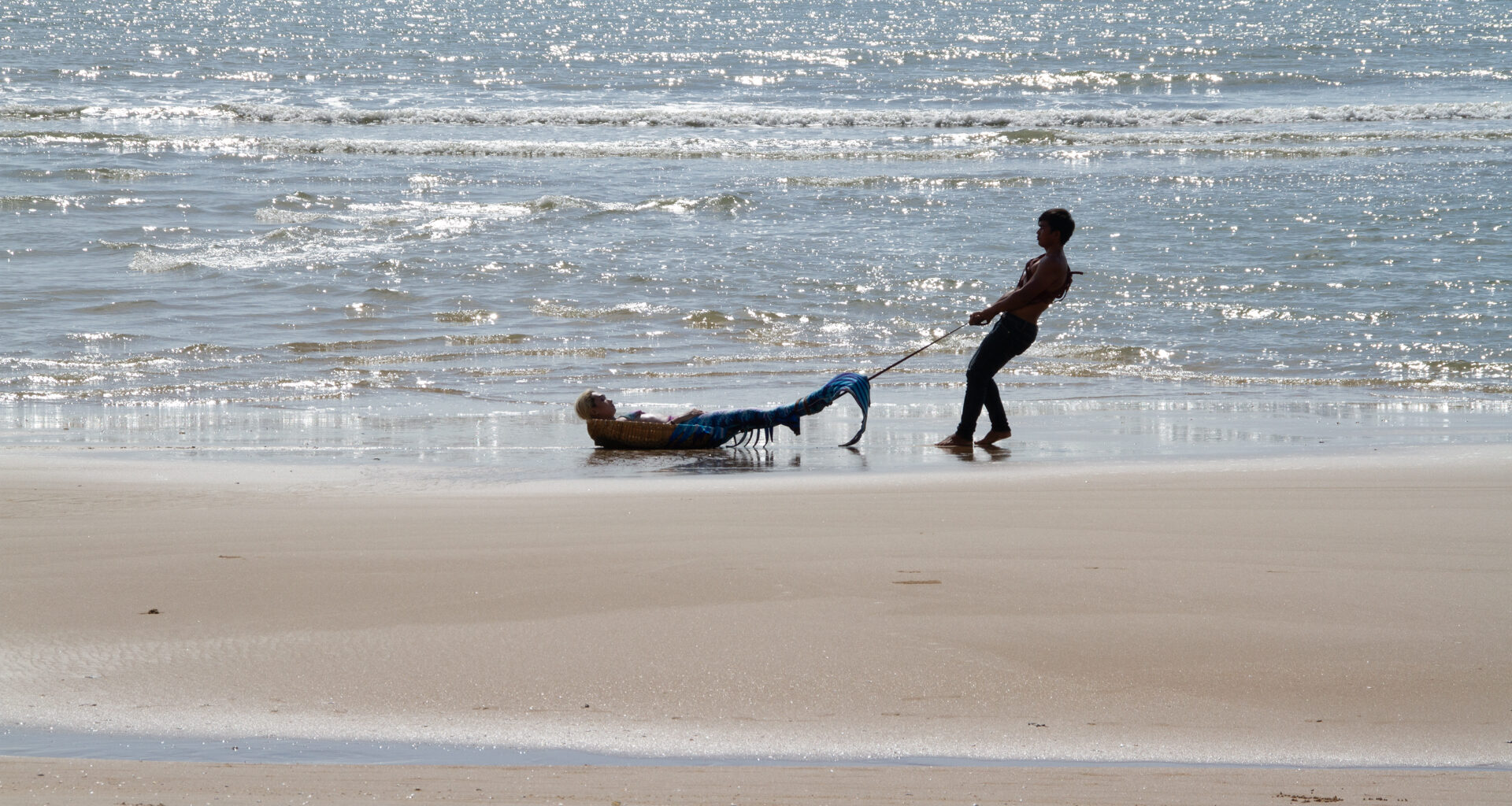
We Exist in the Ambivalence of Those Motherfuckers
Organized by Anh Vo, Lumi Tan, maura nguyễn donohue
Performance Space New York
January 26–February 7, 2026
New York
Đoàn Thanh Toàn is one of four artists from Vietnam in residence at Performance Space New York as part of We Exist in the Ambivalence of Those Motherfuckers—a tentacular, multi-pronged program I co-organized with Lumi Tan and maura nguyễn donohue to explore contemporary performance emerging from Vietnam. Alongside Đoàn, we invited Lại Diệu Hà, Vũ Đức Toàn, and Nhi Lê across generations and artistic trajectories to travel to New York City for three weeks with the primary intention of exchange and research. They are among the few artists in Vietnam who have devoted themselves to experimental performance while remaining deeply invested in building an ecology of practice grounded in collectivity, care, and sustained togetherness.
I sat down with Đoàn in Sài Gòn [Ho Chi Minh City], Vietnam, in the suspended time before their departure to New York City, when no plan yet needed to formalize. A choreographer and organizer based in Sài Gòn, Đoàn is a co-founder of Project Đẩy Sàn, a grassroots platform dedicated to creating space, resources, and community for experimental performance in a landscape marked by extreme scarcity and constant change. Our conversation drifts through this state of suspension: between making and not-yet-making, between facilitating for others and listening for one’s own voice, between unlearning what performance is and learning what else performance might be.
Anh Vo (Rail): What is the landscape you’re inhabiting in the studio these days? What kinds of thoughts occupy you? What are you curious about?
Đoàn Thanh Toàn: I talk to myself a lot. There is also a lot of grunting and singing, to nothing almost. I want to stir things up, to get angry. I try to dance, to move, to shake, or just to take a nap and be content with that. I’m carving out time to remind myself what it’s like to be in my body.
I come to the studio with the expectation that I will make something. And then I end up with the reality that I’m not even ready to make anything.
Rail: When was the last time you showed a performance?
Đoàn: The last time I performed in front of an audience was August 2024 in Taiwan. It was part of the Artist Lab residency organized by Bangkok International Performing Arts Meeting (BIPAM) and Taipei Performing Arts Center (TPAC), where a cohort of eight artists spent two weeks in Bangkok and two weeks in Taipei learning about each other’s practices.
There was also a showing in each city. In Taiwan, I collaborated with Nagara Wada, a Japanese experimental theater director. She wrote a monologue, and we took turns performing it in different languages, in slightly different ways. It was my attempt at something I’ve never done before. That is my goal, in general, every time I participate in a residency: to learn a different mode of performance or attempt a different approach.
Rail: These multi-week residencies abroad come with extensive resources and a robust network of people, which feels supportive of your artistic process. Whereas the scene in Vietnam is structured around an extreme condition of lack. It must be very disorienting to be in the studio when there is not really an opportunity or a show to work toward.
Đoàn: Exactly. When I’m in the studio in Sài Gòn, there is no context to put my mind and my body into. Not that my work is site-specific, but it’s always helpful to know the context of where I will be performing, or the audience who will be there.
Rail: When was the last time you choreographed a live performance in Vietnam? Was that Chiêm Bao Thấy Mình (In the Eye)?
Đoàn: That was a long time ago, 2022. And then the next work, Bồng Bềnh (Buoyant), was a video work. Every time I make a performance, I learn and unlearn what performance does and is.
AV: There’s a paradox in your relentless desire to learn: for the past few years with Project Đẩy Sàn, you have been in a position where you mostly facilitate the learning process for other young Vietnamese artists. Of course, you get to learn, too, but it’s different from growing your own artistic voice. Can you describe what this project entails?
Đoàn: The reason I co-founded Project Đẩy Sàn in 2024 with producer Nguyễn Hải Yến (Red), writer Nhật Huỳnh-Vũ, and theater-maker Trà Nguyễn is that we don’t have a platform in Sài Gòn to make, perform, and just try new things.
There are two components to the program: “Rèn” and “Dựng.”
Rèn is structured as an intensive workshop. We invite more established artists in Vietnam or other countries to come and just do a workshop ranging from three days to one week to exchange, learn, and spark collaboration. In contrast, Dựng is conceived to give artists to a platform to show work. Artists are given money, space, mentorship, dramaturgical guidance, and organizing support over the span of six weeks to produce a performance.