
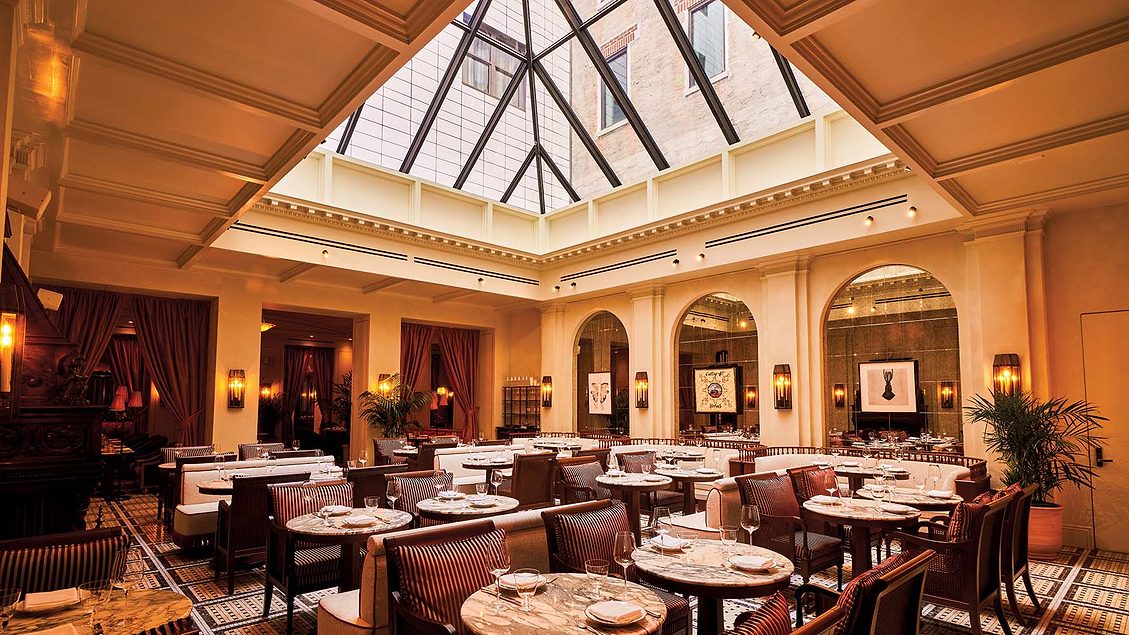
Manhattan’s Union Square is surrounded by a broad collection of historic, sometimes grand, structures. For passersby, an upward glance often reveals a panoply of magnificent carved masonry, ornately detailed terra-cotta, and well-laid brick. BKSK Architects, a 40-year-old New York City–based practice, has consistently displayed a knack for developing elegant design solutions while navigating the technical intricacies (and politics) of these buildings, having completed some 20 adaptive reuse and new projects in the area. One such intervention that fits into its larger body of work is the Twenty Two New York, the first American outpost of a London boutique hotel and social club, which opened its doors in 2025.
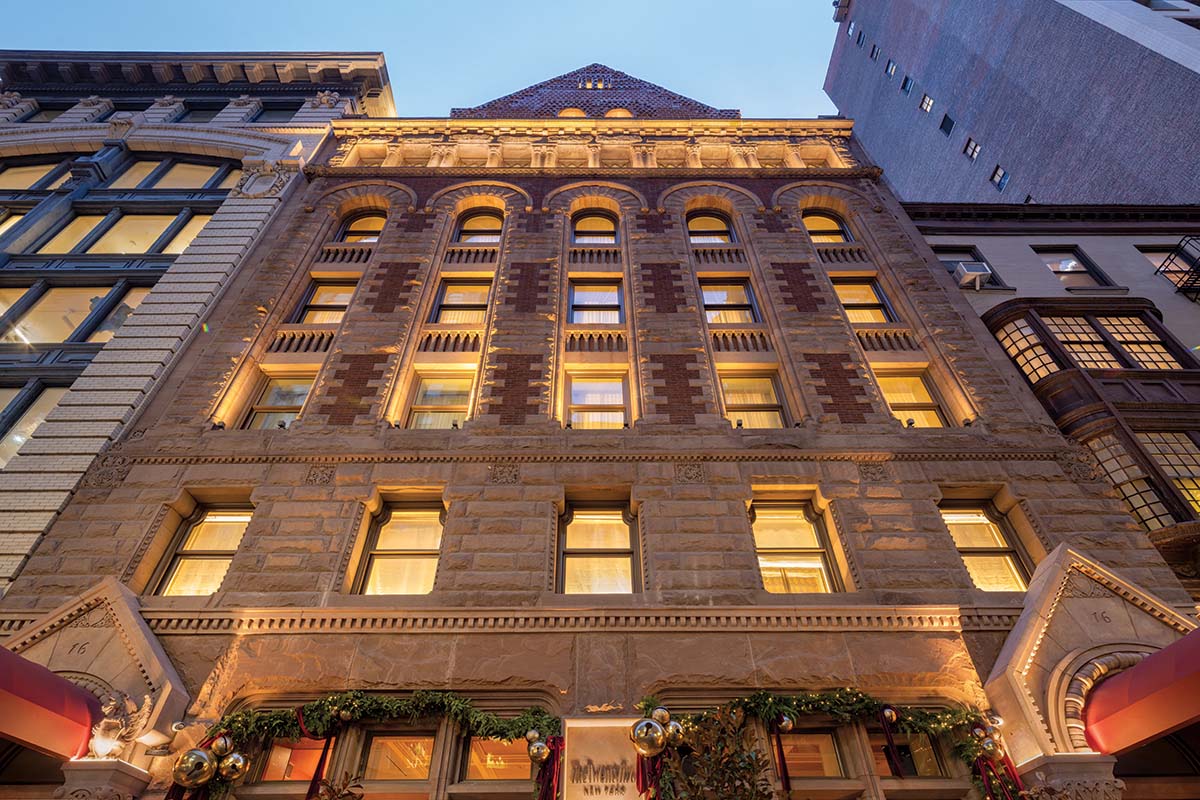
The 80,000-square-foot building is located on a midblock 50-foot-wide and 180-foot-deep site adjacent to Union Square West, in a protected historic district. Its primary, north-facing elevation features a restored Romanesque-revival facade, dating from 1891. An entirely new nine-story reinforced-concrete superstructure (with a cellar and subcellar) sits directly behind. At the building summit, a diaphanous veil of ultra-high-performance concrete (UHPC) shrouds a double-height glass-enclosed guest suite. On the ground floor, the hotel includes a restaurant and lounge, with a skylit atrium; a private members club occupies the second level; and a public lounge and terraces greet visitors on the ninth floor.
1
2
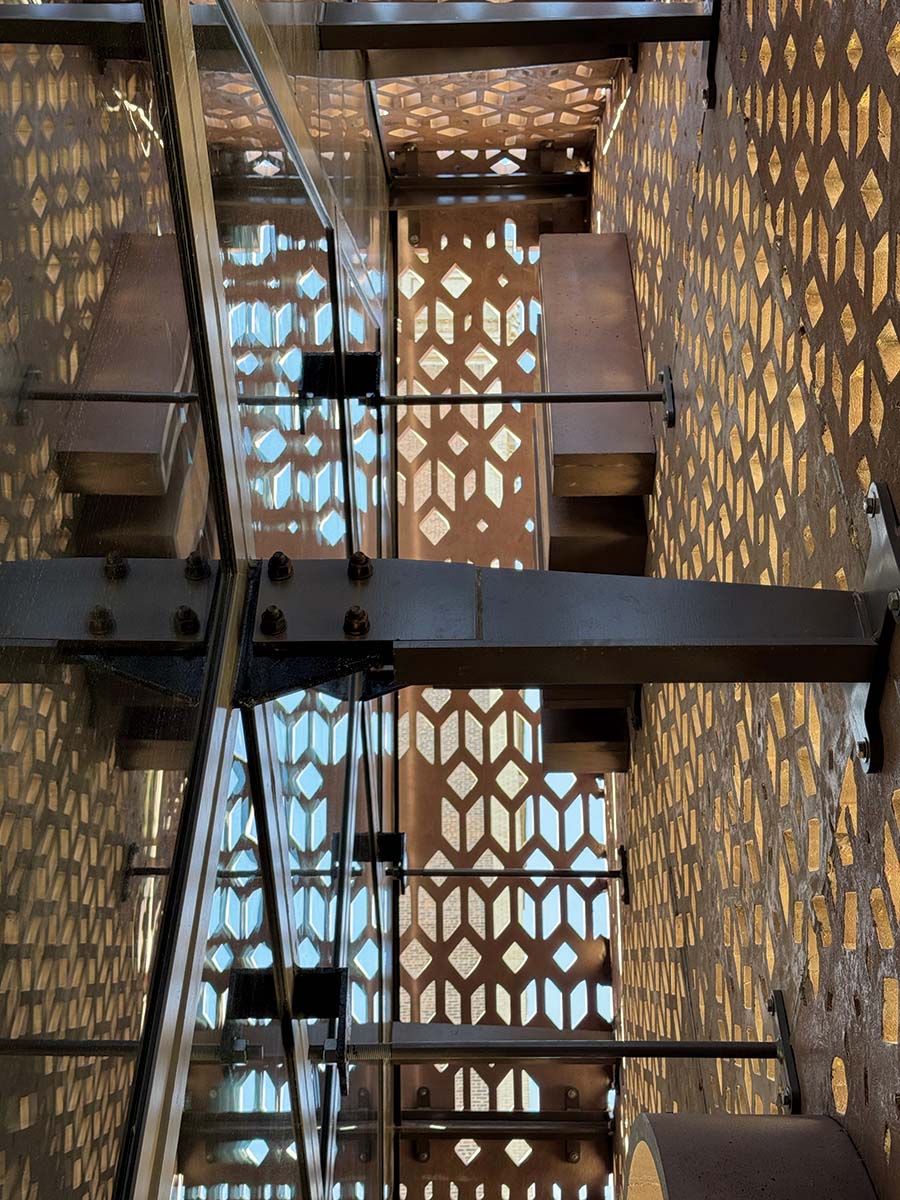
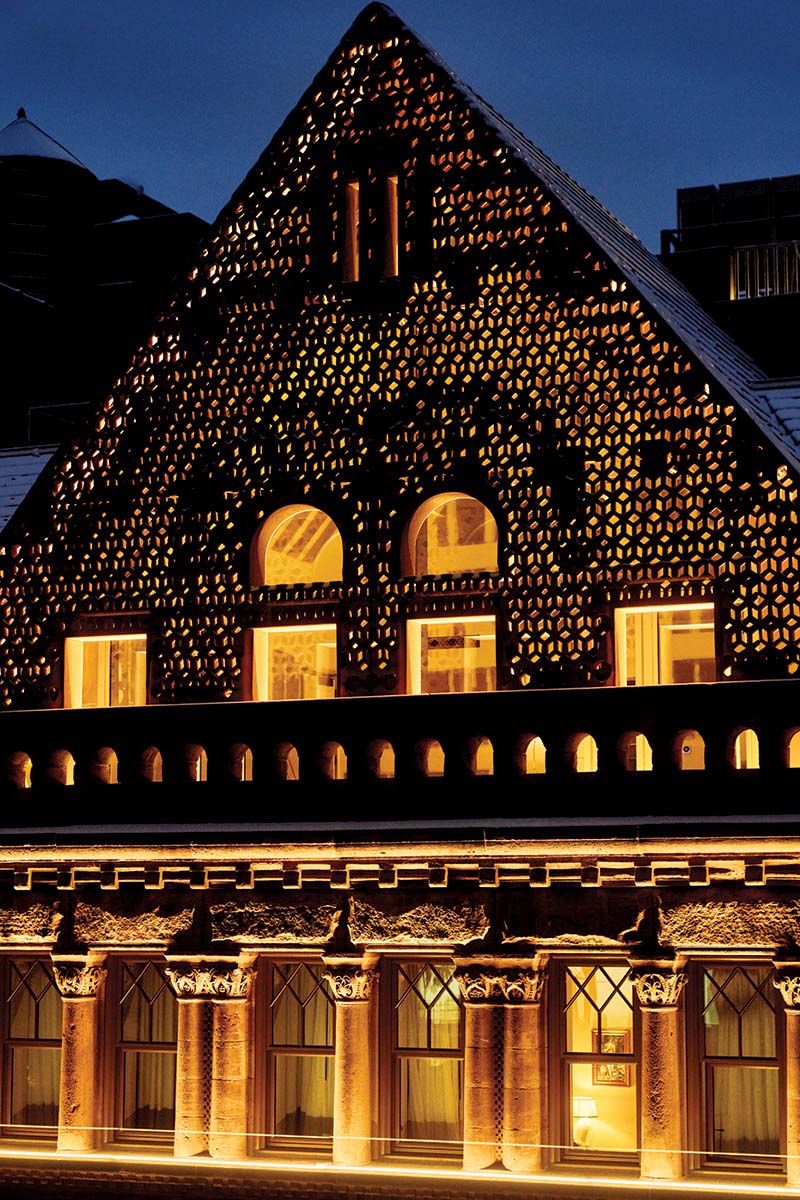
A newly installed UHPC screen is offset from the structure (1), and realizes a never-built plan for a gable (2). Photo © BKSK Architects (1), Steven Rojas (2)
The original structure was known as the Margaret Louisa Home. It was designed by prolific New York architect R.H. Robertson as a six-story dormitory annex of an adjacent YWCA facility, also designed by Robertson in the Romanesque-revival style. Both feature light-brown sandstone and dark red brick. The architect hoped to include an additional gabled level, but those plans were scrapped due to building codes at the time that limited the height of lodging houses.
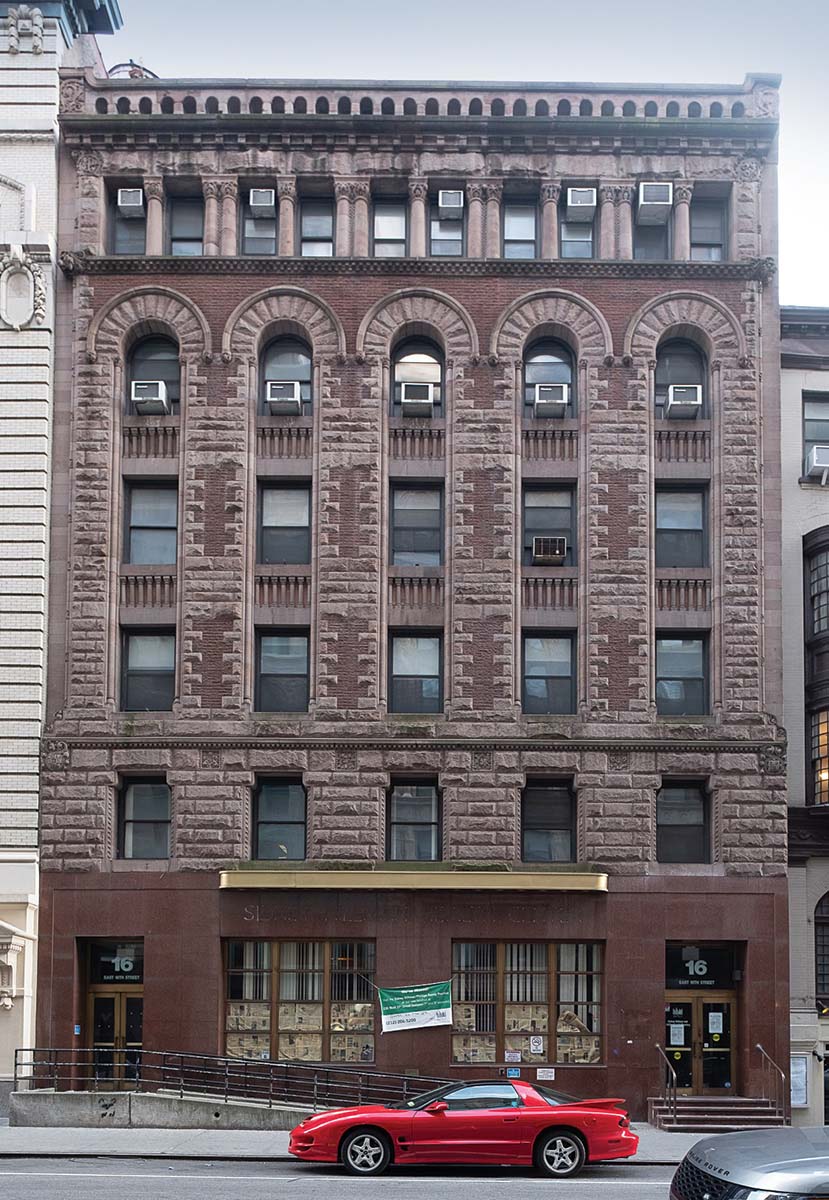
The ground-floor facade was replaced in the 1950s. Photo © BKSK Architects
In 1950, the structure was converted into a nonprofit health center; that project included the demolition and replacement of the existing floor plan configurations, interior detailing, and the highly ornamented stonework on the ground-floor facade. A one-story extension was also added to the rear yard. The client, international real-estate investment firm Reuben Brothers, purchased the building in 2017; BKSK was hired two years later. The prior occupant’s layout proved unsuitable for a hospitality program, and, furthermore, did not meet zoning and ADA compliance.
With those existing conditions in mind, it was deemed most appropriate and expeditious to construct an entirely new structure, with the bulk of the added floors placed at a setback, behind the existing elevation. “The goal was to create a modern hotel, with a certain number of keys, that took advantage of the site’s depth,” notes BKSK partner Todd Poisson. “We also sought to build upon BKSK’s legacy of not shying away from ornament as architecture and respecting context.”
Before work could begin, the design team had to secure Landmarks Preservation Commission (LPC) approval for any exterior alterations. Following review of historic photographs and archival materials, including Robertson’s original elevation drawings for the property, BKSK put forward two primary changes to the street-facing facade.
At ground level, polished red granite panels, added during the 1950 conversion, were to be stripped and replaced with sandstone and granite, sculpted to resemble the original design. Above the parapet, the design team proposed a lacelike metal screen—a nod to the dormitory residents, many of whom worked in the nearby Ladies’ Mile shopping district—proportioned to resemble Robertson’s never-built gable. Following LPC feedback, the latter evolved into its present composition, with UHPC panels integrally tinted a dark tan and intermittently stained red to match the brick-and-sandstone facade.
3
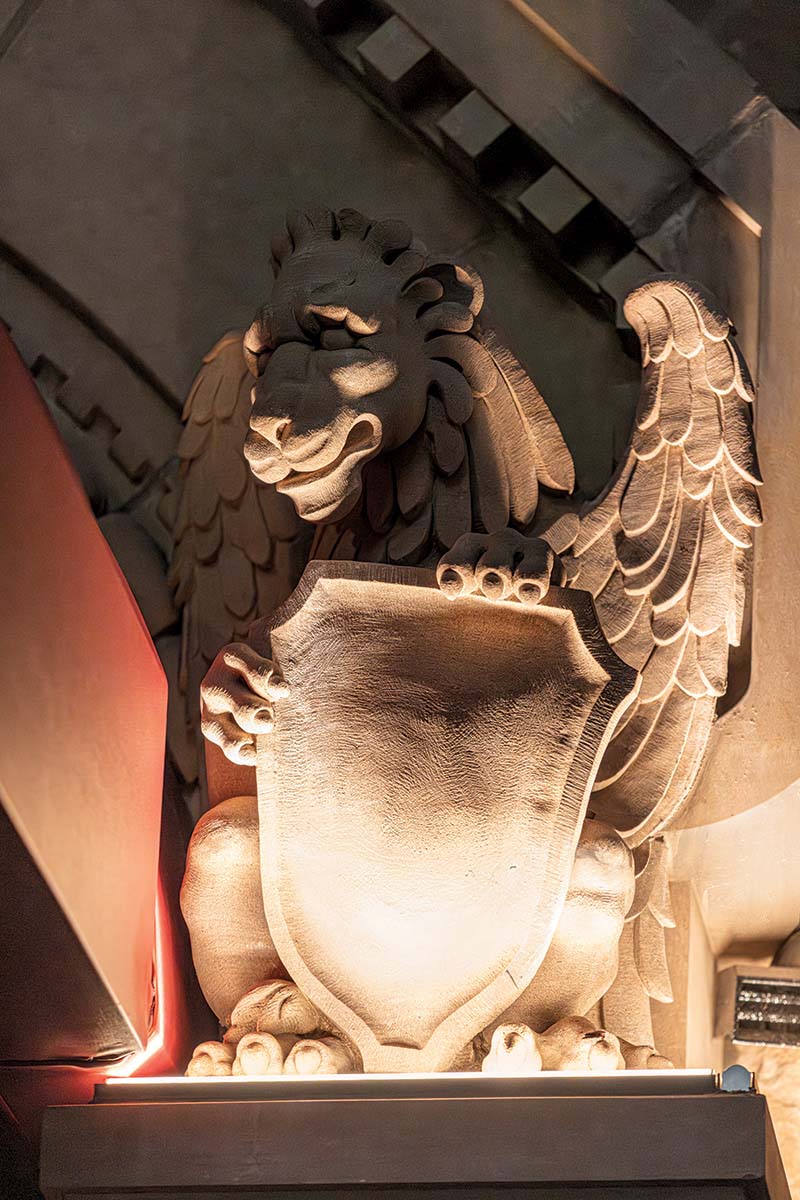
Stonemasons crafted the facade’s new ashlar (3) and griffin gargoyles (4). Photos © Evan Joseph
4
“We made a scan of the historic elevation drawing and abstracted it into a dot matrix,” BKSK principal William Russell explains. “It was then translated into a gray scale to develop its topography, which in its roughness and depth relates to the building’s rusticated stone.”
Construction began in early 2021, and the primary elevation was stabilized with a temporary steel frame as the building came down behind it and the new structure was poured into place. The design team incorporated fly ash into the concrete mix and used recycled steel as rebar to reduce the project’s embodied carbon.
In plan, the 72-key hotel bears a resemblance to the original dormitory; double-loaded corridors wrap around a 40-foot-wide central courtyard, which is clad in white terra-cotta panels.
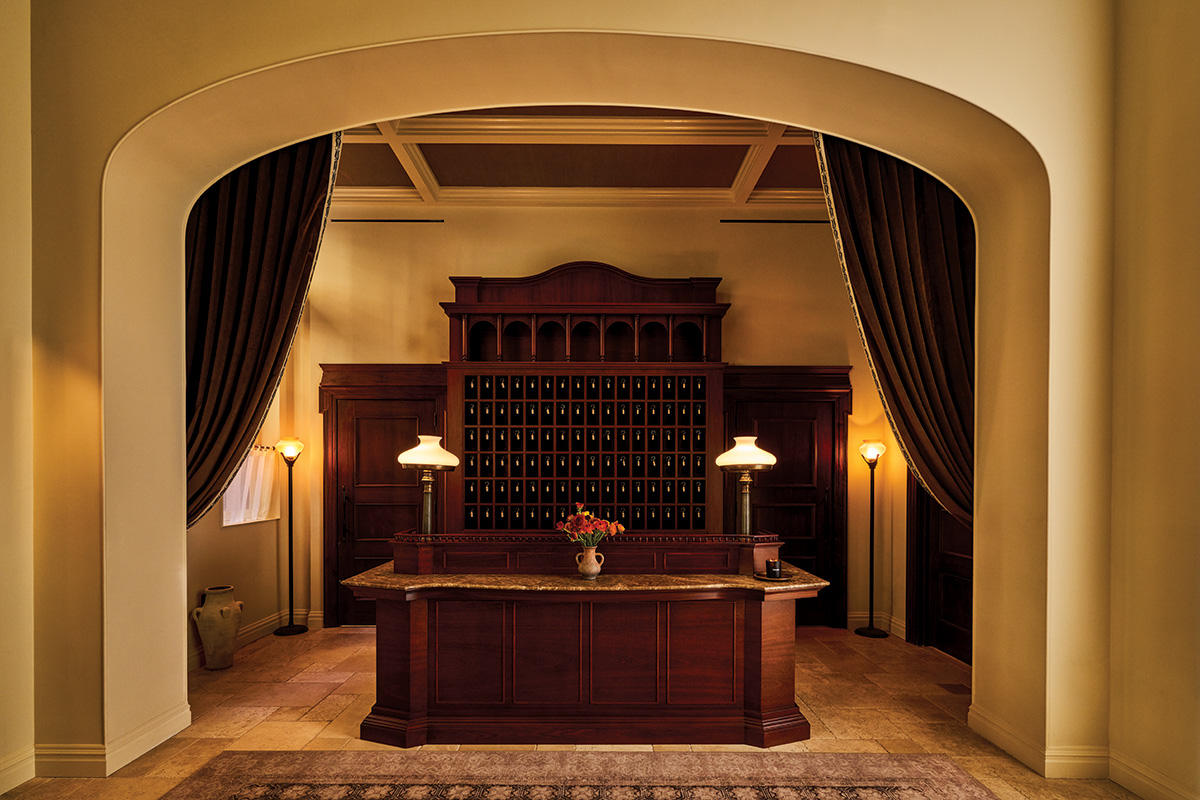
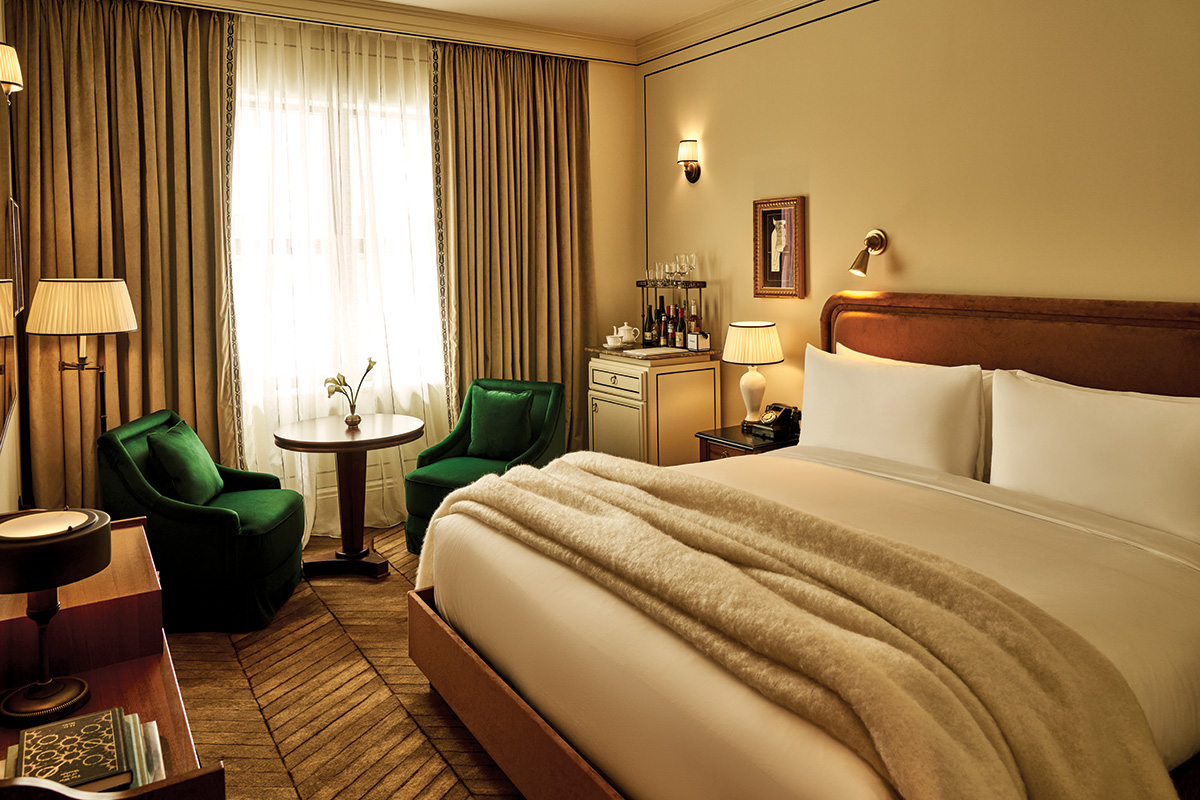
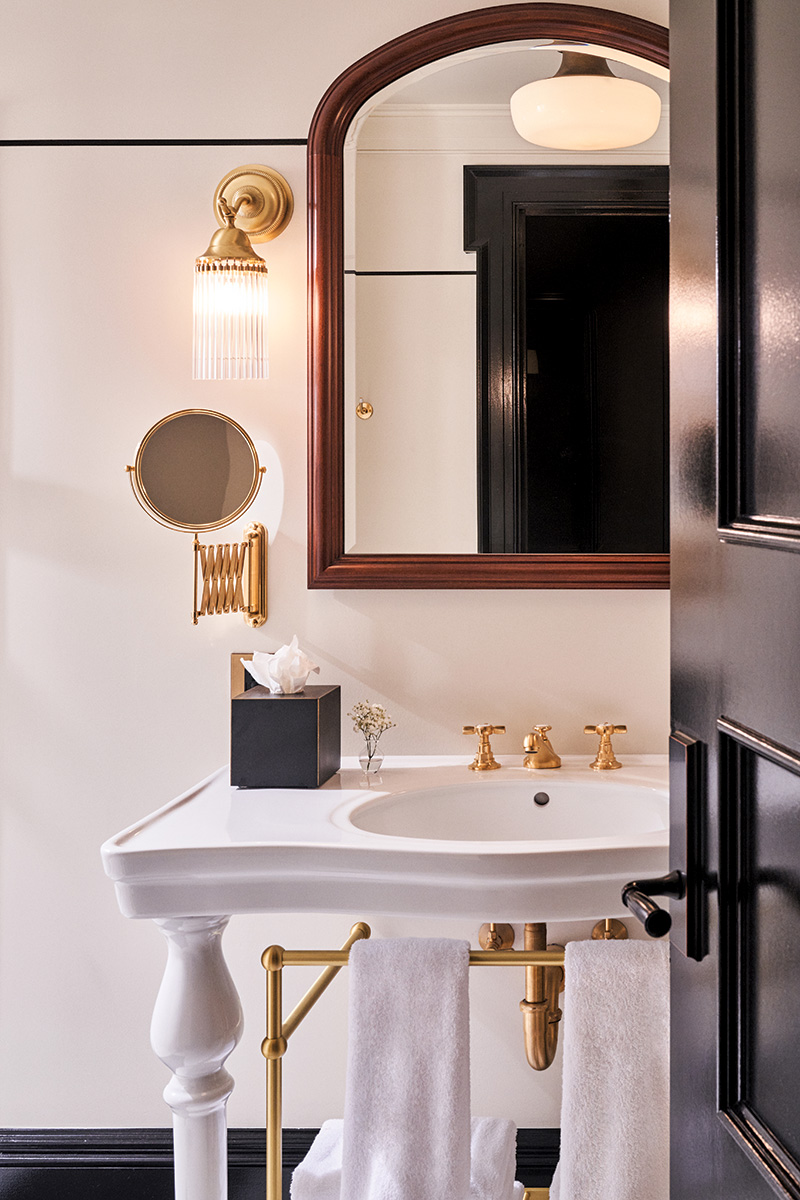
London-based practice Child Studio led the interior detailing and furnishing, which, according to the design team, is partly inspired by historic pictures taken within the Margaret Louisa Home. That approach has yielded ritzy common and private spaces, replete with traditional millwork, intricate tiling, and plush furniture; at times, it is easy to forget that the building is of this century.
5
6
7
The building’s interior design harks back to an earlier era (5 – 7). Photos © Steven Rojas
Facadism, the act of retaining a building’s exterior while replacing its structure, is a sometimes contentious strategy within the field of architectural conservation. Some claim that the approach is inauthentic and fails to account for and recognize a building’s lived-in history. But, at the Twenty Two, a historic facade has been painstakingly restored; plan and program have been resurrected to some approximation of the original building; and a new, thoughtful reinterpretation of an unbuilt feature has been added to a landmark district.
“This project encapsulates how we as a firm work with historic properties,” notes Poisson. Considering the results, it’s an example worth emulating.
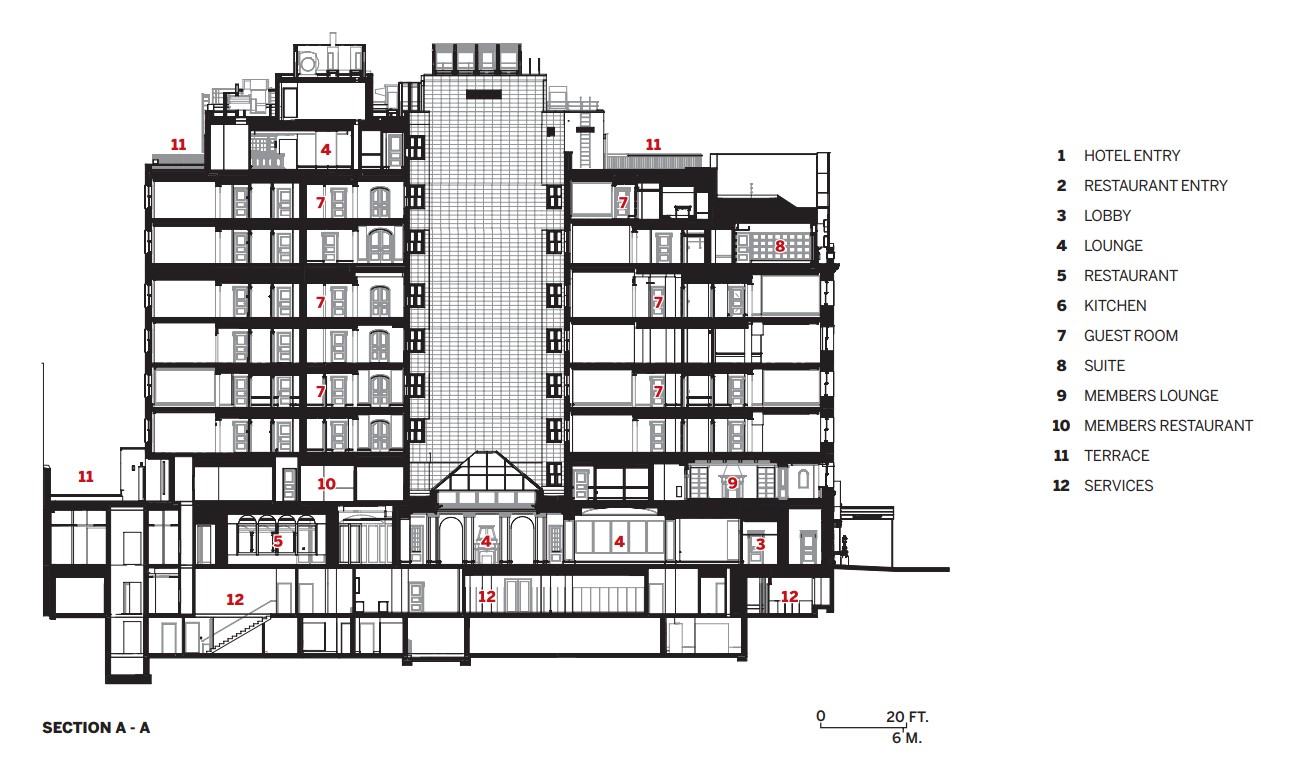
Image courtesy BKSK Architects
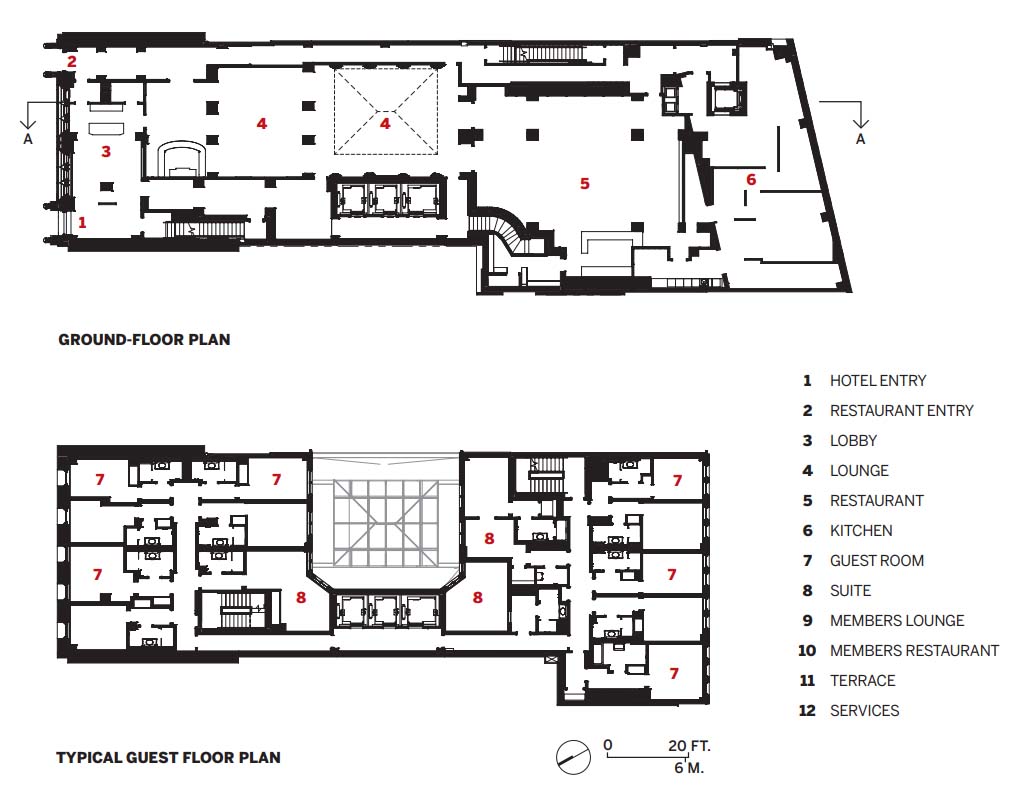
Image courtesy BKSK Architects
Credits
Architect:
BKSK Architects — Todd Poisson, partner in charge; William Russell, principal; Marcel Perez-Pirio, interior architect; Sophie Ladjmi, project architect; Matthew Richardson, sustainability director; Juan Vergara, project manager
Interior Designer:
Child Studio
Engineers:
TYLin (structural); Dagher Engineering (MEP); GZA GeoEnvironmental (geotechnical)
Consultants:
Surface Design Group (facade); Fisher Marantz Stone (lighting)
General Contractor:
MJM Associates
Client:
Reuben Brothers
Size:
80,000 square feet
Cost:
Withheld
Completion:
February 2025
Sources
Masonry:
Kansas Brick and Tile (brick); Heavy (UHPC); Traditional Cut Stone (restoration); EXO Surfaces (terra-cotta)
Curtain Wall:
Bisam
Roofing:
Soprema (built-up roofing); Ludowici (terra-cotta)
Glazing:
Skyline Sky-Lites (skylights); Guardian
Exit Devices:
Von Duprin