
FIVE Holdings brokered an agreement with Axar Capital Management to take “full operational management” of the Mirage and its sister venue The Great Hall.


The Brooklyn Mirage is set to reopen as Pacha New York this summer. Rendering via FIVE Holdings
by Kirstyn Brendlen, Brooklyn Paper
After a battle in bankruptcy court, there’s a new life on the horizon for the Brooklyn Mirage, as global nightlife brand Pacha is set to take it over and reopen it as Pacha New York this summer.
FIVE Holdings, the Dubai-based company behind Pacha, has brokered an agreement with Axar Capital Management to take “full operational management” of the Mirage and its sister venue The Great Hall after the venues’ parent company, Avant Gardner, filed for bankruptcy.
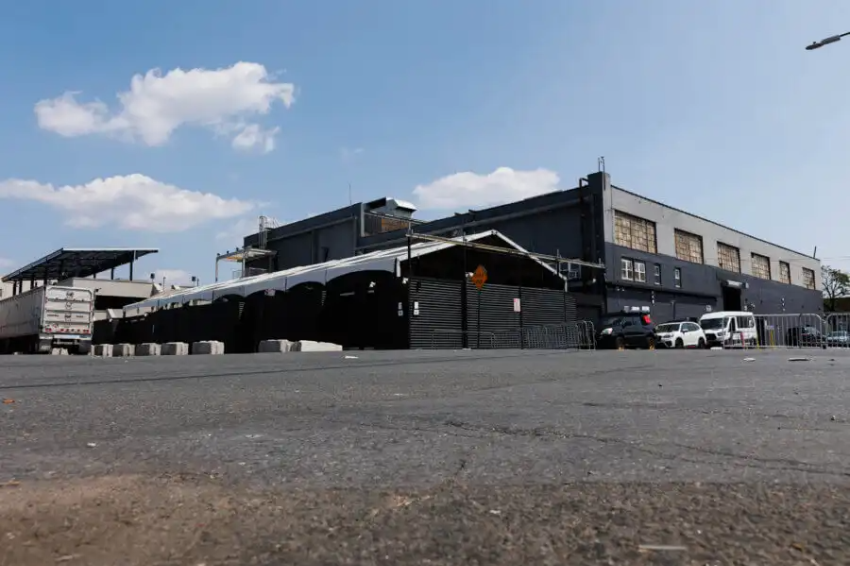 The site in 2023. Photo by Paul Frangipane
That agreement seemed in jeopardy just last week, when a group of unsecured creditors — people owed money by Avant Gardner — accused Axar of secretly brokering a sale to Pacha and undermining a deal previously approved in bankruptcy court.
Court documents show that Axar has since reached an agreement with the creditors, though the details of that agreement were not immediately available.
“With these matters now resolved, the transition to FIVE and Pacha can move forward in earnest,” Axar CEO Andrew Axelrod said in a statement.
Pacha New York will kick off its “first season” in June 2026, the company said. In keeping with Mirage tradition, it will operate as a seasonal venue, closing in October 2026. In those five months, the company said it will bring “world-class performances that place international headliners and homegrown talent on the same stage.”
The Mirage, operating only a few months of the year, had historically relied on temporary certificates of occupancy it renewed each spring, rather than a permanent one.
 The Brooklyn Mirage in 2023. Photo by Chris Lavado/ShoreFire Media
The Great Hall, meanwhile — tucked inside the same complex in East Williamsburg — will be upgraded to serve as a year-round “multi-genre arena.” It was not immediately clear whether the third venue at Avant Gardner, Kings Hall, will be impacted.
In a statement, FIVE Holdings CEO Kabir Mulchandani said the brand’s expansion to New York was a “defining moment” in the company’s journey.
“This move reflects the strength of our vision, the resilience of our platform, and our ambition to help shape the future of entertainment on a global stage,” Mulchandi said. “We are entering a city that influences how the world thinks, creates, and connects — and we do so with bold imagination, long-term commitment, and the confidence to build destinations that resonate far beyond their physical walls.”
Pacha’s original New York City nightclub in Hell’s Kitchen closed in 2016, after ten years in business. FIVE Holdings acquired the Pacha Group in 2023.
The once-beloved Brooklyn Mirage went into freefall last May, when it failed to reopen after a massive renovation. The open-air venue was rife with structural and safety issues, according to the Department of Buildings, and though Avant Gardner had claimed the venue would be up and running for the 2025 season, it was never cleared for occupancy. Last October, Avant Gardner filed for Chapter 11 bankruptcy, citing financial issues largely caused by the ongoing problems with the Mirage.
Bankruptcy court proceedings were rife with controversy. Axar was approved to take over most of Avant Gardner’s assets, but other lenders who had provided funding to Avant Gardner sued, claiming Axar had lied about Avant Gardner’s financial status and construction issues when seeking loans. After Brooklyn Magazine broke the news of a Pacha takeover last month, the unsecured creditors pulled their prior approval for the Axar agreement, claiming the Pacha deal had been negotiated in secret and would undercut the creditors’ ability to recoup their money if the Mirage was sold and proved to be “wildly successful.”
As bankruptcy proceedings unfolded in court, Avant Gardner filed to demolish the Mirage after being ordered by the DOB to fix its myriad issues “through removal or repair.” Demolition was scheduled to start on February 2 and last for two to three months, according to a document circulated by Brooklyn Community Board 1.
Editor’s note: A version of this story originally ran in Brooklyn Paper. Click here to see the original story.
Related Stories
Email tips@brownstoner.com with further comments, questions or tips. Follow Brownstoner on X and Instagram, and like us on Facebook.