
A new modern Filipino cafe debuted in Queens this winter, churning out chicken adobo melts and espresso drinks with artisanal heritage salts, which are shaved and sprinkled tableside. Co-owners Angel Carreon and Anna Javier opened Bukas Cafe in Elmhurst at 56-14 Van Horn Street by 57th Avenue in Elmhurst on Friday, January 16.
In recent years, across New York, modern Filipino spots have emerged: Naks by the Unapologetic Foods team and the now-closed Tadhana, both on the Lower East Side, and Barkada Social Club in Astoria. And now, Bukas Cafe, which continues that wave by presenting a menu so different from the traditional fare at longstanding pioneers like Renee’s and Ihawan in Woodside’s Little Manila.
“I don’t want to be competing with them,” says Carreon. “I want to be innovative. It’s respecting Filipino roots, but reimagining the food in a different, creative format.”
Carreon and Javier are relatively new to the restaurant scene. Carreon worked in tech operations for digital media companies in Manila; Javier jumped around with various jobs: call center receptionist, Emirates flight attendant, and a casino marketing coordinator. But ever since they moved in together in Manila in 2016, Carreon — who grew up in a household of chefs and avid home cooks in the province of Batangas — brought her love for cooking into their home. She experimented with techniques culled from videos and restaurants. Together, they dreamt of opening a restaurant.

The dining room at Bukas Cafe. Bukas Cafe/Official
In 2018, Carreon immigrated to New York and became a paralegal at a law firm, where she’s still working full-time. Javier soon followed, working as an executive assistant to a proprietor of pharmacies and Kew Gardens Chicken, a charbroiled chicken shop in Queens.
Despite having limited restaurant experiences, they have big ambitions. And last year, they put those restaurant dream gears into motion: they hosted a pop-up at the Sommwhere creative studio, where they served a five-course menu that included scallops kinilaw (cured scallops with coconut cream, jalapeños, and sumac). After which, they signed the lease on the former Pata Cafe space.
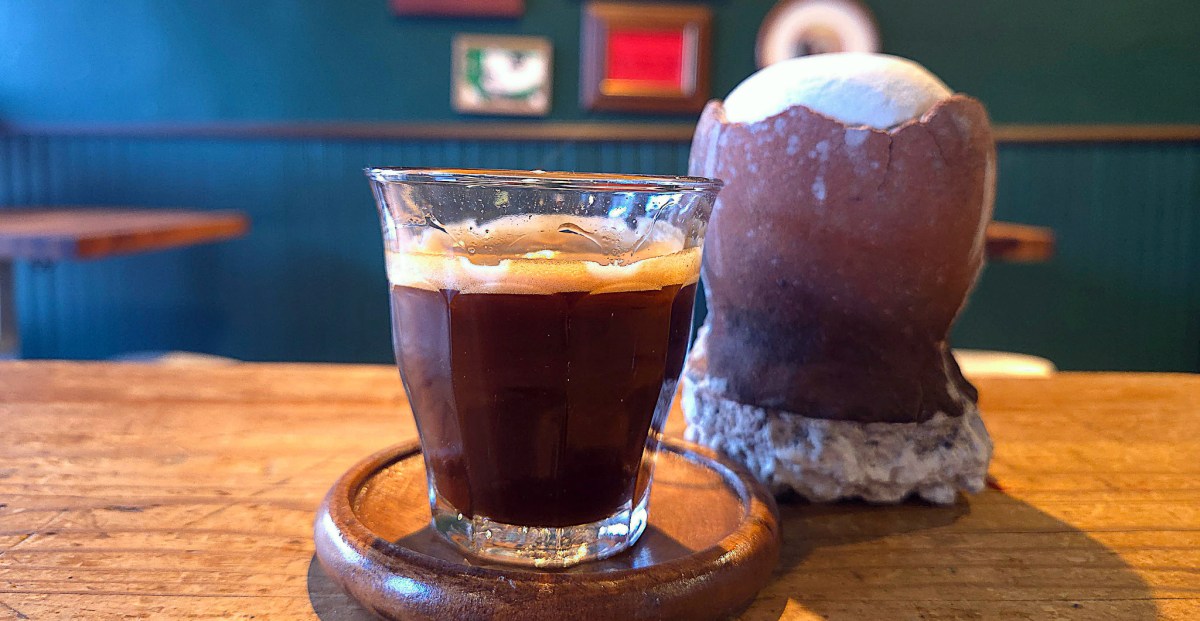
Their main goal behind Bukas is spotlighting rare Filipino ingredients. Artisanal salt production is an endangered heritage craft in the Philippines, and Bukas offers two kinds. Asin tibuok salt is a labor-intensive, time-consuming seasoning common in the island of Bohol. Coconut husks are soaked in seawater for several months, then dried, and burned with seawater into ashes. Seawater gets poured through the ashes, and liquid gets transferred into claypots that get roasted until the water evaporates, and salt accumulates at the rounded bottom of the claypots. When finished, the claypots are flipped upside down and cracked open to expose the craggy dome of salt inside. It resembles a prehistoric dinosaur egg.

Adding salt to a drink at Bukas Cafe. Bukas Cafe/Official
At Bukas, Javier brings the asin tibuok salt tableside for drink orders. She shaves the orb into a soft velvety powder that builds on top of an espresso shot glass rimmed with honey and calamansi syrup. Altogether it’s sweet, salty, and tangy, with smoky notes from the asin tibuok. (The coffee is made with beans from Brooklyn roastery Devoción.)
The second salt, the tultul salt from Guimaras Island, is made by simultaneously burning and soaking driftwood with seawater. More seawater gets filtered through the resulting ashes to produce a brine that gets mixed with coconut milk and cooked in pans until rectangular bars of salt shape up. For the Bukas Na latte, Javier grates a slab of tultul salt that falls like snow into the cup. The seasoning, which is less salty and more creamy than the asin tibuok, develops salted caramel flavors in the drink, which already has a house-made browned butter-muscovado syrup and salted cream.
Carreon attributes the scarcity of the salts in New York’s Filipino restaurants to their high price point and limited use as a finishing salt. One kilogram of asin tibuok retails for $130, compared to $3 for the same amount of regular table salt.
Bukas’s drinks incorporate other Filipino ingredients for cream toppings, like sikwate (blocks of pure cacao), coconut, and ube.

The adobo jalapeño melt at Bukas Cafe. Bukas Cafe/Official
For Bukas’s food, Carreon remixes dishes and ingredients from different regions of the Philippines by playing with untraditional ingredients. The current menu has only three items: popcorn chicken; pimiento grilled cheese sandwich, which is served with condensed milk dip (just like Carreon’s aunt used to make for her, which works well together); and a glorious adobo jalapeño melt sandwich featuring mozzarella, shredded pork or chicken braised in soy sauce and vinegar, and served with tangy adobo jus.
Originally, Bukas had a larger menu when it opened, but that first weekend was “overwhelming,” they both expressed, leading the duo to pare down the list. Removed entrees — like a deconstructed tinola (a chicken and vegetable soup perfect for sick days) — will be rolled out as daily specials. The trimmed line-up also lightens Carreon’s 5 a.m. kitchen prep before she heads to her full-time law firm job.
Bukas’s small counter-service 340-square-foot, 15-seat space conveys a cozy, chic mood through dark green walls, dark wood tables, and a bookshelf. Currently, it’s open on Wednesdays from 7 a.m. to 5 p.m., and Thursdays through Sundays from 9 a.m. to 5 p.m.