
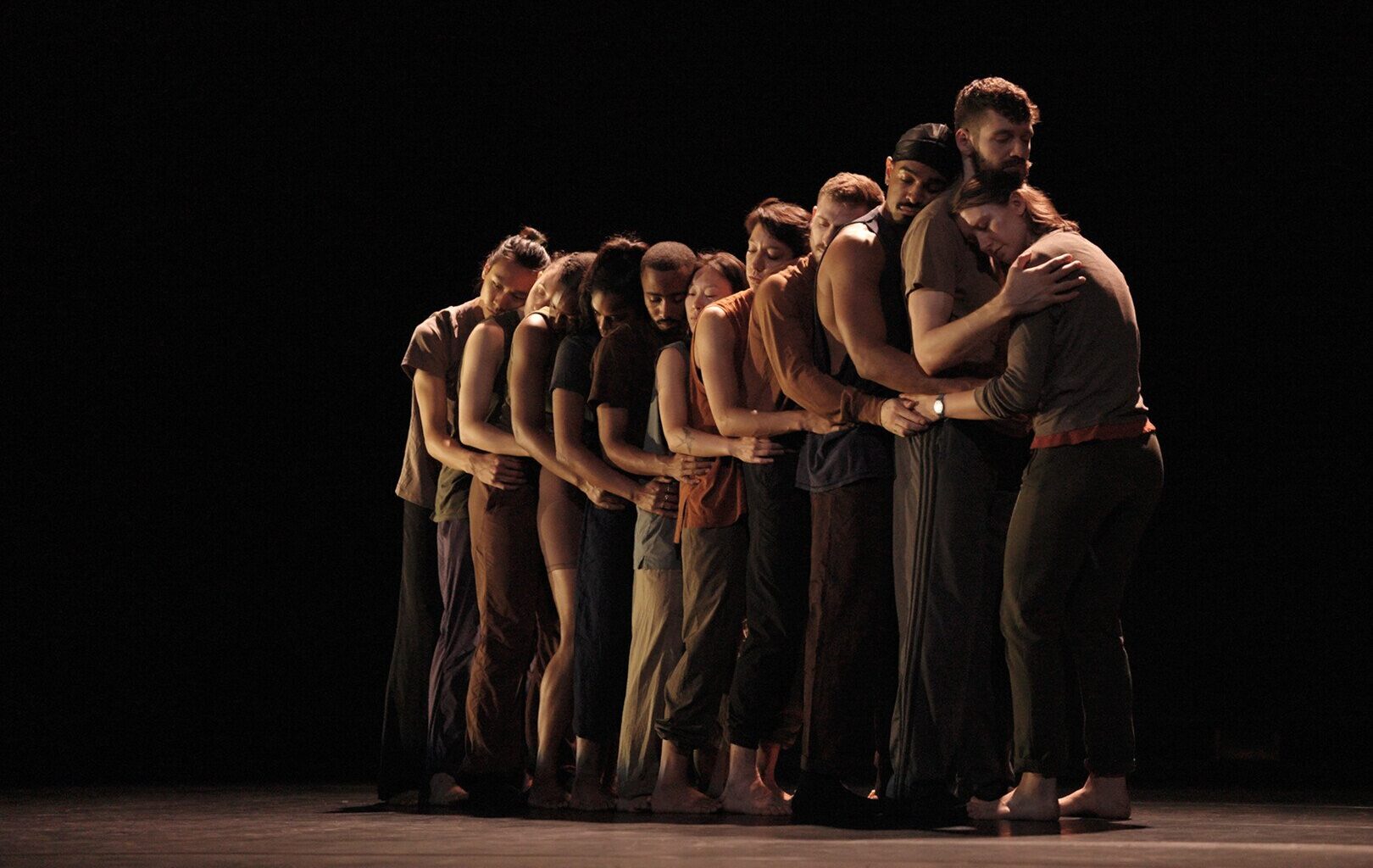
Trusnovec: Oh, yes, Kati Kallio & Laura Feodoroff’s Hidden Steps. It’s lovely when those moments happen, when people walk away feeling like, oh, I just had a window open to another world.
Rail: That’s a great way to put it.
Trusnovec: We think about that a lot as we build the programs. We group films in a way that they make sense together—or in a way that they completely don’t make sense. That they’re so different; we just want there to be an eclectic variety. That happens a lot with the shorts programs. Every time the film ends, before the next one, you have no idea what to expect.
Rail: The shorts are my favorite. They demonstrate so well the many things you can do on film that you can’t onstage. They’re little gems.
Trusnovec: We purposely are looking for dance as a cinematic experience. It’s one thing to record dance, and a lot of people submit recorded performances. And they’re beautiful. But for us, we’re really looking for films where you can get lost in the visuals, and where people are being super creative. It’s not just a three-camera shoot capturing a dance performance.
Speaking of the shorts, Daniel Gurton’s Spoken Movement Family Honour is another of those films that had a unanimous vote with us. There’s a place on the form where you can click award-worthy. We don’t do awards, but we all were clicking that unbeknownst to the others, just because it’s such a powerful film. What the dancers do gesturally, and the way the camera works—it’s a feast for the eyes, that film. I watched it multiple times in a row, because I just was so taken by it.
Rail: That’s a great example of what you can do on film versus onstage—the close-up of that heated conversation that takes place only in hand gestures on the table. The camera brings you eye level with that tabletop. And I noticed that, actually, something similar appears in several of the other films, maybe not that intensely, but with close-ups of the hands and a conversation without words playing out with gesture.
Trusnovec: Keely Song and Robert Machoian’s The Ballad of a Home is probably one of those.
Rail: What I liked about that one is that it starts out in a way that you think is going to be a straight narrative movie—it has dialogue, you see her pull up in the driveway as she’s arriving home to her family, you hear her and the husband bantering with the kids as they prepare for dinner. But when the couple addresses each other, it’s done only in non-verbal abstract movement.
Trusnovec: I haven’t seen anyone do quite exactly what they do. They’ve really created something unique for themselves.
Rail: I notice there are some films on the program that are world premieres, some that are making their US debut, and some for the first time in New York. And then some are not premieres at all.
Trusnovec: We always hope to get as many premieres as possible. We want to be the first stop for a dance film. But we also know there are incredible dance festivals all over the world, and so these films are making their appearances in different places throughout the year. We’re happy to be part of the journey the film is on.
Rail: I was happy to see Drea Cooper’s O R I G I N S about Alonzo King in California. We in New York don’t get to see that company very often.
Trusnovec: And it’s beautifully shot, with so many gorgeous images.
Rail: And we get to hear his philosophy, and how he generates that work in his dancers. That’s always fascinating to me.
Trusnovec: I love being a fly on the wall, but I also like sometimes to get some more verbal information from a choreographer, to hear about what they’re thinking, what their process is—especially having worked for somebody that never spoke about their process at all.
Rail: Really? He didn’t?
Trusnovec: Paul? Never. He barely said anything. You just danced. Which was amazing: that was the conversation.
Did you get to see any of the films on the Portraits program? I’m curious if you got to see Kate Weare and Jack Flame Sorokin’s film, RISA, about Risa Steinberg.
Rail: I was just going to mention her. I was so touched by that one.
Trusnovec: Same here. I found it really emotional, and just so beautifully treated, poetic, the choice to film in black and white. It’s another that is definitely in my top five films of the whole festival. Actually, all four films on that program are gorgeous portraits of artists who ride on the cusp.
Rail: Remind me of the others.
Trusnovec: There is Andrew Margetson’s Carmen. It’s this stunning flamenco dancer in the middle of a plaza, and she’s just dancing. There’s something captivating about it. I could not take my eyes off of her. Another is Xavier Diaz’s We Are Cumbia, We are Family. It’s about, again, a world I didn’t really know of, and it’s right here in New York. The fourth is Sarah Niemann and Dominic Miller’s In Stillness and In Motion, about a New York choreographer, Olga Rabetskaya. She has an injury, and she’s faced with the challenges of moving. That was striking. I think these four portraits are really special together.