
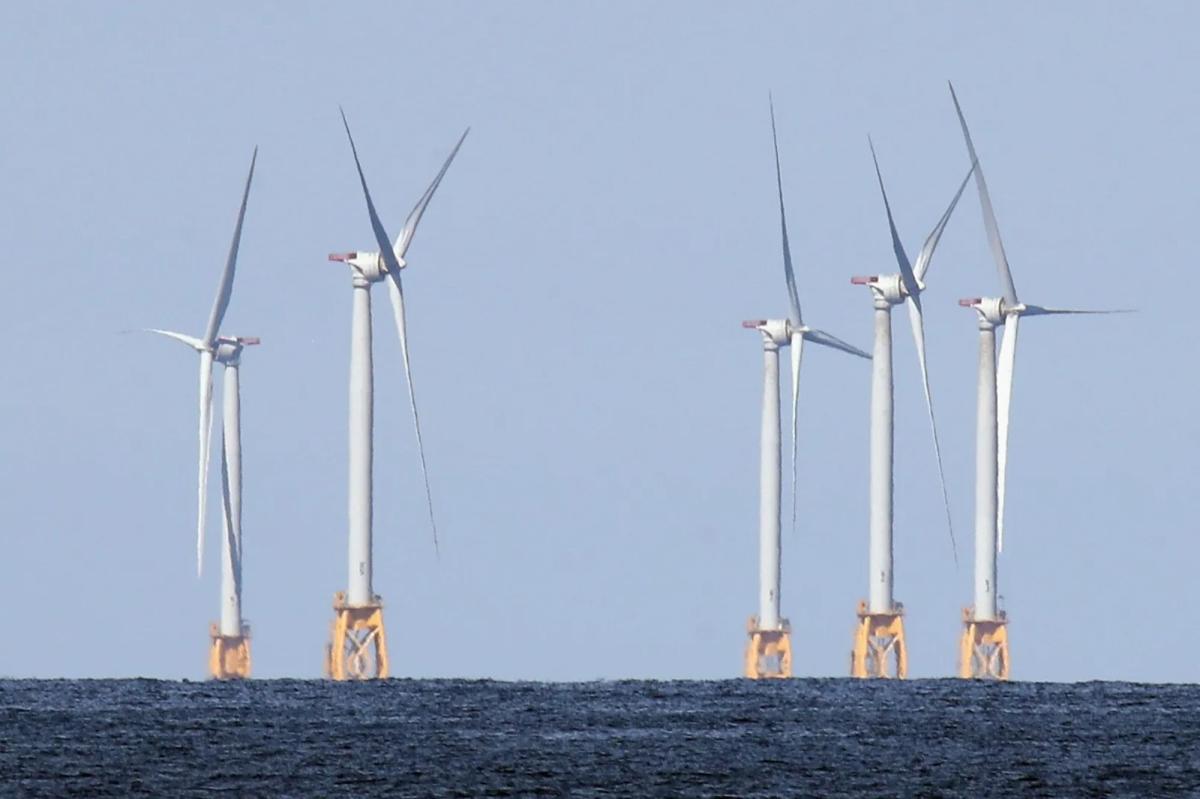
An outspoken global actor in the grand theater of climate policy, New York has long insisted the transition to green energy would be cheap and straightforward.
For years, state leaders have promised aggressive emissions cuts at little cost.
Now, reality is crashing the party, and the state has been caught out in that fib.
Facing a court-imposed Friday deadline, New York has effectively conceded that its green goals would pose “costs consumers simply cannot bear.”
This admission exposes the gaps between lofty ambition and the harsh economic realities of rapid decarbonization.
The state’s 2019 climate legislation made grand, sweeping promises. It demanded 70% renewable electricity and a 40% emissions cut from 1990 levels by 2030, escalating to a zero-emission power system by 2040 and net zero economy-wide by 2050.
Legislators, intoxicated by the myth that wind and solar are the “cheapest” energy sources, ignored warnings from analysts who pointed out that these intermittent power sources are only potentially cheap when the sun is shining or the wind is blowing.
All other times, the costs escalate as you need an entire backup power system for reliability.
The utopian law was passed, with the tough part — actual regulations — deferred until later, when presumably magical tech would materialize.
As writer Francis Menton — who has closely followed this on his Manhattan Contrarian blog — has pointed out, six years into the 11 available to meet the 2030 mandate, New York gets less electricity from zero-carbon sources than it did in 2019.
Environmental groups sued in March, dragging the state into court to enforce laws to achieve those targets.
The Supreme Court ruled in October, ordering compliance by February 6, 2026.
If the Department of Environmental Conservation blows past this deadline without taking action, the court could hold it in contempt, imposing fines or other penalties to force costly compliance.
New York’s defense in court bears outlining: a humiliating August 2025 letter admitting the whole scheme is “infeasible“ and “unaffordable for consumers.”
Get opinions and commentary from our columnists
Subscribe to our daily Post Opinion newsletter!
Thanks for signing up!
Even the state’s most aggressive scenario — piling on unproven tech and policies — would fall short of the 2030 goal, while jacking up energy-system costs by at least 35% in 2040, adding a whopping $42 billion that year alone.
That’s a regressive tax on every New Yorker, hitting the poor hardest with skyrocketing bills for heat, light and transportation.
New York admits that the costs of the grand climate promises are “insurmountable.”
Its draft Energy Plan, a bloated 2025 tome hundreds of pages long, offers no roadmap, just vague aspirations.
Achieving net zero? Forget it. The state’s own plan confesses that even $42 billion extra won’t suffice, as green-energy sources require vast overbuilds, batteries that don’t scale affordably and backups that undermine the “green” label.
Self-interested supporters and deluded green-energy boosters have long peddled fantasies of dirt-cheap renewables, but real-world data tells a different story: Germany’s Energiewende has doubled electricity prices with minimal emissions cuts, leading to the country’s own chancellor to declare that Germany is attempting the world’s most expensive energy transition.
Spain’s blackouts, meanwhile, expose solar’s frailty.
Globally, the best economic analysis shows going net zero costs far more than its climate benefits.
The pain hits now whereas the benefits are diffuse and far into the future.
In this century, such poor policies deliver less than 17 cents in benefits for every dollar spent.
Of course, emission reductions by New York, which emits less than 0.4% of global greenhouse gasses, will have no measurable impact on the planet’s temperature.
But this is true even for the entire rich world — if it actually went net zero by 2050, it would still cause only a miniscule temperature reduction of less than 0.2°F by 2100.
This is because the vast majority of emissions in the rest of the century will come from places like China, India, Indonesia, Brazil and Africa, where poverty reduction is a much more urgent challenge.
The real solution to climate change will only come from making green energy truly cheaper and more efficient, through innovation.
New York could use a part of its $42 billion to fund meaningful research into innovations like advanced nuclear, carbon capture, much cheaper batteries or geoengineering.
Most of it could be put back in the pockets of taxpayers.
But the real problem for New Yorkers is there’s no graceful exit.
The court dismissed the state’s pleas, insisting it must issue rules and let politicians handle the fallout.
New York faces an impossible choice: ram through ruinous regulations that would trigger economic exodus and risk blackouts, or beg the Legislature for delays amid howls from climate-fixated activists.
None of this is unique to lawmakers in Albany. It is the green-energy trap repeated the world over.
Politicians have chased the utopian vision of net zero with religious zeal, but when the bill arrives, voters revolt.
Just look at Europe’s carbon taxes that sparked yellow-vest riots and stunning U-turns.
New York’s predicament should be a wake-up call to abandon these mandates and redirect resources to citizens and high-impact green R&D.
In the end, climate policy must pass a simple test: Does it deliver more good than harm?
New York’s legislation flunks spectacularly, wasting a fortune on virtue-signaling gestures.
Bjorn Lomborg is president of the Copenhagen Consensus, visiting fellow at Stanford University’s Hoover Institution and author of “False Alarm” and “Best Things First.”