
Home » America Travel News » Boston Joins New York City, Chicago, Detroit, Pittsburgh, Albany and More US Cities to Embrace Arctic Polar Blast with Brutal Freeze, Now American Tourism Industry is Melting, Everything You Need To Know How Cold Snap Killing Travel Sector
Published on
February 5, 2026
By: Tuhin Sarkar
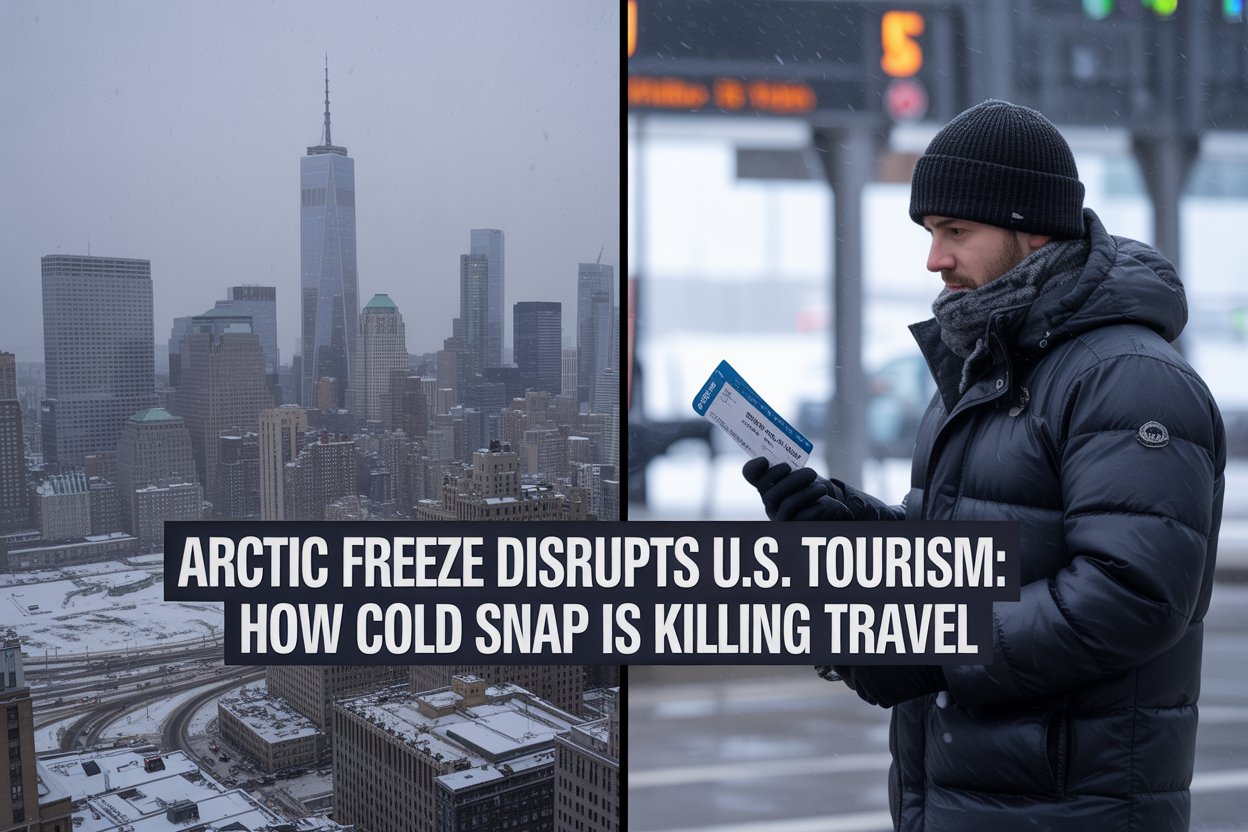
As the Arctic polar blast strikes hard across the United States, Boston, along with New York City, Chicago, Detroit, Pittsburgh, and Albany, is now facing a brutal freeze that has turned the country’s tourism industry into an ice-cold disaster. This extreme cold snap isn’t just a temporary inconvenience – it’s a travel nightmare, affecting millions and threatening to freeze out tourism for good. The Arctic cold has already caused flight cancellations, hotel cancellations, and hazardous travel conditions in major cities across the Northeast and beyond.
The American tourism industry that was slowly recovering now faces a crippling cold front. But the Arctic blast is more than just a freeze on travel; it’s a devastating blow to an industry that can’t seem to catch a break. As tourism in these cities comes to a halt, visitors are stranded, and hotels, airlines, and tour operators scramble to handle the fallout. The polar blast is putting America’s tourism sector on life support, and it’s not clear if it will thaw in time for a rebound. Stay tuned as we break down how this cold snap is melting the travel sector and reshaping the future of U.S. tourism.
As the Northeast braces for an unprecedented weekend of extreme cold and snow, millions of residents and travelers will face some of the most brutal winter conditions seen in years. This weekend promises temperatures colder than anything experienced so far this winter, with snow and severe freeze-ups hitting the region like a hammer, accompanied by winds gusting at up to 40mph, creating a severe risk of frostbite. For over 100 million people, this Arctic onslaught will bring dangerous wind chills and a nightmare for anyone venturing outside.
The Arctic Front: A Polar Onslaught Arrives with Fury
From Friday night through Sunday, the Arctic air surging south from Canada will strike the Northeast with an icy vengeance. This isn’t just a cold spell; it’s a brutal freeze that will cause life-threatening conditions. The Great Lakes will feel the full force of the cold, as snow, slush, and freezing rain transition to powdery snowflakes and dangerous ice. Temperatures plummeting to -10°F or lower in many areas, the winds will amplify the cold, leaving residents feeling as though it’s 25°F below zero.
Advertisement
Advertisement
The snowstorm’s fury will rapidly freeze roads and bring cities to a standstill, from the Midwest all the way to the Northeast, where delays, cancellations, and hazardous road conditions will cause widespread chaos for travelers. This is not a minor cold front; this is a full-on Arctic assault.
Wintry Chaos Ahead: Snow, Wind, and Ice Will Disrupt Travel
As we move into the weekend, travelers should prepare for the worst. Snow showers will cover everything from the Great Lakes to the Northeast, with freezing rain threatening to make roads impassable. The snowfall will be intense and fast-moving, especially in New England, where 4-5 inches may accumulate on Saturday. Airports across the region are already bracing for flight cancellations and delays as this storm disrupts air travel like never before.
Advertisement
Advertisement
Detroit, New York City, and Boston will see heavy snow and an unforgiving freeze, leaving drivers and travelers stranded for hours. The intense snow will turn roads into icy death traps, and with temperatures plummeting, the worst part of the weekend will come during the early hours when the snow and winds hit hardest. For anyone planning to drive or fly this weekend, prepare for a nightmare.United, American, SkyWest, Alaska, Endeavor, PSA, and Other Airlines Face 2576 Delays and 84 Flight Cancellations Across the US, Leaving Thousands of Travelers Stranded Across Charlotte, Anchorage, St Thomas, Dallas, San Juan, and Washington DC
Severe Wind Gusts and Bitter Cold Push the Limits of Endurance
The winds won’t just be fierce; they’ll be downright dangerous. With gusts up to 40mph, the wind chill will make temperatures feel like -25°F in some places. Hypothermia, frostbite, and dangerous cold injuries will become a real threat for those caught outside. Skiers, snowmobilers, and outdoor enthusiasts should brace for life-threatening cold. For anyone venturing outdoors, wearing multiple layers, gloves, hats, and warm boots is a must.
Advertisement
Advertisement
In New York City, a night on the town could easily lead to frostbite if you’re not properly bundled up. Boston, too, will be shivering through bitter winds and heavy snow. The RealFeel temperatures will make it feel like the dead of winter, even when the sun is out. For those who think they can brave the elements, the cold will feel like a brutal slap to the face.
Coldest Nights of the Year: Extreme Freeze Sets in Sunday Night
Saturday night into Sunday morning, the Northeast will hit its coldest temperatures of the season. New York City, which recorded its coldest night of the year just weeks ago at 9°F, will see temperatures dip into the single digits. Boston may also drop below 5°F, making for an unrelenting cold snap that only worsens overnight. By Sunday night, the Arctic freeze will grip the region, and many areas will see sub-zero temperatures.
People need to stay indoors as much as possible or risk exposure to life-threatening cold. Wind chills will freeze exposed skin in minutes, and prolonged exposure could cause severe injuries or worse. The Northeast is entering a deep freeze, and the danger is real.
The Impact: How the Cold Wave Will Disrupt Your Plans
The bitter cold isn’t just an inconvenience; it’s a major disruption to daily life. For many residents, freezing temperatures will lead to power outages, slippery sidewalks, and road closures. The snow will fall fast, turning every corner into a slippery ice rink. Travelers will face delays, airport chaos, and dangerous highway conditions. For some, it may take hours to even get out of their driveway.
As temperatures drop and the winds howl, prepare for the coldest weekend of winter to test even the most seasoned winter warriors. This is the kind of cold no one wants to face, and those who do will find themselves battling the worst the winter has to offer.
Why You Should Act Fast: Protect Your Family and Home From the Freeze
With temperatures like this, the risk of frostbite is higher than ever. Cold weather injuries will skyrocket this weekend, especially for those without proper clothing and shelter. Those with elderly relatives, neighbors, or pets need to take extra precautions to keep everyone safe. Ensure your heating system is working properly, check on vulnerable family members, and stay indoors as much as possible.
Winter preparation is essential before heading into the deep freeze. Stock up on supplies, and if you must travel, make sure you have an emergency kit, including blankets, extra clothing, and food. Be sure to check your car’s antifreeze, and be ready to face a weekend no one will forget.
US Tourism Struggles in January 2026: A Snapshot of Inbound Visitor Trends
As we begin 2026, tourism to the U.S. continues to face significant challenges. January is typically a month that sees a lull in international arrivals due to winter weather and post-holiday slowdowns, but this year, the international tourist market to the U.S. has been notably sluggish. Recent data highlights a decline in international arrivals, reflecting broader trends that have affected U.S. tourism for much of 2025. This report explores the challenges and outlook for the U.S. tourism sector, shedding light on visitor patterns, the current landscape, and future projections.
Declining International Arrivals: The Year Starts Slow
According to the National Travel and Tourism Office (NTTO), international visitor arrivals to the U.S. saw a decline for the eighth consecutive month in December 2025, and this trend has largely continued into January 2026. The most recent reports point to a drop of around 2.9% year-over-year for international travelers entering the U.S. by air, continuing a broader downward trajectory that started in mid-2025. These declines have raised questions about the long-term sustainability of inbound tourism as international travel patterns evolve.
In January 2026, official statistics are yet to be published, but industry experts are anticipating similar patterns of decline or, at best, stagnation in visitor numbers compared to the end of 2025. This slow start to the year has been attributed to several factors, including ongoing global travel disruptions, visa processing delays, and economic uncertainties, all of which have contributed to weaker demand for U.S. destinations.
The overseas visitation, which typically makes up a large portion of international tourism to the U.S., has also fallen short of expectations. While some regions have seen a resurgence in travel—particularly Asia, Europe, and parts of Latin America—the U.S. has been underperforming relative to other destinations. Overseas arrivals fell to 3.2 million in December 2025, signaling a continuing trend of stagnation despite efforts to bolster tourism. This has led to a heightened uncertainty in the U.S. tourism recovery in 2026.
Economic and Policy Factors Contributing to Declines
A key reason for the sluggishness in inbound tourism to the U.S. is economic factors affecting international travelers. Currency exchange rates continue to work against many visitors, with the strength of the U.S. dollar making it more expensive for international travelers to visit. This economic factor has hit European and Asian visitors particularly hard, as their currencies struggle to compete with the dollar, increasing travel costs for flights, accommodations, and daily expenses in the U.S.
Additionally, visa processing delays continue to hinder the flow of international visitors. While the U.S. has made efforts to streamline visa applications, bureaucratic delays have plagued many travelers seeking to visit the country. These issues are especially pertinent in key markets like China, India, and Brazil, where lengthy visa wait times have prevented many from making travel plans.
Beyond the economic and logistical barriers, global health concerns and political tensions have also contributed to fewer visitors to the U.S. Countries such as China, which saw large declines in outbound tourism, have particularly reduced their travel volumes due to internal economic and policy constraints. Similarly, visa restrictions and heightened border security measures have deterred travelers from regions that are traditionally large sources of tourism to the U.S.
Regional Impact: Where are U.S. Tourism Markets Struggling?
Canada and Mexico, which are the two largest sources of cross-border U.S. tourism, have shown significant declines in the past year. This has been attributed to multiple factors, including stronger domestic tourism markets in these regions, which are drawing more travelers to explore within their borders rather than venturing to the U.S. According to reports, Canadian visitation to the U.S. dropped by over 10% in late 2025, while Mexico also saw a reduction in traffic, primarily due to increasing costs and a shift in travel preferences within the North American market.
However, the impact on European visitors has been more subtle but significant. The U.S. has traditionally been a top destination for travelers from Germany, France, and the UK, but their numbers have been weaker recently. A combination of currency strength, political instability, and economic concerns in Europe has dampened enthusiasm for U.S. travel in these key regions. The 2025 slowdown from Europe was particularly notable in the fall months, as travel to North America showed signs of flatlining.
Slight Recovery Expected Later in 2026
Despite the current slow pace of inbound arrivals, there is hope for a rebound later in 2026. Projections from various tourism authorities, including the World Tourism Organization (UNWTO) and U.S. Travel Association, point to a gradual increase in international tourism to the U.S. as global travel markets begin to stabilize. The forecast for 2026 predicts that the U.S. will see a rise to around 85 million visitors, surpassing the 77 million in 2025, and moving closer to pre-pandemic levels.
The rebound in Asia-Pacific and South America tourism is expected to boost overall numbers as countries like India, Japan, and Brazil continue to expand their outbound travel markets. With direct flights from key cities in these regions, the U.S. will likely see more international tourists arriving, especially for leisure, events, and cultural experiences.
Brace for the Big Chill – The Coldest Weekend of Winter is Coming
This weekend will be one for the history books, as the Northeast faces its coldest weather of the season. With snow, freezing rain, and blistering winds creating dangerous conditions, travel disruptions, and life-threatening cold, it’s crucial to prepare yourself for what’s coming. Don’t underestimate the cold – this is a storm and freeze unlike anything the Northeast has faced this winter.
Impact of the Arctic Cold on U.S. Tourism in 2026: A Winter Nightmare for Travelers
In January 2026, the United States experienced one of the harshest Arctic cold waves in recent years, bringing severe winter weather to a vast portion of the country. The extreme cold front has caused significant disruptions in tourism and travel plans, leading to flight cancellations, disrupted hotel bookings, and a general sense of unease among visitors. This report delves into how the Arctic cold has affected tourism, why these disruptions matter, and what travelers and industry professionals need to know as the winter season continues.
Arctic Cold Wave Disrupts U.S. Travel and Tourism
The Arctic blast, which swept across the United States in January 2026, brought record-breaking cold temperatures and heavy snowfall to many regions, with more than 100 million people impacted. The storm hit particularly hard in the Northeast, Midwest, and Southeast, forcing travelers to alter their plans due to flight delays, transportation disruptions, and dangerous road conditions.
This major cold front originated from eastern Canada, funneling frigid air into the U.S. As a result, several cities, including New York, Boston, Chicago, and even Southern cities like Atlanta and Florida, were forced to deal with icy roads, snowstorms, and temperatures far colder than usual. The winter weather wreaked havoc on essential infrastructure, causing travel chaos across the country.
Flight Cancellations and Airport Disruptions: A Nightmare for Travelers
One of the most immediate and visible impacts of the Arctic cold wave on U.S. tourism was air travel disruptions. According to reports, more than 2,000 flights were canceled, and hundreds of others were delayed due to the snowstorm and freezing temperatures that paralyzed major U.S. airports, especially in the Northeast and Midwest. These disruptions caused miserable conditions for travelers who were already dealing with extreme cold temperatures.
Airports in New York City, Chicago, and Boston saw the most severe impacts, with JFK, Logan International, and O’Hare experiencing mass delays and long wait times. International tourists visiting the U.S. were particularly affected, with European, Asian, and Latin American travelers facing significant disruptions in their onward journeys due to the ripple effect caused by the U.S. winter storm.
The major disruptions were due to the combination of snow accumulation, dangerous ice on runways, and reduced visibility, all of which created unsafe conditions for flying. In addition, the low temperatures caused issues for aircraft, as the cold can freeze vital mechanical parts, requiring more time for maintenance and de-icing procedures.
Hotel and Accommodation Challenges Amid the Freeze
In addition to air travel disruptions, the Arctic cold wave had a significant impact on hotel and accommodation bookings. Hotels across the affected regions saw fewer guests due to road closures and unsafe travel conditions, particularly in cities like Chicago and Boston. Moreover, with power outages reported across several areas, including parts of New York City, many tourists were forced to cut their stays short or relocate to hotels in areas with more reliable electricity.
For those who did make it to their destinations, the extreme cold made it difficult to enjoy outdoor activities, a key selling point for many U.S. destinations in the winter. Ski resorts in the Northeast and Rockies saw mixed bookings, with some visitors choosing to cancel their trips due to poor weather conditions or the unexpectedly cold temperatures. Meanwhile, southern destinations, which usually enjoy milder winters, also faced cancellations as tourists anticipated snowfall in places like Florida and the Carolinas, which are typically not prepared for such weather.
Dangerous Road Conditions and Reduced Tourism Activity
While airports were severely affected by the cold wave, road travel was equally compromised. In cities like New York, Boston, and Chicago, snow and ice made driving treacherous, causing significant delays and accidents. The National Weather Service issued multiple warnings for travelers to avoid non-essential travel due to the extreme conditions.
These hazardous road conditions had a direct impact on local tourism. Popular winter destinations like ski resorts in Vermont, New Hampshire, and Colorado saw limited attendance, as many visitors stayed home due to the unsafe roads. Similarly, tourists hoping to visit city landmarks like Central Park in New York or the Liberty Bell in Philadelphia faced chilly outdoor conditions that cut short their sightseeing experience.
In areas where travel was necessary, tourists had to deal with long delays as road crews worked to clear highways. While some tourist destinations remained open, the weather caused diminished visitor numbers across major winter tourism markets.
Economic Losses for the U.S. Tourism Industry
The combined effects of flight cancellations, hotel disruptions, and decreased tourism activity have resulted in significant economic losses for the U.S. tourism industry. With hundreds of thousands of cancellations and delayed trips, the revenue losses for airlines, hotels, and other tourism-related services have been substantial. The National Travel and Tourism Office (NTTO) indicated that the financial toll could be in the billions as tourists modify or cancel plans due to the extreme weather.
The snowstorms and power outages are estimated to have cost the hospitality industry millions of dollars in lost revenue from cancellations, decreased room bookings, and fewer travelers at popular tourist spots. With the winter season typically being a high point for tourism in the U.S., the Arctic cold and related disruptions have undermined the expected winter tourism recovery.
Tourist Sentiment and Future Trends
The disruptions caused by the Arctic cold wave have caused some long-term concerns in the U.S. tourism industry, especially in light of global warming and extreme weather events becoming more common. Experts suggest that tourists might increasingly reconsider destinations that are prone to such unpredictable and dangerous weather conditions.
Travel agencies and tour operators are already discussing the implications of these extreme events for future bookings, with some wondering whether snowstorm-prone regions will see a decline in interest as people look for more predictable vacation spots. Other experts predict a shift towards warmer destinations during the winter months, which may force U.S. winter tourism hubs to rethink their marketing strategies and the types of activities they offer to travelers.
The Arctic Cold Wave Shakes U.S. Tourism
The January 2026 Arctic cold wave has had a profound impact on U.S. tourism, resulting in widespread travel disruptions, hotel cancellations, and diminished activity in popular tourist destinations. As the winter progresses, the tourism industry will need to adapt to the increasingly frequent extreme weather events that impact travel. Looking forward, it’s likely that we will see a shift in tourism patterns in the U.S., with tourists becoming more cautious about visiting destinations that face frequent winter disruptions. As the tourism industry recovers from the immediate losses, it will also need to consider long-term strategies to manage these risks and enhance the overall visitor experience during winter months.
Are you ready for the Big Chill? Brace yourself for the brutal cold, and stay safe this weekend.
