
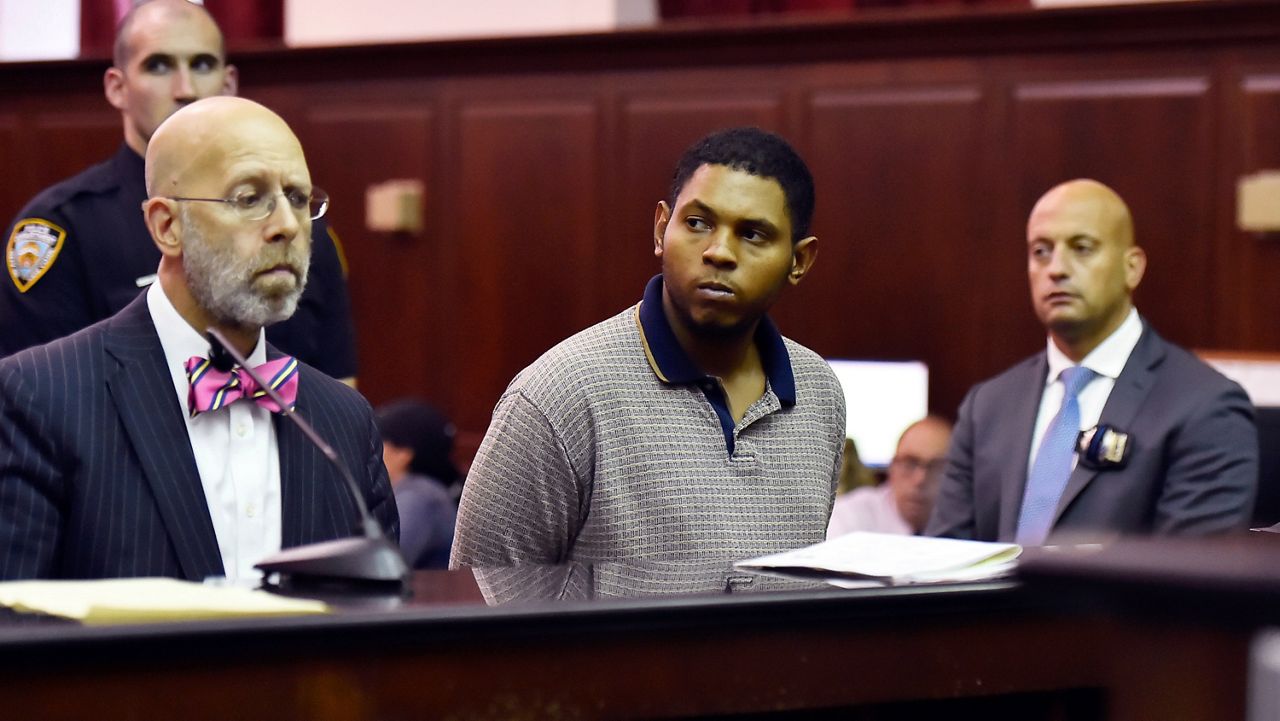
It’s been more than six years since Randy Santos, a homeless man, was first accused of going on a rampage in Chinatown and attacking other homeless people with a metal bar, killing four of them.
Santos has pleaded not guilty to charges including first-degree murder in the October 2019 deaths of Florencio Moran, Nazario Vásquez Villegas, Anthony Manson and Chuen Kok.
What You Need To Know
Randy Santos is accused of going on a rampage in Chinatown in October 2019 and attacking other homeless people with a metal bar, killing four of them
Santos has pleaded not guilty to charges including first-degree murder in the deaths of Florencio Moran, Nazario Vásquez Villegas, Anthony Manson and Chuen Kok
Prosecutors say evidence shows Santos knew exactly what he was doing when he attacked the men, but his attorneys are asserting the insanity defense
He also faces attempted murder charges for assaults that left two other men severely injured.
Prosecutors say evidence shows Santos knew exactly what he was doing when he attacked the men. They say he went on a “trial run” when he attacked another homeless man in a similar manner the month prior. The prosecution has now rested its case.
But his attorney from the Legal Aid Society argued in court last week that Santos had been diagnosed with schizophrenia, and he was hearing voices in his head telling him he needed to kill 40 people or he would die too.
Santos, who is now 31, is asserting the insanity defense. His lawyers argued that he is not criminally responsible because of his mental illness.
Santos’ brother, Anthony Fernandez, took the stand Wednesday and told jurors that his brother had asked him for a knife the night of the attacks.
Fernandez described a “heavy feeling and dark energy I’ve never ever felt being around my brother” that night.
He said he was concerned about his brother, and only gave him a butter knife, because it was blunt.
He also said Santos told him horror movie killers Freddy Kruger and Jason told him to commit the acts.
Santos’ defense attorneys next called to the stand a clinical forensic psychologist who had evaluated Santos following the attacks and diagnosed him with cannabis misuse disorder and schizophrenia with auditory hallucinations.
Dr. Virginia Barber-Rioja testified that Santos did know he was killing the victims, but that his “irrational thinking made it impossible for him to understand the difference between what was right or wrong.”
If his attorneys succeed with the insanity defense, Santos could be sent to a psychiatric treatment facility instead of prison.
But if the jury rejects that defense, he could be sentenced to life in prison.