
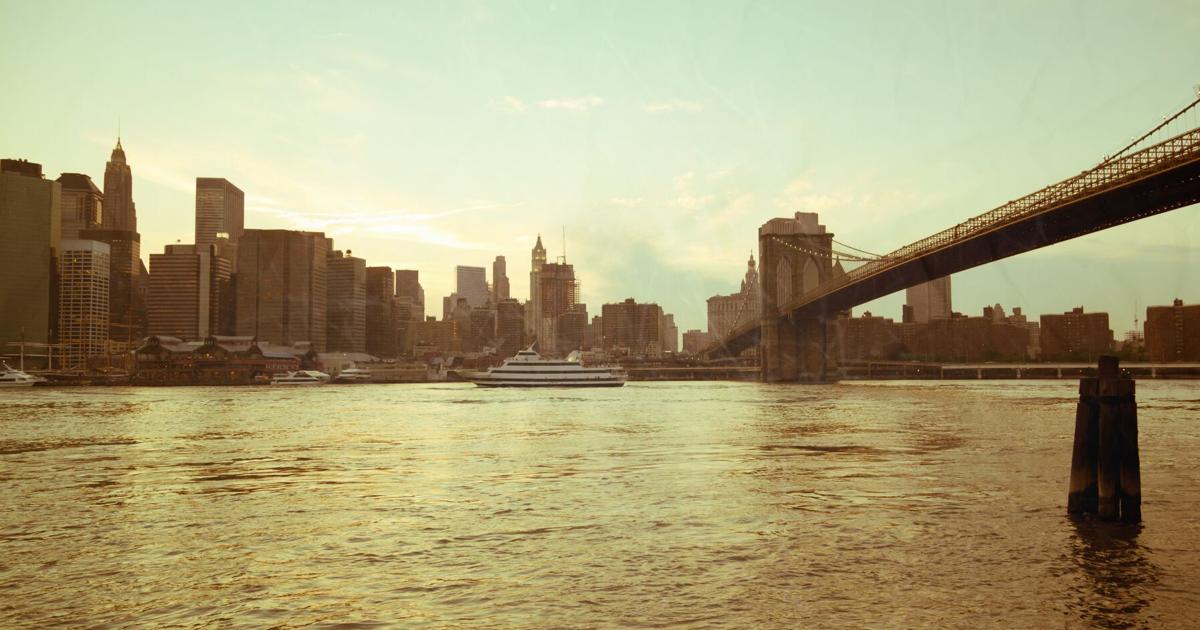
When I was 18, my daddy put me on a Trailways bus headed, eventually, for New York City, 1,000 miles eastward. After a four-year layover at a nearby college, I continued the journey with a job offer in my pocket from a big company in a shiny Manhattan skyscraper.
That is when my troubles began. I spent the next quarter-century accumulating anxieties and frustrations while hemorrhaging self-confidence and money. I am, as a result, the perfect candidate to write a New York memoir.
That impulse resurfaced the other day when I read about the Gotham Book Prize, established a few years back by some rich and literate locals to reward the year’s best book, fiction or non-, about New York City. The winner will be announced next month. The prize is $50,000.
The New York memoir is a hallowed literary genre practiced chiefly by late-career authors but also actors, socialites and other provincial parvenus who journey to Gotham with, as the transplanted Californian John Leonard once wrote, “ambition and a few waltz steps.” Like F. Scott Fitzgerald, E.B. White, James Baldwin, Joan Didion, Patti Smith and other now-famous New York memoirists, I had those qualities in abundance. And yet, my own heldenfahrt (heroic journey) turned out to be more fahrt than helden.
I arrived in NYC one spring day, dressed for work and brimming with hope. All new arrivals used to brim with the stuff, and puddles of it collected on the cratered pavements. I splashed my way toward the apartment of a Columbia University student rumored to have a spare bedroom to rent.
I found the campus ringed by police in riot gear. After talking my way past them, I eventually located my future landlord in the student union building. Just as I entered, however, the doors slammed shut and a bearded student jumped on a table to declare: “We’ve locked ourselves in, and we won’t leave until the university agrees to our demands.”
I spent the rest of the day learning about the evils of capitalism and the Vietnam War. Noticing that I was the only person among them in a suit and tie, my new friends propelled me to the front door as the police went to work on it with a battering ram. “You look respectable,” I was told, “so maybe they won’t start shooting.”
My future landlord eventually dragged me off, and we jumped through an unguarded window to safety. I landed on an ornamental bush that shredded my suit, and we both headed back to his apartment for a drink.
The extra bedroom was already taken, alas, but for the same money I could rent the living room couch. This being New York, where spare beds were as scarce as parking spaces, I agreed and went to fetch my belongings. This being New York, they had been liberated from my car by the anti-capitalist who pried open the trunk.
I was struck by the familiarity of my new surroundings. Without ever having visited, I knew the look and location of Rockefeller Center, the Chrysler Building, Carnegie Hall and Zabar’s, the famed deli. I realized that I had seen them in the flickering images I grew up with on the prairie. Back then, nearly all network TV was produced in New York City. It was the capital of my dreams because dreams are manufactured there.
That was scant comfort as I endured nights of police sirens and car alarms, days of garbage collectors’ and bus drivers’ strikes, overpriced restaurants, snarling salesclerks and haughty waiters. Also, there was the thrill of criminality: My car was again broken into, my wallet taken at gunpoint and my wife advised by a friendly neighborhood cop to stay in at night or get busted for prostitution. Then there were soaring rents, drug-needle-paved sidewalks and the scent of vacant buildings torched by their owners.
This was, after all, the era when New York City was going bankrupt and bonkers. I saw “Fort Apache, the Bronx,” the iconic 1981 film with Paul Newman and Ed Asner about a police station in a precinct so dangerous that its officers were loath to venture outdoors. I thought it was a documentary.
There were benefits, too. I could boast to friends back home that New York was bursting with first-rate theater, music, art and gourmet eateries, even though I couldn’t afford any of that. Besides, I was working day and night, lurching home in spavined taxis as dawn’s light tinted the skyscrapers. That sight inspired Scott Fitzgerald to observe: “New York had all the iridescence of the beginning of the world.”
It seemed more like the end, though on those iridescent rides home I grasped the city’s hidden secret: Everybody works hard to afford a lifestyle they can never enjoy. The celebrity-studded parties you read about? Staged by publicists. The raucous literary soirees recounted in New York memoirs? Grumpy writer’s block victims arguing over cheap wine about their favorite topic: real estate.
Nonetheless, since this was the globe’s entertainment capital, I met celebrities by the limo-load. I lunched with Sylvester Stallone and supped with Patrick Stewart, though they were at other tables. Rupert Murdoch’s and Donald Trump’s kids attended the same elementary school as mine did, though the two men never set foot there.
After many years, New York’s sensory overload had taken its toll on my nerves and values. Offered a transfer to Hong Kong, I hesitated for a few seconds before assenting. It was hard to give up New York, but I’d paid my dues, proved that I had what it takes. I soon discovered that Hong Kong was perhaps the only city even more noisy, expensive and competitive than New York.
I miss my gritty Golconda, which today is much tidier but retains its intimidating allure. Years after leaving the city, my wife and I were teaching at a university in Beijing. One day her students, who had never left China (or, until lately, their rural villages) asked where in America we lived. New York City, she said with a sigh of nostalgia. They persisted: Where in New York? She gave them our old address, whereupon they shouted in unison: “That’s near Zabar’s!”
Her students knew the location, they explained, from growing up glued to “Gossip Girls” on TV. New York dreams never die.