

For decades, we’ve treated urban pollution as an unavoidable price of doing business. But what if that doesn’t have to be the case?
Good news, it doesn’t. Science has been steadily suggesting there are better ways to run our cities; and, in some cities, policy is starting to follow.
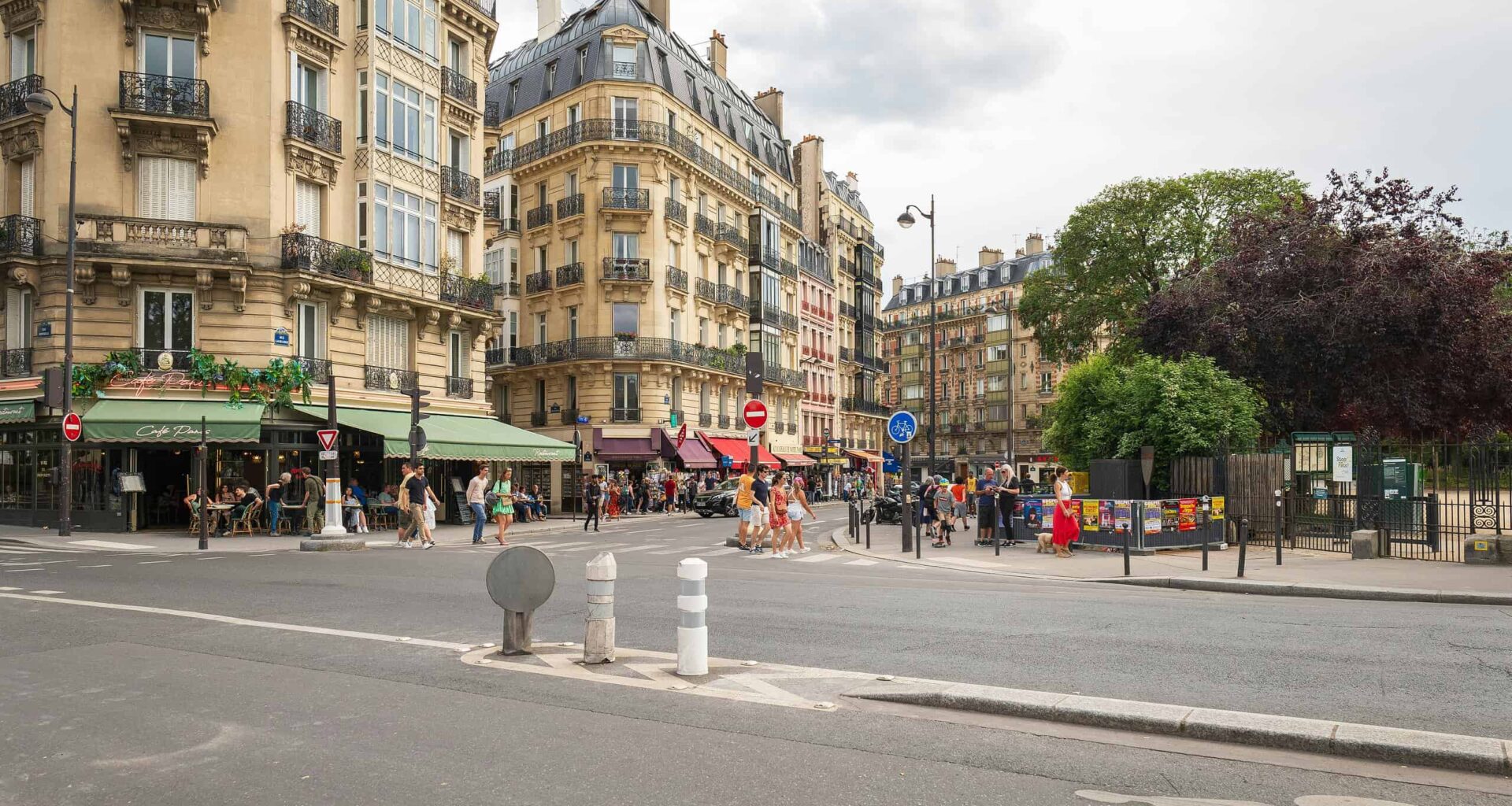
Starting in the early 2000s, Paris City Hall began focusing on making the city more livable. They did this in multiple ways: systematically narrowing streets, widening bike lanes, and rolling out the “Crit’Air” sticker system to ban the dirtiest vehicles. Over the past few years, they’ve accelerated these efforts, and the data shows the approach worked.
In 2019, heat maps of nitrogen dioxide (NO2) — a gas that inflames the linings of the lungs and is a hallmark of diesel exhaust — showed a city struggling to breathe. The map was a spiderweb of crimson veins, with pollution concentrations exceeding safe limits in much of the city. The same was true for particulate matter and other pollutants.
Fast forward to the 2024 maps, the most recent yearly data available, and the difference is striking.
 Maps from Airparif showing the air quality improvement. Similar pollutants show similar patterns of reduction.
The angry red blotches have retreated, leaving behind only the major arteries as heavily polluted areas. Nitrogen dioxide levels have plummeted by roughly 50% over twenty years. Fine particulate matter (PM2.5) is down 55 percent since 2005.
Paris proved that a megacity could function — and thrive — without choking on its own exhaust. But critics always had a rebuttal: “That’s Europe. It wouldn’t work in the car-obsessed United States.”
Now, the first data from New York City’s ambitious congestion tax directly contradicts that idea.
×
Thank you! One more thing…
Please check your inbox and confirm your subscription.
January 5, 2025
While Paris chipped away at pollution for two decades, New York City opted for a sledgehammer.
On the cold morning of January 5, the city launched the nation’s first cordon-based congestion pricing program, charging drivers to enter the “Congestion Relief Zone” (CRZ) below 60th Street.
Naturally, the skeptics howled. Opponents predicted economic ruin, “ghost town” streets, and pollution simply moving to the Bronx or Queens.
One year later, the data has silenced the critics.
A study published in npj Clean Air analyzed data from 42 monitoring stations across the metropolitan area. The findings are clear: in just the first six months, levels of PM2.5 inside the Manhattan toll zone dropped by 22% compared to what they would have been without the policy.
A 22% drop in half a year is massive. It took Paris (or London) years to achieve similar gains.
The results are robust and reliable. The researchers used “counterfactual” modeling — essentially building a parallel universe New York where the tolls didn’t exist — to prove that the clean air was a direct result of the policy.
The researchers also looked at the displacement aspect — the idea that if you stop cars from entering Manhattan, they will just pile up in nearby neighborhoods and choke vulnerable communities with more exhaust. This didn’t seem to be the case.
 Image credits: Hardik Panya.
The study found that Manhattan saw the biggest drop (-3.05 µg/m³), the other four boroughs saw a 1.07 µg/m³ decline in soot. Even the suburbs in the wider metro area saw the air clear by 0.70 µg/m³.
But of course, the biggest critiques of this tax weren’t environmental; they were about the money. Good news once again.
Business Is Booming
The “doom loop” narrative collapsed faster than the pollution levels.
Governor Hochul’s report reads like a victory lap for urban vitality. Far from becoming a wasteland, Manhattan’s office leasing jumped 9.2% in the third quarter of 2025. Retail activity is up. Sales tax receipts rose 6.3%. There’s no sign of economic activity shutting down.
More importantly, the city is adapting in a healthy way. Buses in the congestion zone are 2.3% faster on average. That may not sound like much, but it’s something. If you’re spending an hour going to work and another one back home, that gives an extra hour, for millions of commuters.
Subway trips are up 9%, and the money collected (over $518 million in net revenue) is being funneled directly into the veins of the city, funding $15 billion in transit upgrades like the Second Avenue Subway extension. These are healthy infrastructure investments that will further spill over to the population.
We are also seeing a safety dividend. Clearer streets are safer streets. Traffic crashes are down 7%, and cyclist fatalities in the zone dropped from 23 to 20.
The Cost of Inaction

A previous Harvard study found that car pollution in New York costs the city roughly 1,400 premature deaths every year and billions of dollars in health costs every year. All that is expected to go down significantly in the long run as well.
It’s only been a year since the NYC congestion tax came into force, and the study has another piece of good news: the benefits seem to be growing over time. As drivers adapt (switching to public transit or other options), the city’s lungs are improving more and more. This is also what we’re seeing in cities like Paris.
A 2022 health impact assessment estimated that the most stringent phase of a low-emissions zone in Paris could prevent approximately 810 premature adult deaths and 3,200 cases of childhood asthma annually. In London, which also introduced a congestion tax comparable to NYC’s, there was 6.8% drop in general health problems and a 10.2% decrease in respiratory issues translating to massive healthcare savings.
What we’ve seen over the past decade in Paris and what we’re starting to see in New York is a picture of a possible future. We have the experimental evidence that well-implemented congestion taxes can reduce traffic, improve health, and even saves lives.
The technology exists. The policy works. The only remaining variable is political courage. Other cities, from Los Angeles to Mumbai, would be wise to take note.