
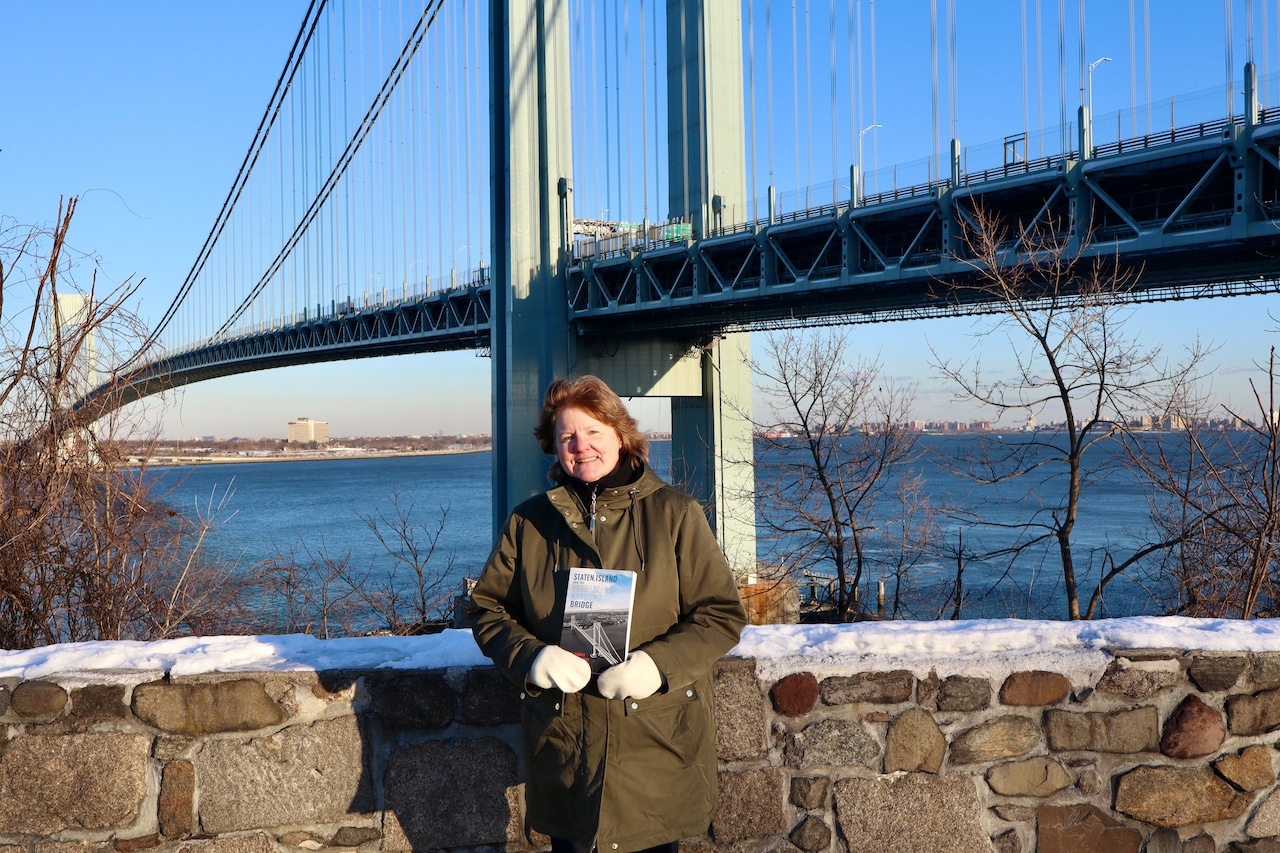
While the saying you can’t stop progress may be true, you do have to plan for it.
And when one doesn’t look ahead when planning a major project, such as building a colossal bridge that would finally connect Staten Island and Brooklyn, well, a bit of chaos has to be expected.
That’s the idea behind long-time resident Patricia M. Salmon’s latest book, “Staten Island and the Verrazzano-Narrows Bridge: Chaos Comes to a Community” (The History Press). The book, which was released on Jan. 21, highlights the host of issues that arose when the bridge opened on Nov. 21, 1964 and in the years that followed.
Salmon remembers all too well how Merrill Avenue, the block she grew up on in Bulls Head, transformed after the Verrazzano-Narrows Bridge was built.
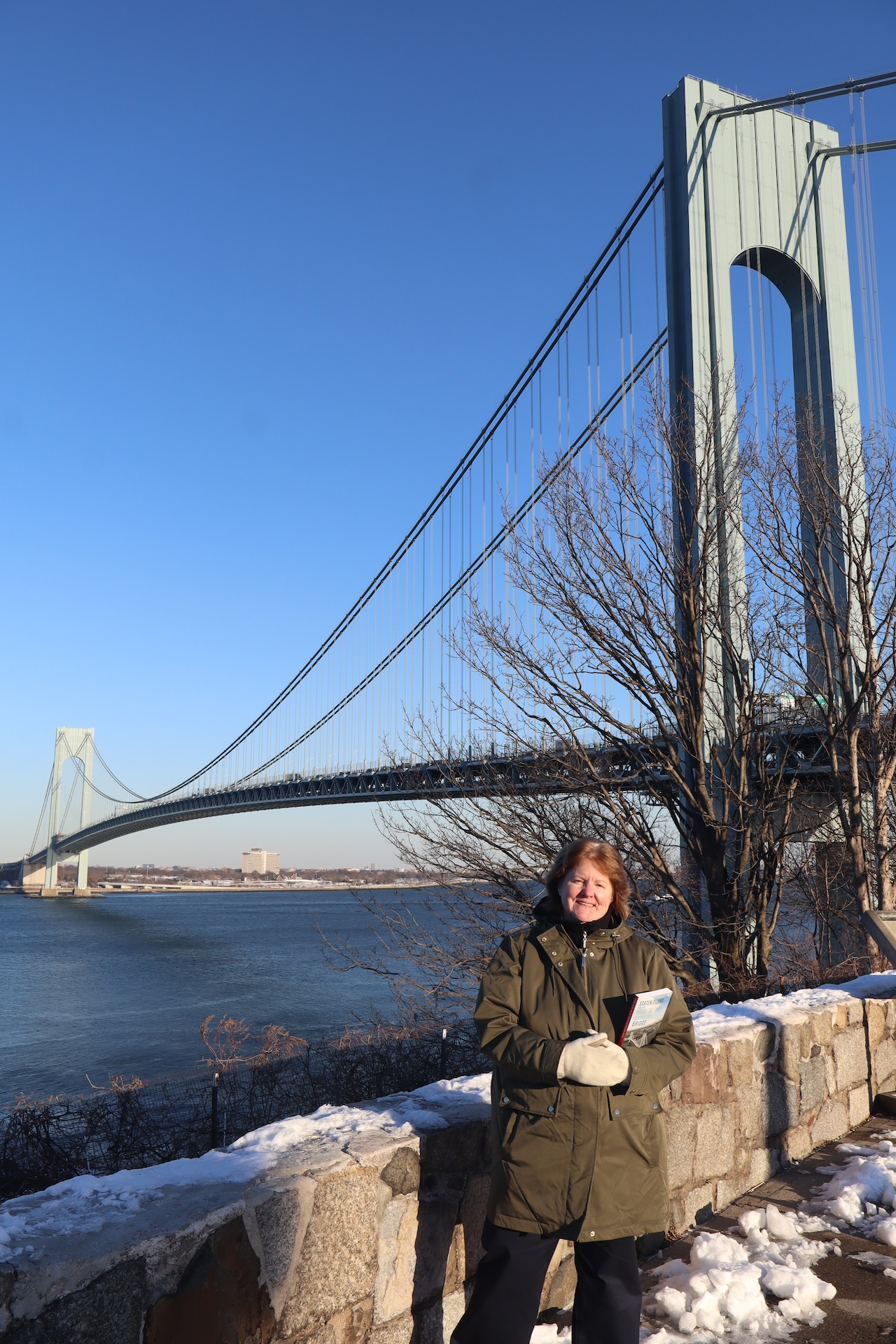 Pat Salmon (Photo / Claire Keag)Third-Party-Submitted
“We went from being in the sticks to being in modern suburbia in a very short period of time,” said Salmon, who moved with her family at the age of 2 to Staten Island.
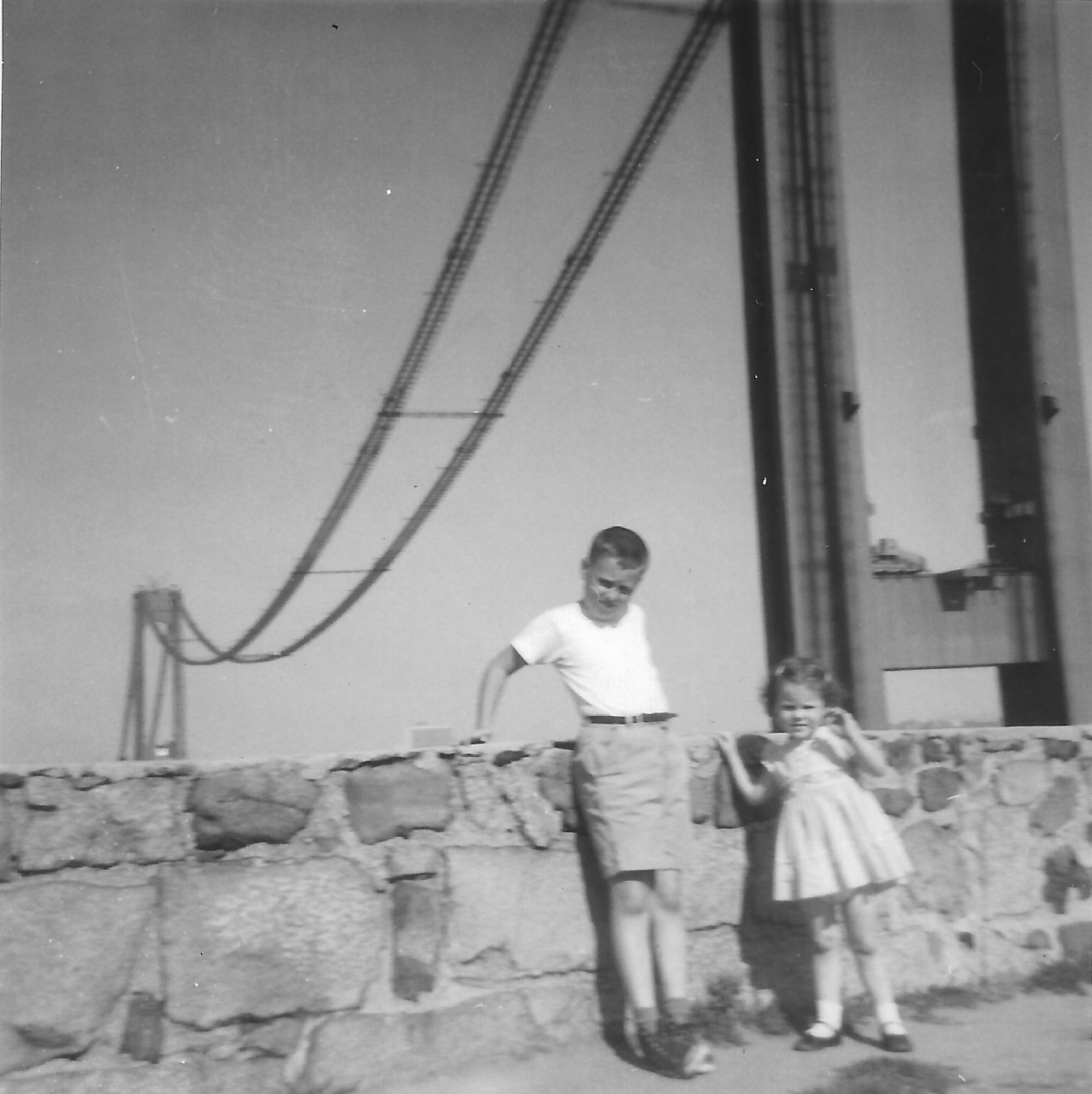 The late Frank Salmon with his sister, patricia Salmon, during construction of the bridge in 1963. (Courtesy/Pat Salmon)Third-Party-Submitted
Her earliest memories are of “horses being ridden . . . and farms around us” — something her father, who had grown up in tenements in Brooklyn, had loved about the borough. Salmon recalled how Merrill Avenue was a dirt road when it reached South Avenue.
A few short years later, that landscape completely changed.
“I remember lumber trucks and cement mixers going up and down the streets because they were building colonies,” said the longtime historian. “It was a free-for-all. Nobody considered that the roads weren’t able to handle this kind of population boom.”
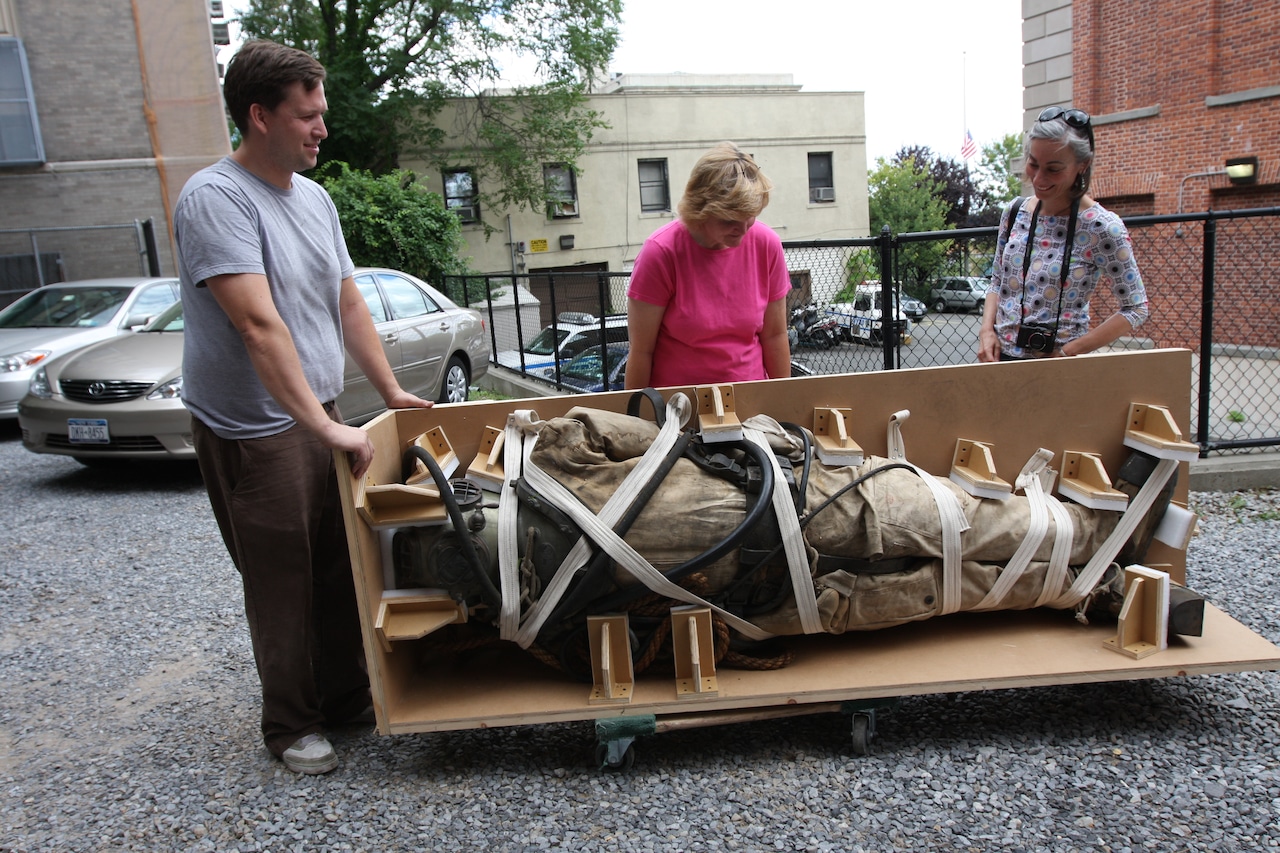 The Staten Island Museum is sending their sea diver man away for restoration….l-r- casper hargreaves (prj manager for surround art) as Pat Salmon and lenora Paglia (art conservationist simuseum) say good bye to the diver man. Staten Island AdvanceStaten Island Advance
The population surge led to a rise in traffic, along with overcrowded schools and other issues that went hand in hand with the fast-paced development.
“There was no sewer system for the most part,” Salmon said, adding that they (builders) were putting septic tanks in and there simply wasn’t enough room for all of the septic tanks needed.
While the bridge may have put a strain on Staten Island infrastructure, it helped to advance the borough’s grassroots movement, as residents stepped up to protect its open spaces.
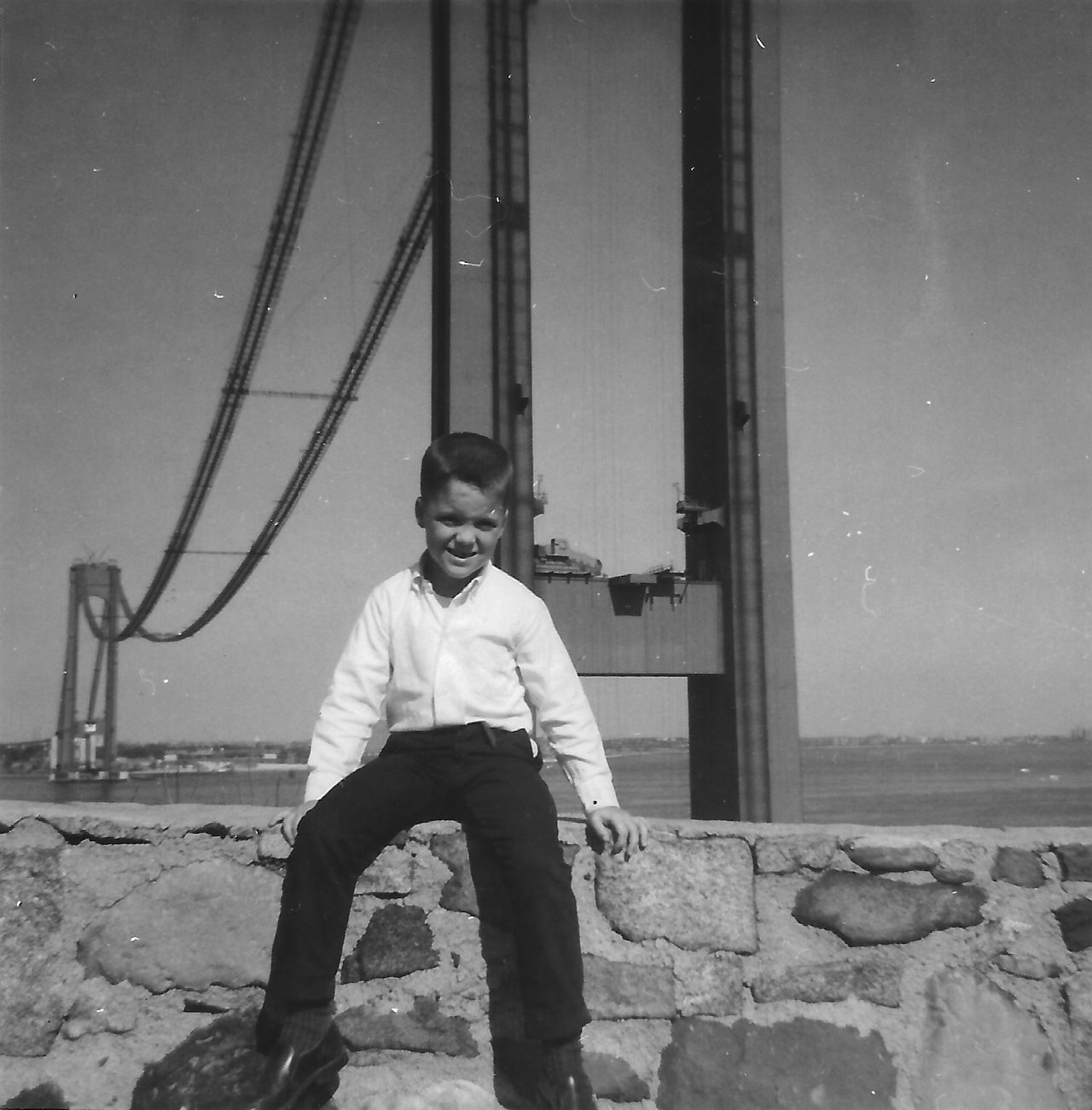 Pat’s brother, James P. Salmon, in 1963. (Courtesy/Pat Salmon)Third-Party-Submitted
“Community groups and civic groups really sprang up in the 1960s . . . They were very vocal about what was wrong and what needed to be done,” said Salmon.
Groups like the Staten Island Greenbelt Natural Areas League (S.I.G.N.A.L.) formed to block the expressway from cutting through the Greenbelt. The momentum continued and more groups continued to preserve open spaces, including the Protectors of Pine Oak Woods, who incorporated in 1975 to pursue Environmental Bond Act funds and establish state parks.
The hard work of these groups, Salmon noted, are the “success stories” of the bridge.
“They preserved so much land and now there’s acres and acres of land where people can go and they can do everything from bird watching to bicycling to nature study.”
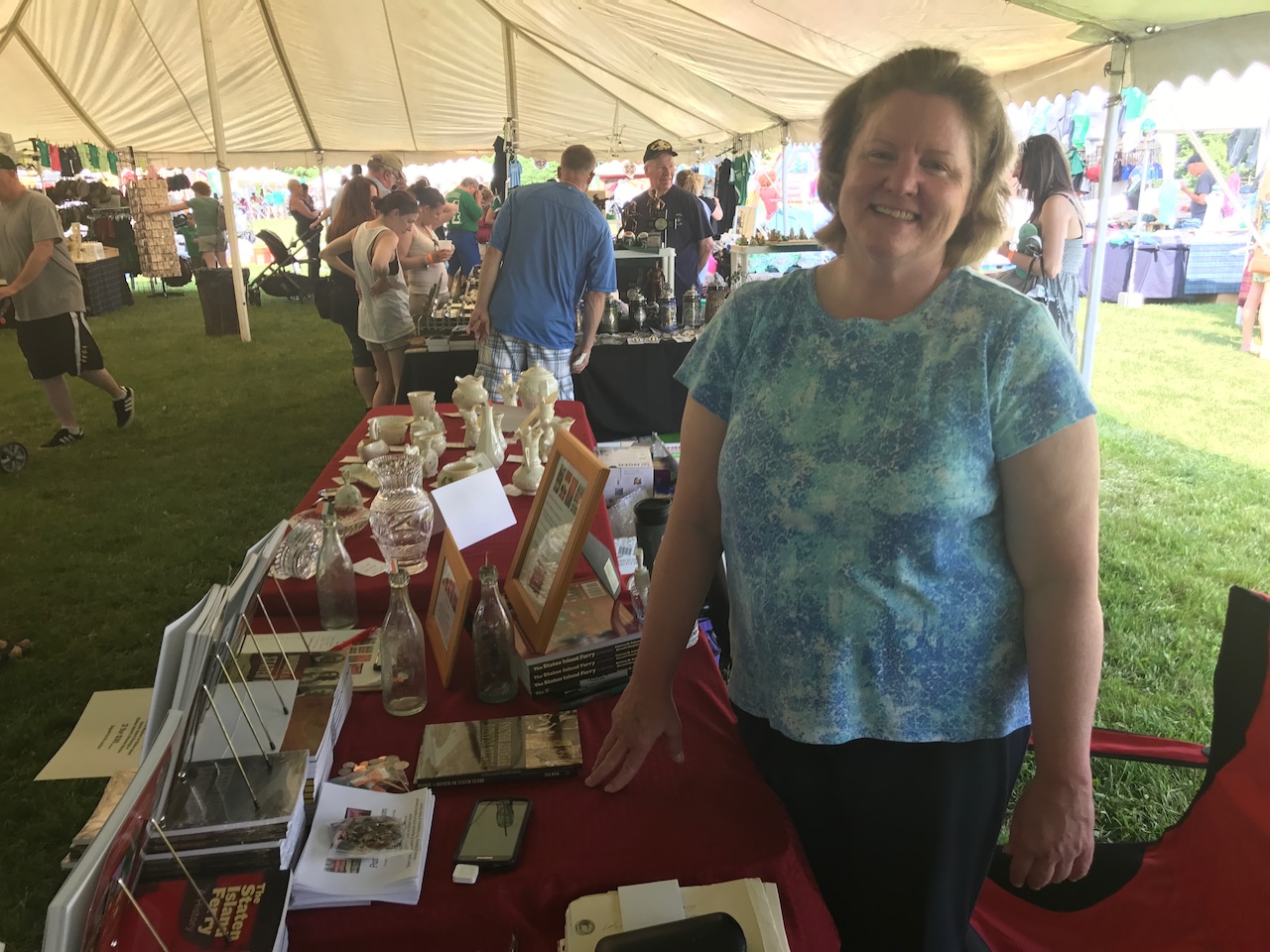 Pat Salmon a the 19th annual Columcille Cultural Center’s Staten Ireland Irish Festival at Mount Loretto, Saturday, June 10, 2017. (Staten Island Advance/Pamela Silvestri) Staff-Shot
When talking to Salmon, it’s easy to see her extensive knowledge of local history has been a lifelong journey. That journey began, she recalls, as a young girl exploring the Port Richmond Library, where she found Staten Island and Its People: A History by Charles W. Leng and William T. Davis. She was thrilled to come across historical information about the Merrell family whom her block, Merrill Avenue (though spelled slightly different), was named after.
“The Merrell Family came from England in the 1700s,” she said.”Their property extended from Richmond Avenue to the Arthur Kill River.”
Her love of history and interest in the outdoors led her to become a professional naturalist at the age of 25. She worked at Clay Pit Pond Park Reserve from 1985 to 1993. While at Clay Pit, she got involved in writing about the park and its history, as well as interviewing those who were knowledgeable about the park.
“Working there really fueled my love of history. It’s a very historical area. All of Staten Island is very historical–from one end to another,” Salmon said.
History isn’t Salmon’s only love: “I’m Irish. I love a good story,” Salmon jokes.
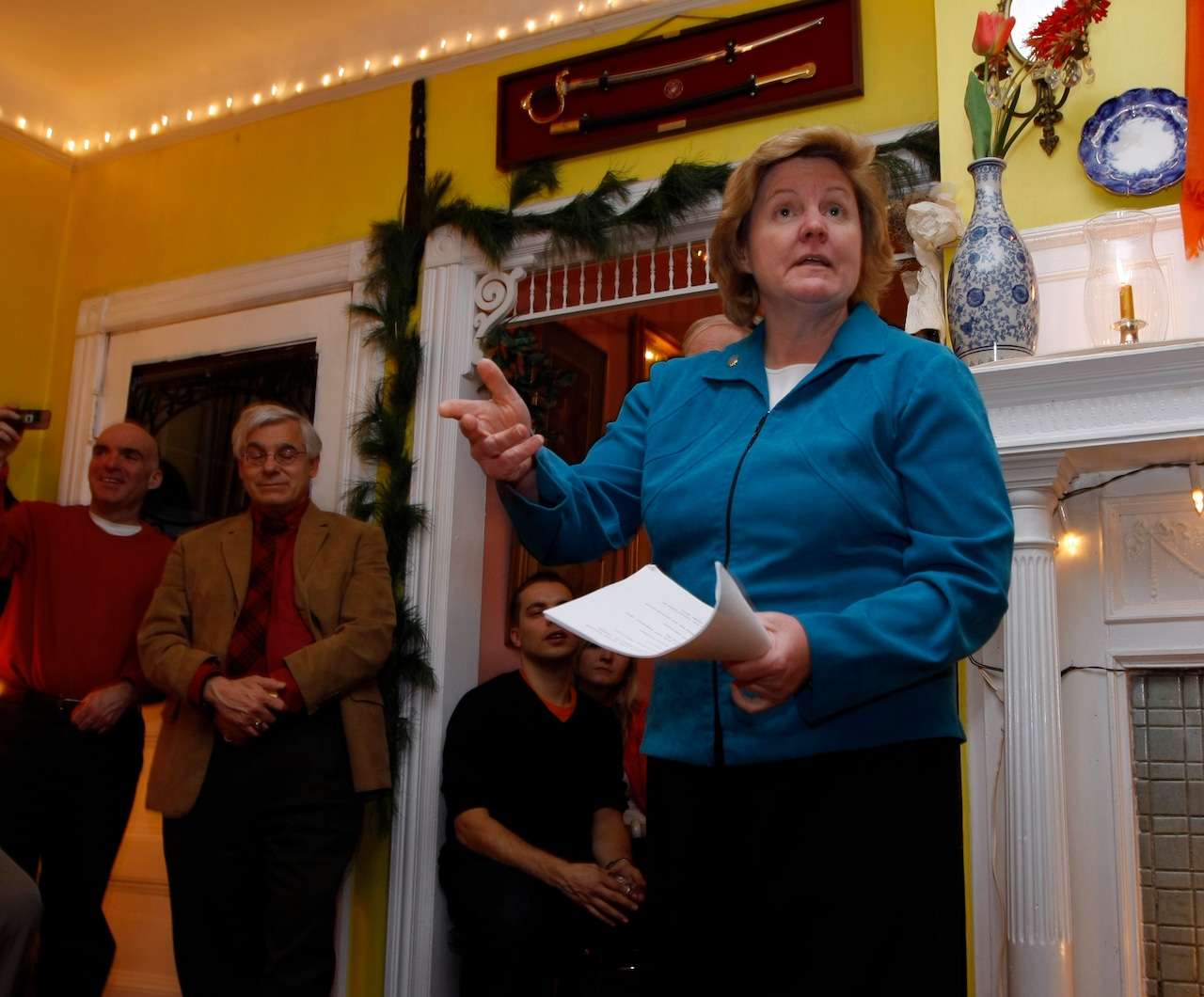 Pat Salmon talks to guests at the Staten Island Museum about the Island’s rich Dutch history as part of a 33rd annual holiday party recognizing the 400th anniversary of the Dutch arrival to America. Wednesday December 23, 2009. (Staten Island Advance / Anthony DePrimo)Staten Island Advance
Salmon, who lived on Staten Island 50 years before retiring upstate, has written five other books about local history: Staten Island’s Brewery Barons, Murder & Mayhem on Staten Island, Realms of History: The Cemeteries of Staten Island, Staten Island Slayings: Murderers and Mysteries of the Forgotten Borough and The Staten Island Ferry: A History.
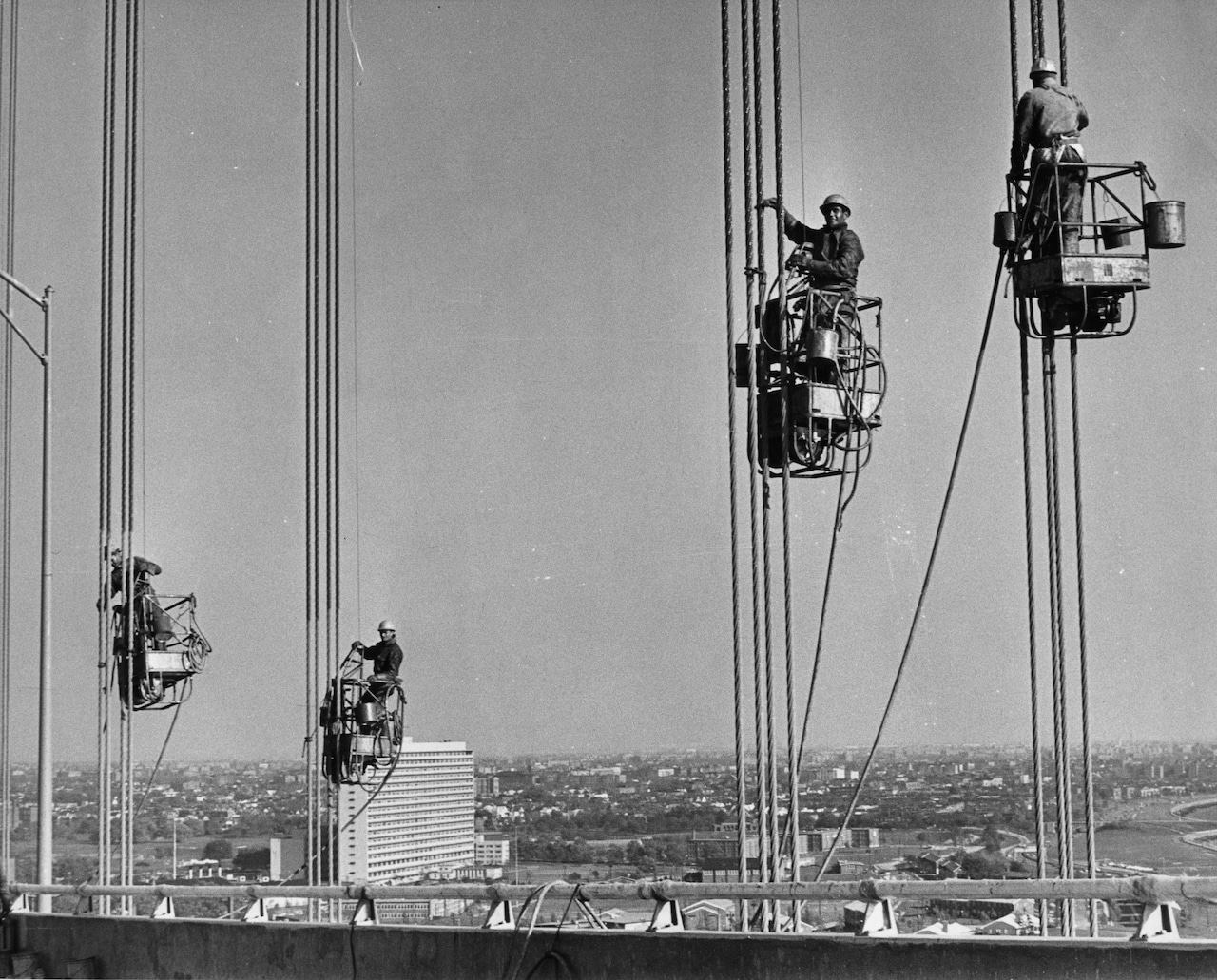 Suspended high above the waters of the Narrows, painters put the finishing touches on the bridge as they coat the cables with paint in November 1964.
Staten Island Advance
In her latest book, Salmon shares stories of the building of the Verrazzano-Narrows Bridge, including the men who worked on it, iron workers as they referred to themselves, (though the bridge was made of steel). Some of the men were related but all became a family due to the dangerous job they performed daily. She also relates stories of families like her own who came to see the construction of the bridge, usually with a camera in hand to take pictures at sites like Fort Wadsworth or Von Briesen Park. Photographing the bridge was so popular that the Staten Island Advance ran a contest for amateur photographers, with winning photos featured in the newspaper on the day of the bridge’s opening.
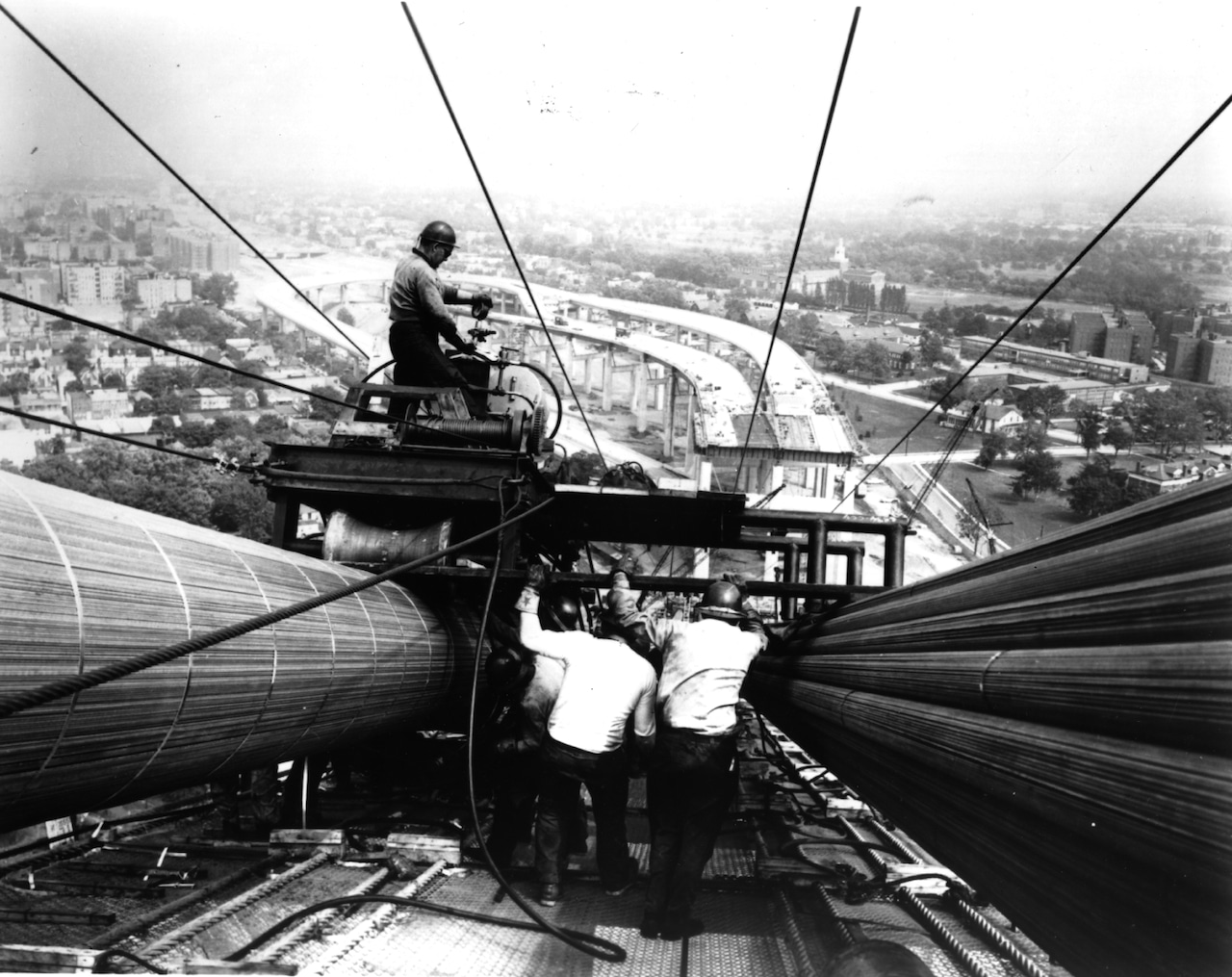 September 12, 1963, the bridge construction workers shown here are squeezing one of the four massive cables that make up the Verrazano Bridge together. 143,000 miles of cable wire was used, and is speculated that they could reach half-way to the moon. (Triborough Bridge/Tunnel Authority photo)Triborough Bridge/Tunnel
Salmon’s love of sharing these stories from the past led her to study communications with a minor in history, earning a Bachelor of Science degree from the College of Staten Island (CSI) and a Master of Science degree in Liberal Studies, with an emphasis on history, also from CSI. It also led her to roles at the Staten Island Museum, serving as assistant vice president of public information and marketing from 1998 to 2001, and as curator of history for the Staten Island Museum from 2001 until she retired in 2012.
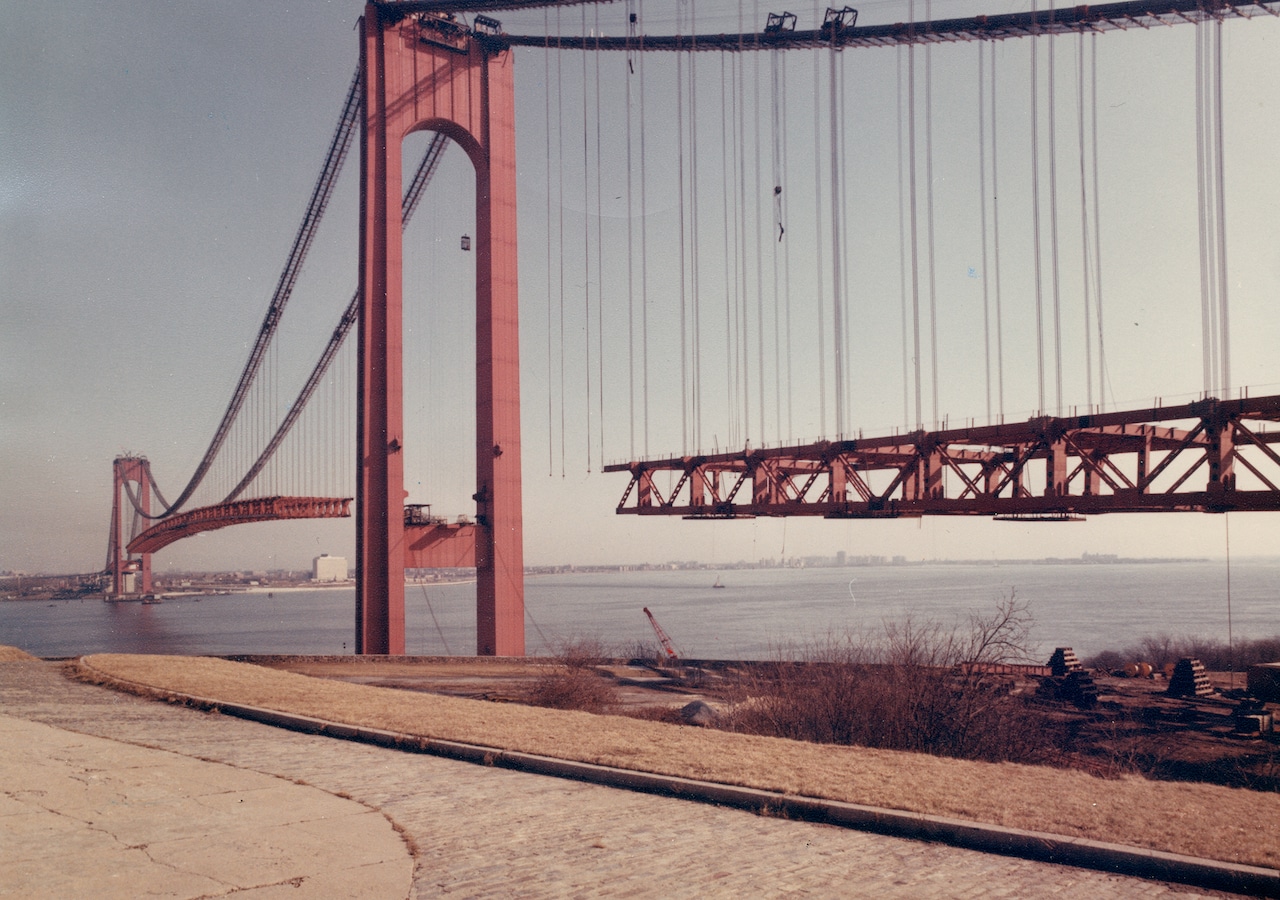 The Verrazzano-Narrows Bridge’s first coat of paint was a rust-inhibiting red. (Photo Courtesy of WSP)WSP
“The scope and breadth of the history of the Island, it’s just fantastic. There’s so much history and there’s so much to absorb,” she said.
Salmon, who is still a guest lecturer at CSI, Wagner College and at a host of other organizations and cultural institutions, is always pleased to see others take an interest in learning about their community through her books or other resources.
“When people know what’s happening around them they are much more interested in preservation of their neighborhoods,” she said. “It gives them pride…and it draws people closer to their community and close to their neighbors.”
Staten Island and the Verrazzano-Narrows Bridge: Chaos Comes to a Community can be purchased online through the Arcadia Publishing website. Salmon is also doing a book launch and discussion on Feb. 21 at 1 PM at the Noble Maritime Collection, Building D, Snug Harbor Cultural Center, Livingston.
She will also host a book program for the Friends of Olmsted Beil House entitled: “Staten Island and The Verrazzano-Narrows Bridge: Effects on the Community” on May 17 at Saint Alban’s Episcopal Church, 76 Saint Alban’s Place, Eltingville.
You can contact her via her website: PatSalmonHistory.com or via her Facebook page at Pat Salmon History | Facebook.