
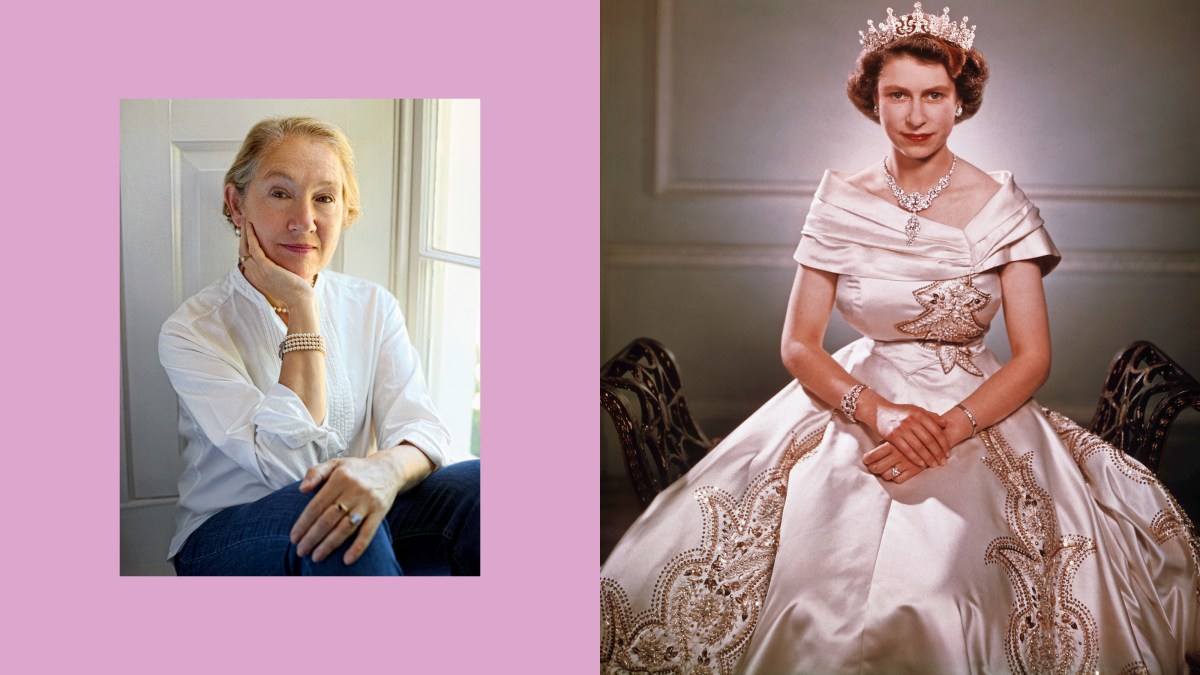
The picnic was over and all but one of the guests had left. So Elizabeth II grabbed a pair of rubber gloves and began clearing away. For the only other person present, there was no time to marvel at the spectacle of Her Majesty doing the housework in a remote Highland bothy on the Balmoral estate. The Queen wanted her to muck in too.
“She pulled on her Marigolds and said to me, ‘Let’s clear up the table,’ ” the writer Justine Picardie says. “It was like seeing a glimpse of an alternate reality and the life that she might have chosen to live.”
Picardie had met the Queen once before at a grand dinner at Balmoral in 2010 where the monarch wore an awesome array of diamonds. On that occasion Picardie was tongue-tied. Now here they were, doing domestic chores together. As they packed leftover food into plastic containers and wiped down the table, the Queen said, “Make sure you don’t miss any crumbs.”
“She was so unaffected,” says Picardie, a former editor-in-chief of the fashion magazine Harper’s Bazaar. “With most famous people the first thing that enters the room before them is their fame. With the Queen there was a kind of humility about her, which I really didn’t expect. A modesty.”
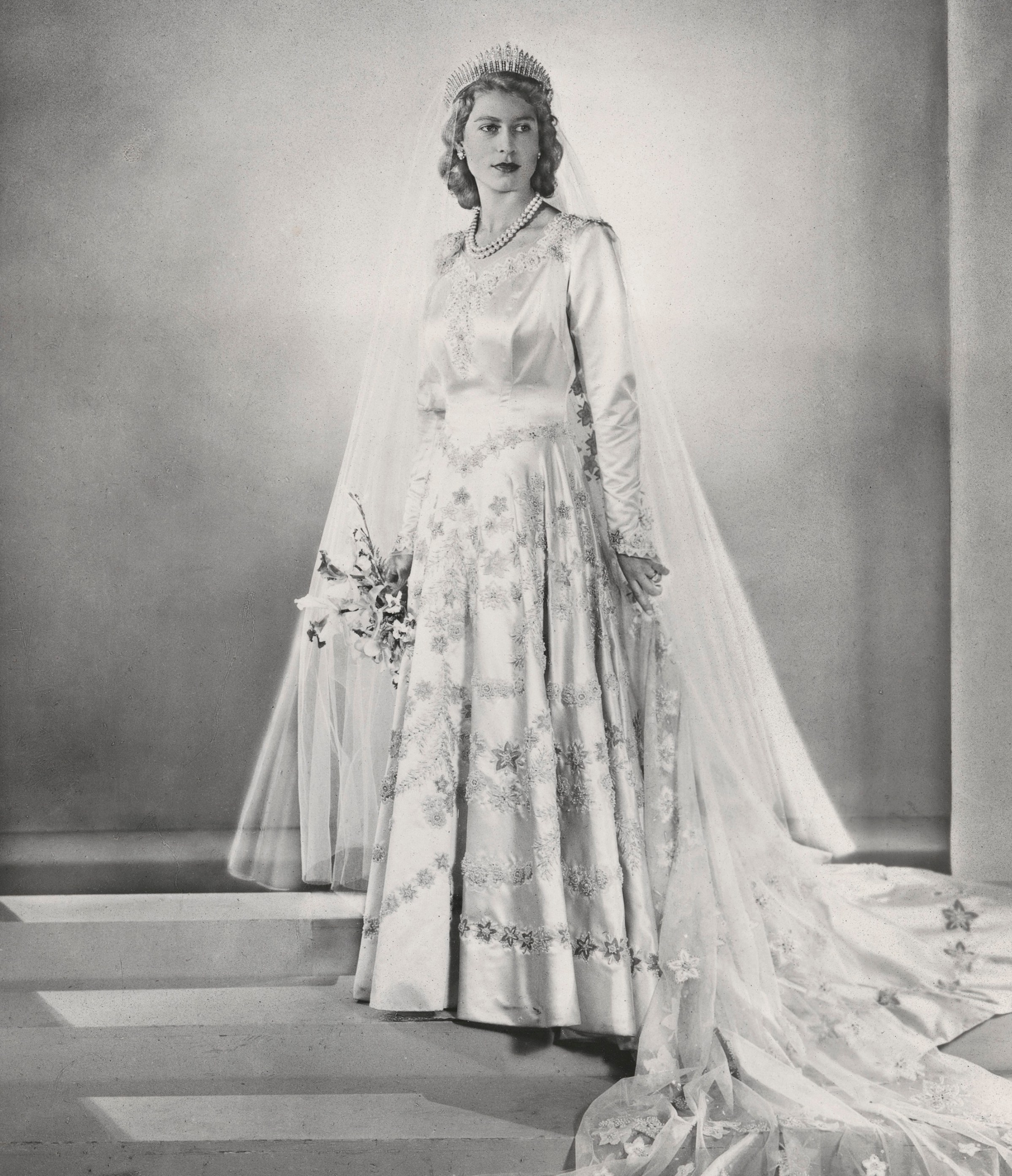
Princess Elizabeth wears her wedding dress of Chinese ivory silk with a 13ft bridal train designed by the couturier Norman Hartnell, 1947
WILLIAM HUSTLER AND GEORGINA HUSTLER/NATIONAL PORTRAIT GALLERY, LONDON
Picardie seems as surprised as anyone that she should have ended up with such access. Although she now lives in a country pile in south Norfolk with sumptuous pink drapes and a well-stocked wine cellar, she is a former punk who comes from a family of north London Marxists. Friends were somewhat taken aback when she remarried a wealthy hunting, fishing kind of chap, the kind who secures invites to Balmoral shooting parties. Picardie’s husband, Philip Astor, is the godson of Prince Philip.
She initially found her husband’s royal connections intimidating — especially his godfather, the Duke of Edinburgh. “His eyes looked like a bird of prey’s — like a hawk. They were really piercing,” she tells me when we meet at her home. “My Philip would say, ‘Oh, but he’s so interesting and intelligent.’ He said he was interested in everything from space travel to religion.” While Picardie remained “frightened” by Prince Philip, over time she felt more at ease around the Queen, who had “a kind of stillness”.
• The Queen’s bold and unique style through the decades
“She was without any hint of entitlements or arrogance,” she says. “She never needed to be flattered. She didn’t demand that one behaved in a certain way towards her. She wasn’t like anybody else. I found her self-possession remarkable.”
Over lunch Picardie had plucked up the courage to ask the Queen about Hardy Amies, her former couturier. Known for designing the Queen’s streamlined daytime outfits in the 1950s, Amies had served as a lieutenant in the Second World War. But Picardie wanted to know if he had also liaised with the Belgian resistance as a spy.

Queen Elizabeth II at Balmoral, 1967
HULTON-DEUTSCH COLLECTION/CORBIS/CORBIS VIA GETTY IMAGES

In the ceremonial uniform of the Grenadier Guards for Trooping the Colour, 1983
HULTON ARCHIVE/GETTY IMAGES
The Queen gave the merest hint of a raised eyebrow before responding, “Ah, yes, those rumours that he was very good at garrotting Nazis.” Picardie was thrilled, having never heard this before. “Of course,” the Queen added. “It was excellent cover for a spy to be a couturier.”
This observation is partly what spurred Picardie to write her new book, Fashioning the Crown: A Story of Power, Conflict and Couture, because “it implied some knowledge of the ways in which clothes can be used to conceal, rather than reveal, the secrets of those who make and wear them”.
The book is all about the soft power the royals wield through their clothes. It explains how the monarchy’s visual iconography has helped to save them from extinction through scandals, such as their German lineage during two world wars and Edward VIII’s abdication after his affair with Wallis Simpson. The Windsors have always relied on British designers to create a patriotic façade in times of trouble.
Elizabeth was the first royal to be born bearing the name Windsor, which was created in 1917 when King George V changed the British royal name from Saxe-Coburg-Gotha due to intense anti- German sentiment during the First World War. Picardie, who has written books on the House of Chanel and House of Dior, wanted to produce a cultural history of the House of Windsor. She became interested in the “artificiality of it all” — how royal couturiers such as Amies and Norman Hartnell, the favourite of Queen Elizabeth the Queen Mother, as well as the photographer Cecil Beaton, were “so key to crafting the idea of the Windsors” and conjuring a sense of “Englishness”. They understood the power of clothes as propaganda, as ways to help the family embody “majesty, mystery and myth”. As Queen Elizabeth II put it: “I have to be seen to be believed.”
“Do you remember when everyone was saying that the Queen wore colours showing that she was anti-Brexit?” Picardie asks, referring to her appearance at the state opening of parliament in 2017 wearing a blue hat with yellow flowers that looked suspiciously like the flag of the European Union. “I have no idea if that’s true, but when she went to Belfast and shook hands with Martin McGuinness wearing the green of Ireland, I mean, clearly that was a decision.”
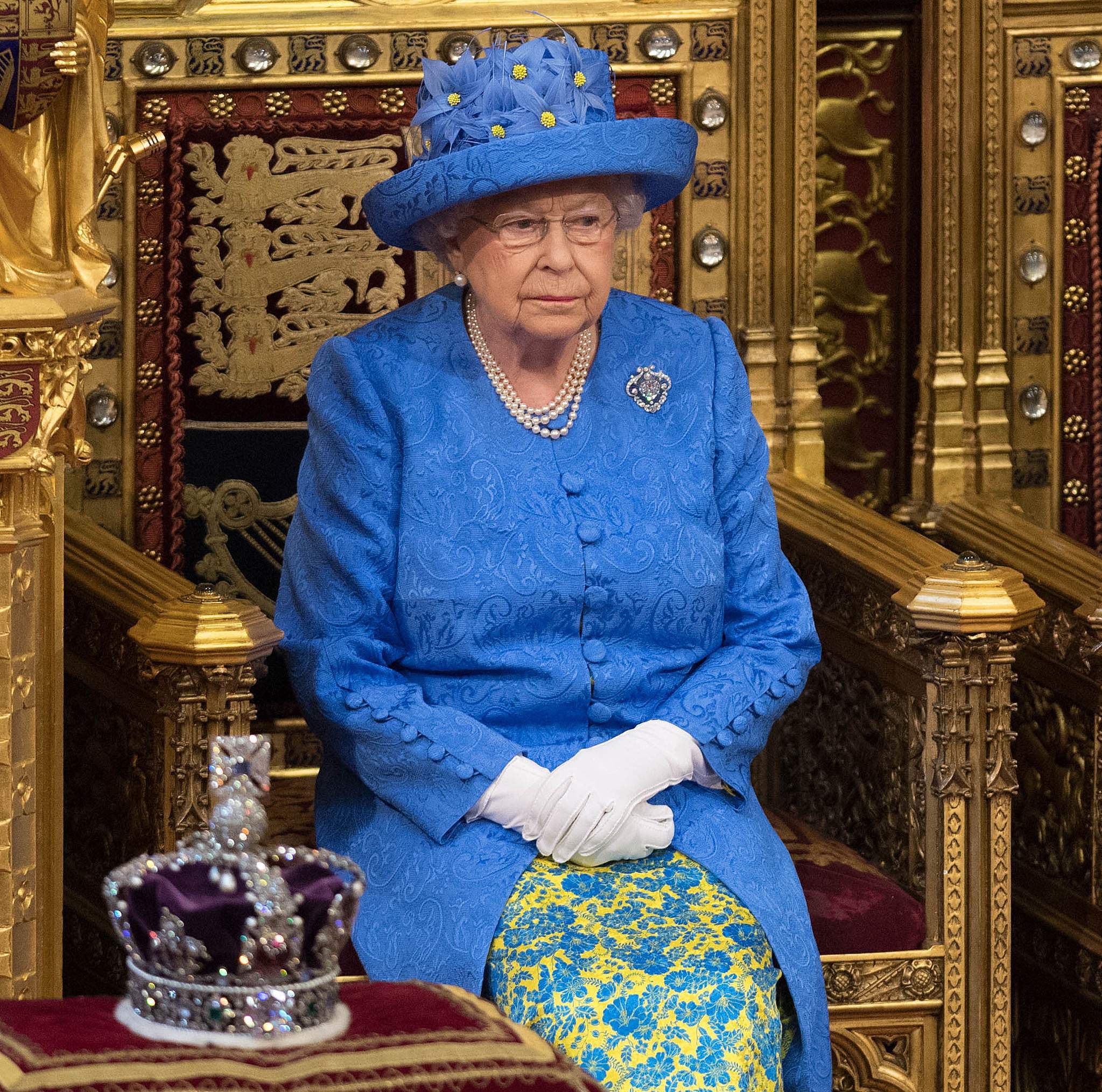
In parliament in 2017, wearing a hat that many took as a nod to the EU flag
GETTY IMAGES

Wearing green in Belfast to meet Northern Ireland’s deputy first minister, Martin McGuinness, and its first minister, Peter Robinson, in 2012
AP
Elizabeth’s sartorial choices cannot be divorced from politics, particularly when it comes to demonstrating her patriotism. While making her wedding dress in 1947, Hartnell became infuriated when the prime minister, Clement Attlee, intervened to check whether all the materials were British. Picardie says that Hartnell was not even supposed to use Scottish satin because the silkworms used were rumoured to be Italian or possibly even Japanese. Hartnell joked: “Was I so guilty of treason that I would deliberately use enemy silkworms?”
Whether the Queen wore a sumptuous silk gown by Amies or yellow Marigolds, Picardie believes that her garments always said more than her words ever could.
The novelist Zadie Smith once wrote that in the public’s minds Elizabeth appears “to be distinctly lower middle class. It’s strange: all her children are recognisable aristocratic types; her grandchildren are aw’fly posh. Yet around the Queen there hangs this persistent aura of Mrs Windsor.” Despite the Marigolds, that wasn’t Picardie’s overriding impression. “I definitely didn’t see her as middle class,” she says. “I was struck by her glamour and grace.”
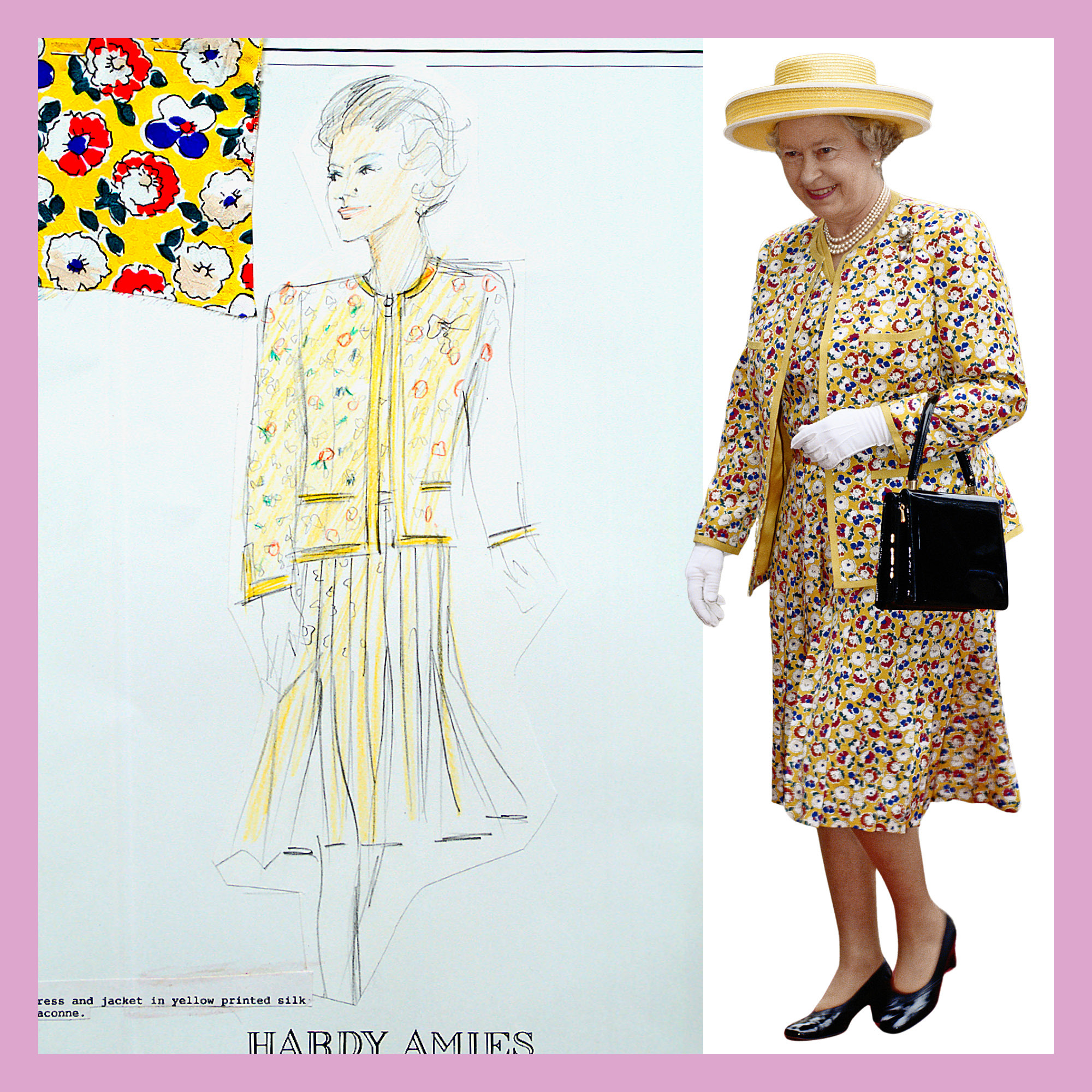
Designs by Hardy Amies for the Queen’s state visit to South Africa in 1995: jacket and dress in yellow silk façonné
TIM GRAHAM PHOTO LIBRARY VIA GETTY IMAGES
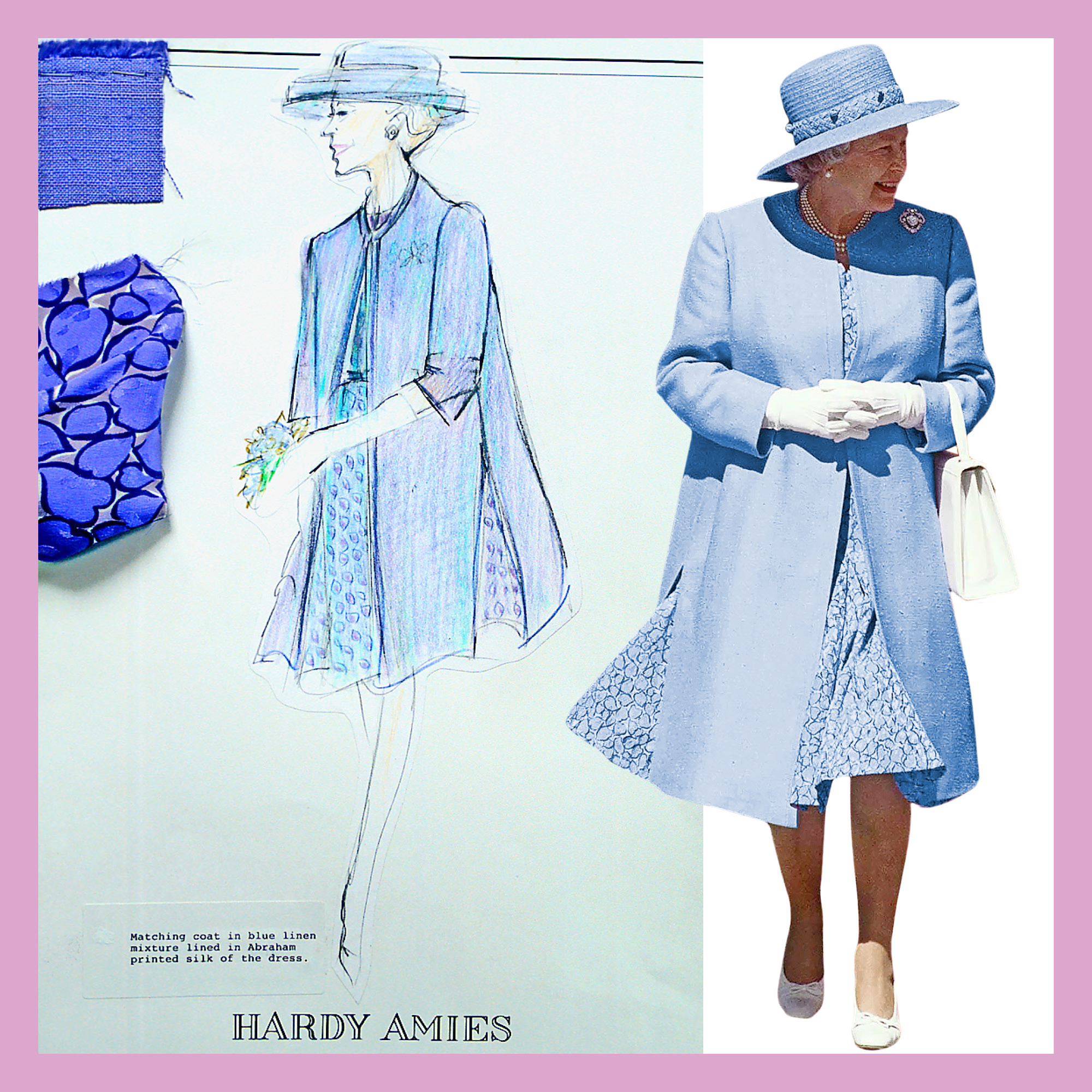
Designs by Hardy Amies for the Queen’s state visit to South Africa in 1995: linen coat and Abraham silk dress
Picardie, who went to London state schools, associates “middle class” with her own very different background, growing up in the 1960s. Her father, Michael, was a Marxist academic, while her mother, Hilary, was a radical feminist who was arrested at Greenham Common. Neither held any reverence for royalty: “They were all for tearing it down.”
Picardie met the Eton-educated Astor, now 66, at a dinner party held by her friend Trinny Woodall, the beauty entrepreneur. He was a barrister who specialised in civil law. She had no experience of socialising with the Windsors but soon understood how “the royal family were part of the rhythm of his life”. The Astor family’s royal ties date back to the late 19th century, after William Waldorf Astor, an American titan of industry, relocated to England in 1891.
When I meet Philip Astor on his way out to walk the couple’s dog, Juno, I can see why the Queen was fond of him. He was often seated next to her at dinners because “he could make her laugh”, Picardie says. He loves to tease and flatter, to offer people a drink from his “grog tray” (a wooden table creaking with booze). The scene at the Old Rectory, the couple’s capacious 17th-century house in the Waveney Valley, is like something from a Jilly Cooper novel: black labrador, cocktails, gloriously chintzy sofas. It feels pure Camilla.
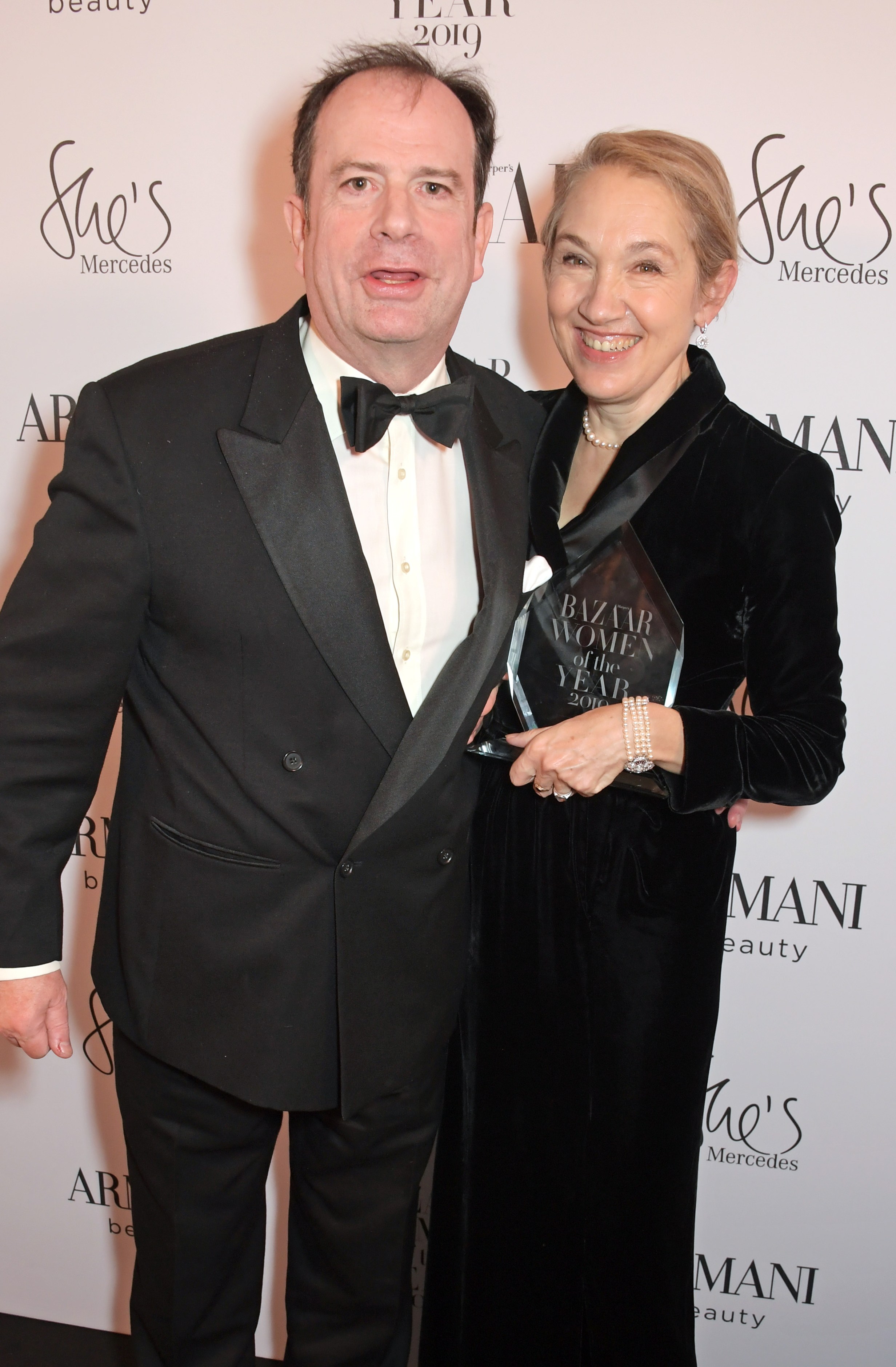
Picardie with Philip Astor, 2019
GETTY IMAGES
Astor’s nephew Harry Lopes is in fact married to Queen Camilla’s daughter, Laura. Though Picardie says she doesn’t know the King and Queen well, in her book she shares an encounter with Camilla, back when she was the Duchess of Cornwall, over a shared literary passion: Daphne du Maurier. During one Balmoral shooting lunch the two women talked about the “pressures on women who marry into the royal family”. Picardie was surprised that Camilla was so keen to talk about du Maurier’s most famous novel, Rebecca, and “the lingering presence of a dead first wife”.
• Is Camilla a style icon? Discuss
Maybe she was trying to tell you something, I suggest to Picardie, who has also written a biography of du Maurier. She must have known you were an expert?
“Maybe she did. Camilla is very shrewd, subtly intelligent,” she says, changing the subject. Although she speaks approvingly of the King and Queen, there is a guardedness there, more so when her husband joins us and starts to praise Prince Philip: “He had an inquiring mind. He liked an argument, he relished being challenged.”
“Much like Charles,” I say flippantly.
“Hmm,” Astor replies. “Perhaps he likes to inquire but he doesn’t like it if anyone…”
“Philip!” Picardie warns. “You’re so mischievous. I think the King does have an inquiring mind — about religion and alternative medicine.”
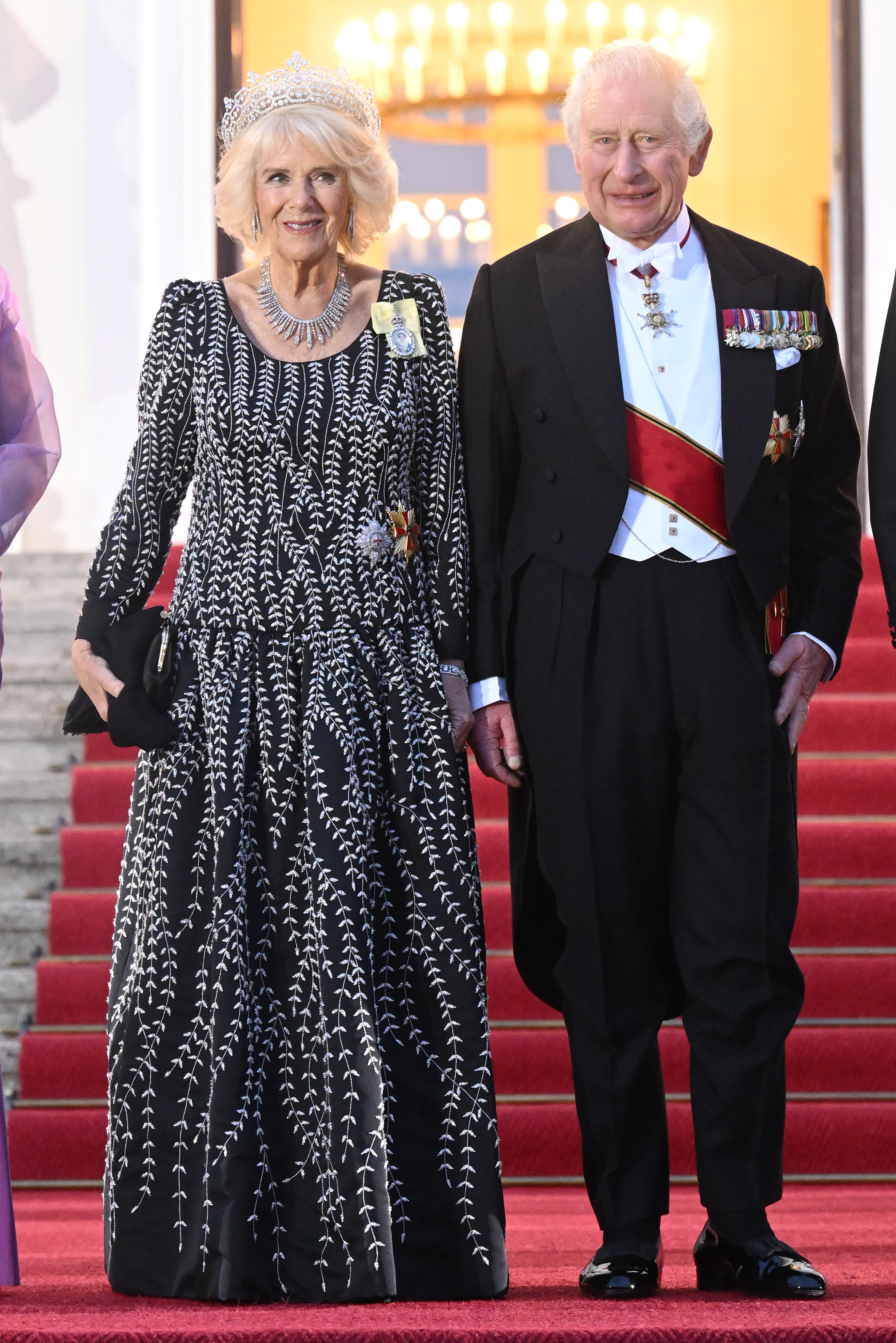
Camilla, the Queen Consort, wears a dress by Bruce Oldfield as she accompanies King Charles III to a state banquet in Berlin, 2023
WIREIMAGE
She clearly admires the combination of stoicism, dignity and glamour in Elizabeth II and her parents, George VI and the Queen Mother, but finds it rather wanting in some of her progeny. I detect a disappointment that the younger royals aren’t supporting the British fashion industry, particularly haute couture, as their elders did. But when it comes to the matter of Andrew Mountbatten-Windsor, formerly known as Prince Andrew, Picardie pulls no punches.
She alludes to his “grubby scandals”, condemning his “absurd entitlement”. The man is “an oaf”, she tells me, based on meeting him once at Balmoral. “I was introduced to him as the editor of Harper’s Bazaar and he immediately talked to me as if I didn’t know anything about the fashion industry. I couldn’t get a word in edgeways.”
It’s tempting to see this particular moment as one of unprecedented crisis for the Windsors — thanks to Andrew’s dramatic demotion and the bad blood with Harry and Meghan. In fact Picardie’s book is a reminder that this is nothing new. “There has been crisis after crisis,” she says. “Is there more estrangement in the Windsors than any other family? I’m not sure, but the repeating patterns are so marked.”
She is referring to Edward VIII’s abdication to marry the American divorcee Wallis Simpson. Picardie has long been entranced by Simpson’s “hard chic” style, crafted by designers such as Mainbocher and Schiaparelli, which contrasted with the soft, bosomy, pastel dresses worn by the Queen Mother. She became fascinated and then appalled by the darkness and decadence beneath the clothes of the Duke and Duchess of Windsor. “Edward and Wallis are still seen as incredibly glamorous. But what lies underneath is so ugly — in their support of fascism. They were properly pro-Nazi.”
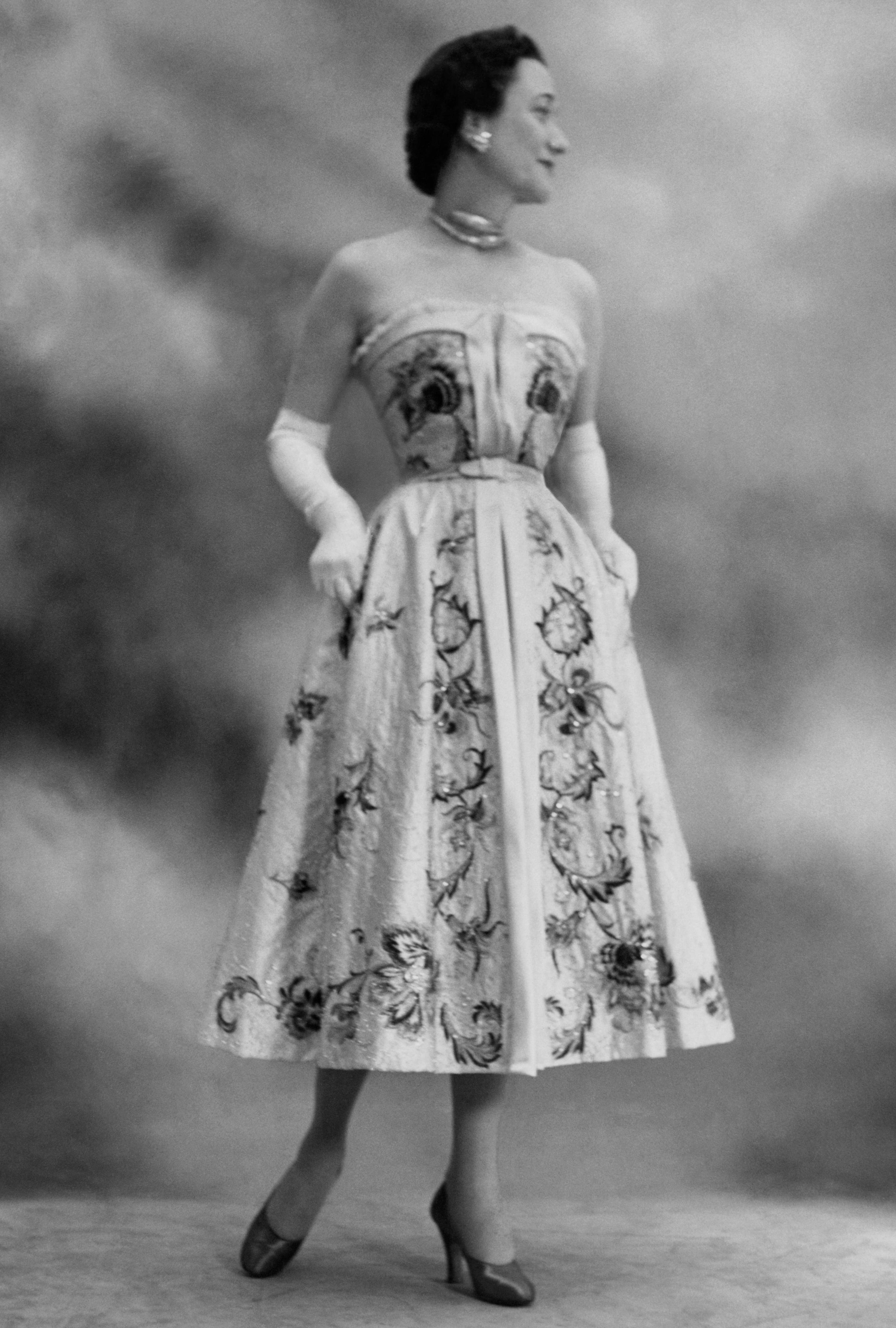
Wallis Simpson wears a Dior gown for a 1951 photoshoot by Cecil Beaton
CECIL BEATON/CONDE NAST VIA GETTY IMAGES
Their racy glamour stands in contrast to his brother George VI and his wife, Elizabeth, the couple who had to step up to the throne. Yet the future Queen Mother was also extravagant in her tastes. On her month-long state visit to Canada in May 1939 she took so many garments that two train carriages were required for her 40 trunks of luggage.
Picardie compares the Queen Mother’s “plump figure”, which was “comforting and maternal”, with the current Princess of Wales, who is so slender she conforms much more to the fashion world’s idea of elegance. And yet she claims she doesn’t want to be a fashion horse and makes a point of recycling her outfits — partly to make the royal family seem “more democratic and relatable”.
• Kate’s style evolution: from tea dresses to coronation couture
While Picardie admires some aspects of this strategy, she fears that the monarchy is losing its sense of pomp and ceremony. She thinks it’s “fine” for royals to occasionally wear high street brands, but she hopes that they will continue to support British textiles and dressmakers. She praises the princess’s choice of a lace gown by the British designer Phillipa Lepley for the state dinner with President Trump in September. “Catherine is a hugely powerful ambassador,” she says. “And that dress, worn with the family heirlooms, was absolutely royal style, down to perfection.”
I tell her it conjured for me a Disney princess, designed to flatter the president’s idea of beauty and luxury. But for Picardie there are different associations: “The gold dress channelled the style of Norman Hartnell. I saw it directly in the tradition of the Queen Mother and, with the embroidery, also Queen Mary.” She also notes that while the dress the princess wore to the Royal Variety Performance in November was “beautifully made” and made her look “graceful and elegant as always”, it was by a German, the designer Talbot Runhof.
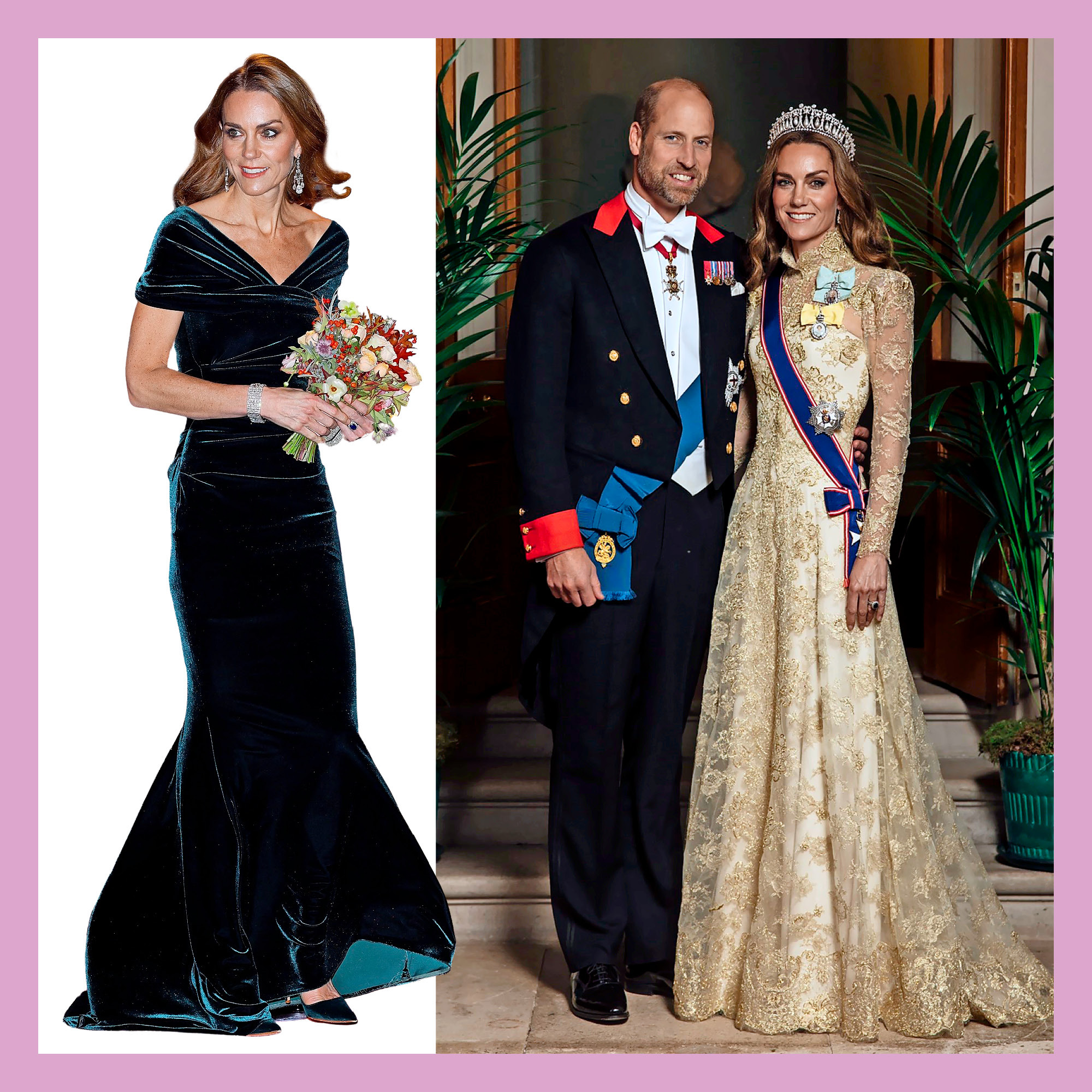
From left: the Princess of Wales wears a dress by Talbot Runhof to the Royal Variety Performance in November; with the Prince of Wales at a state dinner for President Trump in September, wearing a gown by Phillipa Lepley
GETTY IMAGES
There is a serious point behind all this power projection. In recent years we have become used to seeing our royals in less glitzy clothes. Meanwhile America is in its new boom era. Trump, for instance, redecorating the Oval Office in gold. “When I look at the Trumps, I see wealth, I see ostentation, I don’t see glamour,” Picardie says. She would love for the younger royals to embrace more silver and gold in their wardrobes “because if you can’t wear a silver or gold gown as royalty, when can you?”
Ultimately their choice of garments could be what protects them. Picardie says that a lot of people see the royal family as an “unshakeable” part of the establishment. “I don’t see it that way at all. If you look at the great sweep of history, there is always a threat. And if you lose sight of that, that’s when you’re going to lose your head.”
As a house guest of the royals she noticed how they all grow up surrounded by symbols of monarchy’s frailty, including the relics of kings and queens whose reigns have come to bloody ends.
Everything for royalty is symbolic, Picardie says. It’s no use trying to appear more democratic. They must embrace glamour or die. “The fabric of monarchy has always been about their clothes. For the House of Windsor to continue, they need to be fluent in the language of how to look, because they’re not there to speak their minds. Their words are mostly written for them, dictated by the courtiers. In the end it’s their wardrobe that does the talking.”
Meeting her majesty
Windsor Castle has long been a place of fortification, writes Justine Picardie, from its early origins in the 11th century when William the Conqueror built it as a strategic stronghold that could be used to defend the monarchy against attack.
Hence the decision at the beginning of the Second World War that the young Elizabeth, known as Lilibet, and her younger sister, Margaret Rose, should live within the castle’s protective walls and ramparts while their parents were seen to be doing their patriotic duty in London.
The princesses were attended by their Scottish governess, Marion Crawford, and a company of Grenadier Guards. “Windsor Castle was a fortress, not a home,” Crawford wrote later. She recalled restless nights in the dungeons, which had been converted into a bomb shelter. “There lingered about it always the memory of others who had probably been incarcerated there and left some of their unhappiness behind them. The atmosphere was gloomy and there were beetles.”

Queen Elizabeth II and Prince Philip at Windsor Castle on their 70th wedding anniversary in 2017
MATT HOLYOAK/CAMERA PRESS
More than 70 years later I went to Windsor Castle for the first time, having been invited by the Queen to stay with my husband, Philip. It was June — we would be attending the races at Royal Ascot — and there were no obvious signs of beetles, nor any imminent threat of bombs. But red-coated guardsmen still paraded and armed police officers were on patrol. We had been issued with a schedule and a dress code for formal day and evening wear; I was obliged to bring a surprising number of outfits, hats and accessories, and to change at least twice before lunch.
The sartorial requirements were stricter than any I had encountered at the Paris couture shows as the editor of Harper’s Bazaar, and despite my long experience of the demanding formalities of French fashion houses, a visit to Windsor Castle was infinitely more nerve-racking.
The Queen appeared to be entirely herself in this imposing setting; by which I mean there was never any sense of her performing, in the way that a modern celebrity might do. She was without doubt the most famous woman in the world, but her apparent modesty seemed to me as natural as her dignity. She was not flirtatious, unlike her mother or her mercurial sister; nor did she deploy her status as a weapon against others. She embodied the power of pageantry but avoided pomposity, for she held true to her heartfelt belief that she was the servant of the people.
And for all her consummate ability to look impassive and unruffled, the rare moments that I witnessed when her face lit up with emotion — as she watched her prized racehorses at Ascot, for example — were wonderfully engaging.
She did not require much in the way of entertainment and was immune to flattery. Her smile, when it came, was delightful because it was natural, rather than forced. Even so, I felt an acute sense of failure in my inability to amuse her in our encounters at Windsor Castle.
Once, after returning from the races, I saw her sitting alone by a bay window. An equerry gave me a polite nudge and suggested I speak to her; I walked over and curtseyed. The Queen made a gesture that I should sit down. I murmured something about her racehorses, and she nodded, kindly, apparently untroubled by my conversational limitations. We talked about the weather and the beauty of the roses in the Windsor gardens; we returned, again, to the safe and reassuring subject of her dogs. Eventually she asked if I would like to accompany Philip to see the library.
I thanked her and withdrew, wondering if the correct protocol was to walk backwards, but decided against this, in case I tripped over a precious piece of furniture or delicate porcelain.
© Justine Picardie 2026. Extracted from Fashioning the Crown: A Story of Power, Conflict and Couture (Faber £25), published on February 26. To order a copy go to timesbookshop.co.uk. Free UK standard P&P on orders over £25. Special discount available for Times+ members