
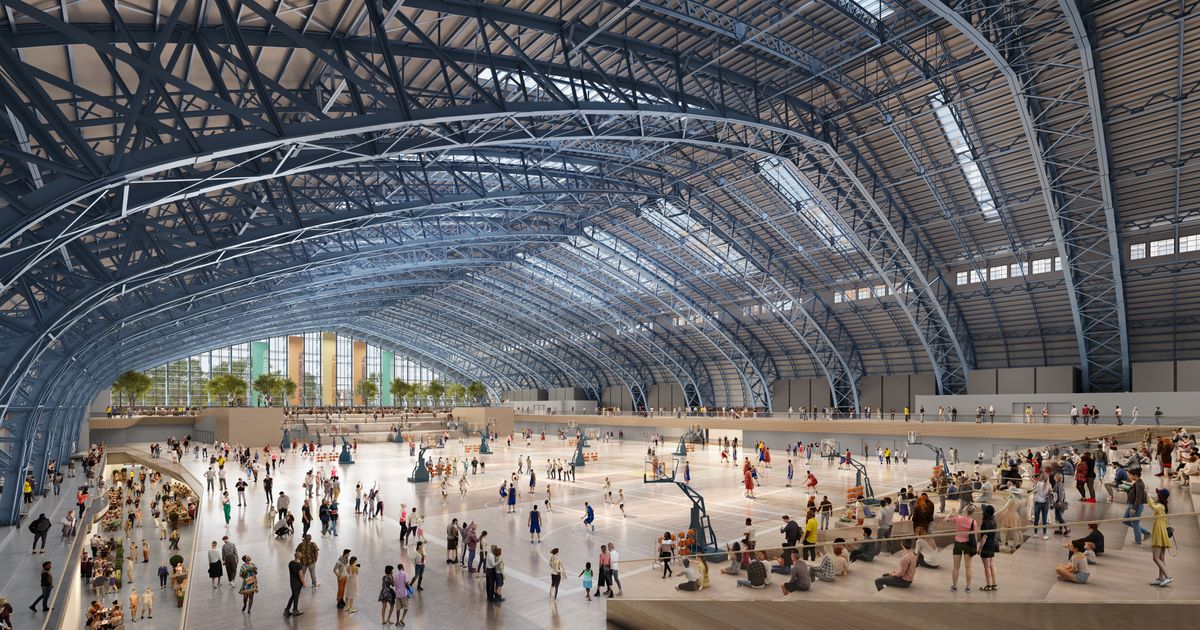
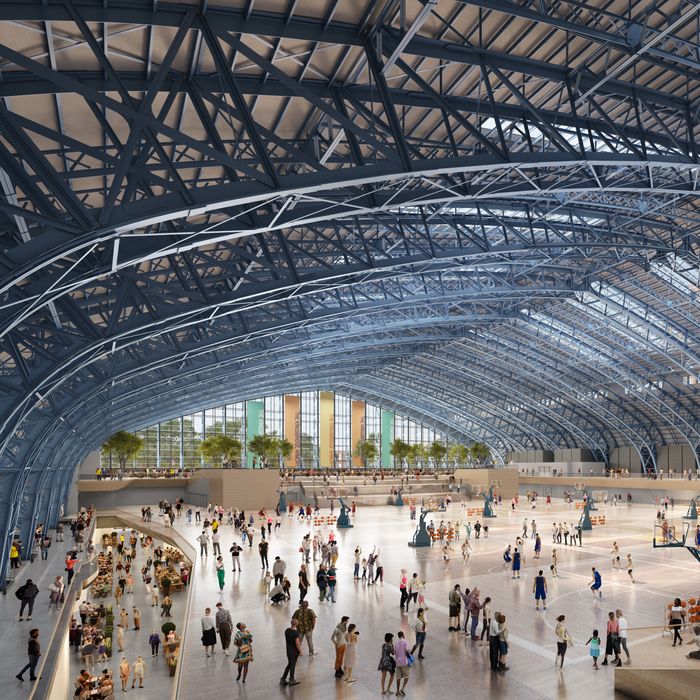
The Kingsbridge Armory is the kind of place you’d be more apt to find in a children’s book than across from a billiards bar in the Bronx. The glowering, crenellated castle, guarded by a pair of thick round towers, has been abandoned for 30 years. If you do manage to sneak past its immense portal and through a low-ceilinged colonnade, you emerge into a space as high and open as the main hall at Grand Central Terminal but four times as vast. With light slanting in from a row of windows eight stories above the floor, and an immense vault above, the drill hall has a sacramental feel. You could, in fact, slip the entire Cathedral of St. John the Divine inside that single room. And that’s not even including the cavernous subterranean levels or the block-long turreted headhouse.
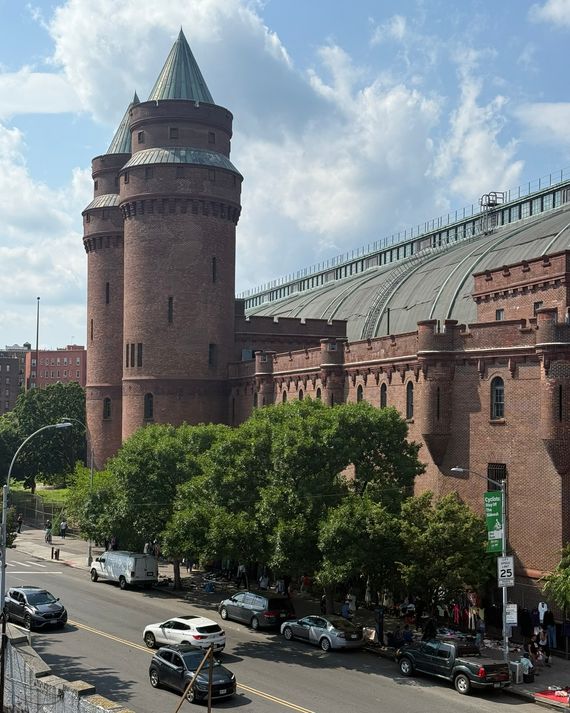
The turreted headhouse, ready to repel an invasion from Upper Manhattan—or to become the headquarters for various Bronx non-profits.
Photo: FXCollaborative
Big chunks of New York real estate come with powerful doses of fantasy; a full-block structure of nearly 600,000 square feet on three levels, with the No. 4 subway on the corner, has the kind of presence to ignite outsize dreams. In a city willing to displace a community garden or a newsstand to claw back a few extra feet, the Armory’s yawning, epochal emptiness seems like poking through your medicine cabinet and finding an alternate universe behind it. And after decades of futile wishes, maybe the place is finally ready for a new life — not today, not tomorrow, but in a few feverish years. The latest in a series of grand plans, led by 8th Regiment Partners (a joint venture of Maddd Equities and Joy Construction) and the Northwest Bronx Community and Clergy Coalition, envisions recycling the drill hall as an indoor town square and entertainment space. By, say, 2032, a celebrity DJ like Fred Again could be hosting dance parties for 17,000 on the drill hall’s flat floor (provided he remains famous that long).
“It’ll be a safe and gorgeous version of people throwing raves in fucked-up warehouses,” says producer Mike Luba, who’s working for Live Nation to make that a reality. To him, the best thing about the Armory is what it lacks: sightline-obstructing columns and fixed configurations. “For dance music, it’s not a lot of fun to be in seats,” he says. In the ideal version of the venue, the stage can go anywhere, everyone pays the same, and the crowd is in constant motion.
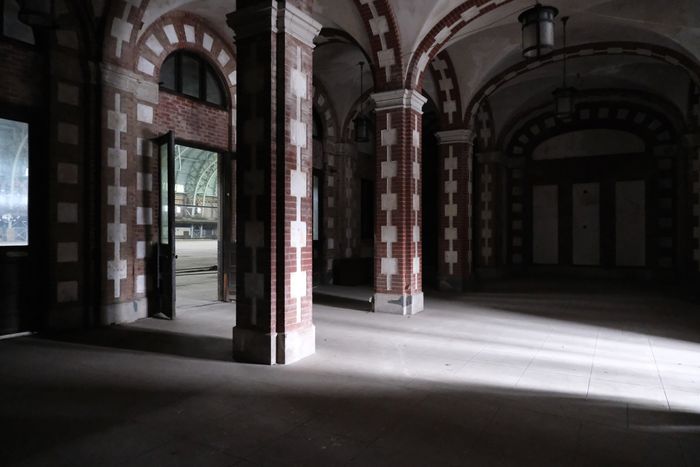
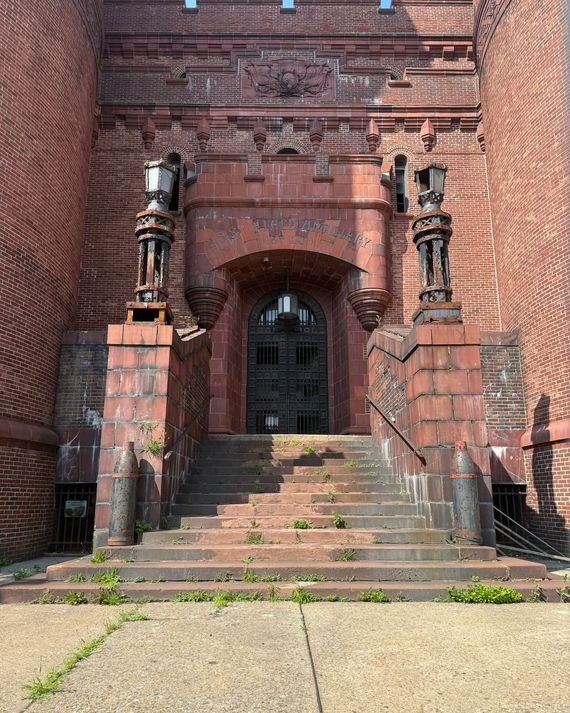
From left: The long-closed portal, guarded by cannon shell-shaped bollards. Photo: FXCollaborative/ The entrance portico, a low-ceilinged pause before the big reveal. Photo: FXCollaborative
From top: The long-closed portal, guarded by cannon shell-shaped bollards. Photo: FXCollaborative/ … more
From top: The long-closed portal, guarded by cannon shell-shaped bollards. Photo: FXCollaborative/ The entrance portico, a low-ceilinged pause before the big reveal. Photo: FXCollaborative
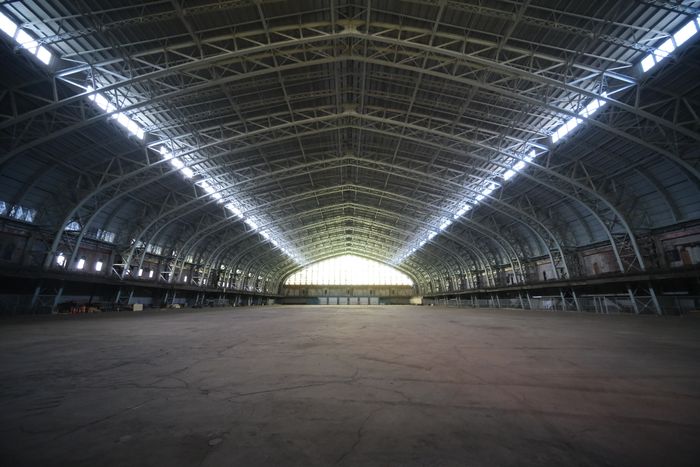
The drill hall, a 180,000 square-foot, column-free room waiting for a new purpose….
Photo: FXCollaborative
The much broader mission, though, is to turn the building into an indoor main square that is welcoming, not just on concert nights, but during the day, a place where people can meet for a pickup game, a drink, a job interview, a date, or a workout. “The Armory isn’t an island,” says Sandra Lobo, the executive director of Northwest Bronx. “It’s meant to be a place that brings people in to spend money in the local corridor.”
Miraculously, a proposal to realize those ambitions, with a design by FXCollaborative, has made it through the always-contentious public review process and even nailed down hundreds of millions in subsidies. That’s farther than any previous proposal has advanced — and it’s still a long, long way from a ribbon cutting. What’s exciting about this moment is that it’s rational to be optimistic. The proposal is solid, the design promising, the neighborhood supportive, the bureaucracy cooperative. All the participants seem earnest and fully engaged.
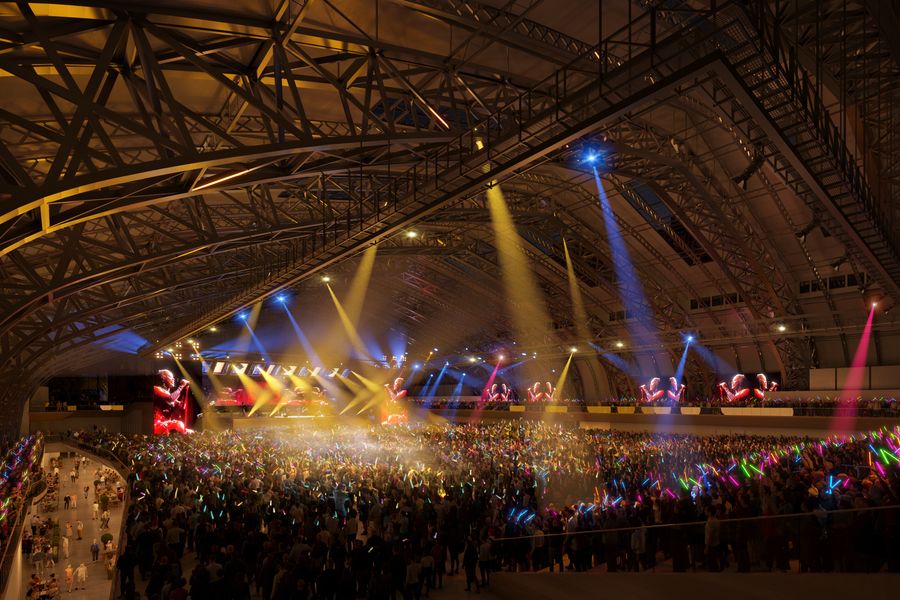
… such as a dance party for 17,000 on a new raised floor.
Photo: FXCollaborative
Even so, the building’s history promotes some judicious skepticism. Built just before World War I as a military installation, it served as a multipurpose tool for mustering, training, and parading troops until the National Guard relinquished it in 1994. Since then, it’s been used to distribute supplies (after Superstorm Sandy) and food (during the COVID emergency), and shoot movies (I Am Legend). But, except for those brief episodes of usefulness, in the past few decades, it has mostly frustrated wannabe visionaries.
In 2008, the city’s Economic Development Corporation gave its blessing to the Related Companies’ scheme to convert the armory into a giant shopping center, including a banquet hall, a farmers’ market, and, quaintly, a “cinema” — a sort of outer-borough version of Related’s Time Warner Center, only bigger. (The Shops at Hudson Yards didn’t exist yet.)
The neighborhood, including Northwest Bronx, rebelled, pointing out that mall jobs paid little, small businesses would be crushed, and profits would be siphoned away to national corporations.
In 2013, City Council approved a plan to turn the armory into the Kingsbridge National Ice Center, a nine-rink skating circus with a 5,000-seat hockey arena. Mayor Bloomberg crowed. NHL Hall of Famer Mark Messier cheered. Bronx borough president Ruben Diaz Jr. pronounced himself “thrilled.” The City Council vote, he announced, represented the “final hurdle” for “a transformative project” that would “bring tens of thousands of new visitors to the borough, helping to stimulate our economy, while also creating hundreds of living wage jobs for Bronx residents.” In the hockey world, the borough would go from backwater to mecca.
The financing never materialized.
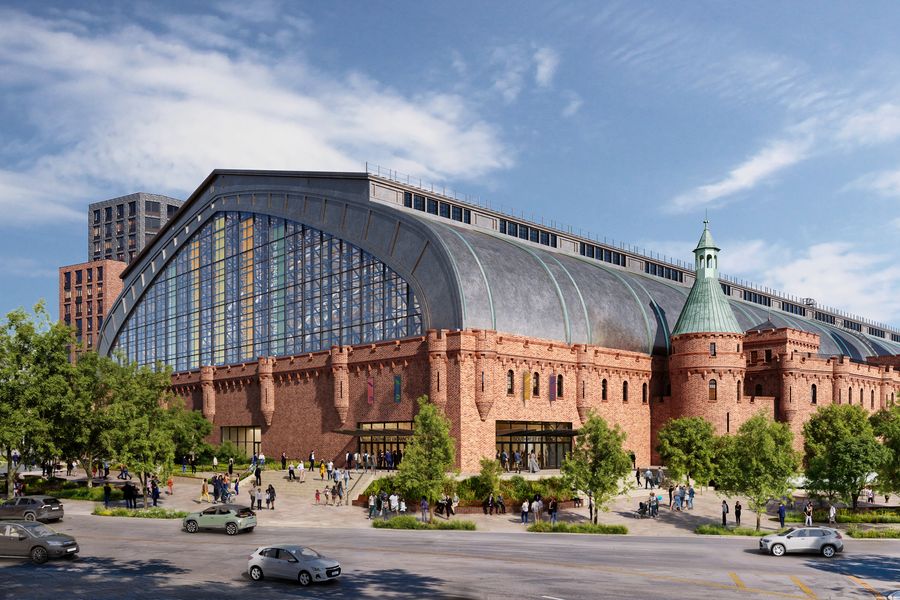
New entrances would make the Armory friendlier and less martial….
Photo: FXCollaborative
Now, a constellation of nonprofits, private companies, and politicians are confident that this third plan is a keeper. The city has kicked in $115 million, the state another $100 million. The developers believe they can make money. More important, the city’s Economic Development Corporation made sure that the project would have the enthusiastic support of community activists who spent years fighting for ways to ensure that a big project would benefit the little guy. Unlike many slow-moving urban mammoths, this could be a model for how to integrate local desires with capitalist imperatives to deliver your friendly neighborhood megaproject.
The Kingsbridge Armory is a box big enough to contain a lot of desires. The key to the current proposal’s success in getting this far is that it began with the neighborhood’s aspirations rather than a developer’s. Like most of New York, the Bronx needs housing, and the plan includes up to 500 affordable apartments right next door, convenient enough to walk to a job in the Armory (but perhaps also close enough to feel like Fred Again is DJ-ing in your bedroom). The demand for shelter has also created other shortages. Lobo points out that so many industrial areas have been rezoned for housing in recent years that it’s choking off a potential mini-revival in urban manufacturing.
“Soul Snacks is selling across the country now, and they want to grow in the Bronx. KD New York had to move to New Jersey. Port Morris Distillery closed because their rents got too high,” says Lobo, who believes the Armory can mitigate that trend by supplying the economy with below-market manufacturing space.
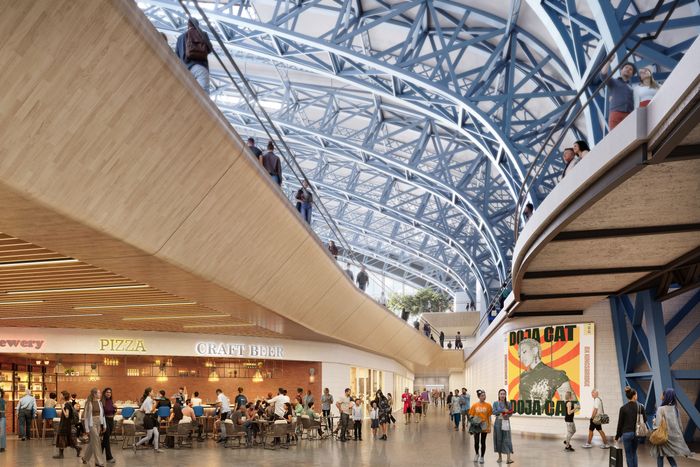
… with a ground floor given over to Bronx foods and local retail.
Photo: FXCollaborative
The beauty of that arrangement is that what’s made in the Bronx can be sold in the Bronx, which means that money stays in the Bronx. Typically, titanic venues — conference centers, casinos, arenas — act like crowd valves, sucking in thousands of people from multiple states, then expelling them back to their homes without any clear sense of what part of the city they’ve just visited. But the 8th Regiment plan promises to add friction to that process, so that some of the concertgoers’ dollars stick to the blocks around the Armory. Live Nation would commit to hosting local concessions, cross-promoting nearby stores and restaurants, and providing discounted tickets for neighborhood residents.
It all sounds like a joyous convergence.
Even if all these sunny promises are enshrined in contracts, built into budgets, and consecrated with good intentions, there are still plenty of ways the whole project could go kerflooey. Live Nation might back out. Investors could scatter. And even if it gets completed, it could still wind up feeling off. Too much architecture — too many foyers, signs, cafés, screens, glossy surfaces, bright colors, and walls — could ruin the raw, funky feel of the place. That’s something everyone involved thought about. “We want to leave it alone as much as possible,” Luba says. “If we come in and turn it into a shiny new thing, it loses the spirit that makes it so epic.”
Yet even a minimalist approach amounts to a major architectural and engineering undertaking to make it safe, comfortable, legal, and nontoxic. (The lower levels are so thick with asbestos that I was told a visit would require a hazmat suit.) The architects at FXCollaborative have some big moves in store. They’ll raise the drill hall’s floor to the level of the current mezzanine, supporting it with a whole new structure. Even just insulating the building so that the temperature stays constant (and so 100-decibel sound levels don’t dislodge all the neighbors’ fillings) may require a second layer of glass walls at either end.
The project embraces more than just the drill hall. With the help of the architecture firm Gensler and the design company Blueprint Studios, Live Nation is studying the possibility of inserting a second large, but more manageable, 5,000-person venue underground. That would turn the Armory into a complex similar to Madison Square Garden with its arena above and theater below. The landscape architecture firm SCAPE has designed a new public plaza that wraps half the building from West Kingsbridge Road around to Reservoir Avenue: more trees, groves, and seating, instead of the familiar arrangement of gates and chain-link fences. And a whole constellation of local institutions and community groups is eyeing the three-story brick headhouse for office space.
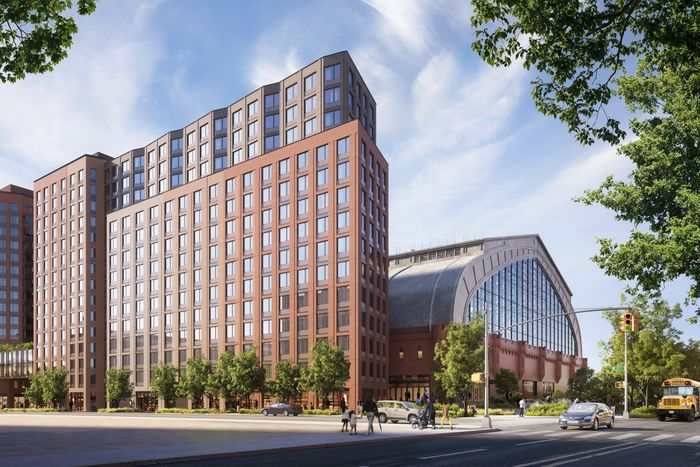
The full-block site is spacious enough to have room for new residential buildings with up to 500 affordable apartments.
Photo: FXCollaborative
It’s a tricky balancing act to open up a defensive bastion to the neighborhood without destroying its martial history. The design calls for stripping the iron bars off windows and breaching the castle walls for generous corner entrances. The Landmarks Preservation Commission signed off on both ideas, but not without urging the architects to find new spots for iron gates emblazoned with crossed cannons and bollards shaped like artillery shells.
Like a medieval castle, where lords slept, blacksmiths pounded, soldiers trained, mummers mummed, and farmers sold their produce, the 21st century armory will be a mixed-use project in the truest sense. The plan jumbles together uses that zoning had put asunder, so that homes, offices, factories, stores, entertainment venues, public space, and markets all share the same city block. There is no precedent for such an intense mixture anywhere in New York City.
“This project feels relevant to now and to the kind of city we’re trying to build,” says FXCollaborative’s design director Austin Sakong. “It has the possibility to ease old antagonisms between community members and developers, and refresh the distinctions between retail and light manufacturing, community space and culture.” It’s a project conceived for flux. “We’d all be shocked if, ten years after it opens, it’s still exactly the way it started out.”
Paradoxically, the abundance of space means the design will have to be as efficient as a ship’s cabin. The building’s size is its strength, but it’s also a burden, because there are only so many ways to put a behemoth to work. And once it’s been restored, it must also be maintained, which means that every unused corner becomes a financial drain.
The remaining hurdle is the same as it always is: money. Estimates of the cost vary: more than $500 million, according to the developer; $650 million in the Bronx borough president’s recommendation; closer to a billion, if you figure that construction budgets tend to bloat. Lobo estimates that the Northwest Bronx coalition will need to come up with $25 million — nearly four times its annual budget — just to build out the manufacturing spaces.
Which is why Luba is both eager and cautious: “We’re going to try as hard as we can to make it work, but it’s not for the faint of heart.”
Related