
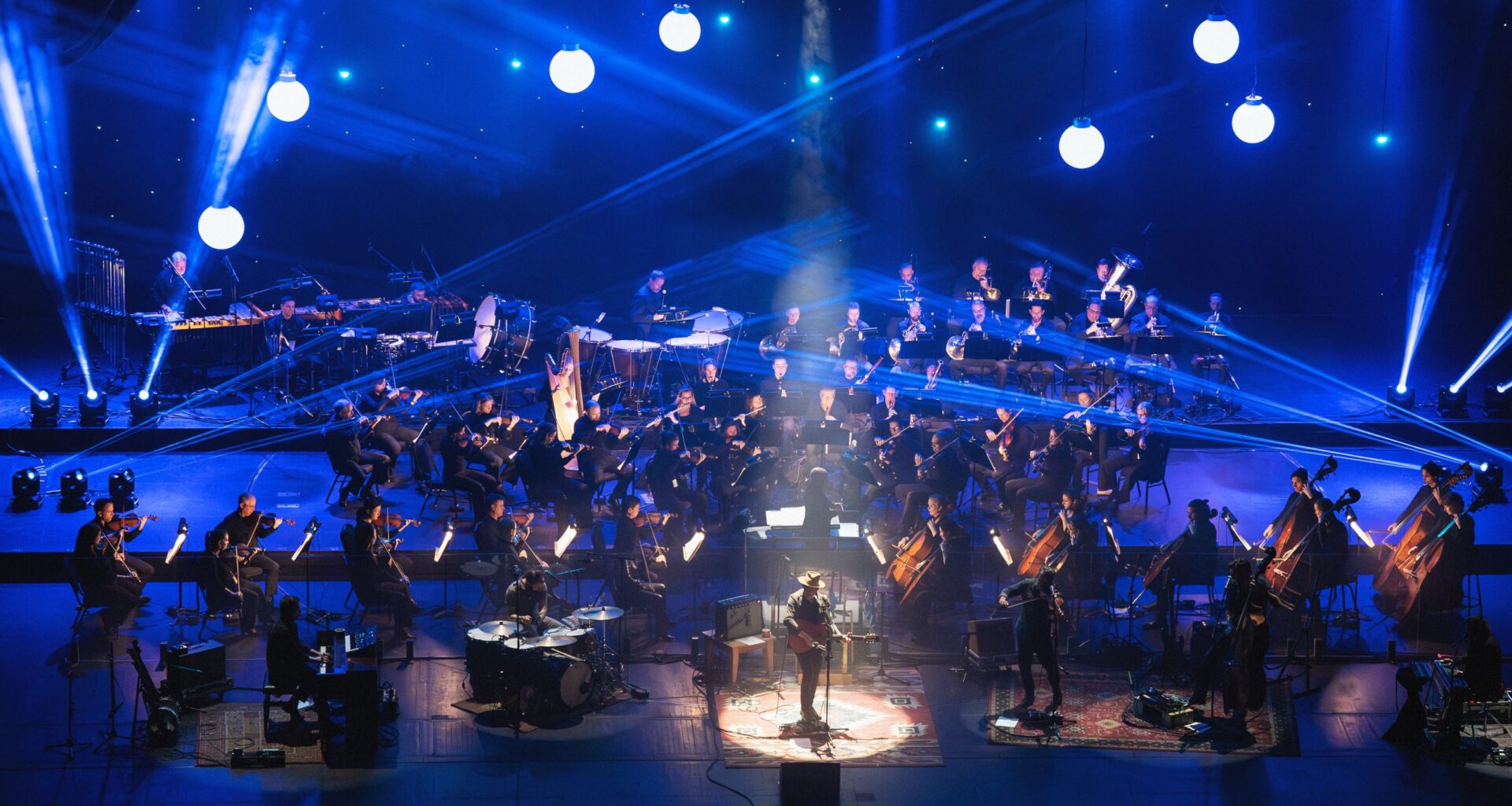
If symphonies had Super Bowls, the Colorado Symphony’s kicked off Jan. 30 at Radio City Music Hall and ended Feb. 1 at Carnegie Hall, both in New York City.
That’s when the orchestra took to those stages for the first time, with Boulder’s Grammy-nominated folk singer Gregory Alan Isakov and virtuoso violinist Itzhak Perlman, who, among other things, played for Queen Elizabeth in the George W. Bush White House and at the first inauguration of President Barack Obama.
Playing Carnegie had been the Colorado Symphony’s goal for years, said Daniel Wachter, who became president and CEO in April. But when the dates aligned with the lead-up to Super Bowl LX they saw an opportunity to supersize their visibility.
“Over so many years, the Colorado Symphony has increased the artistic caliber, the artistic level through auditions, guest conductors and the artistic leadership,” said Wachter. It’s also “watched nationally,” for its innovative programming and collaboration with other musical genres, he said. Think Sting, Wu-Tang Clan, the Flaming Lips and Tenacious D’s Post Apocalypto tour stop, all at Red Rocks.
“But classical music, at times, has had a little bit of a stigma and barriers about etiquette,” Wachter said. “People don’t know when to clap, what to dress in and so on and so on. So it perceives a little bit like an elite thing. I mean, it’s a bit historic and that’s a stigma.”
Enter football and smart marketing, no ad agency needed. Wachter told The Colorado Sun he was hoping to reach “a sports community who loves the Broncos and the Nuggets, to have them really realize we have the same caliber people in the performing arts community.”
Quincey Trojanowski is on the team. She was introduced to the bassoon when a woodwind quintet performed at her elementary school in the Chicago suburbs. She was in second grade and knew she had to play it. A bassoon looks like an extra long clarinet with a twisty metal piece about a third of the way down that has a double reed. It is not the instrument kids drift toward naturally. “In general the bassoon is a less commonly played instrument,” Trojanowski said. “I mean, it’s not criminally uncommon, but, you know, compared to a violin or a trumpet, it’s not really the most friendly instrument for accessibility reasons.”
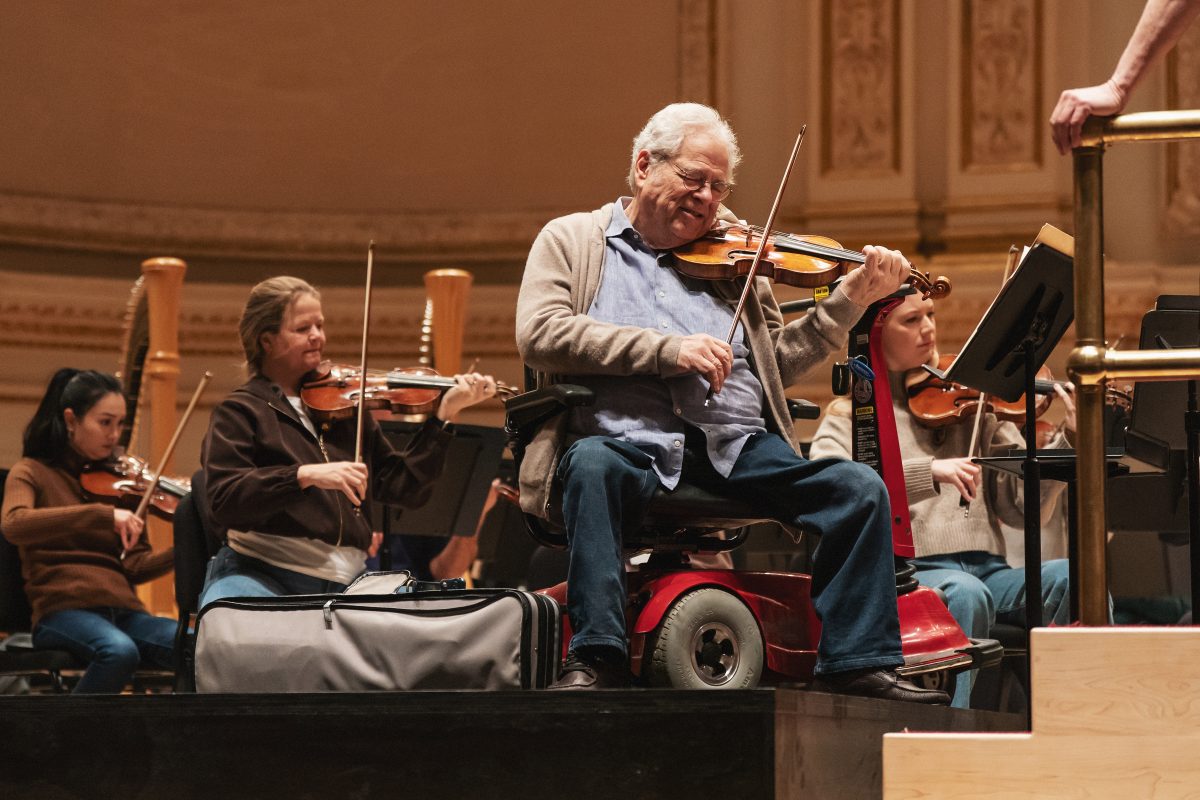 Itzhak Perlman plays with the Colorado Symphony Orchestra, Feb 1, 2026, at Carnegie Hall in New York City. (Courtesy Amanda Tipton Photography)
The kids weren’t allowed to play instruments until fourth grade, but when the time came she begged until she got one. Then it was lessons at the Merit School of Music. Summer programs at Interlochen Center for the Arts and Tanglewood. Studying under principal bassoonists in college and grad school. And in 2025, she was hired by the Houston Grand Opera, which she calls “an orchestra, just not a symphony orchestra,” as second bassoon, which provides the essential harmonic foundation, rhythmic stability and sonic support for an orchestra’s woodwind section (flutes, oboes, clarinets, saxophones).
But first bassoonists get the more melodic riffs and Trojanowski said “the position of principal bassoon is an absolute dream to me. Personally, I’ve always been drawn to being able to play those really out-there and expressive, just free types of things.”
So when the principal bassoonist spot opened in the Colorado Symphony, she jumped. “Also Colorado’s undeniably a beautiful place to live. I knew that I wanted to be working with really great people living in a really great place. It was just like a no-brainer for me to apply.”
Seventy four other bassoonists did too, which Trojanowski says was a large number.
“I’ve only ever been on the auditioning end, which means I usually don’t get to see all the numbers, but I think it was definitely a big audition. It was really competitive, as most are, but especially for the bassoon, there’s just fewer (players) in general. We run into each other all the time. I feel like at this point, there’s few faces that I don’t recognize at an audition. Which, you know, can be either terrifying or comforting, depending how you look at it.”
Her audition must have been good because, taking it back to sports, Wachter said, “everyone has a little bit of an idea that it’s less than 1% of the people who play football ever made it to the NFL, or NBA. The same applies to earn a seat in an orchestra like the Colorado Symphony. There may be 70 or 80 orchestras in the country of our caliber. So we are in the top tier.”
It hasn’t always been easy attracting talent, however. The symphony is in its 102nd season, and Wachter said even though they’ve “developed an incredible artistic level, the challenge and the opportunity is financially,” as in figuring out how to pay musicians a living wage in the third most expensive U.S. state with housing costs approximately 15% higher than the national average.
Boettcher Concert Hall is also in need of renovations, which $20 million of the $950 million voter-approved Vibrant Denver Bond that passed in November will help address. But the symphony has said $20 million “is not the final solution. … The final solution would be a new world-class concert hall built from the ground up.” And Wachter said “a meaningful $120 million renovation” would address the “essential and functional needs of this iconic music hall.”
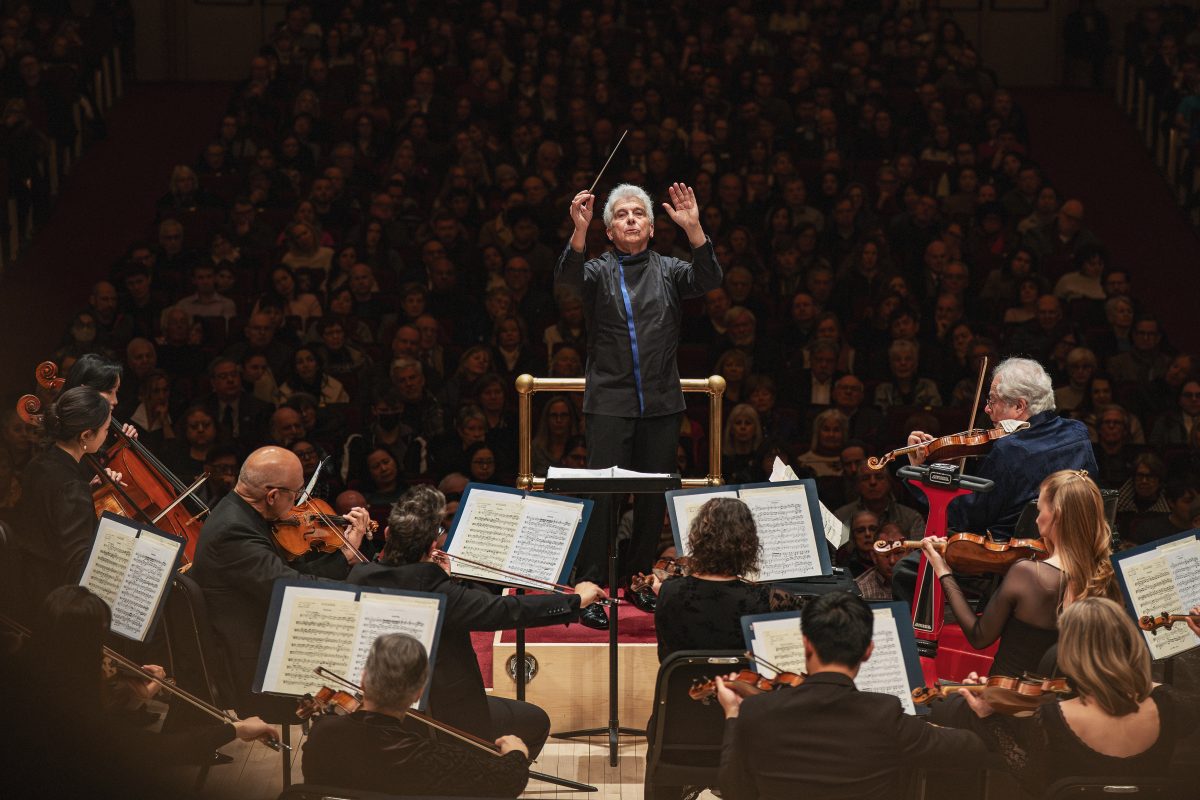 Colorado Symphony conductor Christopher Dragon doing his thing to help the orchestra sing in New York City. (Photo Courtesy of Amanda Tipton Photography)
But first he wanted to address musician pay, so when he took his role in April, “one of my first big things that I had to get accomplished was to extend our collective bargaining agreements with the musicians,” he said. He did, creating a three-year contract in which the symphony agreed to meet “a very important threshold of $70,000 base pay for every musician and then there is another 5% increase next year, and another 4% increase in the year after.”
That may not exactly ease the burden for artists needing to live in the state ranked 48th for housing affordability.
Trojanowski wouldn’t say how much she makes; only that it’s enough for her to be “just fine living with this salary, which is another huge part of why I applied. I was very clearly going to be able to live a steady life, which is obviously in this day and age a very important thing.”
There’s a “massive range of how much you could be paid in an orchestra,” she added, “but especially in the music world, things can be very inconsistent. So a salary in general is something to celebrate.”
Wachter is pleased about the new union contract, but understands the cost of living in Colorado isn’t declining. Still, he said, “it was encouraging to see… we’re able to attract…so many people for a principal bassoon role. And by the way, the same happened for the timpani.”
Type of Story: News
Based on facts, either observed and verified directly by the reporter, or reported and verified from knowledgeable sources.