
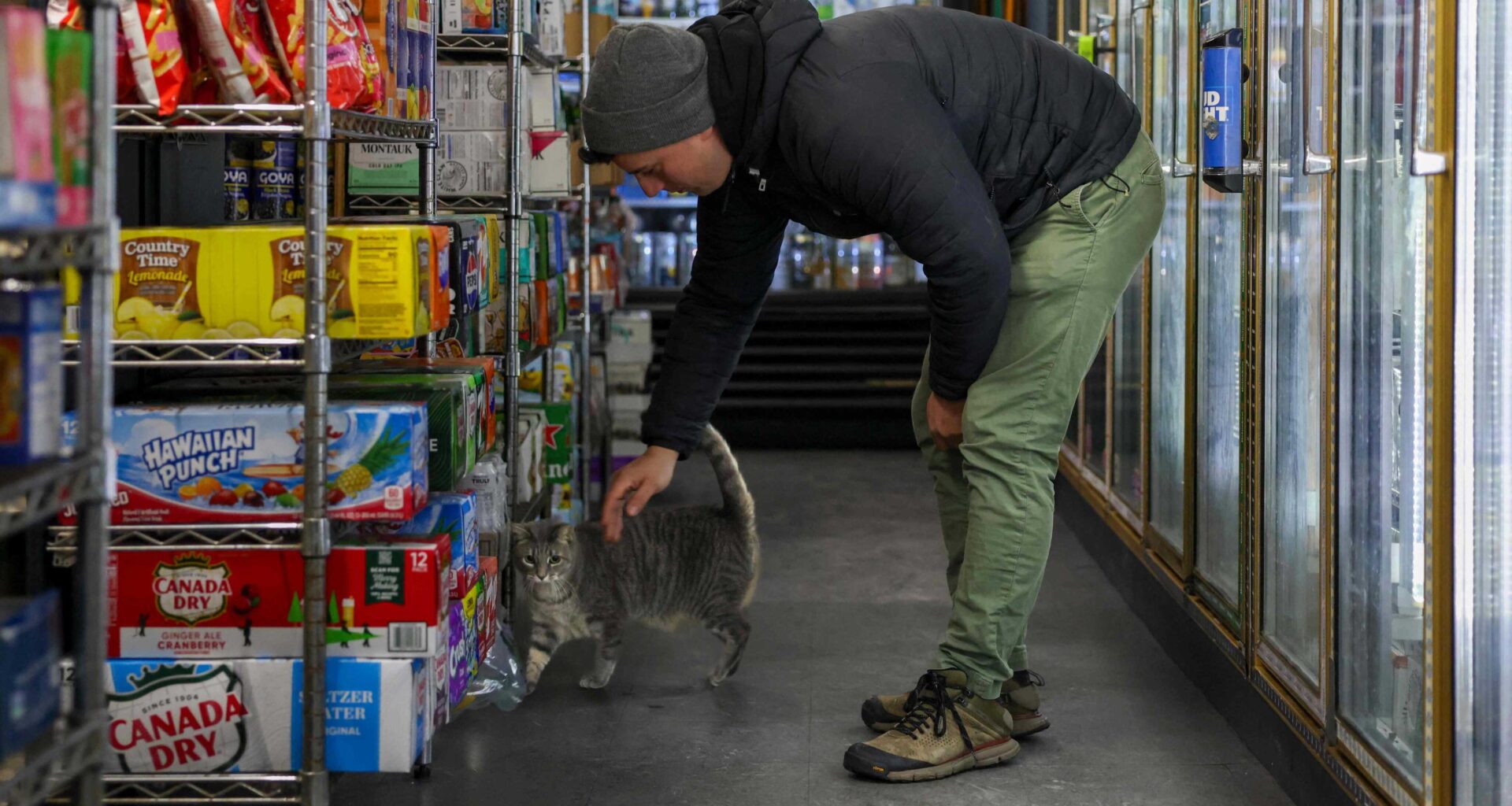
Simba is a large cat with thick ginger and white fur, and he is one of the many felines that inhabit New York’s corner shops, known as “bodegas”, despite their illegal status.
While bodega cats are renowned for helping to keep pests away, they have also become a cultural icon for New Yorkers. As a result, some residents are now advocating for legal protections for these beloved shop helpers.
“Simba is very important to us because he keeps the shop clean of the mice,” said Austin Moreno, a shopkeeper in Manhattan.
The fluffy inhabitant also helps to entice customers.
“People, very often, they come to visit to ask, what is his name? The other day, some girls saw him for the first time, and now they come every day,” Moreno said.
Around a third of the city’s roughly 10,000 bodegas are thought to have a resident cat despite being liable to fines of US$200 to US$350 for keeping animals in a store selling food, according to Dan Rimada, founder of Bodega Cats of New York.
Rimada photographs the felines for his social media followers and last year launched a petition to legalise bodega cats, which drew nearly 14,000 signatures.
“These cats are woven into the fabric of New York City, and that’s an important story to tell,” he said.
Inspired by Rimada’s petition, New York City council member Keith Powers has proposed a measure to shield the owners of bodega cats from penalties.
His legislation would also provide free vaccinations and spay or neuter services to the felines.
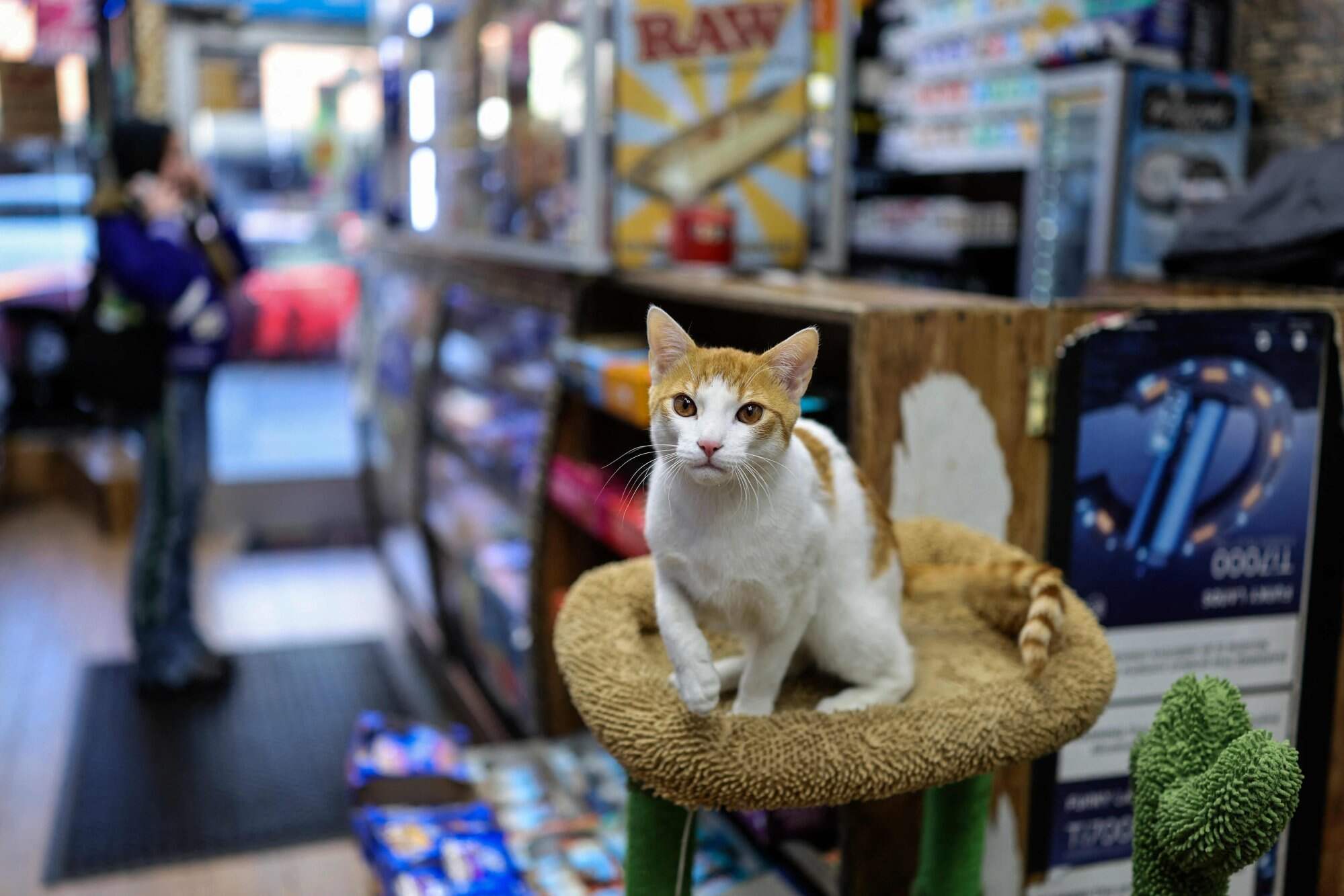
Approximately one-third of New York City’s 10,000 bodegas are believed to have resident cats, despite potential fines for keeping animals in food-selling stores. Photo: AFP
But animal shelters and rights groups say this wouldn’t go far enough.
While Simba can nap in the corner of his shop with kibble within paw’s reach, many of his fellow cats are locked in basements, deprived of food or proper care, and abandoned when they grow old or fall ill.
Becky Wisdom, who rescues cats in New York, warned that lifting the threat of fines could remove “leverage” to encourage bodega owners to better care for the animals.
She also opposes public funds being given to business owners rather than low-income families who want their cats spayed or neutered.
The latter is a big issue in New York, where the stray cat population is estimated at around half a million.
Regardless of what the city decides, it is the state of New York that has authority over business rules, said Allie Taylor, president of Voters for Animal Rights.
Taylor said she backs another initiative proposed by state assembly member Linda Rosenthal, a prominent animal welfare advocate, who proposed allowing cats in bodegas under certain conditions.
These would include vet visits, mandatory spaying or neutering, and ensuring the cats have sufficient food, water and a safe place to sleep.
Beyond the specific case of bodega cats, Taylor is pushing for a more radical overhaul of animal protection in New York.
“Instead of focusing on one subset of cats, we need the city to make serious investments, meaning tens of millions of dollars per year into free or low-cost spay, neuter and veterinary care,” she said.