
Every January, New York City comes to life with JanArtsNYC, a citywide showcase of experimental and international performance. During a recent symposium at the West Bank Cafe, TheaterMania publisher Rosemary Maggiore spoke with the leaders behind the initiative — Carla Hoke-Miller (New York City Mayor’s Office), Lisa Richards Toney (Association of Performing Arts Professionals), Thomas O. Kriegsmann (Under the Radar), Shanta Thake (Lincoln Center), and Duke Dang (Works and Process) — about how the city’s festival ecosystem brings artists, audiences, and presenters together. From free tickets to global showcases, JanArtsNYC opened doors to new work, built audiences, and kept New York at the heart of creative innovation.
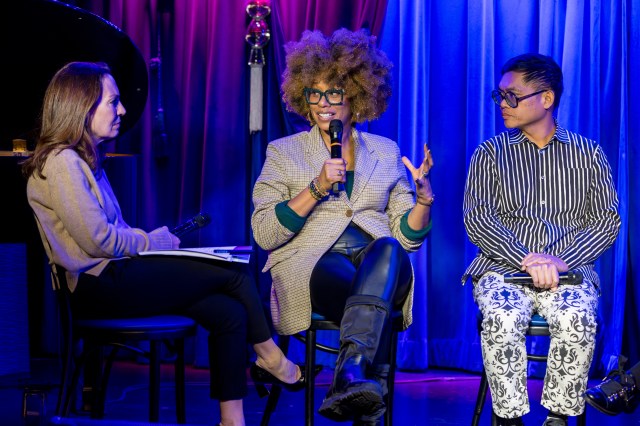 Rosemary Maggiore, Lisa Richards Toney, and Duke Deng
(© Tricia Baron)
This conversation, the first in a series, has been condensed and edited for clarity.
Rosemary Maggiore: What is the genesis of JanArtsNYC, and how has it shaped festival ecosystem of the city?
Carla Hoke-Miller: When we created the Theatre and Live Performance Industry portfolio at MOME, everyone said, “You have to go to the APAP conference if you want to know anything about what’s going on,” and so I did. I met with Mario Garcia Durham and Jenny Thomas to talk about building on APAP’s Under the Radar and globalFEST partnerships to include other independently produced festivals and convenings that as a whole would be named JanArtsNYC. We worked together with peers and colleagues to identify companies and organizations initiating brave new work year-round in NYC with performances and events that culminated during this amazing industry gathering held here every January. We found valuable ways the City could support and promote JanArtsNYC in any way we could. We now have 12 diverse partners, and it is going to keep growing.
Lisa Richards Toney: Over the 13 years JanArts has been around, it’s grown and grown. APAP, at our core, is about ensuring that people working the the professional industry of the performing arts have an opportunity to do their work well. To do one’s work well means that you are exposed, you have a network of people, you have opportunity to learn, to think deeply, to make a deal. APAP tries to bring together an opportunity for all of that to happen over a set of days. We’re an ecosystem. It’s not just presenters, everybody has a part to play, and APAP needed to be a place where all were welcome. JanArtsNYC gives people opportunity to see the work, to go to globalFEST, to go to Under the Radar. By doing that, it’s creating a magnanimous opportunity so that this industry can thrive.
Shanta Thake: The great thing about our festivals is the idea that everybody comes to New York and meets the audience of New York. That’s critical to how our festivals work. The reason these showcases are successful is because agents and presenters and managers are there, but also because they’re seeing full houses of New Yorkers. This diverse audience, young and old and from everywhere in the world, really changes the entire atmosphere of this conference. Coming to New York and having people meet actual fans of these artists is so important. You get a good sense if something is going to work in your town, and the artists get a good sense of who they are in this global ecosystem.
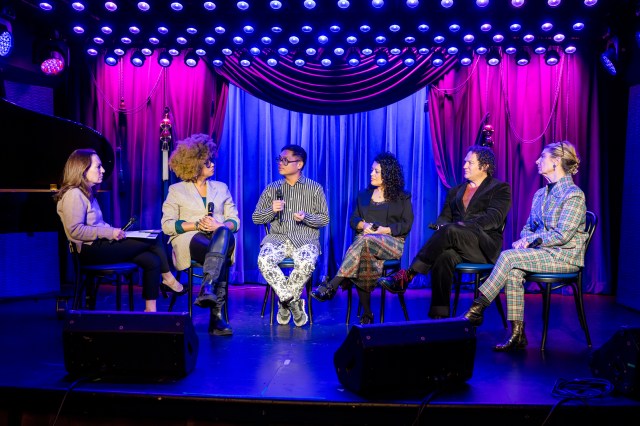 Rosemary Maggiore, Lisa Richards Toney, Duke Denk, Shanta Thake, Thomas O. Kriegsmann, and Lisa Richards Toney
(© Tricia Baron)
Rosemary Maggiore: How does JanArtsNYC and its partner festivals expand access to the work and build new audiences for experimental and global performance?
Lisa Richards Toney: The festival model is one of the most fantastic models to demonstrate the power of the arts and to bring people together. You go to any festival across the country, around the world, and you will see people in the industry, the person you knew at the grocery store, and your grandmother’s best friend. It’s designed to be at the center of your community and that is a beautiful thing. We need more of that.
Thomas O. Kriegsmann: The language of audiences is truly the most important language that we speak: the language of transforming artists, the language of growing new languages of performance that reflect what’s happening on our society. We worked with the mayor’s office this year to give away 1,500 free tickets and that was extremely important to us. We’re doing experimental work. It can often be hard to access. It’s for very small audiences, but some of it is for very big audiences. In order to really get people to understand what’s going on and see something very different, something that is completely against the grain of conventionality, we need to open the doors to them. It was an incredible move for the mayor’s office to partner with us on that. It wound up being incredibly successful and we’d like to do it a lot more.
Carla Hoke-Miller: People get used to going to these festivals and then they’ll think, “I want to go to a festival somewhere else in the world,” or, “I want to follow this group that I saw perform at Under the Radar and see what they’re doing now at La MaMa, so I’m gonna start going there.” It is working to get New Yorkers to understand all of the rich performances and dance and music available to them all the time.
Duke Dang: The reality is that we’re in an America that hasn’t had compulsory arts education for two generations now. Without that base, oftentimes the work doesn’t speak for itself anymore. You work so hard to bring people in your doors and they don’t understand it because they haven’t had the education and then they leave and maybe don’t come back. What we do [at Works and Process] is have the creators there talking about what they’re trying to do. They’ll hear it direct from the creator, and afterwards, there’s a reception for audiences and artists to continue the conversation. It brings people into the fold in a very welcoming way. Amid an environment where there’s so much slop AI content, this process is a reminder of what makes us human.
Shanta Thake: We’re all part of the nonprofit performing arts [sector]. Our job is often to fundraise around these ideas and take down the barriers that stand between our work and the audiences. At Lincoln Center for the Performing Arts, our entire season is free or choose what you pay for everything, including our Under the Radar shows and globalFEST this year. We’re reaching out to people who have not historically felt welcome or, to Duke’s point, like they don’t understand it, to say “This is still for you.” Thinking about it with partners in the commercial or government sectors is critical to how we make this all work.
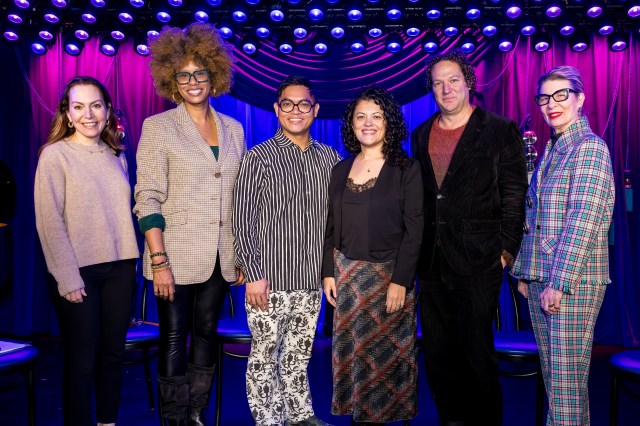 Rosemary Maggiore, Lisa Richards Toney, Duke Denk, Shanta Thake, Thomas O. Kriegsmann, and Lisa Richards Toney
(© Tricia Baron)