
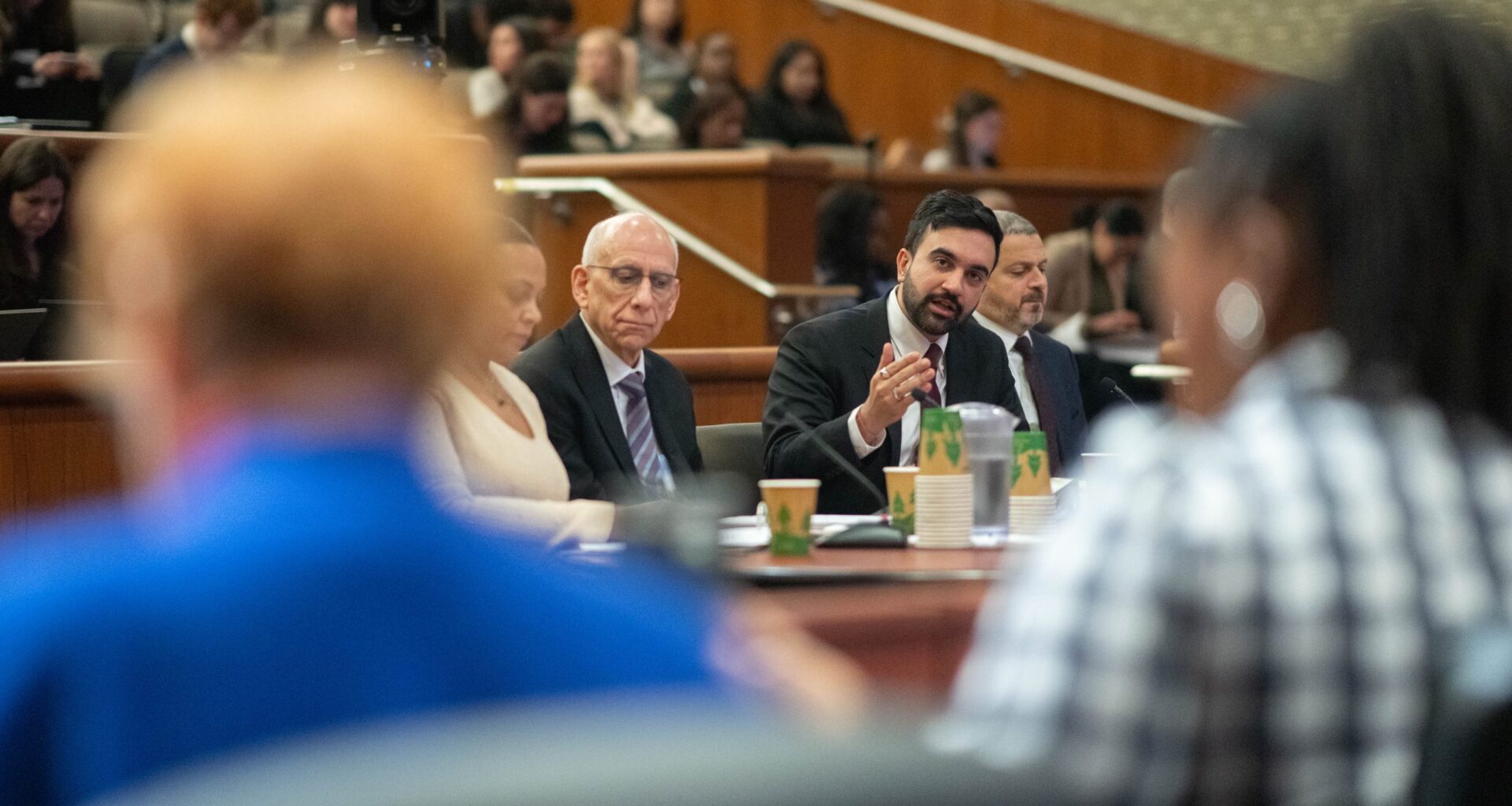
New York City’s estimated $12 billion budget gap over the next two years shrank to $7 billion over the last few weeks after updating revenue and bonus estimates and tapping into reserves, Mayor Zohran Mamdani told state lawmakers Wednesday.
The mayor traveled back to Albany for his first “Tin Cup Day” as mayor, after years on the other side of the aisle as a Queens assemblymember. The annual trip is a chance for mayors across New York to request funding from the state budget.
Last month, Mamdani held a press conference to lay out the city’s “serious fiscal crisis,” which he said bolstered his case for the state raising taxes on the rich. The mayor blamed that crisis on the city’s budgeting under his predecessor, Eric Adams, and what he framed as chronic underfunding from the state.
His remarks last month came after new City Comptroller Mark Levine sounded the alarm earlier in January, predicting the city will end this fiscal year in June with a $2 billion deficit that would well to nearly $10 billion in the following fiscal year.
Inside the wood-paneled hearing room in the state capitol building, Mamdani said that the projected $12 billion deficit had now shrunk to $7 billion – taking some of the pressure off of Gov. Kathy Hochul to raise taxes this year to help the city balance its books, as it’s legally required to do.
“By assuming an aggressive posture in savings without compromising city services, incorporating updated revenue and bonus estimates and using in-year reserves, we have lowered that $12 billion gap to $7 billion over two fiscal years,” he said, without specifying how much he’d taken out of reserves.
The city would continue to make “meaningful progress towards shrinking the gap,” he added.
Mamdani’s broader pitch echoed the budget message he shared last month. He called for the city to get what he says is its fair-share of state money, arguing the state takes in billions more in tax revenue from city residents than it returns in funding. He also again called for a 2% tax increase on New Yorkers statewide making $1 million or more.
“The cumulative goal of this work —and all that will follow—will be a city that works for the many, not just the few,” he said. “One where we restore New Yorkers’ faith in our democracy.”
Mamdani faced questions from dozens of state senators and assembly members about everything from his budget goals to the city’s response to the snow and extreme cold. He deferred at times to his first deputy mayor Dean Fuleihan and budget director Sherif Soliman to explain both the city’s budget issues and needs. He also shared his table with Jahmila Edwards, who leads intergovernmental affairs.
Assemblymember Patrick Burke, who represents parts of western New York including Buffalo, opened up the questioning by noting that Mamdani’s argument the city doesn’t get back what it gives into the state budget was “ideologically inconsistent” with his other politics.
“If someone says, ‘well, people in Manhattan are contributing most of the tax base, so therefore they should get more than people in Staten Island or the Bronx or Brooklyn,’ that’s not so good,” he said.
People living in smaller cities that he represents, like Dunkirk, on Lake Erie, are afraid of losing badly-needed money if more goes to New York City, he added.
“It should be needs based, it should be human beings and what they need.”
Mamdani in turn noted the vast wealth disparities within New York City, saying that more money is needed to “take care of working people.”
The state fiscal year begins April 1, and the budget is expected before that, although it’s frequently delayed. New York City’s fiscal year begins on July 1, and budget negotiations take place throughout the spring.
Mayor Mamdani’s first preliminary budget will be released Feb. 17, before months of hearings and negotiations with the City Council. That’s followed by an executive budget proposal from City Hall and continued negotiations with the council before a final budget deal sometime in June.
Related