
Photo-Illustration: Curbed; Photos: Daniel Yadin
In good times, klezmer singer and composer Éléonore Weill makes most of her living playing gigs around the city under her name or fronting the two bands Fada and Tsibele. But when the COVID pandemic began, she got divorced and had to move out of the Kensington house she shared with her ex-husband. Then she was hit by a car, which left her with a traumatic brain injury. She went on to live in 17 apartments around New York City over the next three years, moving between friends and sublets and short-term situations in search of stable, affordable housing.
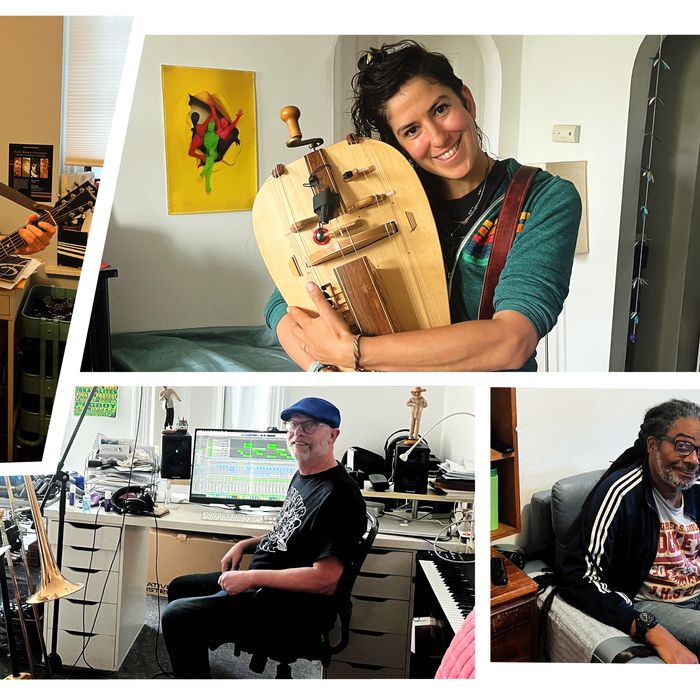
Eventually, Weill moved into a stately prewar building on Ocean Avenue in Midwood. There, she landed an apartment she has no plans to ever leave: a rent-stabilized one-bedroom for less than $2,000 a month. In her airy apartment, she gave me the full tour of instruments that had been scattered across the city during her nomadic stint: a piano, an electric organ, two accordions, a hurdy-gurdy, a bass recorder, two bass drums, a tongue drum, an electric bass, and a purple clarinet. She pulled open dresser drawers to reveal three dozen wooden flutes gifted to her over the years. The living room is her music studio and practice area, but it’s more than a workspace. “I’ve been craving a nest,” she said.
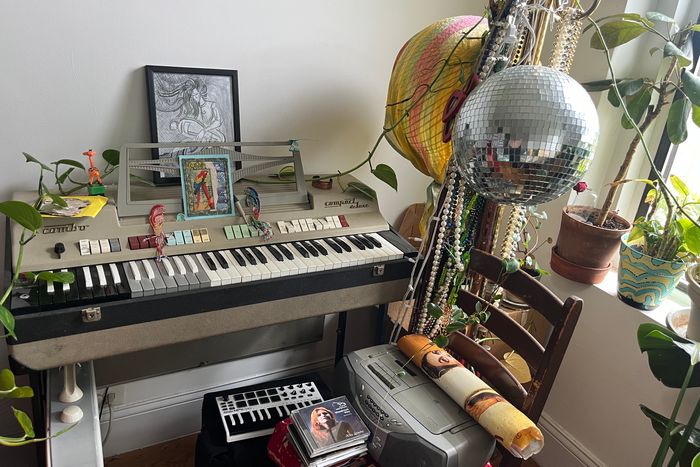
Weill’s electric organ in a corner of her music room–living room.
Photo: Daniel Yadin
The apartment was previously rented by her ex-husband (and current bandmate), who learned of the spot from Jeremiah Lockwood, a musician who lives one floor below. Lockwood got his apartment on the recommendation of Courtney Lee Adams, a singer-songwriter who lives in the building across the street with her husband, Buford O’Sullivan, a trombonist. In total, about a dozen musicians call 1641 and 1650 Ocean Avenue home. But they’re not all part of the same music scene — they play jazz, rock, reggae, ska, klezmer, and salsa. The common denominator is Ivona Hertz, their building manager. She has a reputation of renting to musicians, whose irregular incomes and lifestyles often make them nonstarters for other landlords (if you multiply your tips by your monthly bar-residency fee, you’ll probably still fall short of the 40-times-rent income requirement that’s standard in New York).
Hertz, who immigrated from the former Czechoslovakia to New York when she was 21, has for decades owned and managed a small portfolio of Ocean Avenue buildings alongside her ex-husband and business partner. Her office is in Prospect Heights, but she gets involved in some of the minor details of apartment life down in Midwood; she bought a bench for the clique of babushkas who sit outside the building and reimbursed Lee Adams for the soil she bought to plant a flower garden at the foot of her building. In her 50s, soft-spoken and quick to smile, Hertz is even a regular at many of her tenants’ shows. But perhaps the most surprising thing is the way she runs her buildings. She rents every one-bedroom at the two Midwood buildings she manages for less than $1,900 a month, far less than the average for the neighborhood. Some tenants, like Weill, are paying hundreds less than what Hertz could legally charge on their rent-stabilized units. Hertz doesn’t work with a broker and doesn’t advertise, but word spreads, and she receives dozens of applications a month, she said. “When tenants are happy and not too strained to pay the monthly rent,” she explained, “they tend to stay longer, are more cooperative when repairs are needed, and often refer friends.”
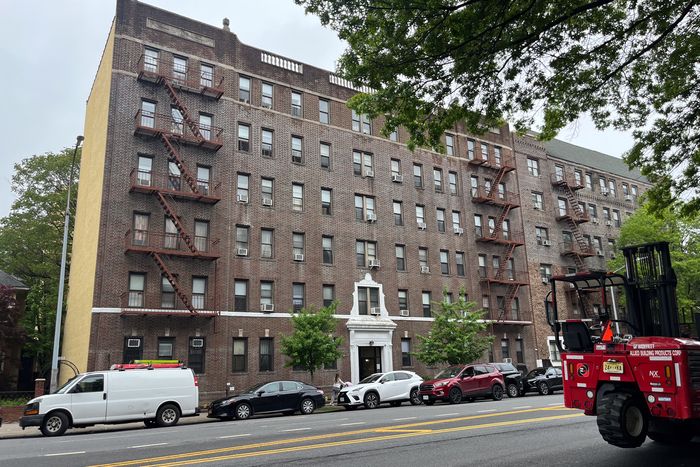
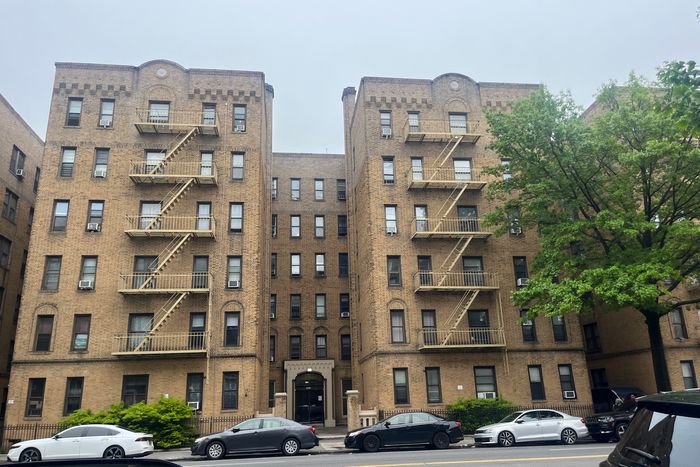
From left: 1650 Ocean Avenue Photo: Daniel Yadin1641 Ocean Avenue Photo: Daniel Yadin
From top: 1650 Ocean Avenue Photo: Daniel Yadin1641 Ocean Avenue Photo: Daniel Yadin
New York City still has a handful of buildings dedicated to housing artists; there’s Westbeth in the Meatpacking District and, perhaps more famously as of late, Manhattan Plaza in Hell’s Kitchen, a hub of performing artists with a deep Broadway and Hollywood pedigree, from Tennessee Williams to Timothée Chalamet. But this community of musicians on Ocean Avenue sprung up less by design and more as a byproduct of affordable housing shrinking to an ever-smaller pool of neighborhoods, among them Midwood, a middle-class residential area in south-central Brooklyn nestled between Marine Park and Bensonhurst. The neighborhood is better known for its large community of Orthodox Jews and the high-school students attending Murrow and the local yeshiva schools rather than for any particular accommodation to performing artists (not a single musician I interviewed could name a bar or venue by their building). The streets surrounding 1641 and 1650 Ocean Avenue are mostly quiet except for moms pushing strollers. To the east, the blocks of single-family homes could easily pass for New Jersey; to the west, toward the subway, sturdy low-rise apartment buildings abut rowhouses and townhouses. Up and down Ocean Avenue stand dozens of large rent-stabilized prewar apartment buildings, an artery of affordability through the heart of the neighborhood.
“This is not a hipster neighborhood in any way, shape, or form,” said Lee Adams. But, she added, “if you want a pharmacy or to go get your nails done, this is the place for you.” It’s certainly a leap from where she used to live, on 1st Street and First Avenue in the East Village, where rock clubs and performance venues abound. But after 26 years there, she lost her rent-stabilized apartment in 2020 following what she described as a “bruising” eviction struggle.
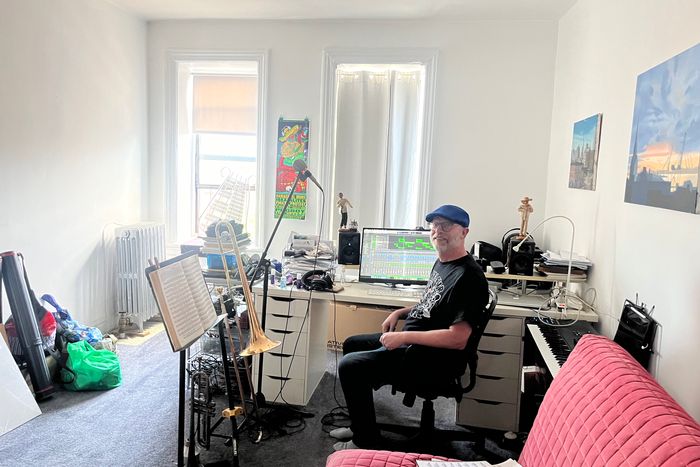
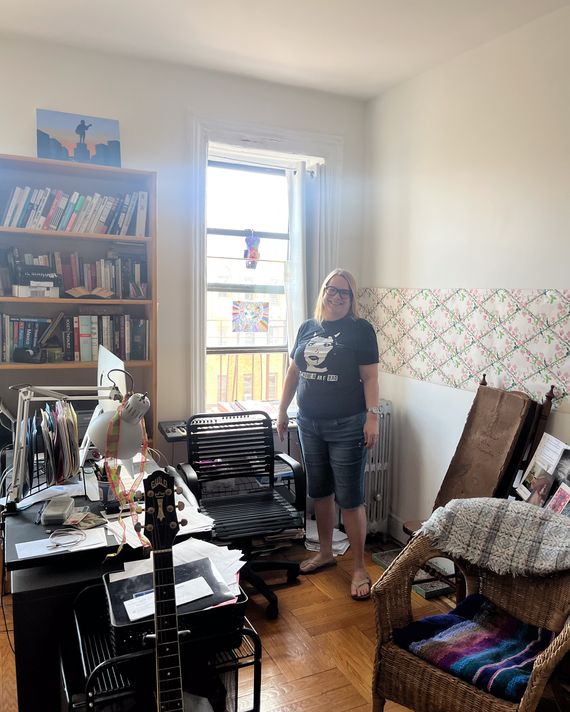
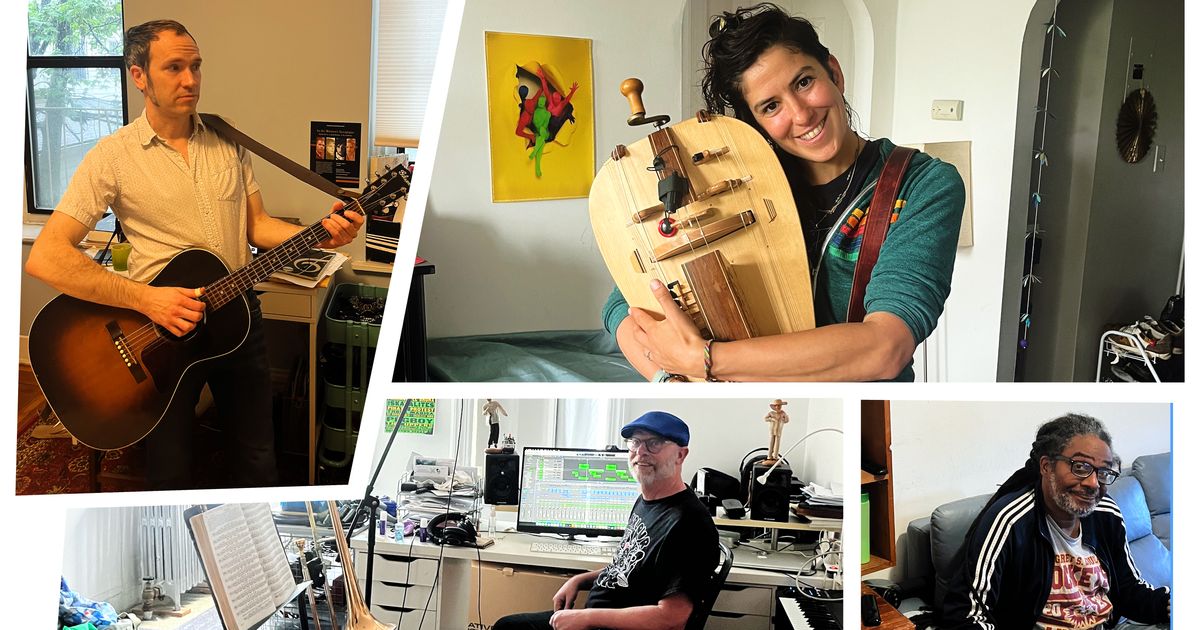
From left: Courtney Lee Adams in her music space. Photo: Daniel YadinBuford O’Sullivan, her husband, in his own music space. Photo: Daniel Yadin
From top: Courtney Lee Adams in her music space. Photo: Daniel YadinBuford O’Sullivan, her husband, in his own music space. Photo: Daniel Yadin
In fact, most of the musicians who live in Hertz’s buildings are veterans of the city’s music scene who, over the decades, have had to move farther and farther away from Manhattan and the swaths of Brooklyn and Queens where rents are climbing even more rapidly. There’s Weill’s neighbor, Gregory Jackson, a Brooklyn-born bassist who used to tour the world with Burning Spear and played on Amy Winehouse’s first album, Frank. For 15 years, he had a great deal on the ground floor of a Crown Heights mansion. Then, during the pandemic, the building’s elderly owners died, their children sold the property, and he had to move. But Crown Heights had become a place he could no longer afford — the average rent had risen more than 35 percent during the 2010s. His friend and mentor Kevin Batchelor, a trumpeter who plays in the Sun Ra Arkestra and leads the NYC Ska Orchestra, put him in touch with Hertz. Before the pandemic, Batchelor himself had moved from a place on the Grand Concourse in the Bronx to a large one-bedroom apartment in 1641 on the recommendation of Lee Adams’s husband, O’Sullivan.
In his Ocean Avenue apartment, Batchelor has a practice space and room for dozens of trumpets and his model-train set. In their roomy three-bedroom, Lee Adams and O’Sullivan each have a dedicated room for their music. O’Sullivan has a small recording studio in his with a thick gray rug as soundproofing. Like many of the brass players on Ocean Avenue, he practices with a mute. Lockwood sings and plays the guitar inside his apartment for hours, but he doesn’t practice his drums there —“that’d be unkind and uncivilized,” he said. In any case, the buildings have quiet-hour rules starting at 10 p.m. every night, and no sounds louder than a TV are allowed. (And if you need to be louder than a TV? Karel Ruzicka, a jazz saxophonist and composer who lives above Weill and below Batchelor, will play inside his walk-in closet if he needs to “let it rip.”)
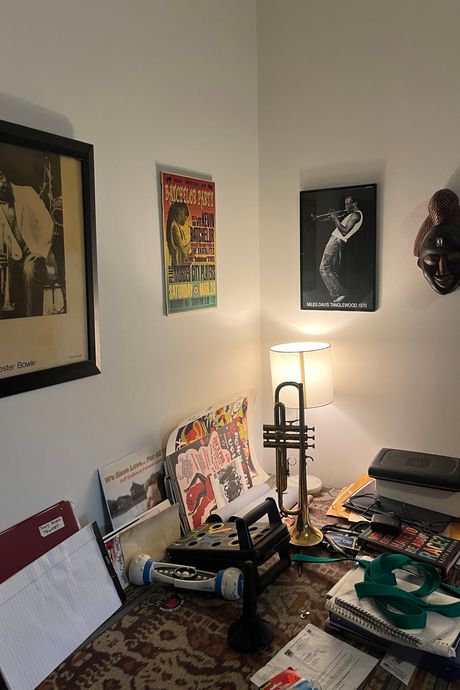
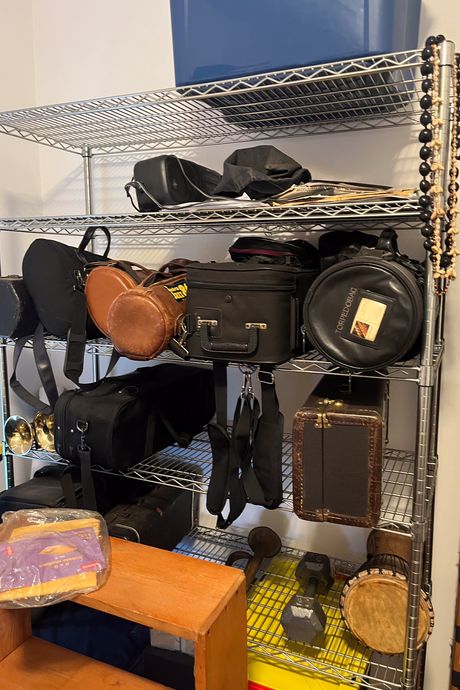
From left: Kevin Batchelor’s apartment and a shelf of instruments. Photo: Daniel YadinPhoto: Daniel Yadin
From top: Kevin Batchelor’s apartment and a shelf of instruments. Photo: Daniel YadinPhoto: Daniel Yadin
Most of the other residents at the Ocean Avenue buildings belong to a decidedly different demographic: Soviet Jews who moved in sometime in the ’80s, followed by immigrants from across the former Soviet Union, bookended more recently by Pakistanis, Bangladeshis, and another wave of Ukrainian immigrants. They don’t seem to mind their noisier neighbors — neither Hertz nor the musicians have reported fielding any complaints about loud music (the Department of Buildings doesn’t have a record of them either). A group of Russian-speaking grandmothers sits outside of 1641 on nice days; one of them, speaking through her home-health aide, said she loves to hear the sound of Weill’s piano drifting through the window and asked if she could hear more, the musician said. On the day Xito Lovell, a Panamanian-born trombonist and composer, was set to begin rehearsals for a performance with the New York Philharmonic, a neighbor left a note on his door. “I was sure it was going to be a noise complaint,” he said. Instead, it said, in crisp block letters, “DEAR TROMBONIST NEIGHBOR. WHEN I HEAR YOU PRACTICING I FEEL SAFE AND RELAXED. KEEP KILLING IT!” It was signed, “YOUR NEIGHBOR ON 4TH FLOOR.” (“I felt completely motivated after I read it,” Lovell said.)
For the musicians, proximity has brought them closer, and they increasingly find themselves as sometime-collaborators and stagemates. Batchelor brought Ruzicka into the NYC Ska Orchestra for a performance upstate last May. O’Sullivan and Batchelor now play together in the Ska Orchestra as well as in other projects. Lockwood and Weill have performed together as denizens of the Yiddish music scene; last July, she invited him onstage to perform at her 40th-birthday show at Barbès, the Park Slope dive that’s a capital of sorts for the scene. Hertz was also in attendance. Jackson said he and Batchelor had even been tossing around the idea of staging a small summer music festival for residents in the courtyard of 1650 that would feature the buildings’ musicians.
It’s a community that will probably keep growing. Some of the musicians at 1641 and 1650 didn’t come from as far as the Bronx or the East Village, but from the top of Ocean Avenue, where Hertz and her ex-husband own and manage the “Jazz Dorms,” two buildings below Prospect Park that have largely housed musicians for more than 20 years. With few vacancies in the Prospect–Lefferts Gardens buildings and some of the residents seeking more space, Hertz has begun sending them to the Midwood buildings. This is how Lovell, the trombonist, bumped into his friend Arturo Vergés, a Puerto Rican salsa trombonist — they were moving in on the same day. It was anything but coincidence.