
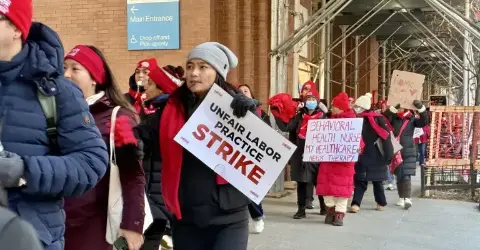
The longest nurses’ strike in New York City is over for three Mount Sinai hospitals in Manhattan and Montefiore in the Bronx after rank and file nurses overwhelmingly approved tentative pacts and will return to work by Feb. 14
But 4,500 nurses remain on strike against New York-Presbyterian after workers rejected the pact which the union bargaining committee had already rejected.
The nurses for the four hospitals will see salaries rise approximately four percent each year of the contract, according to the union.
Nurses at Mount Sinai gave it an 87 percent yes; 96 percent of nurses at Mount Sinai Morningside and Mount Sinai West gave it a thumbs up and Montefiore nurses ratified it with 86 percent.
The NYSNA top brass presented the pact to the rank and file nurses at all three hospital systems.
”We believe all striking nurses deserve to see the details of their tentative agreements and get the opportunity to vote on whether to ratify a new contract,” union president Nancy Hagans said on Feb. 10 before the vote took place on Feb. 11.
New York Presbyterian management said it welcome nurses who wanted to return and urged the union to reconsider the pact.
The strike was unusually contentious compared to three years ago when a strike lasted only three days. The hospital systems last time around appeared to be caught off guard. This time around, the hospitals had begun to bring in traveling nurses at the cost of $9,000 a week and had brought in a high priced PR firm to try to counter the natural good will that nurses appeared to enjoy. The hospitals said that initial salary demands by the union were excessive especially in light of the cuts in federal health care funds that all hospitals are facing.
Mayor Zohran Mamdani was joined by Sen. Bernie Sanders at Mount Sinai at a Mount Sinai picket. Public advocate Jumaane Williams also joined striking workers and various union members from taxi members to the carpenters union joined the picket lines.
The strike began on Jan. 12 with nearly 15,000 nurses walking off the job. Through most of the strike, nurses and their allies walked the picket lines in bitter cold temperatures but kept spirits up with pizza, hot chocolate and warming buses.
Nurses have long complained that many hospitals are chronically understaffed putting patient care at risk. And the new pacts include increased staffing levels.
”Nurses set out to improve patient care because every patient is a VIP,” said Hagans, president of the NYSNA. “Our contracts ensure that our hospitals are safer places–through increased staffing, workplace violence protections and more.
Nurses will begin returning to work by Feb. 14.
“The past several weeks have been challenging, emotional and exhausting in different ways for all of us,” said Dr. Brenday G. Carr in an email to employees at Mount Sinai. “Moving forward after a strike can bring a wide range of feelings: relief, uncertainty, anxiety or all of the above.”