
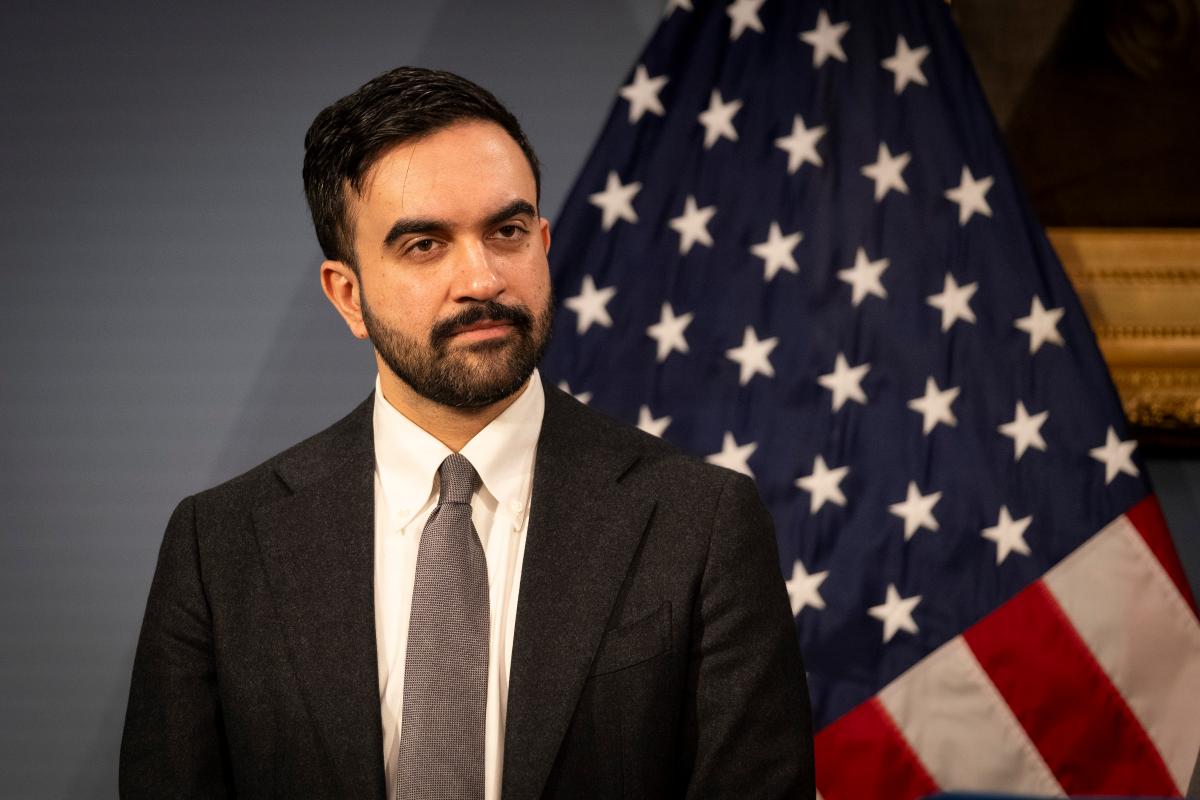
The Partnership for New York City under new President Steve Fulop seems eager to challenge Mayor Zohran Mamdani’s puerile “democratic socialism” agenda.
But when will we hear the same resolve from the industry that generates the largest share of Big Apple tax revenue?
That, of course, is real estate, especially commercial real estate.
Developers and landlords should scream much louder than they have over Mamdani’s pitch for higher taxes on corporations and wealthy individuals.
He made a tin-cup trip to Albany this week to whine over the city’s alleged need for more income-tax cash.
Gov. Kathy Hochul earlier said she opposed tax increases, but Mamdani’s recent endorsement of her could sway her to his side after the election.
Manhattan’s real-estate royalty spent big bucks trying to defeat Mamdani in last year’s primary and election, but they’ve gone mostly mute ever since.
This, although Mamdani’s wish-list tax hikes would promote corporate retrenchment and discourage tenants from signing new leases.
That would imperil, if not cripple, commercial leasing — an indirect blow to the business more damaging than any direct action Mamdani could take against it.
Higher taxes on companies would mean less revenue for the city from real-estate taxes, which contribute the most money to municipal coffers.
Unlike his crackdown on a few rotten apartment landlords, Mamdani has not directly disparaged the commercial-property world.
While he subscribes to stupid economic theories, he isn’t stupid; the office market keeps the city afloat.
Tax revenue generated by real estate stands between the Big Apple’s chronic but manageable fiscal strain and an utter collapse, as occurred in the near-bankruptcy of 1975.
The most recent survey by the Real Estate Board of New York, in March, revealed that real-estate taxes hit a record-high $37 billion — nearly half of the city’s tax intake, easily eclipsing Wall Street’s contribution.
And commercial real estate, from the century-old Empire State Building to the new JP Morgan Chase tower, generates the largest portion of it.
It accounts for the largest share of property taxes, which comprised 89% of all of last year’s $37 billion windfall.
Real-estate tax dollars — from “sidewalk interruption permits” to transfer taxes on billion-dollar property sales — pay for all the wages and benefits of 280,000 city employees, including the NYPD.
They contribute substantially to the state-controlled MTA’s capital-improvement budget.
Get opinions and commentary from our columnists
Subscribe to our daily Post Opinion newsletter!
Thanks for signing up!
From their position of strength, commercial moguls can and should use their dough and formidable lobbying clout to thwart Mandani’s agenda — in public forums, in the media and behind the scenes.
Before Mamdani’s election, most office landlords pussyfooted behind claims they “want to work with him.”
Their caution at the time might have been politick.
But they continue to pull their punches.
For example, Rob Speyer, president of Rockefeller Center owner Tishman Speyer, told the Commercial Observer he admires Mamdani because he “reached out immediately after the primary to people who didn’t support him — including me. He . . . actively listened, as he solicited our views.”
That’s dandy, but we need to hear Speyer — and fellow big developers such as Marc Holliday, Douglas Durst, Steve Roth and Gary Barnett — specifically take on Mamdani’s tax-the-rich pipedream that might drive their tenants out of town.
Advisory firm KPMG, in a new report called “Perspectives: Local Insights from New York City,” found that 70% of business leaders said they plan to “increase their commercial real-estate footprint [in the city] in the next 12–18 months.”
But any incremental gain the city would realize from higher levies on companies would be peanuts compared with catastrophic blow to municipal coffers that would result from tenant contractions that ruin landlords.
As equity analyst firm BTIG put it in this month’s “buy” recommendation for shares of developer SL Green, a “downside scenario” could kick in if, “the new Mayoral Administration creates an unfriendly business environment and slows the pace of business formation/increases relocation of existing businesses which in turn slows leasing and impacts office real estate values.”
The time for timid talk about Mamdani is over. Our skyscraper-builders should let him know they’ll no longer be cowed — and there will be hell to pay if he bullies Hochul into gutting the cash flow that keeps the metropolis alive.
Mamdani, to his short-term credit, let stand measures passed by former Mayor Eric Adams to speed up projects needing public approvals and protect projects from the whims of individual City Council members — even though he could have canceled them.
But tax hikes on corporations could wipe out all the progress at a stroke.