
Some homeowners in an affordable housing program in Queens say their dreams turned into nightmares as they encountered issue after issue at their newly rehabbed homes.
In 2017, Habitat for Humanity bought 23 formerly vacant and dilapidated homes from NYCHA and restored them for their Queens Phase II project.
As required, prospective homeowners spent hundreds of hours helping Habitat build other properties through a process called sweat equity. Then, about seven years ago, they bought the Queens Phase II homes from Habitat and started paying below-market mortgages.
Now, the city’s Housing Preservation and Development department (HPD) is investigating complaints from some homeowners, ranging from piping problems to leaks and more.
“We really trusted Habitat”
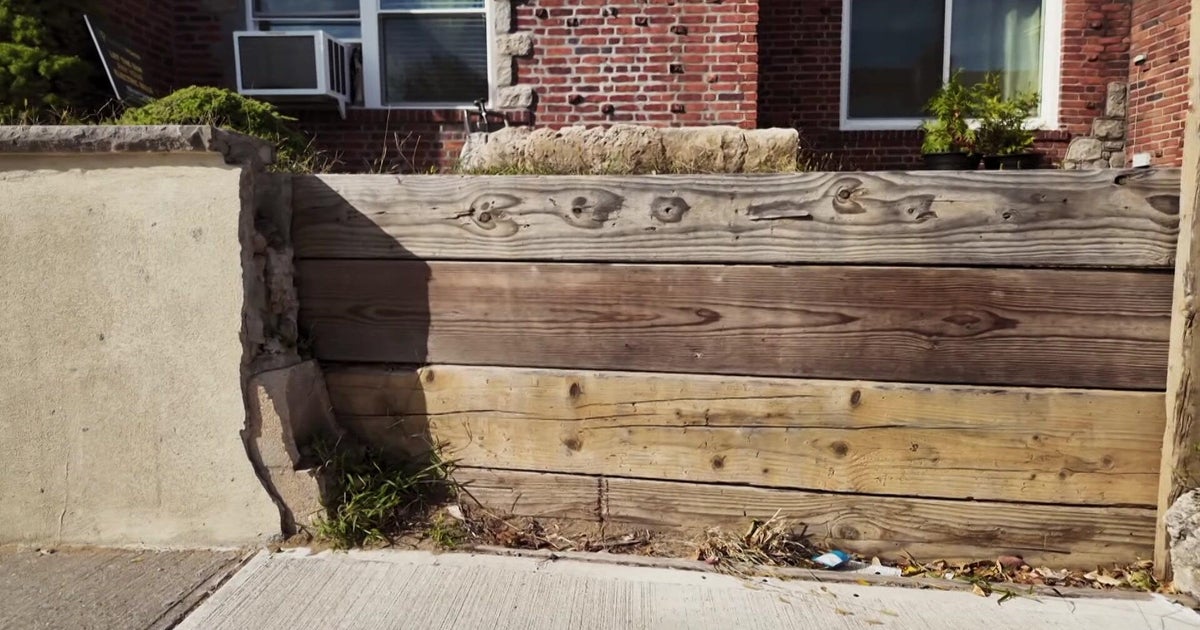
Micah Hunter said his family was ecstatic to move into their Habitat home in Laurelton, but over the years, he said one thing after another started to fall apart, from large chunks of his roof shingles flying off to part of his retaining wall collapsing.
“Over time, the crack got bigger and bigger and bigger,” he said, “and then obviously the wall falling shows the reason why – they were built with no footings.”

Queens homeowner Micah Hunter said part of his retaining wall collapsed.
CBS News New York
Hunter said last summer, months after part of the wall fell, he tripped and fell near the gap and injured his leg while weed-whacking.
“It makes me feel horrible. We really trusted Habitat,” Hunter said.
While Hunter blames the wall damage on poor construction, Habitat emailed CBS News New York saying it’s because a New York City Department of Environmental Protection truck struck it, but the city says it has no record of that crash happening.
Last fall, Habitat sent Hunter a $50,000 settlement offer, which would bar him from requesting any future repair payments and from publicly criticizing the nonprofit.
“I turned it down. That’s why I’m talking to you today, or I would be paying $10,000 every single time I talked,” he said.
“Do the right thing”
The nonprofit paid to fix some of the issues after the sales, and it says other repairs are the responsibility of the homeowners, but the homeowners don’t see it that way.
“It makes me question, well, are all the things that are done in the home, were they done correctly?” homeowner Nicolette Parkinson said.
“It’s more work than it should be for a supposedly ‘new’ house, a rehabbed house. Nothing should be wrong,” homeowner Cassandra Murray said.
“We wanna have all the homes built and repaired to what we thought we were getting, a house, a brand-new gut rehab with no issues,” Hunter said.
“I appreciate that Habitat gave me the chance to have a home. Everybody wants an American dream of a home,” Murray said. “But at the same time, do the right thing. The house is supposed to be move-in ready.”
“We’re putting money into the home. I’ve spent thousands of dollars on landscaping, on cementing,” homeowner Michele Roman said.
No matter how much they invest into their houses, for the next 23 years or so, the amount those New Yorkers can sell their homes for is limited by city requirements. That’s to ensure it can only go to other families that qualify for affordable housing.
Habitat, HPD respond to complaints
Habitat would not agree to an interview for this story but sent the following statement:
“As per the mutually agreed upon process and despite having no contractual obligations, Habitat has provided ongoing support to homeowners and are actively engaged with HPD and third-party inspectors to determine which identified issues are resulting from work done by homeowners, deferred maintenance, normal wear and tear, or other causes while upholding the responsibility of homeowners for maintaining, repairing, and modifying their homes. We will continue to go above and beyond our legal requirements and remain committed to transparency, accountability, and collaboration.”
The HPD said in a statement:
“HPD’s mission is to ensure that every New Yorker has a safe, affordable place to call home, and we do that, in part, by creating affordable homeownership opportunities across the five boroughs, as we have done in this instance. After some of the project’s homeowners notified HPD of alleged issues with these homes, HPD took the homeowners’ concerns seriously — even though the homes had been sold years ago. As part of our review of these concerns, HPD has worked with Habitat to conduct professional, third-party inspections of the homes to help determine whether issues the homeowners have raised can be attributed to the rehabilitation or are matters of routine maintenance that are the homeowners’ responsibility. HPD continues to be in touch with both Habitat and the homeowners on a regular basis, and the review of the alleged issues is ongoing. We will continue to engage with both Habitat and the homeowners as they work towards a resolution.”
The city also points out that the contracts stated the homes would be sold “as-is.”