
In mid-to-late 18th century England, if you wanted your portrait painted, there was one artist whose touch set him apart: Thomas Gainsborough.
“You can always kind of recognize a Gainsborough because there’s this sinewy, sort of — it’s been called the gossamer web of paint — that was, even in his own life, people were talking about how no one could paint like he could paint,” said Aimee Ng, the Peter Jay Sharp chief curator at The Frick Collection and organizer of the exhibition “Gainsborough: The Fashion of Portraiture.”
What You Need To Know
“Gainsborough: The Fashion of Portraiture” is on view at The Frick Collection through May 25
The exhibition features 25 portraits by Thomas Gainsborough, including 22 loans from 17 lenders in North America and the U.K.
It is the first exhibition in New York devoted solely to Gainsborough’s portraits and the Frick’s first special show dedicated to the artist
Visitors can also see five additional Gainsborough works in the museum’s permanent collection galleries
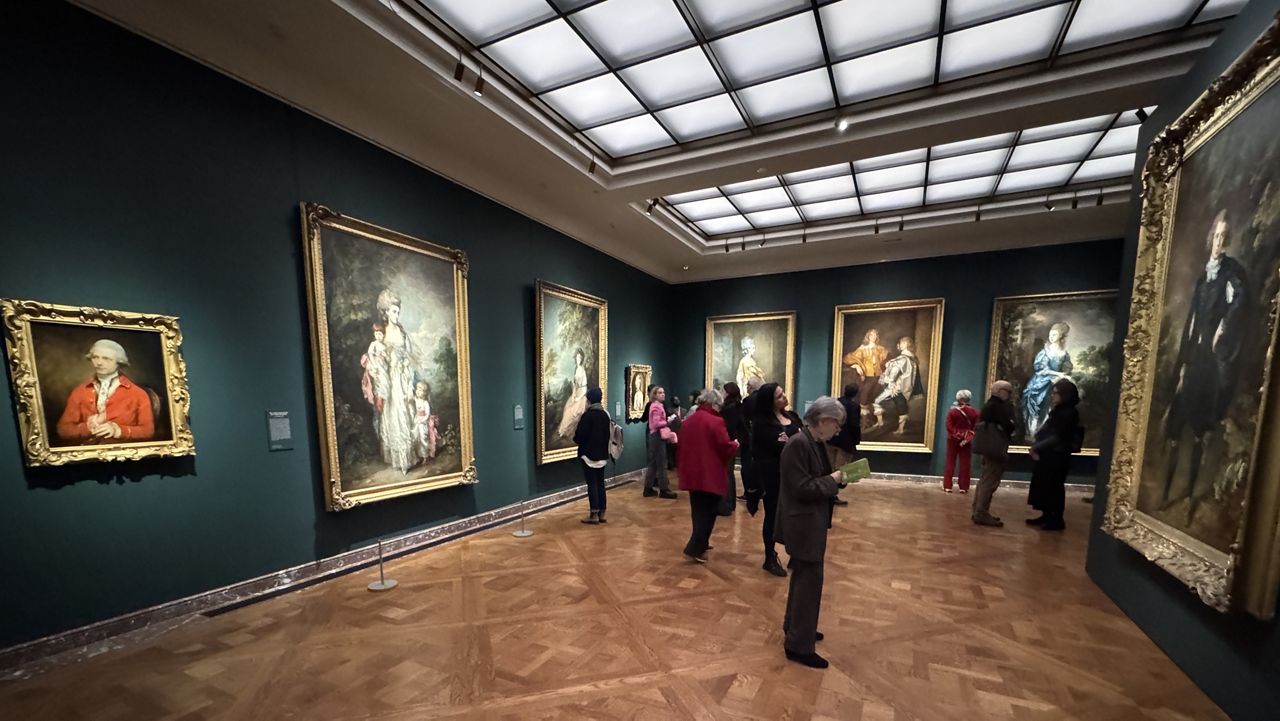
The new exhibition at the Upper East Side museum is the first devoted to Gainsborough’s portraits in New York and the Frick’s first special exhibition focused on the renowned British artist.
On view through May 25, it brings together 25 works that explore the interplay between portraiture and fashion in 18th-century Britain.
Of the 25 paintings featured, three are from the Frick’s permanent collection. The rest were loaned for the exhibition.
“Twenty-two paintings are on loan from 17 lenders in North America and the U.K., and we are grateful to all of them,” Ng said.
Gainsborough’s clientele ranged from royalty to relatives and friends. He painted the king and queen of England, along with his wife, his nephew and studio assistant, his friend’s dogs, a Belgian inventor named Merlin, and Ignatius Sancho — a servant who was also a composer, writer and abolitionist.
“He’s the only Black sitter that Gainsborough painted that we know of, and actually this is probably the only portrait of a servant by a major artist in the 18th century in Britain that we know of,” Ng said. “But of course, Gainsborough was not showing him as a servant. He was showing Sancho as a gentleman.”
The exhibition situates these portraits within the context of 18th-century fashion, highlighting how fabric, texture and silhouette became tools of identity in Gainsborough’s hands. Flowing gowns, tailored coats and shimmering fabrics are rendered with the same lightness that defined his brushwork.
Visitors can also see five additional Gainsborough works in the museum’s permanent collection galleries, located in the library and dining room of the former Gilded Age home of industrialist and art patron Henry Clay Frick.
The mansion, between 70th and 71st streets on Manhattan’s Upper East Side, reopened last April after a years-long renovation.
Beyond Gainsborough, the Frick houses works by masters such as Johannes Vermeer, Claude Monet, Édouard Manet, Edgar Degas and Rembrandt.
Plan a visit and find out about programs coinciding with the exhibition on The Frick’s website.