
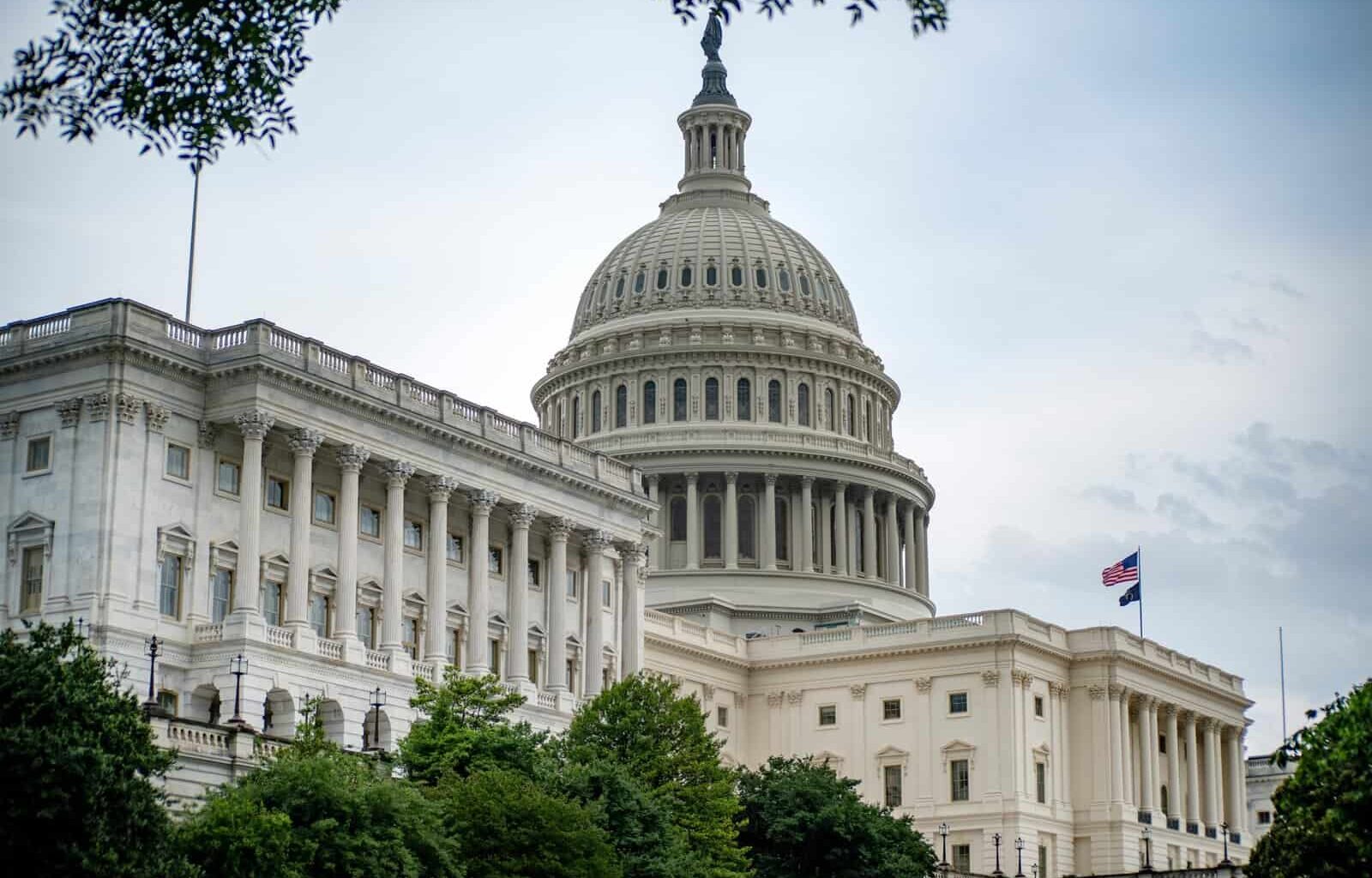
Congress Tackles the Benefits Cliff
Senator John Husted (R-OH) recently introduced the Upward Mobility Act, which proposes pilot projects that would allow five states to combine funding streams for anti-poverty programs to help eliminate benefits cliffs.
The legislation takes aim at a major flaw in the current design of the social safety net that disincentivizes hard work and career advancement. The patchwork of programs funded in the United States all have different eligibility criteria and requirements, which can mean that even small changes in income can result in a significant net loss because of benefits. For instance, when someone who receives public benefits gets a raise, earns a promotion or works extra hours, they are likely to lose access to some of their benefits. This decrease in net income is called the benefits cliff.
Last year, NCRC published a benefits cliff report highlighting this exact problem and some of the experiences our members have had serving single parents who have had to navigate this dilemma. Our analysis showed that even well-intentioned policy changes like childcare deductions tend to delay cliffs rather than eliminating them, resulting in workers losing their benefits.
According to Husted’s announcement last week, the legislation would supposedly “free states from bureaucratic rules that limit flexibility.” During a recent local public radio interview, Husted said, “We don’t have the work ethic in this country that we once had, and we literally have the federal government telling people we will give you more money if you stay home than if you go to work. That’s crazy.”
Historically, proposals to reform public assistance programs have been met with skepticism. Husted’s proposal is reminiscent of the welfare reforms passed into law during the 1990s when a series of pilot projects laid the groundwork for the Clinton Administration with the goal of shrinking the social safety net. Delivering on a campaign to “end welfare as we know it,” Clinton signed the Personal Responsibility and Work Opportunity Reconciliation Act (PRWORA) of 1996 into law with bipartisan support in Congress.
The central accomplishment of PRWORA was replacing the Aid to Families with Dependent Children (AFDC) program with the Temporary Assistance for Need Families (TANF) program. While AFDC was an uncapped federal matching program that was paid to states based on caseloads, TANF is a block grant program that allocates money to states and gives them the flexibility to spend it as they see fit within certain broad categories.
Putting aside the racist undertones motivating this language, what has happened since is that states have spent less and less of their TANF grants on basic cash assistance for families. Instead, states have diverted funds to non-assistance projects, such as a $90 million volleyball arena. Instead of streamlining processes and uplifting more people, the flexibility from TANF has largely led to the misuse of program funds.
The TANF reforms from the 1990s sound very similar to what Husted has proposed, except state pilots funded by the Upward Mobility Act apply not just to TANF but every antipoverty program. While the purported goal is to eliminate benefits cliffs, the effect could be the further degradation of public benefits altogether.
For now, the bill and its companion in the House will make their way through the committee process. With midterms coming up this year, big shifts are not likely as lawmakers hunker down for campaign season. However, this legislation could be a precursor for what’s to come in future years from Congressional Republicans.
NYC Takes on Affordability
In other news, the Mamdani Administration in New York City has been tackling affordability and economic mobility from many angles, from delivering on a key campaign promise to fund universal childcare for two-year olds to eliminating hotel junk fees to cutting red tape for developers and small businesses
Mamdani’s laser focus on affordability undoubtedly shifted the national conversation, subsequently influencing races across the country, including important gubernatorial victories for Democrats in Virginia and New Jersey. However, all eyes are on New York as the fight for economic mobility and affordability continues nationwide.
Changes to SNAP Coming Soon
The changes to the Supplemental Nutrition Assistance Program (SNAP) passed in the One Big Beautiful Bill Act (OBBBA) will pose greater barriers to affordability and economic mobility. Some of the major changes to SNAP include:
Increasing cost burden for states
Changing benefits eligibility
Expanding work requirements to more people, including previously exempt vulnerable populations, such as homeless individuals and veterans
Prohibiting changes to benefit amounts based on updates to the Thrifty Food Plan, which defines the contents of a market basket of goods
Removing the ability for participants to use energy assistance program deductions in their eligibility calculations
As these go into effect, state agencies and lawmakers are being forced to make tough choices about whether to change eligibility criteria to reduce costs that will lead to cutting benefits for more people. More people will have to work to receive benefits despite limitations like childcare, eldercare and transportation that overwhelmingly impact low-to-moderate income families who rely on SNAP benefits.
Some states with more favorable views of SNAP benefits may pass enough funding through their state legislatures to maintain benefits at previous levels for most people who have historically been eligible. In these states, programs like SNAP Employment and Training (SNAP E&T) – the workforce development program for SNAP participants – are likely to see a rise in case loads as more of those who are eligible will be subjected to work requirements.
On the other hand, there will be states that cannot come up with the money to pay for the additional costs placed on them as a result of OBBBA. These states are likely to further constrain eligibility criteria to reduce the cost of benefits, which means that fewer people will receive nutrition assistance.
The overall impact of OBBBA will be an increase in hunger across the country, leaving millions of children, the elderly and disabled people at risk of food insecurity. During the previous shutdown, we saw the vulnerability of the SNAP program and the devastating impacts of hunger be weaponized as a tool for political leverage.
Economic mobility is not getting any better for Americans, but there are reasons for cautious optimism as we head full steam into the 2026 primary elections. Nevertheless, changes to SNAP and Medicaid as well as a continued affordability crisis loom large as the economy continues to deliver for the top 1% while leaving everyone else behind.
Simon Wang is the Economic Mobility Specialist with NCRC’s Economic Mobility team.
Photo credit: Ramaz Bluashvili via Pexels.
