
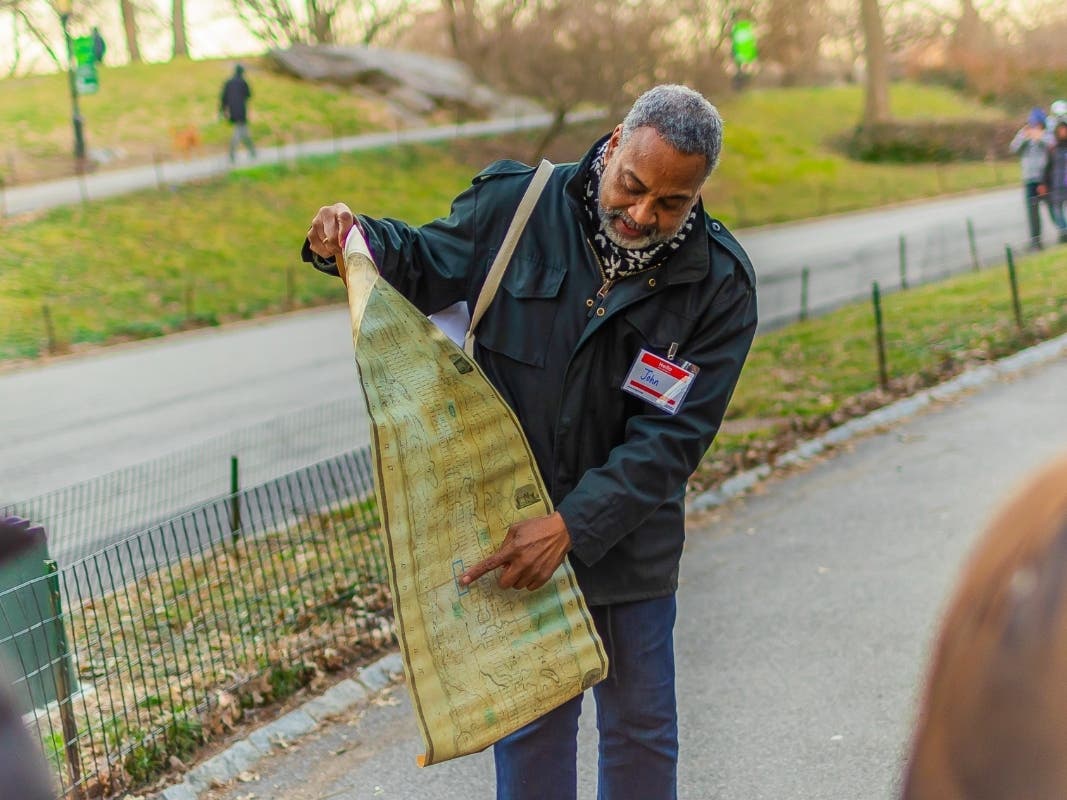
CENTRAL PARK, NY — The Central Park Conservancy is inviting New Yorkers to explore the history of Seneca Village, the largest community of free African-American property owners in pre–Civil War New York that existed before Central Park was built, with a new series of tours.
This initiative is part of Black History Month programming and aims to remember the community that flourished along what is now the Park’s perimeter from West 82nd to 89th Streets during the 1800s.
The Conservancy has also launched an online hub dedicated to sharing its research about the community, to bring the history of Seneca Village to life for residents and visitors.
“Caring for Central Park means understanding and honoring all facets of its history, all year round,” Jessica MacLean, Historian at the Central Park Conservancy, said. “This February, we encourage New Yorkers to join us and celebrate the free Black New Yorkers who established Seneca Village two hundred years ago.”
While no photographs or illustrations of Seneca Village are known to exist, researchers have utilized historical documents, archaeological findings, and topographical maps.
This research has allowed them to develop a 3-D model, available on the Conservancy’s website, depicting what the community may have looked like in 1855.
“Too often, the stories of Black communities have been displaced from the public landscape, even though they are foundational to the city’s growth and identity,” MacLean said. “Anyone who takes one of our in-Park tours or explores our chronicle of Seneca Village is doing their part to ensure this vital history is shared and remembered.”
In March 2025, the Central Park Conservancy began a multi-year initiative with support from the Mellon Foundation, which aims to permanently commemorate Seneca Village within the Park. The Conservancy is developing a vision for this commemoration through partnerships with local schools and cultural institutions, alongside public programming that visualizes Seneca Village’s history.
Guided Seneca Village tours are available for $10 for the general public throughout February. New York City educators are eligible to attend these tours for free year-round. Learn more here.
For questions and tips, email Miranda.Levingston@Patch.com.