
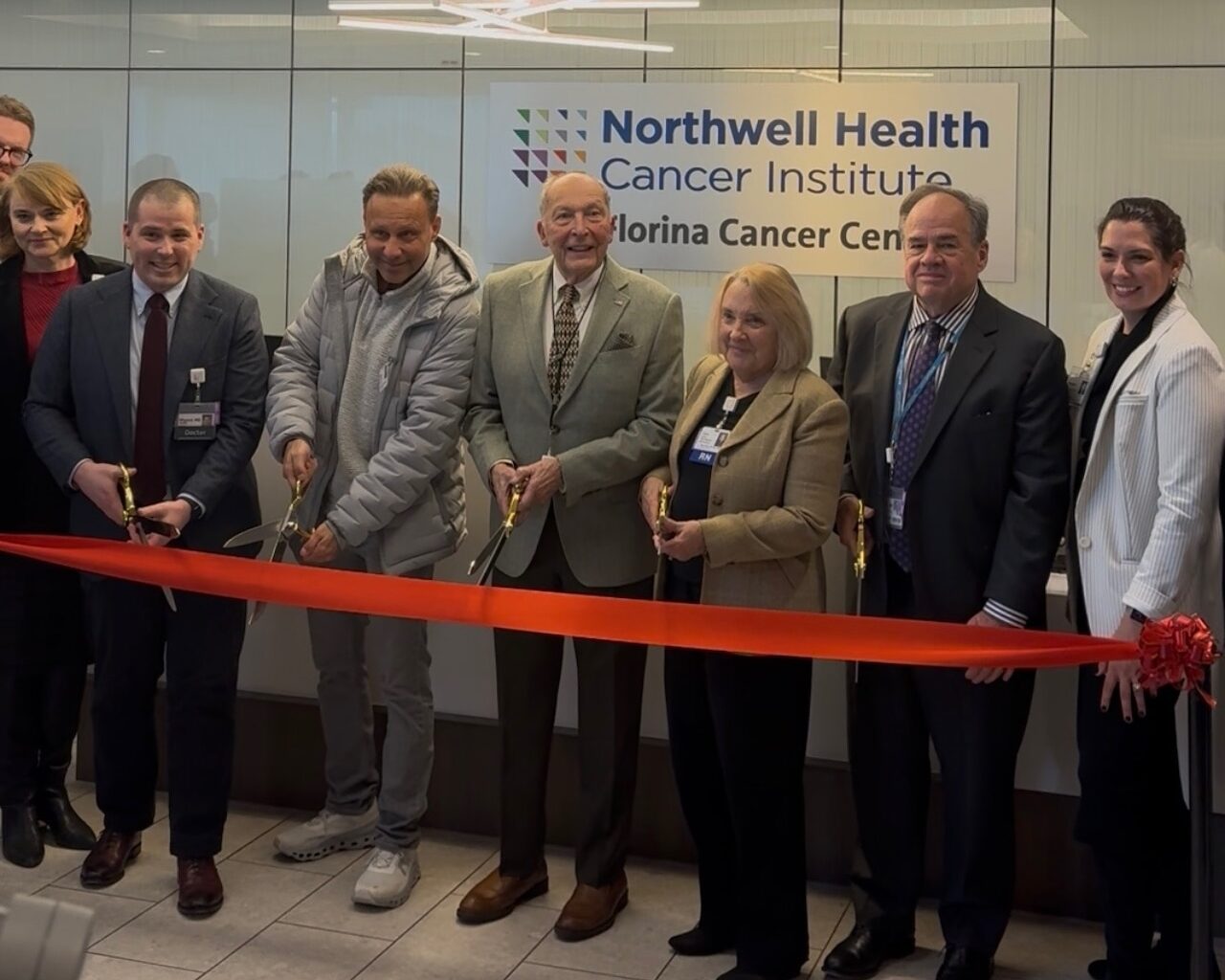
STATEN ISLAND, N.Y. — Staten Island University Hospital celebrated the opening of its new Supportive Oncology Program at the Florina Cancer Center with a ribbon cutting ceremony on Thursday.
Meagan Sills, president of the hospital, said the launch marks a significant expansion of services aimed at supporting patients holistically.
“Supportive Oncology is focused on improving the quality of life for patients living with cancer, from the time of diagnosis through treatment and beyond,” Sills said in a speech before the ribbon cutting.
Sills said the program will not only help patients manage physical symptoms, but will address the “emotional, social and spiritual needs that can arise during treatment.”
Dr. Timothy Wigand said the program’s focus is on the quality of life for patients.
“Our goal is to make sure that people have the support they need to live as long as possible and as good as possible,” Wigand said in his speech.
“We’ve seen that patients who work with a palliative care doctor earlier on in diagnosis actually live longer,” Wigand said in an interview after the ceremony.
“I think my job is to take a step back,” Wigand said. “And just make sure that whatever treatments people are going through, they are tolerating them in the right way and having the right support with medication.”
Dr. Thomas Bradley said the new program is a “testament to our commitment to treating the whole person, and not just the disease.”
“We know that a cancer diagnosis impacts every facet of a patient’s life,” he said in a speech during the ceremony. “Patients often grapple with debilitating side effects, anxiety, depression, nutritional challenges, financial burdens and the task of navigating life post-treatment.”
Bradley said the staff at Florina is committed to fulfilling the unmet needs of patients.
“Our vision was to provide a safety net, a guiding hand and a source of strength for every patient and their loved ones throughout their cancer journey,” he said.
Wigand said by next year he hopes to see a higher percentage of patients integrated in the program.
“It’s important for people to realize that if they are facing cancer, that a palliative care doctor and supportive oncologist are here to make sure that your life can be the best it can, and also help you live longer.”
Wigand said with the rollout of this program he hopes to see patients live longer lives.
“I think we’ll have a lot more patients that will be able to tolerate treatments for longer and do better,” Wigand said. “There’s been an absence of that on the Island. We didn’t have the same type of specialty support, but we have it now.”