
This story was originally published by THE CITY. Sign up to get the latest New York City news delivered to you each morning. Public health, explained: Sign up to receive Healthbeat’s free New York City newsletter here.
When a mediator presented a proposal to striking NewYork-Presbyterian nurses and hospital management on Sunday, the elected rank-and-file representatives at the bargaining table didn’t like what they saw.
Securing improved nurse-to-patient ratios in the new contract has been a major priority for the New York State Nurses Association, and staff at NewYork-Presbyterian have been pushing the hospital to agree to enforcement language that matches what their colleagues at Mount Sinai and Montefiore have already won.
Among other issues, the mediator’s proposal, which the union’s representatives rejected, offered only about half as many new hires as the union was asking for, said neonatal nurse Beth Loudin, who sits on the NewYork-Presbyterian executive committee.
The nurses ultimately turned down the contract by a resounding margin on Wednesday, following a tense skirmish with union leadership, who forced a vote over the objections of rank-and-file nurses holding out for a better deal. (Mount Sinai and Montefiore nurses approved their tentative agreements by wide margins, and will return to work by Saturday.)
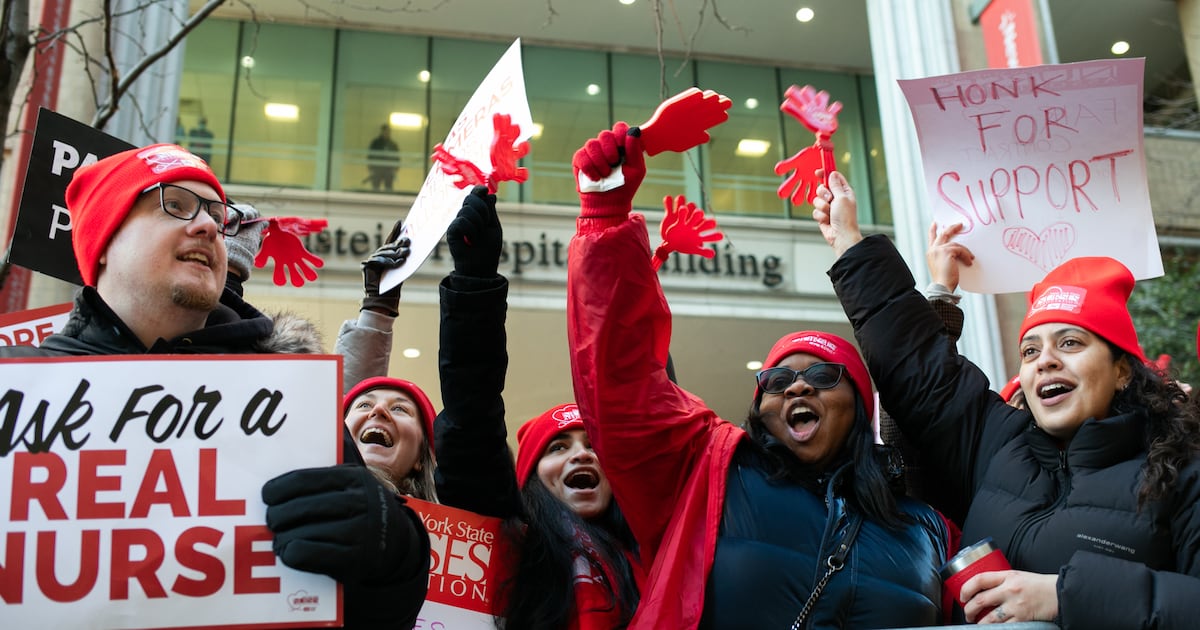
NewYork-Presbyterian stands as the only hospital still on strike as nurses enter their second month on the picket line. As of Friday afternoon, the two sides and their mediator had not agreed on dates for further negotiations.
Patrick Kline, a cath lab nurse and strike captain at NewYork-Presbyterian Milstein, said he believes the vote results delivered a mandate and granted nurses significant leverage as they head back to the bargaining table.
“I think that’s what people have learned through this process — that we, the rank and file, are the union, and that if we’re not happy, we hold elections,” Kline said. “We want our nurses and jobs protected, and we want more nurses to safely care for our patients. That’s what it’s coming down to.”
The tentative agreement included the same 12% salary increases that the union secured in its earlier deals with Mount Sinai and Montefiore and preserved the health care and pension benefits the union and NewYork-Presbyterian locked in weeks ago.
But staffing remains the heart of the nurses’ demands.
NewYork-Presbyterian laid off 2% of its workforce last year, or about 1,000 staff, nurses and other health care workers among them. “We just need stronger language in our contract to protect our jobs. NYP just continued to delete that line that we needed,” said Loudin. “There’s no countering, there’s no conversation.”
Jacqueline Brown, a recovery nurse at NewYork-Presbyterian/Columbia, agreed. “No nurse should have to take on 20 patients in the emergency room by themselves,” she said.
On Wednesday, a NewYork-Presbyterian spokesperson said the hospital was “disappointed that our nurses did not ratify the mediator’s proposal, which we accepted on Feb. 8 and NYSNA leadership endorsed.” The spokesperson, Angela Karafazli, said the hospital is willing to honor the proposal the nurses rejected for reconsideration.
How long the strike continues depends on several factors, said Rebecca Givan, an associate professor of labor and employment relations at Rutgers University, who specializes in the health care sector. Management can weigh their readiness for a long strike, and they have a greater pool of travel nurses to hire once Montefiore and Mount Sinai staff return to work.
On the other hand, nurses have delivered a strong mandate in rejecting the contract, Givan said.
“I think it weakens Presbyterian’s hand, and it creates greater pressure on the hospital,” she said. “And it shines a light on the fact that nurses and patients in the other hospitals have enforceable ratios that benefit patients, and Presbyterian has so far refused to have the same contract language.”
Since the Wednesday night vote, the hospital has sent out notices to nurses asking them to indicate whether they are interested in returning to work by 6 p.m. Saturday.
Meanwhile, also in the last several days, the union has stepped up its efforts to ensure that NewYork-Presbyterian nurses do not cross the picket line.
On social media, nurses have circulated infographics warning that the union will no longer protect anyone who breaks the strike. In conversations with colleagues, they are emphasizing the need for solidarity. Strike captains are routinely checking in with their hospital units to ensure members stay strong.
In the cath lab, Kline said, 100% of nurses pledged to continue holding the line.
Claudia Irizarry Aponte is a senior reporter covering labor and work for THE CITY.