
How can people possibly afford to live in one of the most expensive cities on the planet? It’s a question New Yorkers hear a lot, often delivered with a mix of awe, pity and confusion.
We surveyed hundreds of New Yorkers about how they spend, splurge and save. We found that many people — rich, poor or somewhere in between — live life as a series of small calculations that add up to one big question: What makes living in New York worth it?
When Erika Fernandez-Pacheco was a child growing up in New York City, her family lived largely paycheck to paycheck. Her parents, both immigrants, met at a factory in Manhattan. Her father later worked as a taxi driver and a bodega owner.
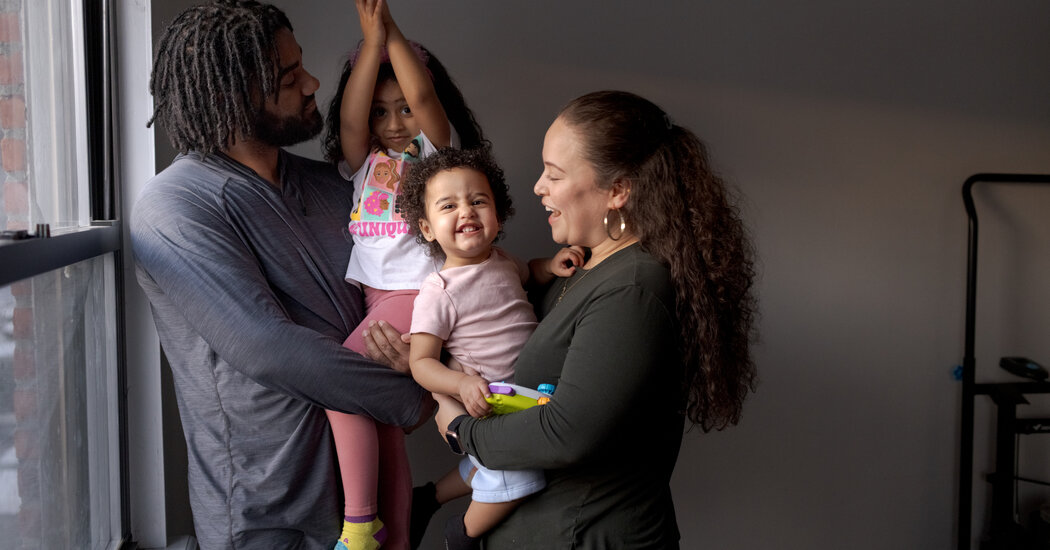
These days, Ms. Fernandez-Pacheco and her husband, Manuel Pacheco, are far from rich, but they’re more than comfortable.
Ms. Fernandez-Pacheco works as a sports journalist and content creator, and Mr. Pacheco works in food service at a Manhattan hotel. Together, they earn between $165,000 and $170,000 in a typical year. They have two daughters, 4 and 1.
“We’re not just getting by,” Ms. Fernandez-Pacheco said. “We have a life.”
Luck be a landlord
Having a good landlord in New York City is the best kind of luck.
Ms. Fernandez-Pacheco, 37, and Mr. Pacheco, 38, moved to East Elmhurst, in Queens near LaGuardia Airport, during the Covid pandemic. Ms. Fernandez-Pacheco was pregnant, and they were in search of more space and cheaper rent. They found both in a three-family home on a quiet street.
Their 700-square-foot apartment has two bedrooms and lots of closet space. The landlords, who live downstairs, have not raised the couple’s $1,800 monthly rent since 2021, when they moved in.
But their apartment is far from public transit. Mr. Pacheco has to leave for work by 4:15 most mornings, before the bus starts running. So he uses his monthly Lyft membership to take a car to the nearest subway, which is a half-hour walk away. It’s a $10 expense, even before he swipes his transit card.
The couple looked for apartments closer to the subway but found that rents were $2,500 or more for cramped spaces. They decided to stay put, content with their affordable apartment in their affordable neighborhood.
Recently, Ms. Fernandez-Pacheco has been scrolling a Reddit page where New York parents vent about how expensive it is to live here. Sometimes, their complaints make her roll her eyes.
“The amount of people who are like, ‘I can’t afford to live in New York’ — I’m like, duh, you live in Park Slope!” she said. “Move to Queens, move to the Bronx.”
Grandparents make the best babysitters
The couple have never paid for a babysitter, relying instead on both sets of grandparents to help care for their daughters.
It’s a lot to ask of their aging parents, but the nearby day care centers charge about $2,500 a month, more than the family’s rent.
The system isn’t exactly foolproof. Ms. Fernandez-Pacheco works from home part of the week and watches her children when she has breaks.
She’ll never forget the morning when she was logging on for an important Zoom meeting and her older daughter started vomiting. Ms. Fernandez-Pacheco’s parents were still en route to the house, so she had to slam her laptop shut and rush to her daughter.
When her younger child had a bad case of the respiratory infection R.S.V., Ms. Fernandez-Pacheco worked from the hospital.
The family has found real relief in the city’s free prekindergarten program. The couple’s older daughter attended 3-K last year, and after a tough transition to being dropped off at school, she came to love it. She’s in pre-K this year, which has helped relieve the burden on the grandparents, and will attend a local public school come fall.
The family’s medical costs are minimal. Because Mr. Pacheco is a member of the Hotel and Gaming Trades Council, one of the city’s most powerful unions, the entire family has access to free insurance offered at the union’s dedicated health centers.
The couple is selective about which activities they send the girls to. They’ve signed their older daughter up for swim lessons at a local pool, which cost $45 a week. In the winter, when it’s too cold to take the kids to the playground, they visit a bouncy house nearby, which costs $17 for two hours.
‘Not taking this money to the grave’
The family’s ability to relax enough to enjoy their lives requires long-term planning and diligent saving.
The couple aims to put away about $1,200 a month, hoping to someday have enough saved for a down payment on a house. Sometimes, though, they manage only $500 or so.
They are strategic about their grocery shopping.
The couple uses Ms. Fernandez-Pacheco’s father’s wholesale account at Jetro, a wholesale shop for people in the food business, left over from his days as a bodega owner. They shop there twice a year to buy frozen chicken and beef in bulk, typically spending $150 per trip. The family spends another $250 or so on groceries a month, splitting their shopping between Costco, which Ms. Fernandez-Pacheco thinks has the best prices, and BJ’s, which she believes has the better coupons.
“I feel like I’ve turned into my parents,” Ms. Fernandez-Pacheco said. “I ask around about how much a head of lettuce costs” at different stores.
They waited to buy new tires for their car, which is now paid off, so they could save $600 on a new set during a Black Friday sale.
That budgeting allows them to spend on what they really care about.
They threw big parties for each daughter’s first birthday, with more than 100 guests, top-shelf liquor and lots of food, including homemade ceviche from Ms. Fernandez-Pacheco’s parents, sourced from a seafood market in Flushing, Queens. The total cost for their older daughter’s party, including the venue rental, was about $4,500, which the couple thought was worth it to mark a major milestone for their family.
The couple asked their guests to contribute to their daughters’ college savings accounts in lieu of gifts.
And they try to take one big family vacation a year, most recently to Barbados, which cost about $4,000 between flights and hotels.
It has taken some time for Ms. Fernandez-Pacheco to feel comfortable splurging on herself and her family from time to time. When she frets over a decision, she thinks of her mother-in-law’s encouragement to live a little: “You’re not taking this money to the grave.”
We want to hear from you about how you afford life in one of the most expensive cities in the world. We’re looking to speak with people of all income ranges, with all kinds of living situations and professions.