
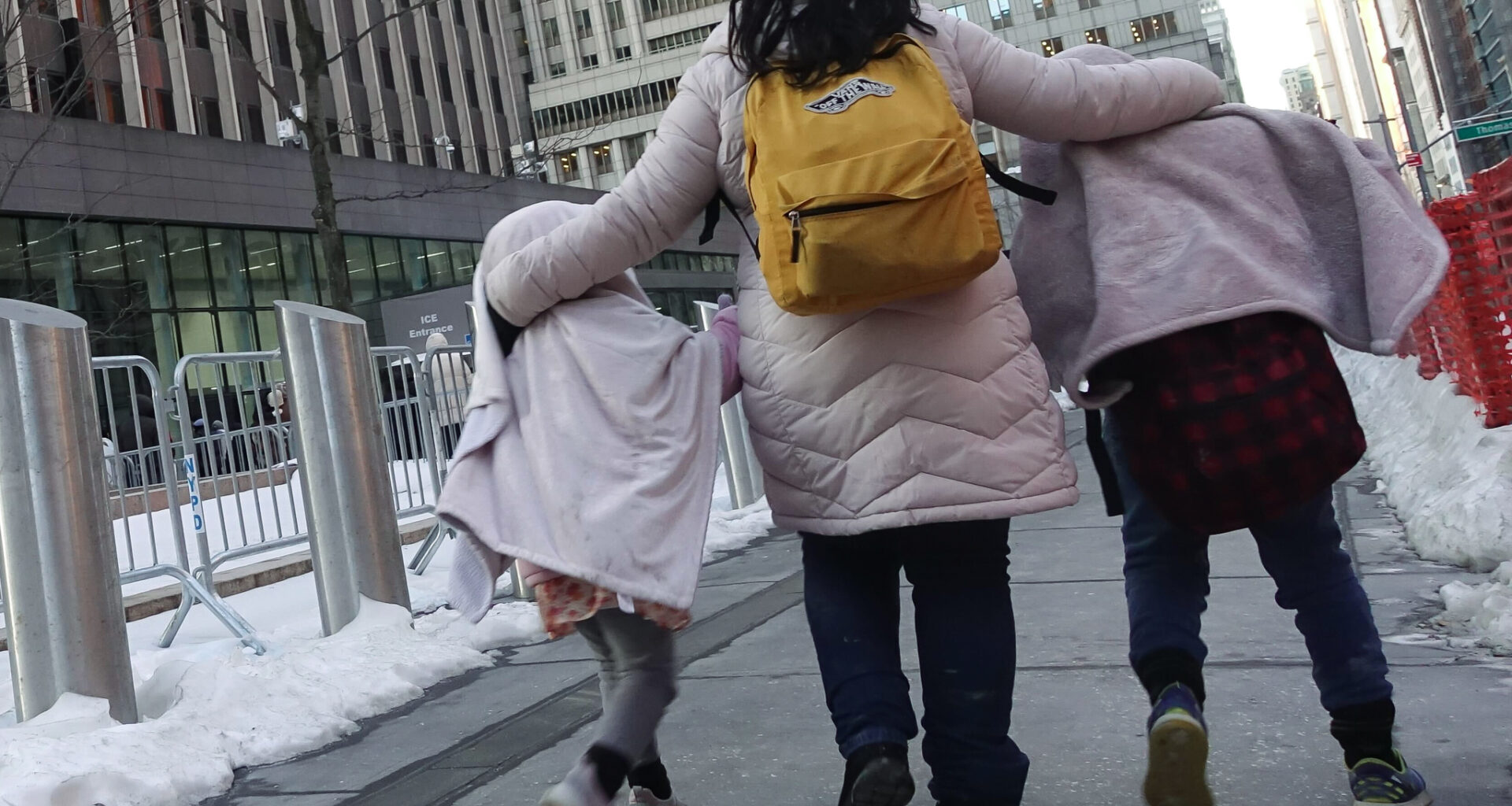
The night before her check-in this week with Immigration and Customs Enforcement Ingrid, a 37-year-old mother from Honduras, tossed and turned, waking up every hour or so to check the time.
Her eight-year-old son and-four-year-old daughter were anxious too.
The last time they’d had a check in at 26 Federal Plaza, five days before Christmas, what started as a routine visit quickly became a nearly three-week-long nightmare.
THE CITY previously reported how the family was arrested, shipped across the country and confined to a hotel room for nearly 20 days, through Christmas and New Year’s, without being able to call their family or a lawyer, before being abruptly returned to New York and released thanks to a federal judge’s temporary restraining order.
But that order has expired, and the judge decided not to block their deportation. While their attorney is appealing that decision, returning to the scene of their arrest hung heavily over the family as they prepared to return just weeks after their release in early January, following a holiday season.
THE CITY is withholding Ingrid’s full name and the names of her children as her immigration case is ongoing.
The night before their new appointment, Ingrid’s eight-year-old son packed a backpack full of toys the night before recalling how bored he’d been, trapped inside a hotel room for weeks without anything to play with.
Ingrid’s daughter, a U.S. citizen, stuffed a miniature white purse with pens and paper for doodling.
Ingrid prepared a bag full of milk, juice, water and snacks. When the family was arrested in December, they’d spent all day in a waiting room with nothing to eat. They’d been offered one meal but it was too spicy for the kids and they were starving by the time they got food late that evening while confined in a hotel room near LaGuardia airport.
As their new appointment approached, Ingrid could feel her children’s anxiety build.
“‘I hope they don’t arrest us because the 13th is Valentine’s Day, and I want to be there,’” Ingrid recalled her son telling her.
“As a mother I get so sad,” she told THE CITY in Spanish. “What do I say to the child.”
Where Families Are Arrested
Inside 26 Federal Plaza, ICE agents stalk the halls on the floors with immigration court rooms, arresting immigrants appearing for mandatory court hearings. More recently, legal filings indicate, agents have also started arresting people attending appointments and interviews inside the USCIS offices on another floor of the building.
But the ICE check-ins — required for many immigrants in deportation proceedings or who already have orders of removal — are the primary way the agency is arresting children in New York City.
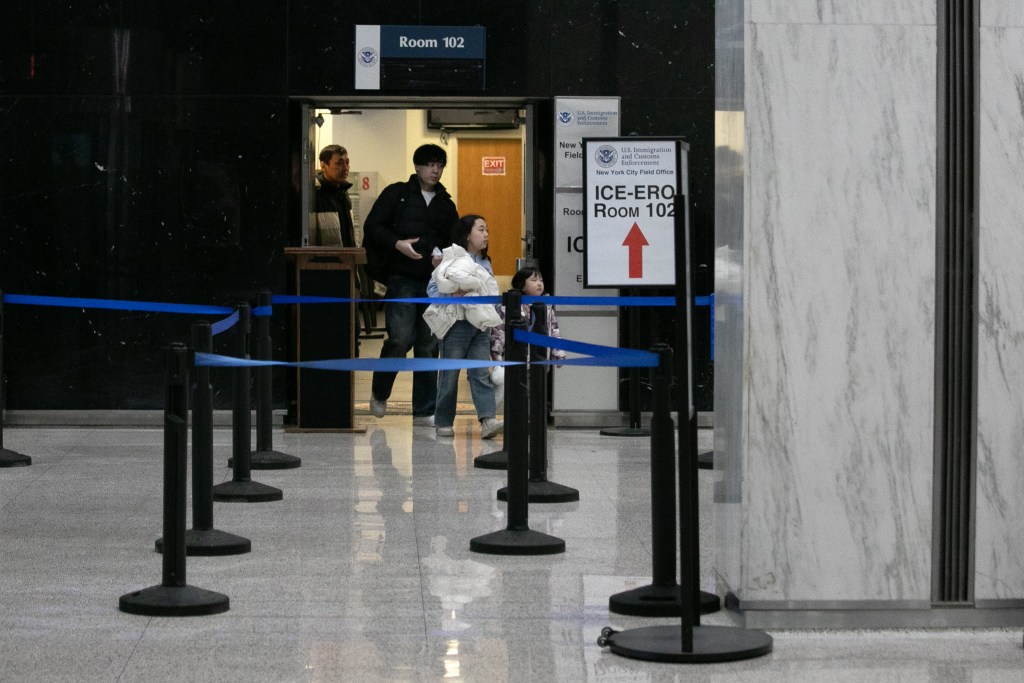 An immigrant family leaves an ICE check-in office at 26 Federal Plaza, Feb. 12, 2026. Credit: Ben Fractenberg/THE CITY
The agency’s records show 151 children in New York City were arrested between January and Oct. 15 of 2025, the most recent data available through the Deportation Data Project, which obtained it through Freedom of Information Requests.
Families under ICE orders of supervision show up in the pre-dawn hours and line up outside 26 Federal Plaza, they’re directed to floor offices where they cram into a waiting room.
Some never get to leave of their own accord, but are arrested and often speedily deported, as was the case of a Chinese father and 6-year-old son and the Ecuadoran 6-year-old and mother THE CITY reported on last year.
Lining Up in the Cold
The morning of their check-in, Ingrid had to rouse her young children before dawn, leaving their home in Suffolk County at 4:30 a.m. to get a ride with a neighbor. The family arrived 20 minutes ahead of their 7 a.m. appointment on one of the coldest days in years, with the temperature hovering at just 6 degrees.
Around four dozen people were lined up outside waiting for their check-ins, many with young children in strollers, bundled up and draped in blankets.
Building security started letting in attorneys and people with other types of appointments into the building by around 7 a.m. In a separate line, the families waiting for ICE check-ins remained outside in the cold for another 40 minutes.
Ingrid’s son sobbed, unable to feel his feet. She watched a father cradling his young child, trembling with cold as tears ran down his cheeks.
ICE employees manning a podium outside the ground-floor check-in office told THE CITY they weren’t in charge of the door and deferred to the security guards outside.
Uncertainty hung over everyone in line about, wondering, as Ingrid put it, “If this is the last time we’ll be here, or if they’re going to send us to our countries, or if we’ll be allowed to return to our houses.”
Asked about children waiting outside in Arctic temperatures this week, Tricia McLaughlin, a spokesperson for the Department of Homeland Security, which oversees the agency that runs security in government buildings replied: “So your claim is that other people could go inside before 7 AM but kids were barred from going inside or what are you trying to claim here?”
As families were finally allowed to enter the lobby and make their way through security, a girl who looked to be around nine sobbed silently and rattled with cold, stamping her frozen feet while following her mother to the elevator.
Two ICE officials in plain clothes directed adults to a ground floor office, while sending families with kids to an office on the 5th floor, down a long hallway into a waiting room. The few lawyers accompanying families and this reporter were told to wait outside. A sign translated into six languages posted on a bulletin board by the door urged people to self-deport, saying they could be eligible for a $2,600 stipend if they did so.
After about an hour, families started leaving one by one. Ingrid was let go by around 9:30 a.m. and given a date to return in August. Her relief was palpable as she embraced her lawyer, Andrea Soto, who’d been waiting in the corridor.
“I’m going to breathe a little easier,” she said. “Thank God we can return to normal life.”
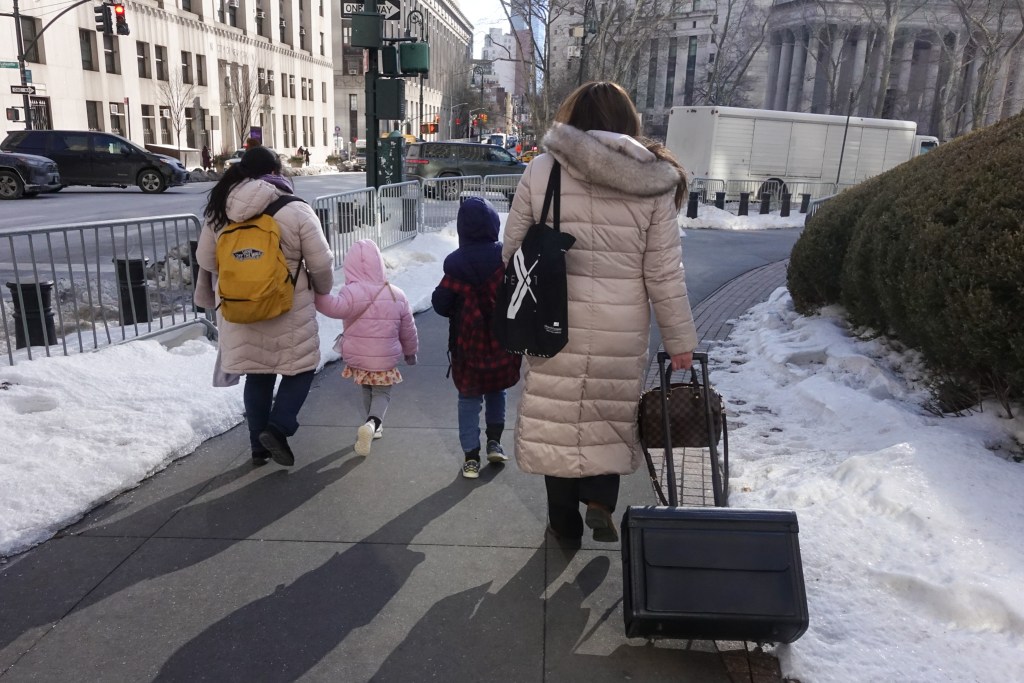 A family and their lawyer leave 26 Federal Plaza in Lower Manhattan to head back to eastern Long Island following a check in with ICE officials, Feb. 9, 2026. Credit: Gwynne Hogan/THE CITY
Over a hot chocolate a few blocks from 26 Federal Plaza, Ingrid said she’d felt overwhelmed at times: “I feel like I can’t do this anymore, sometimes I wonder, is it better if I just leave?”
But then, Ingrid said, she thinks about her difficult journey here in 2021, the years of struggle and hard work and money spent trying to fight for a right to stay in the United States, the brighter future she dreamed of for her family. Her attorney, Soto, believes Ingrid is eligible for a special kind of visa for victims of human trafficking and is asking a federal appeals judge to block Ingrid’s deportation until that can be processed.
One Bible verse plays on repeat in her mind, Ingrid said: Psalm 27:13: “I would have lost heart, unless I had believed that I would see the goodness of the Lord in the land of the living.”
She recalled weeks earlier when she and her children had boarded a plane in Louisiana headed for Honduras, only to be pulled off 20 minutes later when word of a federal judge’s restraining order made its way to ICE officials on the tarmac.
“All of this is a miracle. They took us off the plane,” she said. Still, she went on, “I would not wish this on anyone, what we’re going through, my kids and I in this moment.”
Related