
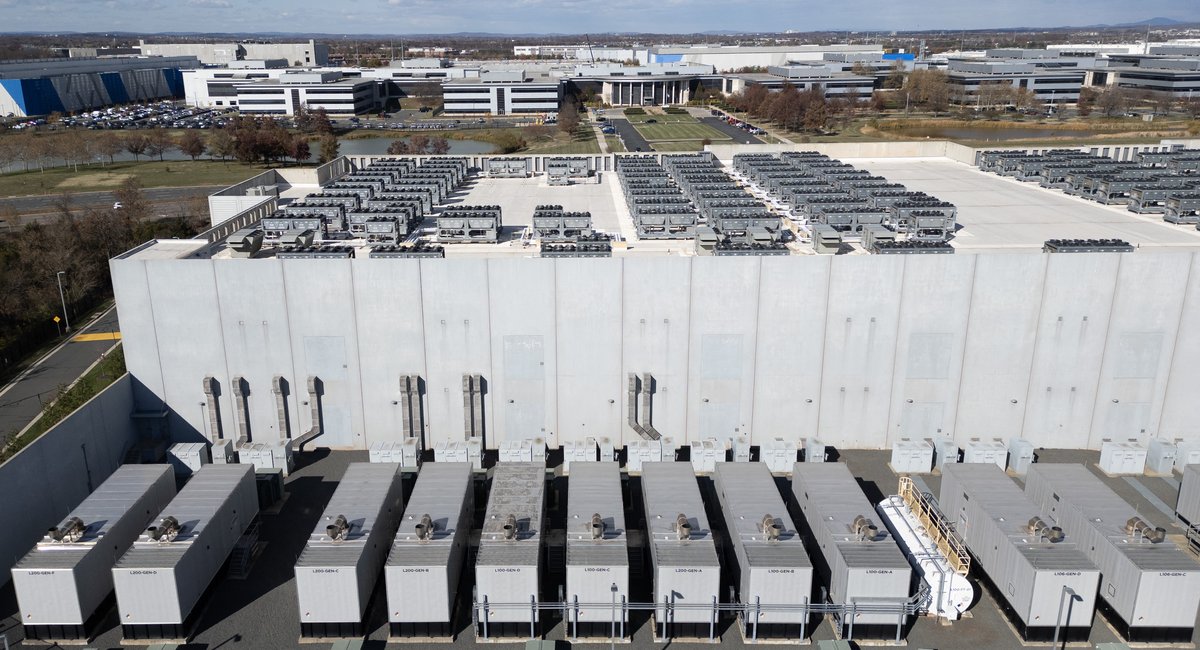
Demand for data centers is rapidly growing in New York, but Gov. Kathy Hochul says she wants tech companies to foot the bill for their mammoth energy costs.
Hochul said Thursday that the Public Service Commission will begin reviewing the costs associated with connecting energy-intensive industries like data centers to the grid. The facilities have been blamed for spiking energy bills around the country due to the tremendous amounts of power they need for cloud storage, cryptomining and AI.
Currently, there are more than 130 data centers statewide, with nearly half located in the New York City metropolitan area, according to Data Center Map, which tracks the facilities around the country. That number is likely to grow.
As of last month, there were 48 projects requesting connections to the grid, totaling more than 11 gigawatts — enough power for roughly 11 million households, according to state grid operators.
One of the data centers in the queue for more power is Greenidge Generation, the cryptomining facility running a fossil-fueled powered plant in the Finger Lakes. The computer farm on the bank of Seneca Lake has requested an additional 200 megawatts, enough to power nearly 200,000 homes. The request is almost double the current capacity of the plant, which has faced pushback from locals around the picturesque region.
The increased demand from data centers has the potential to drive up costs for electricity customers because upgrades to power generation, transmission and distribution are necessary to accommodate supply. Hochul’s initiative would ultimately require high-energy businesses to pay more to draw from the state’s power grid or supply their own to avoid burdening rate payers. Hochul previewed the initiative in her State of the State address last month.
According to the Department of Energy, energy demand from data centers nationwide could triple by 2028, meaning they’d consume as much as 12% of all U.S. electricity.
“New York will continue to lead in attracting new technologies, but we must also grow responsibly, ensuring affordability comes first and those profiting from data growth pay their share,” Hochul said. “To prevent rising costs for everyday consumers, the state will enforce a simple standard: these industries must cover the costs of their expansion as it relates to utilities — just the same way it works for everyday consumers.”
She said data centers put “unprecedented strain on the electric grid without creating many jobs in the process.” The Greenidge Generation facility, according to its own filings, powers around 20,000 computers running 24 hours a day, seven days a week, while employing fewer than 50 workers. The facility uses energy that produces nearly 800,000 tons of carbon pollution, roughly equivalent to 170,000 cars.
The Public Service Commission will investigate possible changes to current rules for connecting to the grid and cost structure, as well as the effects of large energy requests.
The commission is soliciting public comments and holding a technical conference to generate recommendations on how to proceed.
“As energy demand surges across the state, New York state will provide greater certainty and predictability for businesses seeking to invest in New York while ensuring that data centers pay their fair share,” said Rory Christian, the chair of the state’s Public Service Commission.
The plan comes as the state legislators consider a bill that would impose a three-year moratorium on permitting new data centers. The legislation states that “the growth of data centers is inconsistent with New York’s climate commitments.” Similar legislation is under consideration in at least five other states.