
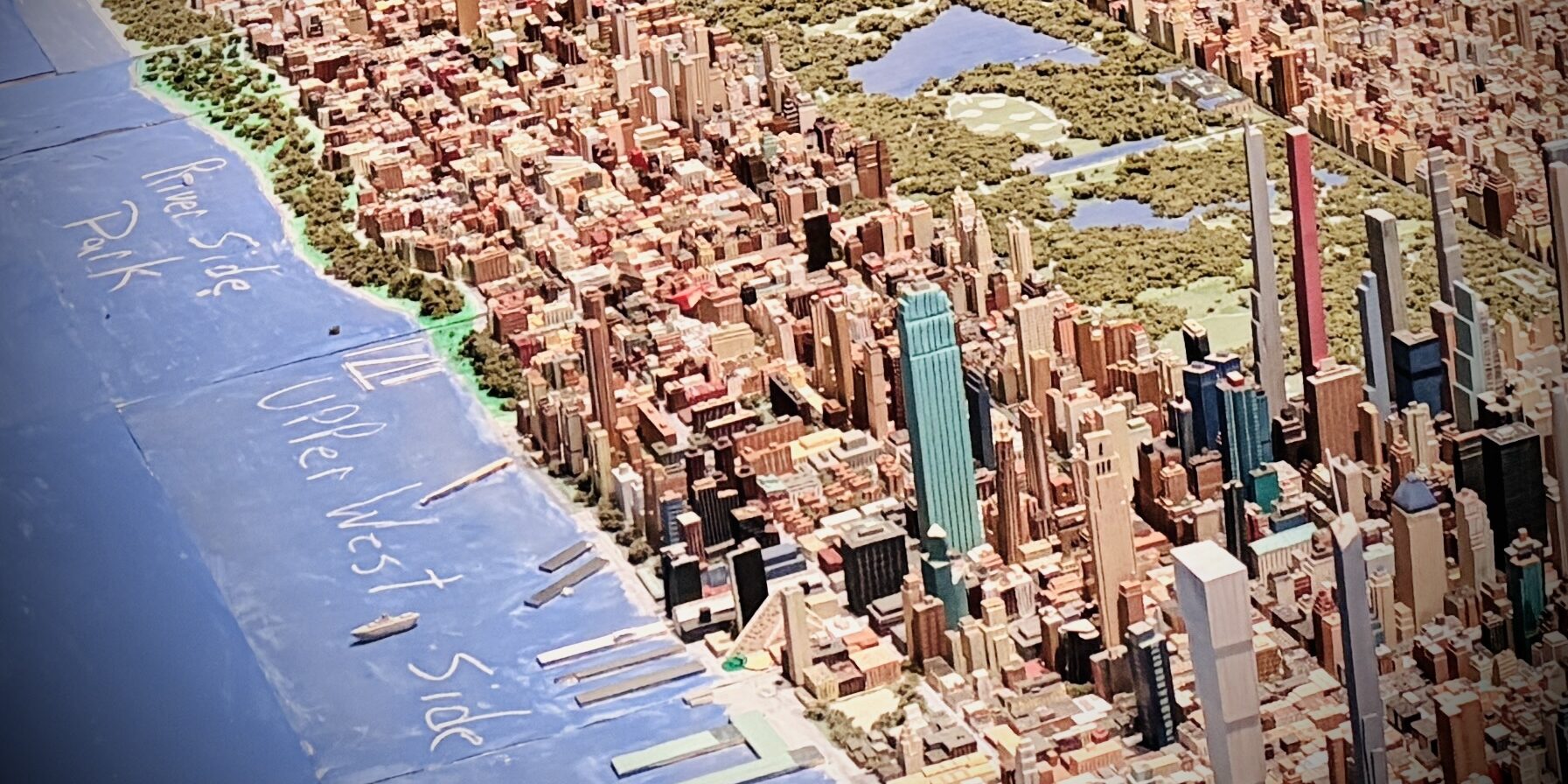
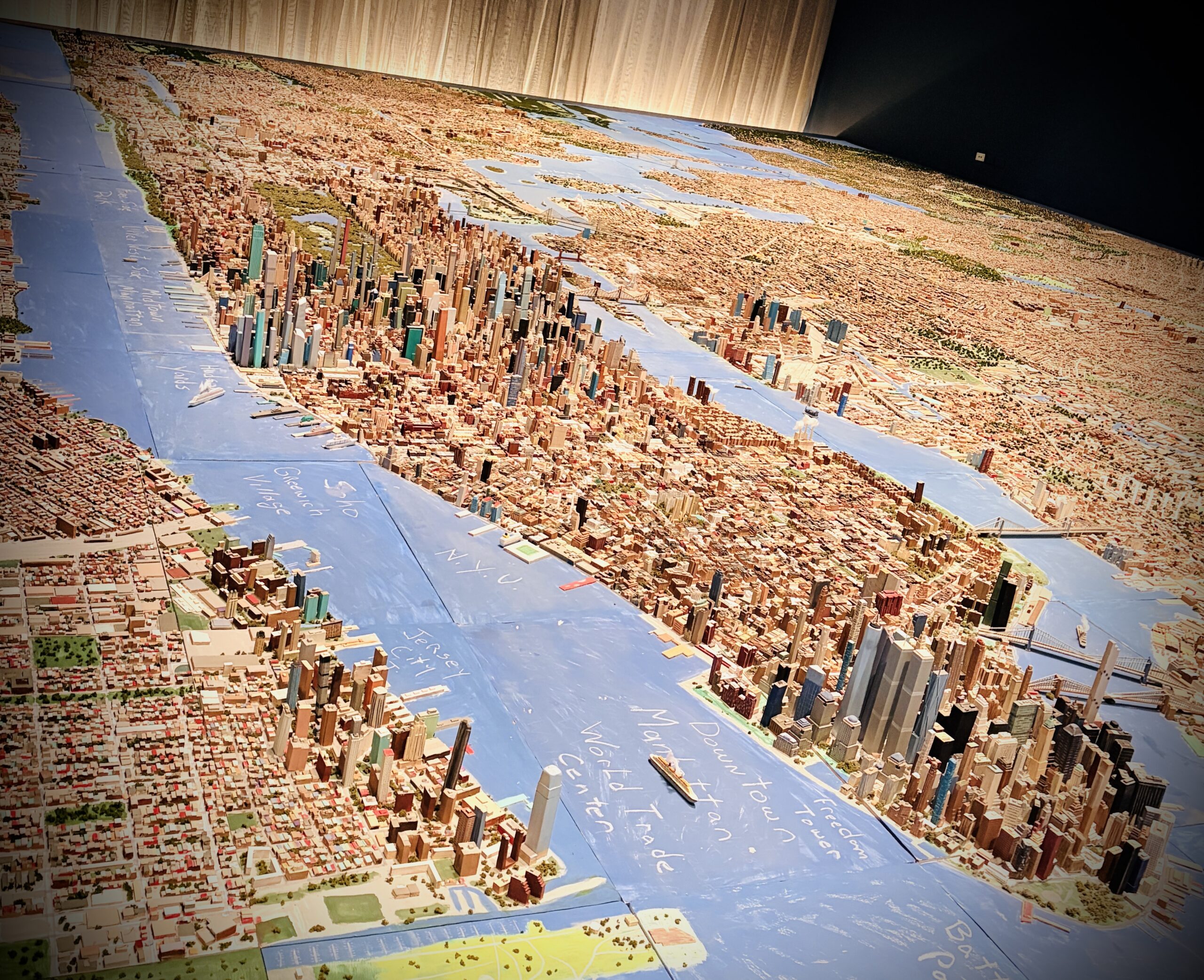
 Photos by Yvonne Vávra.
By Yvonne Vávra
In 2004, truck driver Joseph Macken went down to his basement and began to build New York City. Thousands of buildings, rivers and bridges, parks with trees and lakes, and winding paths, an eight-inch-tall Empire State Building, and all of the city’s more than 350 neighborhoods, where its millions of hearts belong.
It took him 21 years to assemble the five boroughs, with Manhattan alone taking up about half that time. In April last year, it was done. Macken finished the last house on Staten Island — like everything else, made from wood, cardboard, and Elmer’s glue — and looked down at his creation: a 50-by-30-foot miniature version of the city he grew up in. It was the architectural model of a dream the 63-year-old trucker had carried with him since seeing the famous Panorama of the City of New York on a school trip to the Queens Museum.
Unsure what to do next with the city in his basement, Macken turned to TikTok to take the world on a tour of his miniature metropolis and his process. Tens of millions of people watched, collectively spiraling in the comments over how extraordinary it was. Countless commenters declared, “This should be in a museum!”
And now it is. Across the park, at East 103rd Street and Fifth Avenue, the Museum of the City of New York has just opened its newest exhibition, He Built This City: Joe Macken’s Model, which it calls “one of the most ambitious handmade representations of New York City ever created” and a “deeply personal yet universally resonant tribute to the city.”
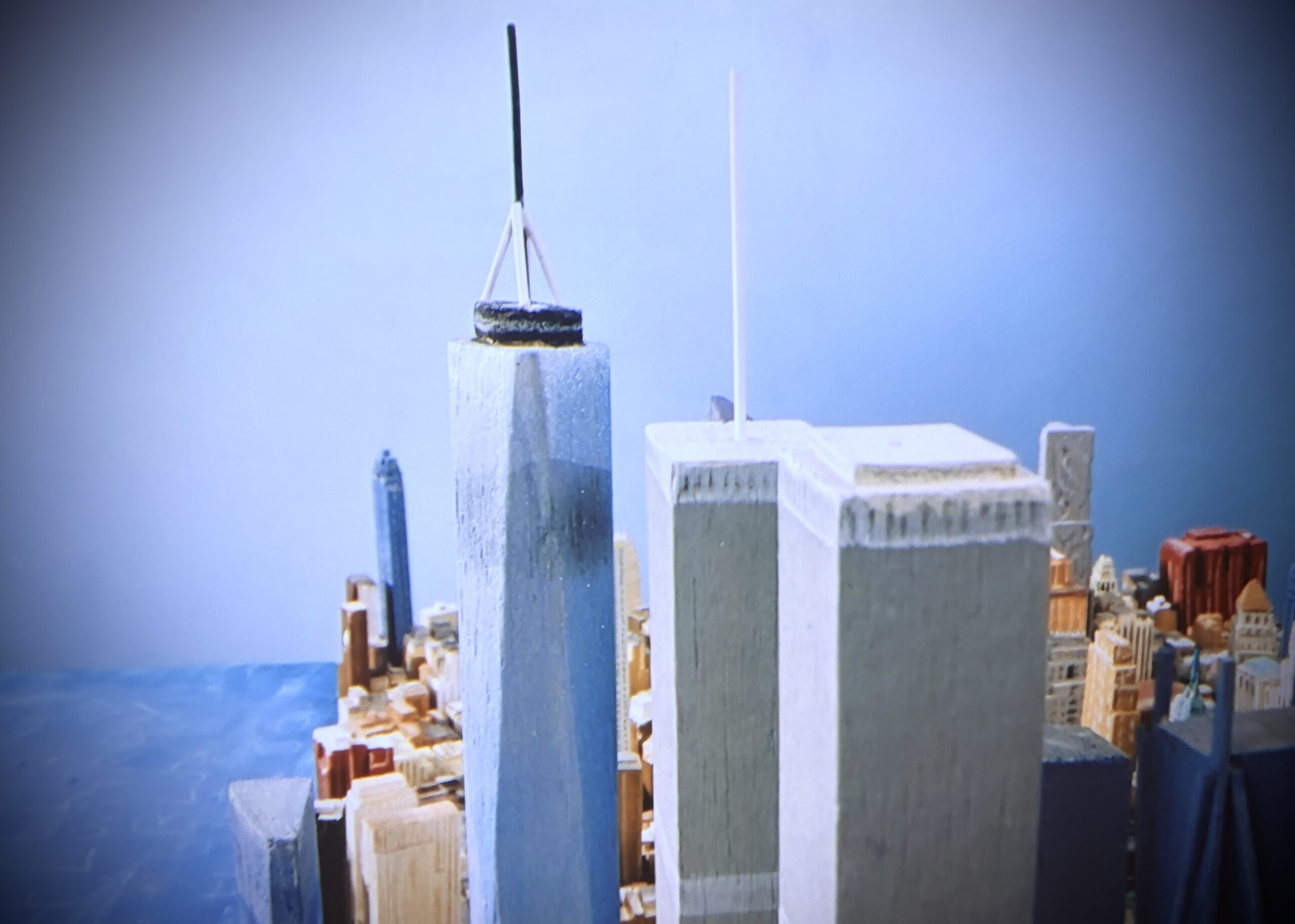 In Macken’s New York, the original Twin Towers stand side by side with the Freedom Tower.
Personal indeed. Though it is a complete and detailed replica, Macken’s own relationship with New York snuck into the model: His is a city with the Twin Towers still standing tall. As a child, he watched the construction of the World Trade Center from his bedroom window in Queens, so he made sure to include them. “I wanted to keep the original towers because they were my favorite, the buildings I used to look at every single day,” he told the museum. Now the towers stand side by side with the Freedom Tower, watching over Lower Manhattan together.
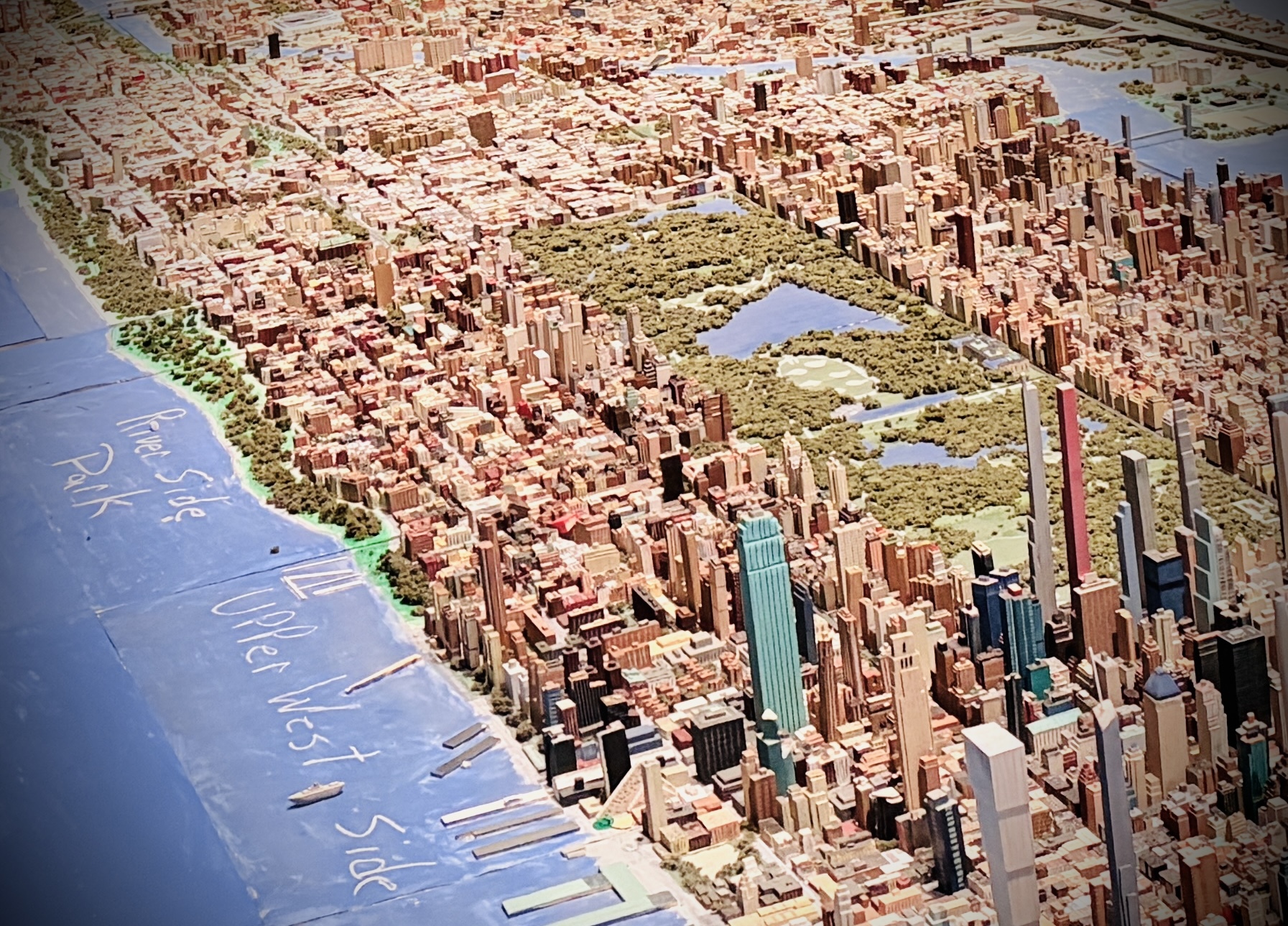 The Upper West Side and Riverside Park.
A bit further uptown lies our Upper West Side — a dense rectangle, fairly uniform in height and color, especially above the eclectic chaos of Midtown. It looks calm and collected, dressed in sepia. Holy schmear, even carved from wood and glued together, this place somehow manages to ooze nostalgia.
Some pieces of the Upper West Side, in fact, felt such a deep longing for the past that they nearly wandered off into history and refused to come back, like the Dakota. When The New York Times interviewed Macken in July last year, the building had gone missing, along with other parts of the neighborhood. “I have it somewhere,” he assured the reporter. And sure enough, all the missing pieces eventually reappeared and were glued firmly back into place.
On a slightly disappointing note, you’ll need a very long neck to make out the details of our little corner of Manhattan. The model is so large that the museum had to wedge it between two walls, which means you can’t get up close to the Upper West Side. Luckily, the exhibition provides binoculars — which feels appropriate. Even in miniature, we require a little effort.
Seeing your own world miniaturized is thrilling and wonderfully disorienting. You recognize the buildings, the rooflines, the landmarks, and yet you can’t believe what you’re seeing. The Upper West Side, one of the first neighborhoods Macken built, is just a tiny fleck in the model. In real life, I know her as uncontainable. Too large and too alive to hold in my mind at once. But here, I’m the giant looming over my world, able to command it in a single glance. The streets are so tiny you could barely fit your pinky into them. What could possibly be hard about life down there?
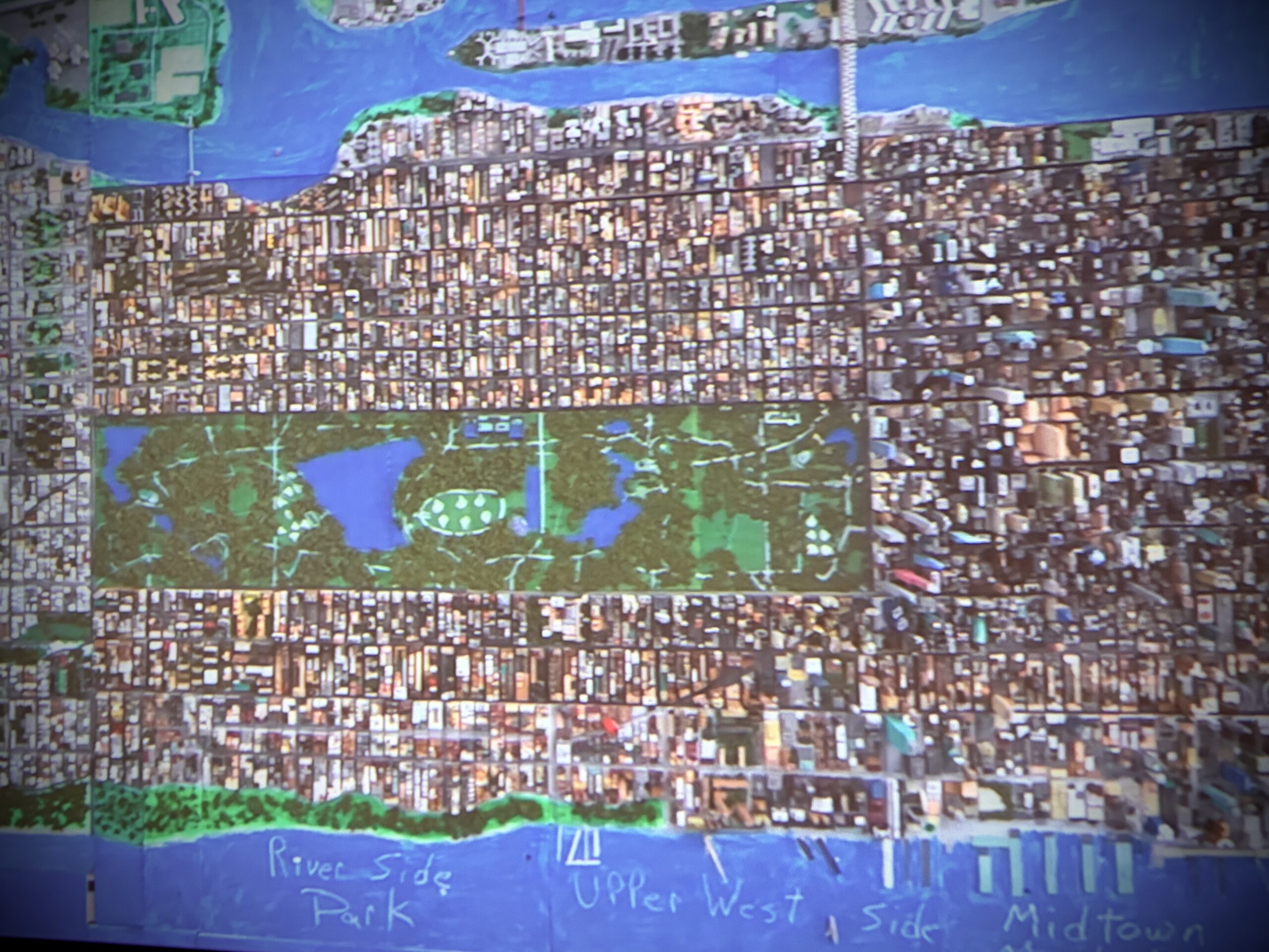 Central Park, as seen in the model.
For once, everything looks serene. The metropolis is motionless, frozen in a single perfect moment. No construction, no demolition, no closing sales. Just a beautiful, tidy permanence — at least until Macken decides it’s time for an update.
What’s missing, of course, is life. That daily parkour, as challenging as it is fun, the energizing encounters, and the memories to be made. Looking at the model, I get the same feeling I do whenever I’m up on a tall tower. The city looks marvelous from above. But there’s that tug — the urge to be back in it and let the crowds carry me away. The magic of the miniature is the perspective it offers: the illusion of control, stillness, and safety. The magic of the real thing is that it refuses all of that. What a gift it is, especially on this Valentine’s Day, to belong to the loud, unruly, gloriously alive one.
After the museum, I crossed the park in record time for an extra-long Upper West Side walk. And not even getting trapped for half a block behind a family of four walking in formation could wipe the smile off my face.
Subscribe to West Side Rag’s FREE email newsletter here. And you can Support the Rag here.