Federica Brignone/GEPA Pictures
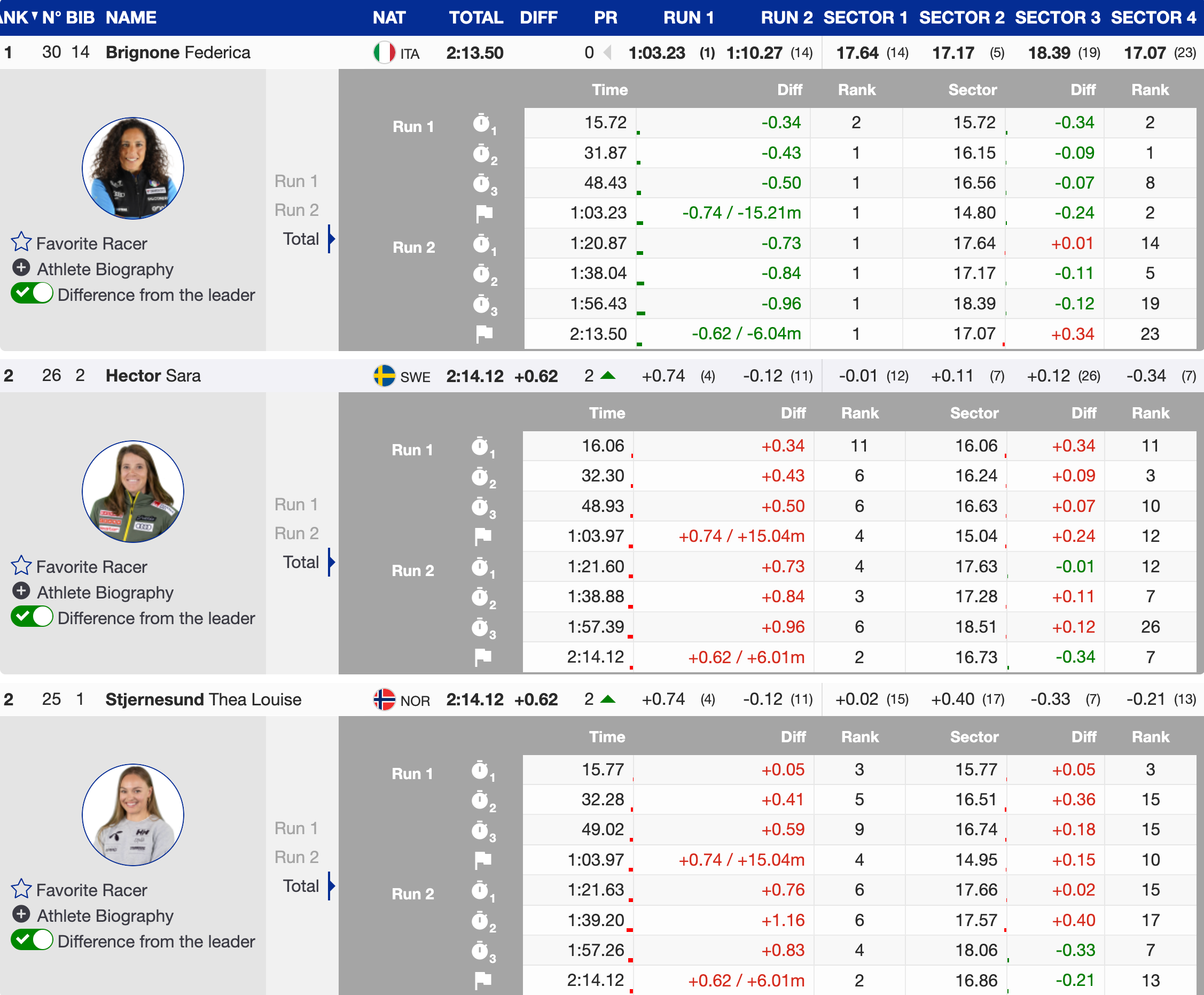
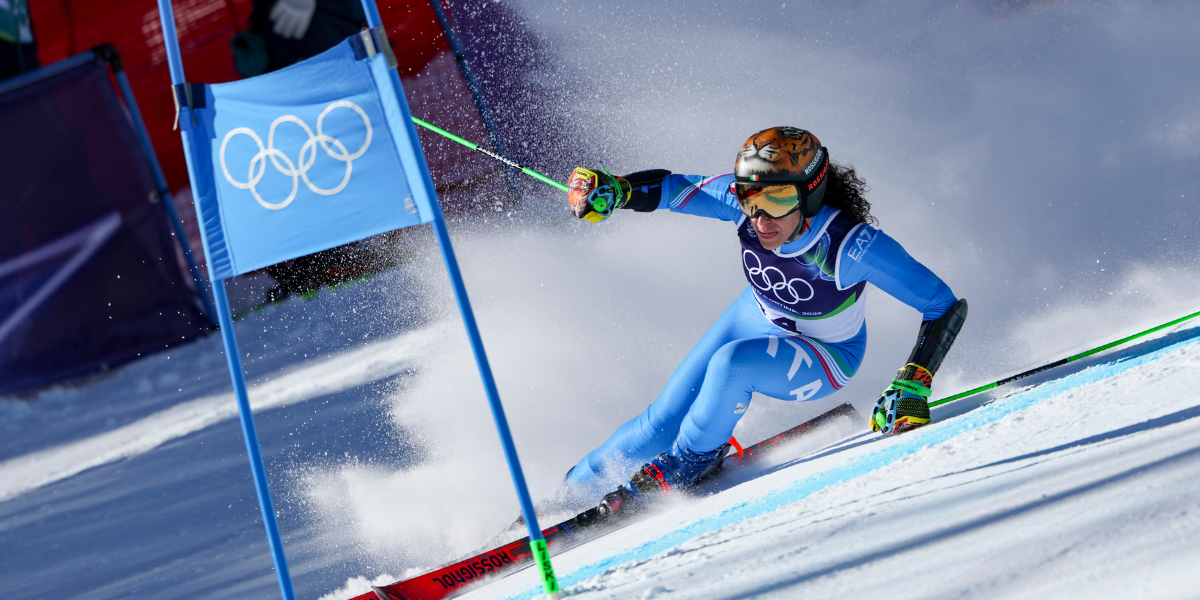
Brignone Delivers Double Gold in Emotional Giant Slalom Finale
I have never sat on the edge of my seat for an entire race the way I did today. When you know ski racing — when you understand the work, the injuries, the setbacks, the doubt, the comebacks — the Olympic Games hit differently. The second run of the women’s giant slalom was not just a competition. It was a culmination of heart, resilience, and belief.
And at the center of it all stood Federica Brignone.
Brignone entered the second run with the lead, but nothing about championship racing is guaranteed. The track was demanding. The margins were razor thin. The pressure was enormous. Yet when it was her turn, she did what champions do.
She attacked.
There was no hesitation. No protecting the lead. She skied with the same authority and flow that defined her first run, linking one turn seamlessly into the next. Her upper body remained quiet. Her line was direct. She absorbed the terrain with intelligence and precision. It was controlled aggression — a clinic in modern giant slalom skiing.
And when she crossed the finish line and the time held, the magnitude of the moment became clear.
Just last April, at the Italian Championships, Brignone broke her leg. The injury was severe. The road back was uncertain. The pain, both physical and emotional, was real. In the lead-up to this Olympic giant slalom, she had only trained three days because of lingering discomfort.
Three days.
To return from that injury and win not one but two Olympic gold medals at these Games — first in the Super G and now in the giant slalom — is almost impossible to comprehend.
This was not just a victory. It was one of the most remarkable comebacks the sport has seen.
You could see it in the emotion at the finish. You could feel it in the crowd. For those who understand what it takes to reach this level, today was the kind of race that brings tears. Brignone did not just win. She inspired.
In a sport defined by risk and resilience, she reminded everyone why ski racing captures the heart the way it does.
Double gold. Against the odds. On the biggest stage. An unforgettable Olympic giant slalom.
“I crossed the finish line and I said, ‘I don’t know if it’s enough when I went through the last few gates.’ Then I heard the crowd and I said, ‘Oh, maybe yes.’ Then I turned around and I saw number one. I have too many emotions. I can’t believe it, yet again.’”
Scandinavian Strength: A Shared Silver
In a rare Olympic moment, the Scandinavians stood side by side on the podium, tied for silver.
Thea Louise Stjernesund of Norway and Sara Hector of Sweden were locked together after the first run — and remained inseparable after the second. Identical times. Identical result. A shared second-place finish on the Olympic podium.
For Sara Hector, the reigning Olympic giant slalom champion, the pressure was immense. Trying to defend a title is one of the hardest tasks in sport. There were moments in her second run where you could see the nerves — a few turns slightly pinched, a touch tight in her line — but she never backed off. She committed to her plan.
Her course report before the run was refreshingly simple: “Just do your thing, and enjoy.”
Sometimes that is the best coaching there is.
At this level, coaches must trust their athletes. The inspection is done. The plan is clear. From there, it is up to the skier to execute. Hector understood exactly what she needed to do. She attacked the course with flow and determination, though she perhaps needed a bit more speed through the middle section to challenge for gold. Still, her composure and fight carried her back onto the Olympic podium.
Thea Louise Stjernesund matched her turn for turn. Literally.
Stjernesund has shown flashes of brilliance throughout her career but has battled inconsistency this season. In the lead-up to the Olympics, she took time to reset and rebuild confidence. That decision paid off. She arrived at the Games with belief and determination, knowing she had the speed to contend with the very best.
On the biggest stage in the world, she proved it.
Calm, precise, and committed, Stjernesund delivered when it mattered most. To leave the Olympics with a silver medal — even a shared one — is validation of both her talent and her resilience.
I hope that I can inspire people that are late bloomers in sport to still go for it. You don’t have to succeed in everything when you’re 19 in the sport, that’s what I want to represent and that’s what means a lot to me to see that it’s possible.- Thea Louis Stjernesund
Two rivals. Two nations. One identical result. An Olympic silver shared between two Scandinavian countries.
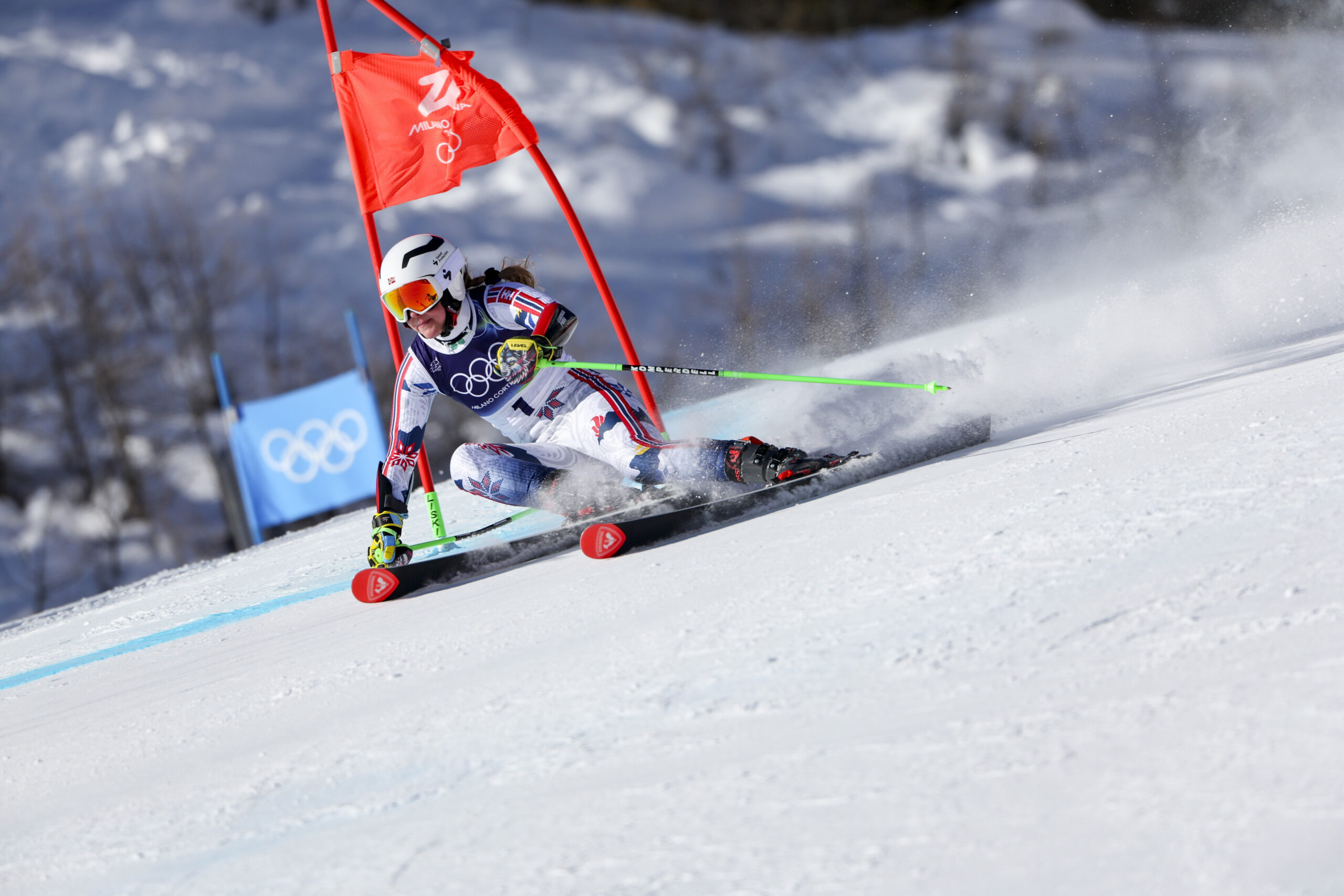 CORTINA D AMPEZZO,ITALY- Thea Louise Stjernesund (NOR). Photo: GEPA pictures/ Matic Klansek
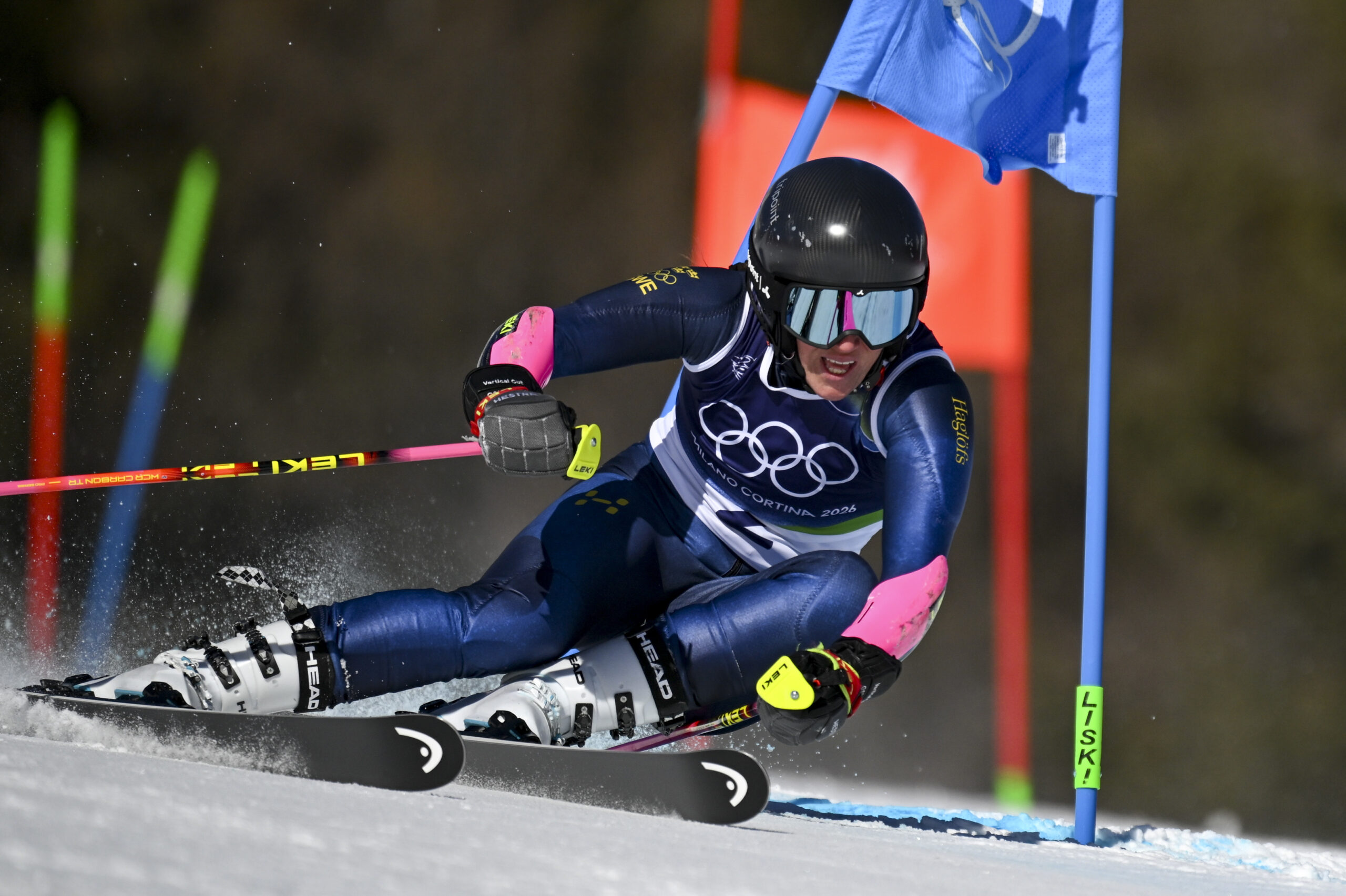 CORTINA D AMPEZZO,ITALY- Sara Hector (SWE). Photo: GEPA pictures/ Alexander Solc
A Breakthrough on Home Snow
Lena Della Mea (Italy) delivered a stunning performance on the biggest stage. Competing in front of a home crowd, she laid down a blistering second run that rocketed her up 11 positions and into fourth place, where she sat in the leader’s chair as the field chased her time.
It was a breakthrough Olympic debut for the young Italian, one that will fuel her confidence for the remainder of the season. Her run was electric from the start. She carried speed effortlessly from turn to turn, staying composed even when small mistakes crept in. Though she lost a touch of time near the bottom, she held it together with remarkable poise and power.
A fearless, high energy performance that announced her arrival on the Olympic stage.
The Pressure Only the Olympics Bring
The Olympics come around only once every four years.
Athletes will tell you they try to treat it like any other race. But it is not just another race. The pressure is heavier. The spotlight is brighter. The hype is bigger. And for many watching at home, it may be the only ski race they tune into all season.
What the world does not always see are the four years in between — the battles, the setbacks, the injuries, the rebuilding, the doubt, and the quiet grind that leads to this single day.
Julia Scheib (Austria), the current leader of the World Cup giant slalom standings, came into these Games as one of the favorites. You could see how badly she wanted it. Her second run was strong and aggressive, moving her up six positions. But it was not enough to reach the podium. In a sport measured in hundredths, desire alone does not close the gap.
She ultimately finished in fifth place.
Camille Rast (Switzerland), sitting second in the World Cup giant slalom standings and also second overall this season, struggled to find her rhythm. Another athlete who clearly wanted it so badly. But in alpine skiing, trying harder does not necessarily make you faster. Often, it is the opposite. Precision, patience, and timing win races, not force.
She finished in 12th place.
Alice Robinson (New Zealand) has been exceptional in giant slalom this season and remains one of the discipline’s brightest talents. However, tough crashes in the speed events have tested her confidence.
There were flashes today of the fast, powerful, confident Robinson fans have come to expect, but not consistently enough to contend for a medal. Her second run moved her up two spots, and she ultimately ended up in eighth place.
The raw speed is there. The belief is still rebuilding.
After sitting third following the first run, Sofia Goggia could not hold her podium position. A few costly mistakes in the second run pushed her back to 10th. It was a reminder of how unforgiving Olympic racing can be.
And then there was Lena Dürr. Carrying momentum from a strong first run, she was skiing herself into medal contention once again. She was building speed, finding rhythm, and looked poised for a breakthrough Olympic podium. But in the final, demanding stretch into the finish, she came off her loaded ski, was pushed late and low, and could not carry her speed through the last terrain feature. The mistake dropped her back to ninth.
That is the Olympic giant slalom.
Four years of preparation. Two runs. No margin for error.
For every athlete standing on the podium, there are others carrying heartbreak — unseen by most, but deeply felt by those who understand the sport.
American Push in the Final Run
🇺🇸 Mikaela Shiffrin — Bib 3 — YOB 1995 — 11th overall (+.92)
🇺🇸 Paula Moltzan — Bib 5 — YOB 1994 — 15th overall (+1.27)
🇺🇸 Nina O’Brien — Bib 11 — YOB 1997 — 20th overall (+1.81)
The second run was set by Mikaela Shiffrin’s coach, Karin Harjo, and the course reflected a style designed with Shiffrin in mind — rhythmical, technical, and demanding precision. Our research indicates that this was the first time a woman has set a course at the Olympic Games, marking a historic milestone for the sport and a meaningful step forward for representation.
Harjo was quick to point to the bigger picture behind the moment. “I wouldn’t be sitting here today if it wasn’t for Mikaela,” she said. “What she’s done to lift women up in this sport transcends culture and job titles. Through her greatness, she’s created opportunities for women to rise. And what that does is pave a path for everyone coming behind us, for your daughters and their daughters.”
The message to Mikaela from her coaches was simple: “Stay compact and go.” But on this day, Shiffrin was not able to fully unleash.
There were stretches of strong, composed skiing, but she did not quite take on the level of risk required to make a significant climb up the standings. Rather than fully trusting her instincts and attacking with her trademark conviction, there were moments where she seemed to ski thoughtfully instead of freely. The fluidity and dynamic edge that define her at her very best were only glimpsed in flashes. Without that final layer of aggression and directness that an Olympic second run demands, the speed needed to charge onto the podium simply was not there.
But the trajectory is clear. Her confidence is rebuilding with every start, every turn, every race. She is closer than it may appear, and when that freedom and fire fully return, so will the results. Shiffrin finished 11th, dropping four spots from her first-run position.
“To be here now within just in touch of the fastest women, that’s huge for me. I’m really proud of that.”- Shiffrin on her day
Paula Moltzan came out firing. She was half a second ahead early in the run, attacking from the start with confidence and intent. But in the middle section, a series of small mistakes added up. At one key moment, she moved away from the ski too quickly, which launched her slightly into the air and disrupted her timing. From there, she was late and fighting to recover. She battled to the finish, but it was not the composed, clean run she was looking for.
“I was actually really happy with my run, minus one turn over the bottom roll where I caught some air. I’m not a very good downhill skier and not very good in the air, so I’ll take the lesson from that. The conditions were great. Besides the middle section getting a little dark and bumpy, that’s to be expected. It’s an outdoor sport. I’ll choose a better line next time. That part is on me, and I’m learning from it.”- Paula Moltzan
Nina O’Brien was the first American out of the start in the second run, knowing she needed to make up significant time.
She delivered the fastest run of the day, exactly the type of performance she had been searching for. Her skiing was error free, aggressive, and fluid. She never lost momentum or decelerated the way she did in the first run. It was classic Nina, direct, fearless, and fully committed.
The speed is there. It always has been.
But the time lost in the first run was simply too much to overcome. Despite her brilliant second run, she was unable to climb high enough in the final standings to contend for a medal.
Still, posting the fastest run on the sport’s biggest stage sends a powerful message.
“It feels great to be competing at the Olympics for sure. I’m loving it. It’s a beautiful day in Cortina. I wish I’d been able to bring some better skiing first run especially, and in parts of my second run, but I still made a lot of turns I’m proud of.”- Nina O’Brien
The Americans leave the giant slalom knowing the pieces are there. On another day, with two clean runs, the story could have looked very different.
“That was an amazing day. That was the greatest show of giant slalom skiing that we’ve had in a really long time, and to do it at the Olympics where people actually have eyes on the sport was really, really cool.”- Shiffrin reviewing the whole day
Canadian Efforts in the Final
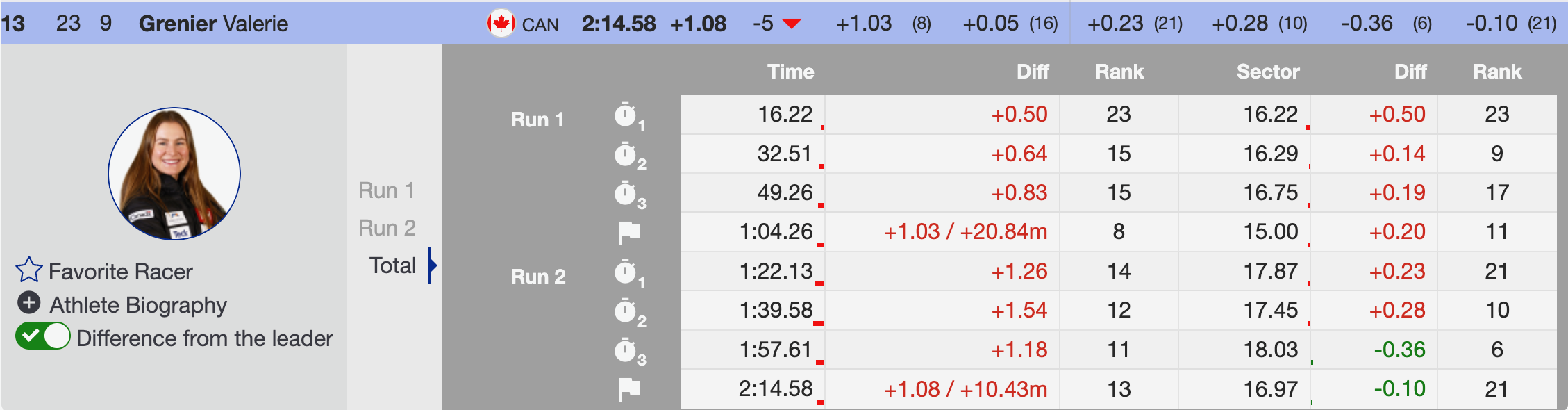
🇨🇦 Valerie Grenier — Bib 9 — YOB 1996 — 13th overall (+1.08)
🇨🇦 Britt Richardson — Bib 15 — YOB 2003 — 26th (+3.15)
🇨🇦 Justine Lamontagne — Bib 42 — YOB 2002 — 28th overall (+4.32)
The Canadian women returned for the second run looking to build, but the Olympic stage once again proved unforgiving.
Britt Richardson came down with intent, but it was not the run she was hoping for. There were simply too many mistakes. She was thrown off balance over sections of terrain and pushed into the softer snow off line. At times she took on too much risk without generating the direction she needed, which cost her speed and control. The aggression was there, but the execution did not fully come together, and she finished 26th overall.
Valérie Grenier entered the second run in strong position after a composed first performance. However, she struggled to maintain the same tactical precision. She was slightly late in her line through key sections, which caused her to lose both time and momentum down the hill. At moments she skied too straight, not shaping the turns enough to carry speed efficiently. It was not the clean, calculated run she had delivered earlier in the day, and she ultimately finished 13th overall.
Justine Lamontagne, however, found improvement. With a stronger and more composed second run, she moved up the standings to finish 28th overall. After an aggressive but error-filled first run, the adjustment showed growth and resilience. For a young athlete in her first Olympic Games, finishing with a solid final performance is something to build on.
The Canadians leave with lessons learned — and clear signs that the speed and potential are there when the execution aligns.
Editor’s note: Additional quotes will be added as they become available. Stay tuned for updates.

Top 30- Race Results
click on images to enlarge
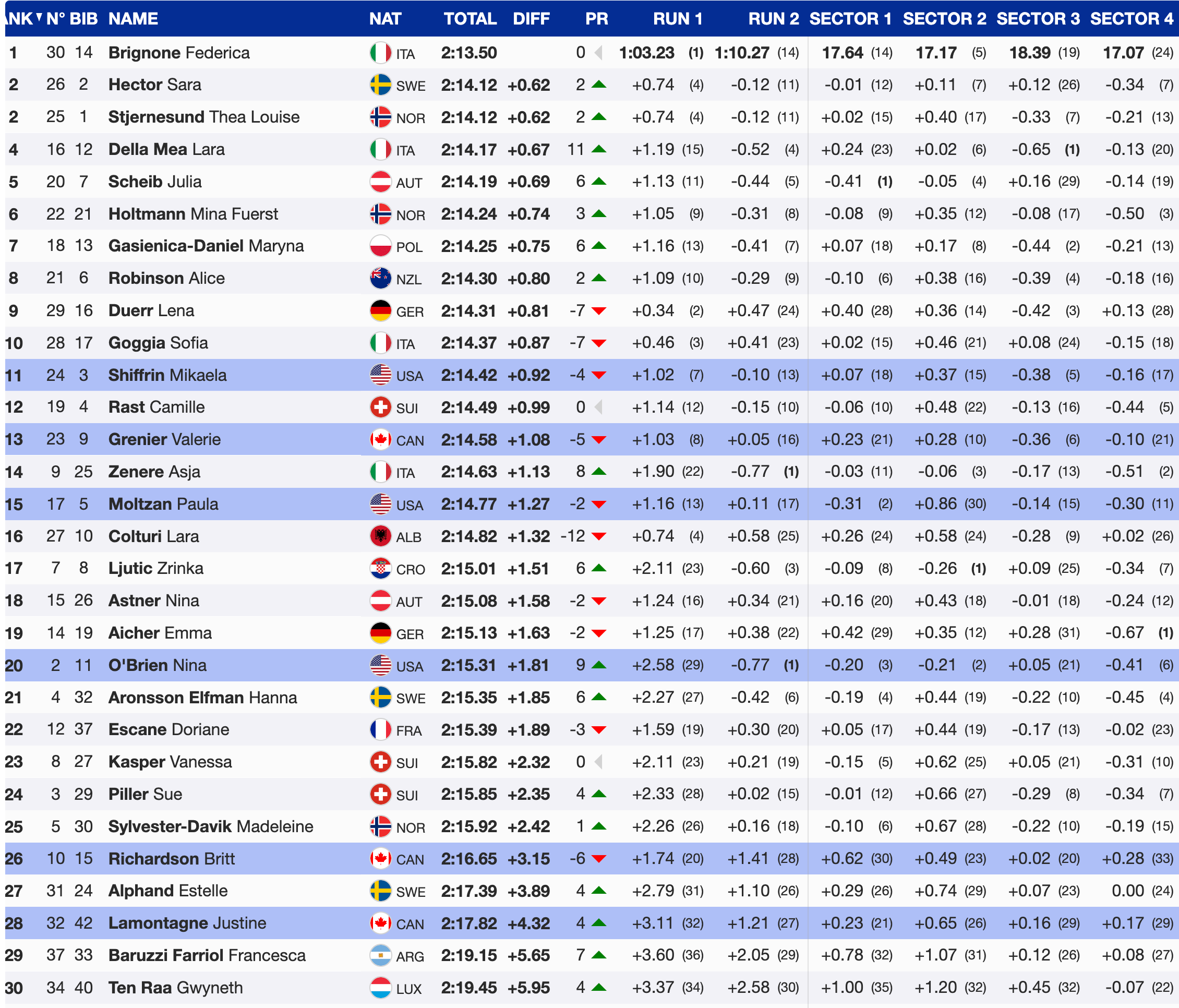
Top Three and North American Athletes Analysis