
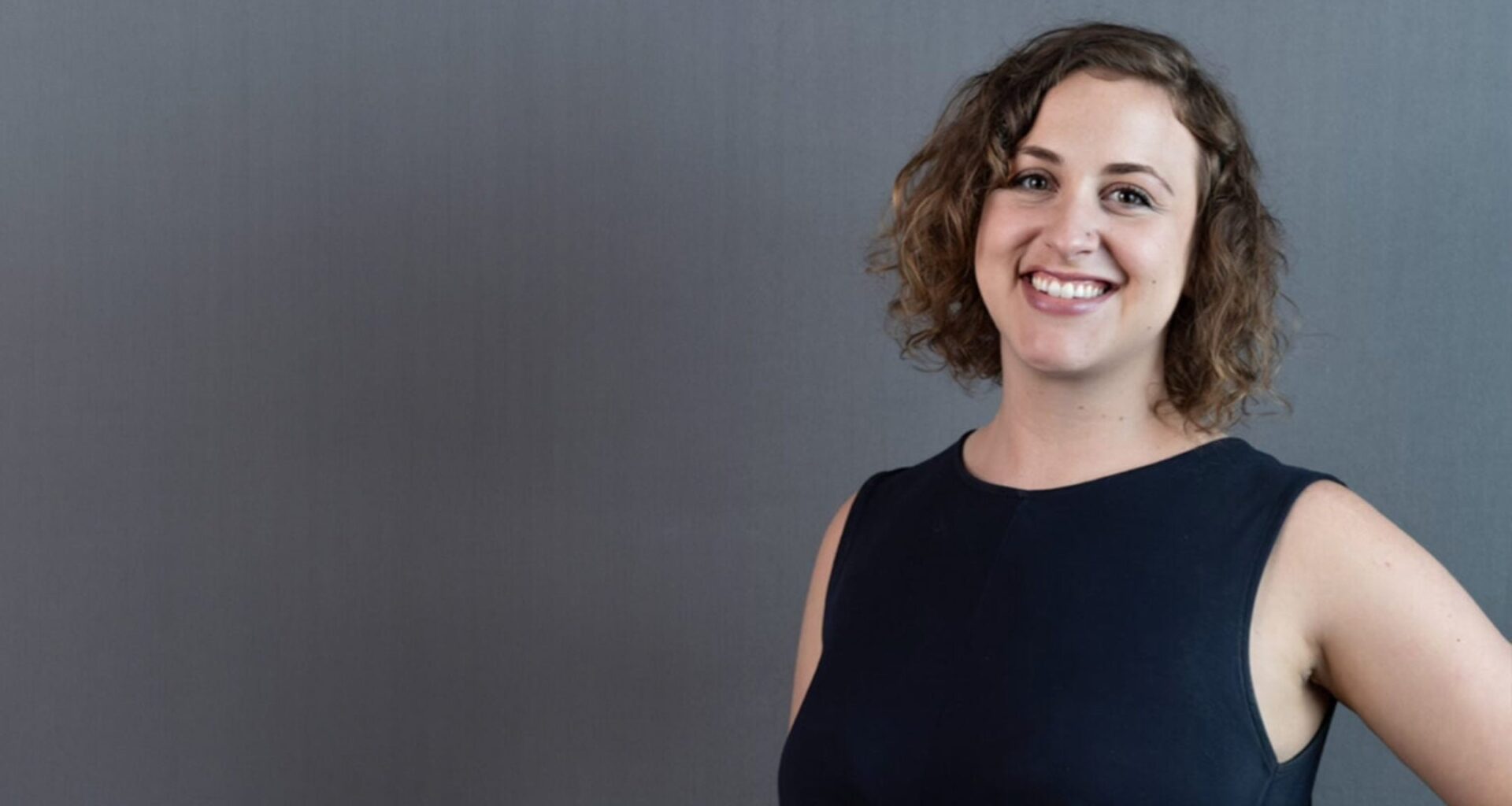
Phylisa Wisdom says she is ready to show the world what “a real, progressive commitment to combating antisemitism” looks like.
Wisdom is set to lead Mayor Zohran Mamdani’s Office to Combat Antisemitism at a moment when the landscape of Jewish New York is shifting.
And as left-wing groups are playing a more central role in city politics, Wisdom said the goal is to “expand the communal table by pulling up additional chairs.”
That goal, Wisdom said, does not come at the expense of other groups across the political and observance spectrum. And as anti-Jewish hate crimes continue to rise, she noted, “visibly Jewish New Yorkers” face the “lion’s share” of antisemitism.
Wisdom has led the progressive advocacy group New York Jewish Agenda since 2023, and is set to officially start on Feb. 23 in her role as executive director of the Mayor’s Office to Combat Antisemitism.
In an interview with the Jewish Telegraphic Agency, Wisdom spoke about her hopes for the new role, her experience attending the same synagogue as Sen. Chuck Schumer, and the “listening tour” that she plans to undergo to devise a strategy in time for the High Holidays.
This interview has been lightly edited for clarity and length.
What kind of impact do you think you will have taking over what’s been described as the “worst job in politics”?
I know that people are saying that it’s a hard job, but I actually see it as an incredible opportunity. I’m really excited about the mayor’s affordability agenda and what it means for our city, and I know that Jewish New Yorkers are and deserve to be a part of that agenda. And our safety and belonging in this city is extremely important to the mayor and extremely important to me.
I know that there are challenges and that antisemitic hate crimes and bias incidents are on the rise, and I am a Jewish New Yorker, too, who feels and experiences that, and I’m scared of that. And I think we have a real opportunity to do something meaningful to address that in the most Jewish city in America, and I know that we can model what a real, progressive commitment to combating antisemitism can look like, and see real results.
Can you tell us about your personal Jewish background and involvement in religious life?
I am born and raised in San Diego, California. I had a very classic Reform Jewish upbringing — went to a JCC pre-school, was active in my temple youth group, was an elected leader of my temple youth group, active in NFTY where I made friends that are still some of my closest friends today and learned to lobby through the Reform movement. And up through now, when I’m a CBE [Congregation Beth Elohim] member and take part in lots of different Jewish cultural and religious activities around the city, which is one of my favorite parts of living in New York. We have lots of different ways to be Jewish and show up in Jewish community.
Progressive Jewish organizations are starting to come out against buffer zone legislation. What do you think about the proposed legislation? What are your concerns?
I understand the increased anxiety and I experience it myself. I remember Rosh Hashanah last year, there was like a rumbling upstairs that I wasn’t used to. I didn’t know whether there was something outside, and when I’ve been in services in the past I’ve had the same fears that other New Yorkers have had. I remember that day looking over at Sen. [Chuck] Schumer, who’s a member of my temple, CBE, and seeing his security and feeling really reassured that they were there. So I really get on a personal level where this is coming from. And the mayor has issued an executive order asking the police department and his law department to review this legislation, and we will await the results of that to make a determination.
Some Jewish New Yorkers have voiced concern that Mayor Mamdani is less willing to call out antisemitism on the left, like rhetoric at some pro-Palestinian protests, versus clear cut things like graffitied swastikas and violent attacks. How do you plan to approach and respond to things like protests outside synagogues and “globalize the Intifada” chants?
We are going to be developing a strategy that is going to come from lots of different places, myriad resources and also a listening tour that I’m going to be kicking off when I start. We’re going to be kicking off a listening tour in at least five different spaces, listening to a diverse set of New Yorkers about their concerns and what they’re experiencing, with the knowledge and understanding that antisemitism exists and shows up across the political spectrum — and in lots of different ways, depending on who you are and how you look. And visibly Jewish New Yorkers experience the lion’s share of antisemitism.
As a result of that listening tour, we will develop a strategy that we hope to launch before the High Holidays, with a lot of robust research and planning and strategy, and that will determine how we respond to all kinds of incidents across the city.
Some constituents have pushed back on your appointment because of your work with Yaffed. How would you describe your relationship with Orthodox Jewish communities? How would you respond to those criticisms?
Of course folks know that I don’t come from the Orthodox community. But I am deeply committed to the safety and belonging of every Jewish New Yorker regardless of how they practice, where they practice, how they observe, what they wear. And I know that the mayor shares that commitment.
Part of what I want to do with this listening tour is develop deeper relationships and really understand each other, and have this strategy be a co-created document that Jews across the observance spectrum can feel good about — knowing that there are about a million of us and we don’t agree on everything. We’re going to have different approaches and desires and needs. But [we want] to get as close as we can to something that all Jewish New Yorkers can feel and understand that we are committed to their safety.
How will your experience in past roles, like leading NYJA and working for Yaffed, inform your work leading the Mayor’s Office to Combat Antisemitism?
I think everything that I’ve done in my career will inform my work. NYJA, I have been leading since a couple weeks before Oct. 7. It’s been one of the most intense periods in modern Jewish history. I have built and managed coalitions across lines of difference, within the Jewish community and outside the Jewish community. So I know that while we represented a specific part of the Jewish community in our advocacy, I have worked with lots of different Jewish New Yorkers. And I will continue that, and the value of making sure everyone’s voice is heard, and everyone who wants to pull up a seat at the table is very very welcome there.
I know that this work is going to be mostly focused on policy and programming related to antisemitism, but also I have come to understand through my work and my personal life that the Jewish community is exciting and big and fun and diverse. There are lots of opportunities for this office to elevate that and show what the mayor has said, that we want every Jewish New Yorker to feel cherished. We’re going to do that through our policy and our programming.
There’s been a noticeable tension in the relationship between the mayor and major Jewish organizations like UJA and JCRC, which was apparent most recently in a symbolic setting when they didn’t sponsor the interfaith breakfast. Why do you think that is? Do you think it’s important that there’s a close partnership between those organizations and the mayor, and what needs to be done to ensure that that’s the case? How do you think you can help?
I’m really fortunate that I’ve worked closely with lots of different Jewish organizations across the city, including the ones that you’ve mentioned, and have great relationships there. Our approach will always be one that seeks to see the entire spectrum of our city’s Jewish community. And we’re going to expand the communal table by pulling up additional chairs, and everyone who wants to take a seat at the table is very welcome to.
In what ways do you disagree with the mayor about Israel and Zionism, and what do you agree on?
First of all, I want to say I’m here to serve the mayor and the people of New York City, and that this is a really crucial moment for Jewish safety in New York City that requires a coalitional approach made up of people who don’t exactly agree on every single piece. And that’s OK.
That’s work that I’ve done in NYJA — I’m accustomed to working with people who we have shared values [with] around a shared goal and shared mission, but don’t exactly see things the same way, and have slightly different approaches and beliefs. When it comes to the mayor, we may disagree on certain things, but we are firmly united in our commitment to combating and uprooting antisemitism in our city, and making real meaningful interventions to do that. And I wouldn’t have accepted this role if I didn’t believe that we were united in that goal.