
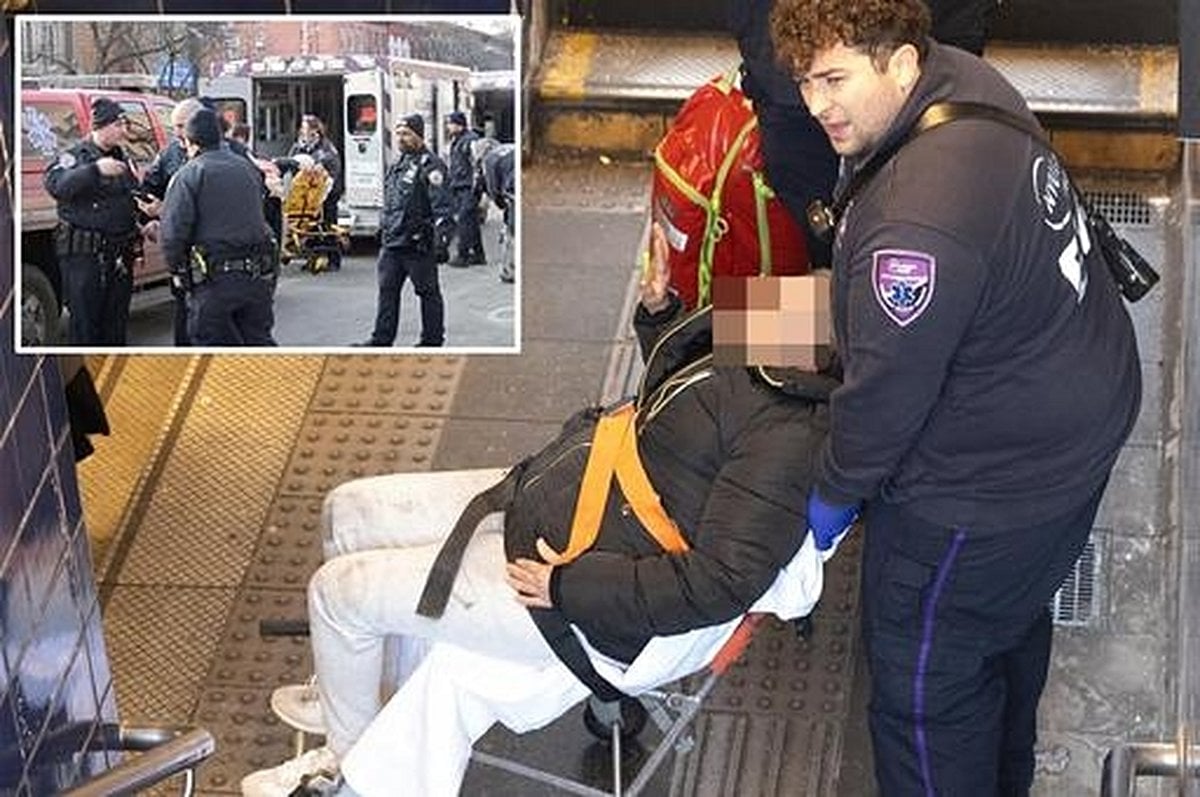
New York City’s subway system, long the lifeblood of daily commutes and city rhythms, has again found itself at the center of troubling headlines. In a span of just a few days, Brooklyn’s underground rails witnessed two separate but equally unsettling incidents, reigniting concerns about transit safety and the unpredictable dangers lurking beneath the city’s bustling streets.
On February 15, 2026, a violent episode unfolded on the R subway line at the 53rd Street and Fourth Avenue station in Sunset Park. Curtis Signal, a 25-year-old Brooklyn native with a well-documented history of violence against women and transit-related offenses, allegedly embarked on a spree that left three women injured and a city once again grappling with questions about repeat offenders and subway security.
According to The New York Post, the chaos began when Signal approached three women on the subway platform, telling one to “shut up” before his aggression escalated. Prosecutors allege that without provocation, Signal lunged at the group, pushing a 51-year-old woman onto the train tracks. The victim, a complete stranger to Signal, suffered “substantial pain to the body and a laceration to the face,” Assistant District Attorney Tziyonah Langsam told the court during Signal’s arraignment. In the ensuing panic, Signal didn’t stop there; he punched a 44-year-old woman, causing her face to swell, before fleeing the station.
But Signal’s rampage wasn’t over. As he exited the station, he encountered a 17-year-old girl who, sensing trouble, tried to get out of his way. Signal reportedly asked the teen, “Are you a gangster?” then, as Assistant District Attorney Langsam described, “punched her dead in the face” while saying, “Little girl thought she was gangster.” The teen later identified Signal as her attacker from a photograph at a local business, while the other two victims recognized him from surveillance footage.
Signal’s arrest was swift. He was found at a local shelter and brought before Brooklyn Criminal Court on February 16, facing a slew of serious charges: attempted second-degree murder, first-degree attempted assault, second-degree reckless endangerment, and criminal possession of a weapon. Prosecutors argued vehemently for Signal to be held without bail, citing his “violent history” as a repeat transit offender and the fact that he’s currently on probation until June 2027. Judge Jacob Zelmonovitz agreed, declaring Signal a flight risk and ordering him held without bail. Signal is scheduled to return to court on February 19, 2026.
The New York Post reports that Signal, during his arraignment, appeared in a red flannel jacket, black hoodie, and white Nike high-top sneakers, and made statements that prosecutors say reveal a troubling mindset. He allegedly complained that “people want to fight for no reason,” and that he “always has to stand up” for himself. When questioned about the attacks, he reportedly said he “did what he had to do.”
Signal’s violent past is extensive and alarming. Prosecutors and sources cited by The New York Post detail a string of previous incidents: in September 2023, he allegedly punched a 67-year-old woman waiting for an F train at 169th Street in Jamaica, Queens. “The experience was so traumatic I can’t talk about it,” that victim told The Post after learning Signal was accused of yet more assaults. In 2023, he’s accused of punching a police officer in a Bronx subway station. The year before, he reportedly beat a 31-year-old woman at a Queens doctor’s office and struck his 13-year-old sister, leaving her with a black eye.
Signal’s defense attorney, Jack Brewer, attempted to offer a different view, arguing that “there is more to Signal,” and noting his client’s background as a Brooklyn native and graduate of Queens Academy High School. But the judge was unmoved, focused on the pattern of violence and the risk Signal poses to public safety.
As Brooklyn reeled from these attacks, another incident just days earlier underscored the unpredictable dangers facing New York City’s transit system. On February 12, 2026, an unknown individual managed to take control of an empty G train near Church and McDonald Avenues in Brooklyn, according to PIX11 and the NYPD. At approximately 3:40 p.m., the unauthorized operator caused the train to collide with another G train. Thankfully, no injuries or property damage were reported—a rare stroke of luck in such a reckless act.
The perpetrator fled the scene, and as of February 16, the investigation remains open. Police are urging anyone with information to come forward, offering several ways for the public to submit tips, including through Crime Stoppers hotlines and digital platforms. The incident, while not resulting in physical harm, has nevertheless rattled nerves and highlighted persistent vulnerabilities within the subway system’s security infrastructure.
These back-to-back incidents have reignited debates across the city about subway safety, the handling of repeat offenders, and the adequacy of current security measures. For many New Yorkers, the subway is not just a means of transportation but an essential part of daily life—one that should be safe and reliable. Yet, stories like these chip away at that sense of security.
Transit advocates and city officials are once again facing tough questions. How can the system better protect riders from violent individuals with a history of offenses? What safeguards are in place to prevent unauthorized access to trains, and are they sufficient? The answers are complex, involving a web of policy, enforcement, and social services. Some argue for stricter bail and sentencing laws for repeat offenders, while others emphasize the need for mental health interventions and support for vulnerable populations. The debate, as always, is heated and deeply personal for those affected.
Meanwhile, the NYPD and the Metropolitan Transportation Authority (MTA) have pledged to increase patrols and review security protocols in the wake of these incidents. Riders are being reminded to stay alert, report suspicious activity, and use available resources if they feel unsafe. For now, the city waits for further developments—Signal’s next court appearance, the outcome of the G train investigation, and, inevitably, the next chapter in the ongoing struggle to keep New York’s subways safe for all who depend on them.
Through it all, the resilience of New Yorkers remains unshaken, even as they demand answers and action from those charged with safeguarding their daily journeys.