
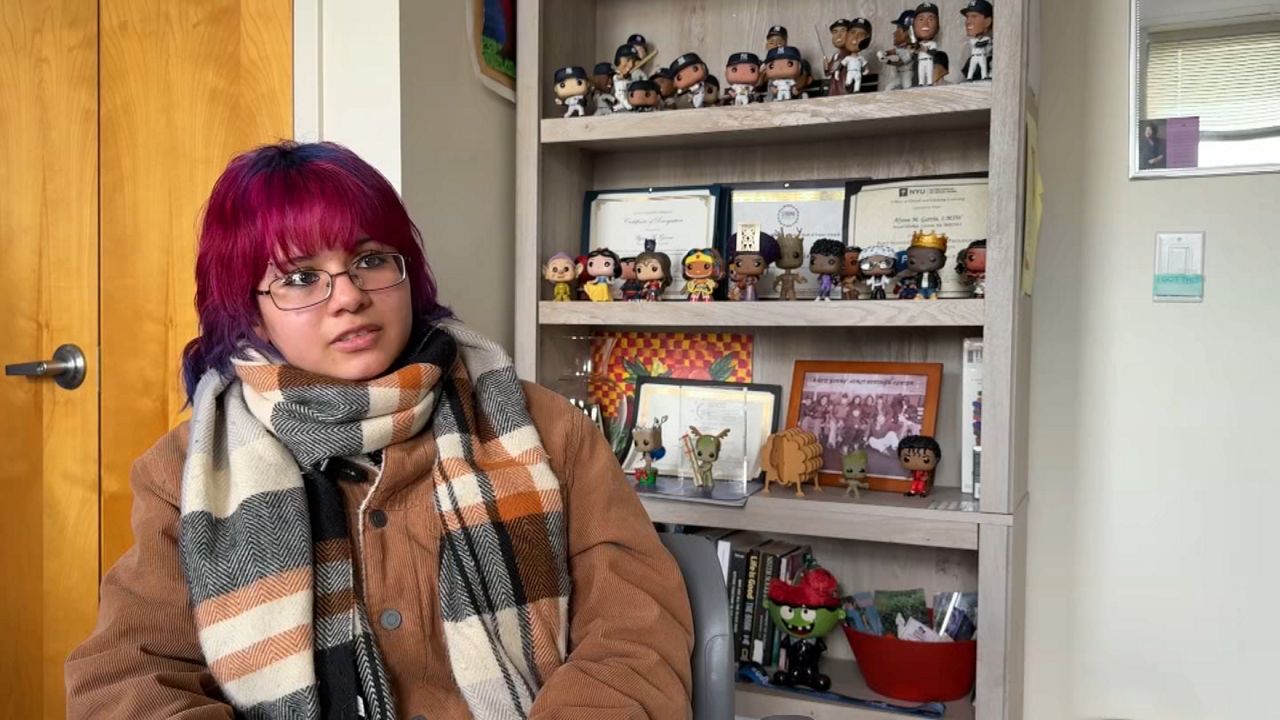
Michelle Cabrera struggled with online learning during the COVID-19 pandemic.
She was in eighth grade at the time and says the shift to virtual classes left her behind academically by the time she arrived at Edward R. Murrow High School in Midwood.
What You Need To Know
Young Adult Borough Centers serve older students who are behind on credits and need flexible schedules to earn a high school diploma
The city spends more than $40 million annually on YABCs and transfer schools
Roughly three-quarters of the programs’ funding expires near the end of each school year
The New York City Independent Budget Office estimates the city faces a $6.5 billion budget deficit, raising concerns about potential cuts
“After COVID, it really screwed me over because everything was online and I’m more of a hands-on person,” she said.
A guidance counselor suggested she enroll in a Young Adult Borough Center, or YABC — a city-funded program designed to help older students who are behind in credits earn their high school diplomas.
“It was the most best choice I ever made because I know I did not want to drop out of school and have no diploma because nowadays I feel like you do need a diploma for almost everything,” Cabrera said.
YABCs hold classes in the afternoons and evenings for teens and young adults whose responsibilities make it difficult to attend traditional school during the day. The programs were created to offer a second opportunity for students to complete their education.
Jennifer Aviles, program director at the Abraham Lincoln YABC — one of 22 YABCs across the five boroughs — said each site serves up to 215 students. Smaller class sizes help students catch up on credits and stay on track to graduate.
Students are also connected to paid internships, allowing them to build resumes and develop job skills.
“It is the only program that is supporting older youth who are under-credited and disengaged from high school to still get a high school diploma,” Aviles said.
The program has operated for more than 20 years.
The city allocates more than $40 million annually to support YABCs and transfer schools. But organizers worry funding may not be renewed under Mayor Zohran Mamdani, as roughly three-quarters of program funding expires toward the end of each school year.
“Programs like these need to be funded and need to be around,” Aviles said.
YABC leaders are among many nonprofit and for-profit organizations that rely on city funding and lobby each budget cycle to ensure their programs are not cut.
The mayor is expected to face difficult decisions. The New York City Independent Budget Office estimates the city is confronting a $6.5 billion budget deficit this year.
“Mayor Mamdani will propose his preliminary budget, and then there will be hearings held by City Council that will be open to the public,” Julia Konrad, assistant director for the education team at the Independent Budget Office, told NY1. “That is a great place for public input because you will have council members asking questions, and then you’ll have an opportunity for public testimony. Anybody can provide that testimony.”
Students like Cabrera say they hope city leaders consider the impact of programs like YABC when weighing cuts.
“They really give you a second chance, honestly. I thought if I dropped out of school, I would have had no other chance but thanks to them I do,” Cabrera said.