
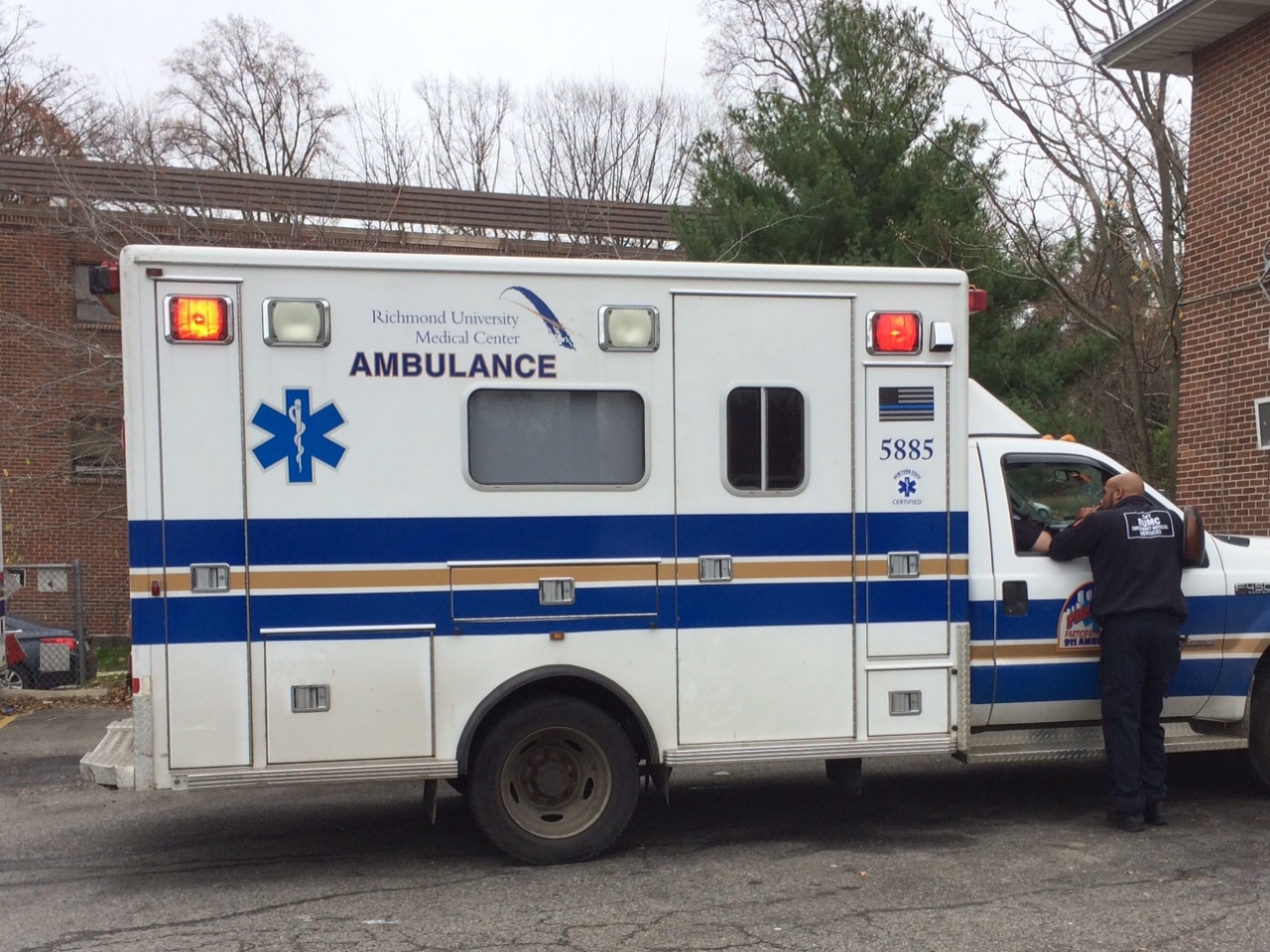
STATEN ISLAND, N.Y. — Richmond University Medical Center in West Brighton, has taken one of its six ambulances out of service during overnight hours as of Sunday, according to a public social media post and a hospital spokesman.
Unit 21Boy, which serves the Rosebank and Stapleton areas, will no longer operate between 1 a.m. and 9 a.m., according to the social media post. The hospital currently operates four Basic Life Support units and two Advanced Life Support units during most hours.
“Like all healthcare institutions, RUMC routinely reviews its emergency medical services demand to ensure resources are aligned with call volume and community needs,” RUMC spokesman Alex Lutz told the Advance/SILive.com.
“Beginning on Feb. 15, one of six ambulances will be taken out of service only during our overnight shift of 1 a.m. to 9 a.m. We will continue to have full ambulance coverage at all other times,” Lutz said. ”The FDNY has been notified in accordance with established protocol. Patient care and public safety remain our top priorities. We will continue to monitor response volumes and adjust as needed.”
Lutz reiterated that there will be an ambulance unit available in the Rosebank and Stapleton area “during all other hours of the day, evening and night.”
According to the social media post, the hospital indicated the decision is a cost-saving measure. The post stated that unit 21Boy brings the fewest patients to RUMC, partly due to its overlap with the service area for Northwell Staten Island University Hospital.
The social media post raised concerns about response times on the North Shore and throughout the borough, noting that other units will need to cover calls previously handled by unit 21Boy.
The online post stated that FDNY/EMS is currently unable to staff its own units and cannot fill gaps created when volunteer or hospital units go offline. FDNY/EMS runs units on 12-hour tours and officials indicated that they will not create a unit for eight-hour coverage, according to the online post.
It noted that heart attack risk is greatest in the first three hours after waking, raising concerns that any delay in response times during early morning hours could affect patient outcomes.