
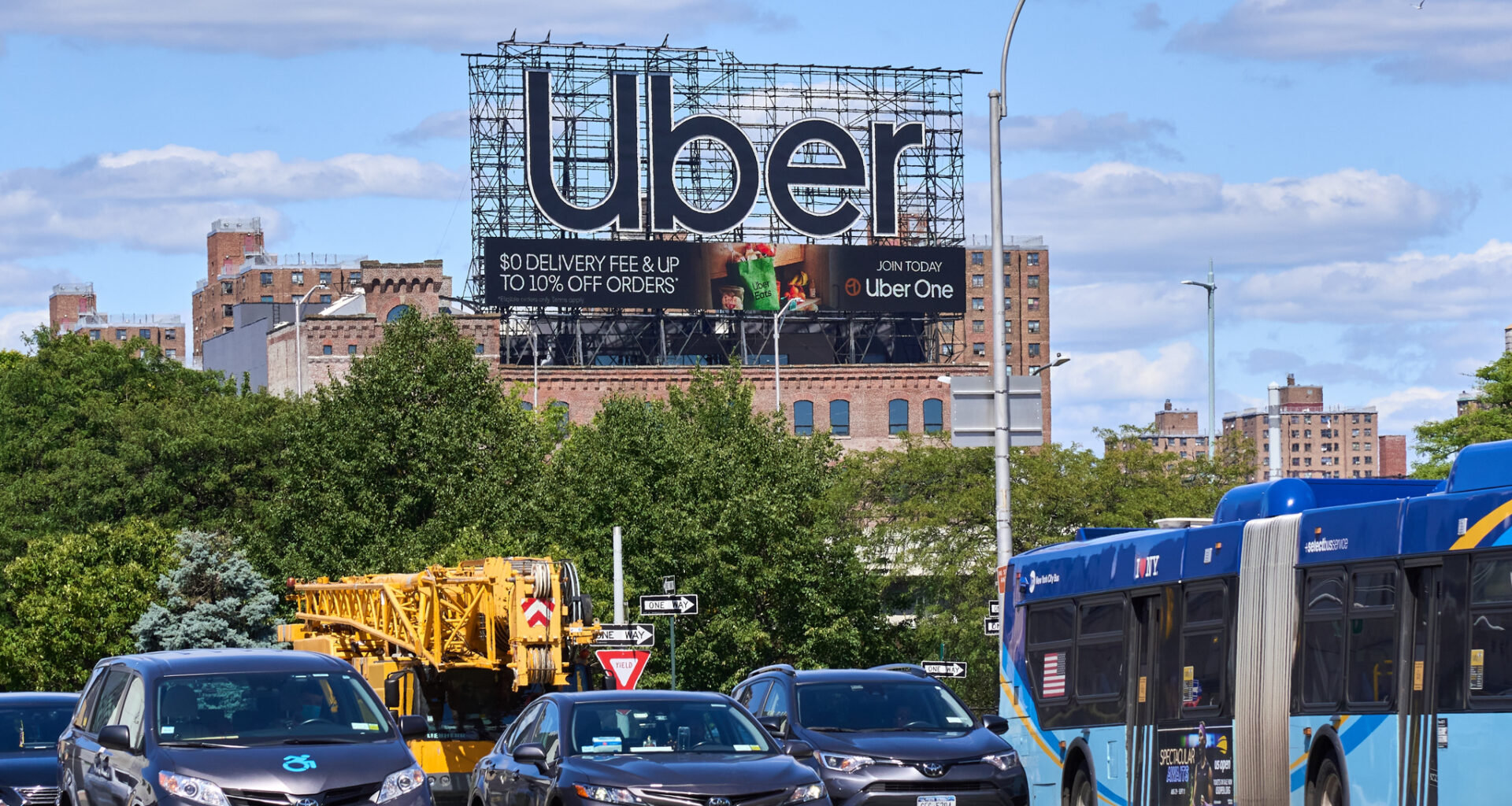
A new report flags how the shortfall of wheelchair-accessible vehicles from the app-based ride-hailing giants subjects New Yorkers with disabilities to longer wait times.
The “Left Behind Across New York” report from New York Lawyers for the Public Interest notes that just 7% of nearly 106,000 for-hire vehicles licensed by the city’s Taxi & Limousine Commission are wheelchair accessible — a figure they say highlights disparities faced by customers with limited mobility who book rides through Uber and Lyft.
“It honestly feels disrespectful,” said Stefan Henry, a quadriplegic customer who uses a large powered wheelchair. “It just feels like they don’t think that people with disabilities need to go to work.”
Meanwhile, the city’s yellow taxi fleet last summer met a years-overdue legal mandate to make 50% of the in-service cabs wheelchair-accessible by equipping vehicles with ramps. It came years after the city blew a 2020 deadline that came about as part of a landmark settlement of a class-action lawsuit approved in 2014.
TLC data shows that of the 10,694 licensed yellow taxis in service in November, 56% were wheelchair accessible.
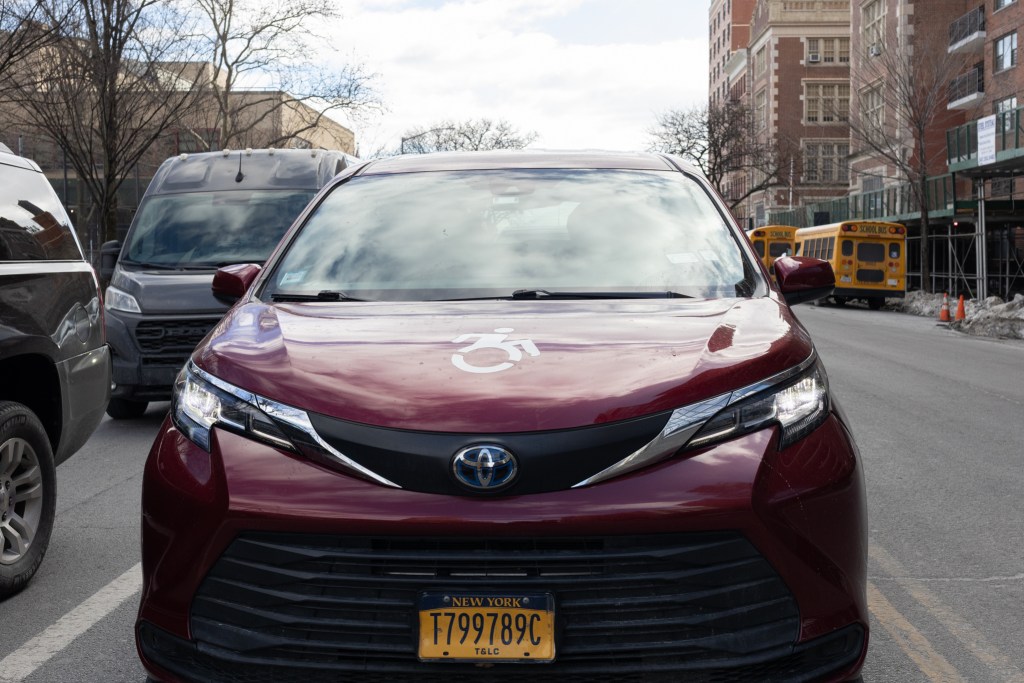 A livery driver on the Upper East Side advertised their vehicle being wheelchair accessible, Feb. 12, 2026. Credit: Ben Fractenberg/THE CITY
“There have been some gains after years of litigation and settlements in wheelchair accessibility in the New York City taxi fleet,” said Justin Wood, NYLPI’s director of policy and author of the report. “But we have not seen the same commitment from these giant and much more profitable corporations.”
The 22-page report notes that the dearth of wheelchair-accessible vehicles from the app-based companies can add to wait times for those who need specially equipped transportation.
Henry, who lives in Manhattan, said trying to book trips through Uber or Lyft often ends in frustration.
“I’ve had to literally not take a ride when I needed it and had to get on the train because it was just impossible to get one,” he said. “Because there’s simply not as much as there would be for able-bodied people.”
A spokesperson for the TLC pointed out that the overall number of accessible for-hire vehicles for the app-based companies has boomed since 2019, when there were only 570 such vehicles in service. There are now close to 7,600 on the road, according to the TLC.
“As the most accessible fleet in the nation, we will always work to ensure that people with disabilities have the same access to transportation as everyone else,” said spokesperson James Parziale. “Since 2019, we’ve seen a 1,200% increase in accessible Uber and Lyft vehicles and implemented rules that have significantly brought down wait times for accessible trip requests.”
The study strikingly points out how Lyft customers had an average wait time of nine minutes for wheelchair-accessible vehicles — more than double the 4.1-minute wait time for its non-accessible rides. According to TLC numbers, Lyft vehicles accounted for 28% of the trips taken in for-hire vehicles in November, the most recent date available.
The report notes that Uber customers waited an average of 4.3 minutes for wheelchair-accessible service, compared to 2.3 minutes for non-accessible vehicles. Uber was responsible for nearly 72% of for-hire vehicle trips in November, TLC numbers show.
“People are constantly waiting and waiting and waiting,” said Eman Rimawi-Doster, a senior organizer for disability justice at NYLPI and a double amputee. “When they try to get in touch with a dispatcher, it’s not only very difficult, but sometimes they can’t even get somebody on the phone.”
Uber spokesperson Josh Gold said that more than 10% of all trips on the platform last year were done in wheelchair-accessible vehicles (WAV) — more than double since 2019. He also countered the report’s conclusions on wait times.
“While a difference exists, we also reject the premise that a roughly two-minute difference in reported wait times is significant,” Gold told THE CITY in a statement. “WAV trips often require additional time for safe boarding and proper securement before a trip is formally started in the app — a step that does not apply to non-accessible trips and can influence how wait times are measured.”
Since January 2025, TLC wait-time rules have required dispatchers to meet at least 90% of requests for wheelchair-accessible vehicles in under 10 minutes — a change from the previous mark of 80% in under 10 minutes.
According to TLC, 95.5% of Uber requests for accessible vehicles had a wait time of under 10 minutes in November, while Lyft met the mark 93% of the time.
Among the report’s recommendations is establishing a “modest per-trip surcharge” to help incentivize drivers into buying new wheelchair-accessible vehicles or retrofitting their existing rides. Since 2015, a surcharge on yellow taxi rides that is now $1 per trip has gone to the Taxi Improvement Fund, which annually distributes millions of dollars to medallion owners switching to accessible vehicles.
“There is no equivalent accessibility fund for the for-hire vehicle side,” Wood said.
Proposed legislation in Albany would create a state authority to finance driver purchases and retrofits of accessible electric vehicles and oversee the investment of those funds.
Gold said the idea of adding surcharges on trips is a non-starter for Uber.
“Additional fees on rides in the highest-taxed market in the country are not necessary as WAV drivers are already paid more by law to offset the higher costs of operating accessible vehicles,” he said.
Rimawi-Doster said NYPLI’s push to get more wheelchair-accessible vehicles into service is part of the organization’s to hold the tech companies accountable.
“It’s far too late,” she said. “But it’s still very necessary.”
Related