
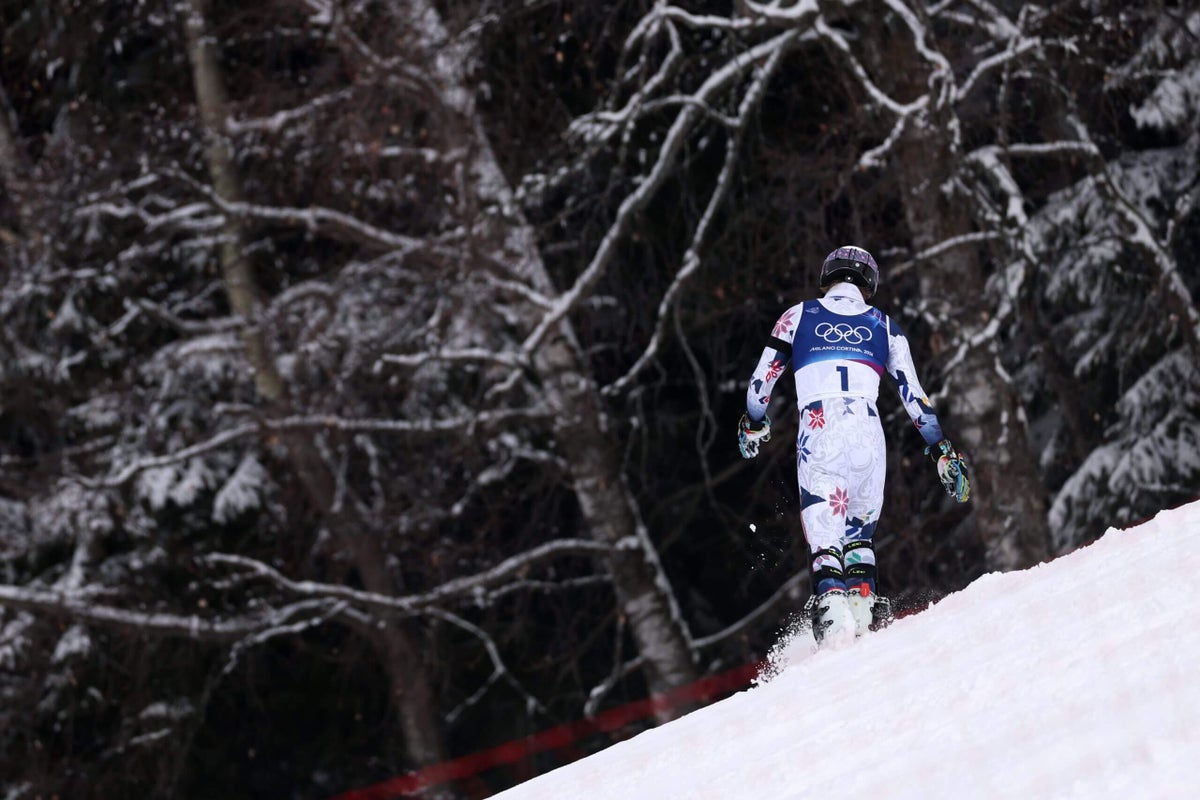
BORMIO, Italy — The Olympics can tug at the heart like few other sporting events: the ecstasy of glory, the misery of defeat and everything in between. The near-misses, the mistakes, the come-out-of-nowhere show-stoppers.
And so it was in northern Italy on Monday. There was Norwegian skier Atle Lie McGrath walking off into the distance, crushed by what had passed him by. A straddled gate in the slalom, a gold medal that was within sight gone. His heart was already heavy after his beloved grandfather, Svein Lie, had died at the start of these Games. And now a missed gate that led to a rush of blood and pit-of-the-stomach disappointment.
Meters away was a Swiss coach, arms aloft — joy — as Switzerland won gold once again, the country’s eighth medal in men’s Alpine skiing at these Games. And at the bottom of the hill, the newly crowned men’s slalom Olympic champion, Loic Meillard, with tears in his eyes. Disbelieving, but walking on air.
McGrath, a five-time slalom World Cup winner and current World Cup leader in the slalom standings, had a relatively handsome lead after the first run. The gap between him and Meillard was 0.59 seconds, and with conditions improved — early-morning snowfall had made way for afternoon sun — what was required of McGrath seemed relatively simple.
Yes, there was pressure; this was the Olympics, the gold medal was on the line. And, yes, nothing is a foregone conclusion in Alpine skiing, especially on a slope as formidable as the Stelvio. Still, McGrath had done the hard work, going out first when visibility was poor and the snow was falling, putting down a first-run time of 56.14 seconds that no one bettered.
As he prepared to weave downhill one last time, he knew if he were to go quicker than Meillard’s total time of one minute, 53.61 seconds, gold would likely be his. It was advantage McGrath, and so he attacked. There was no holding back. Ever since starting the season with two DNFs in three races, he had told himself he would take risks the rest of the campaign.
However, 15 seconds into his run came the error. A gate missed, an opportunity gone. He threw his poles, unstrapped his skis, and stormed off, alone with his thoughts as the world watched on. Were it not for the perimeter fencing, McGrath might have gone into the heart of the woods. He walked as far as he could before resting on the snow. He would later say he “just needed to get away from everything.”
“I thought I would get some peace and quiet, which I didn’t because photographers and police found me out in the woods,” he told the Olympic media service. “I just needed some time for myself.”
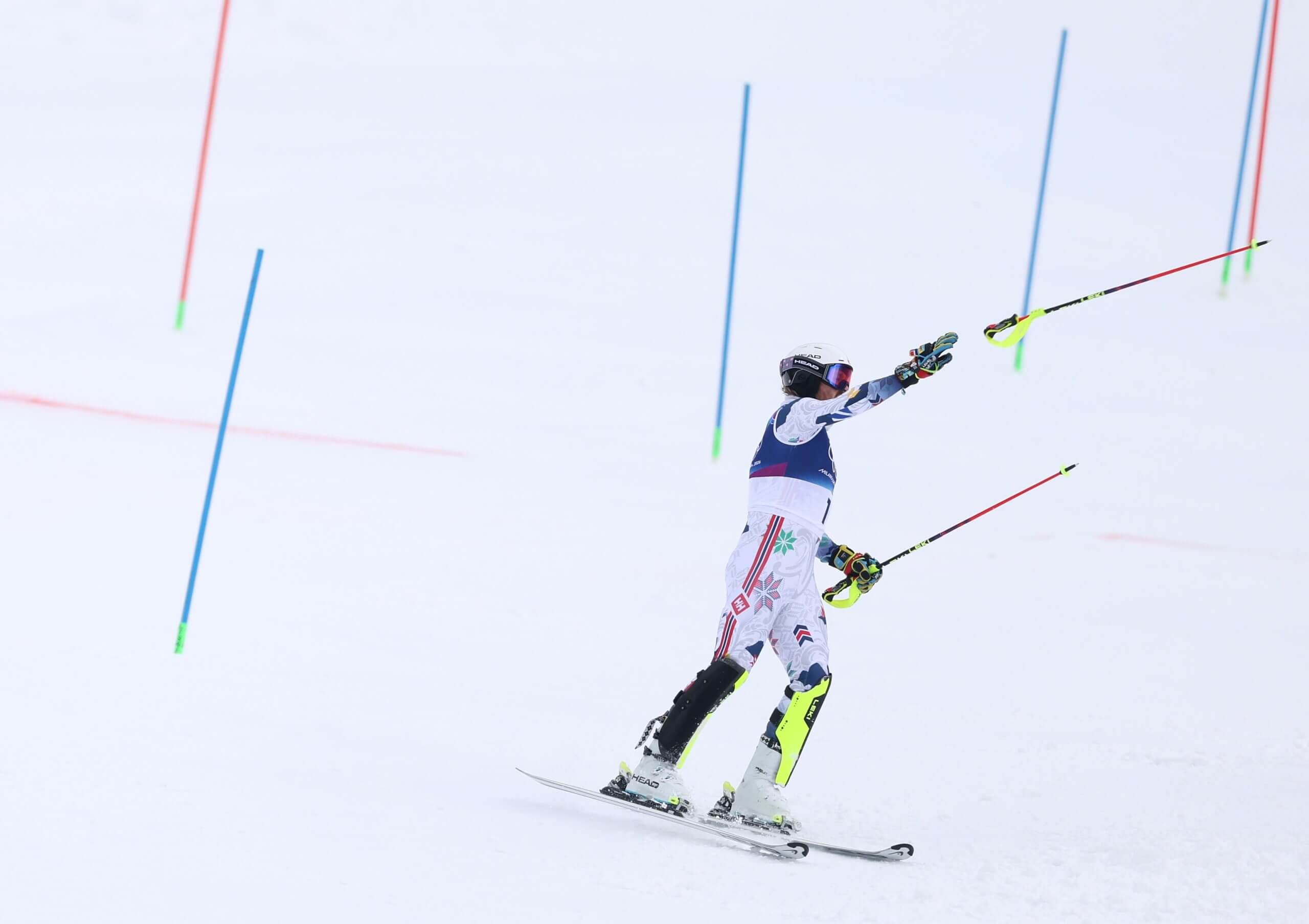
McGrath threw both of his poles over one side of the course after skiing out in Monday’s race. (Christian Petersen / Getty Images)
It wasn’t only the gold that had vanished but the silver (won by Austria’s Fabio Gstrein) and bronze too (Henrik Kristoffersen of Norway). A DNF next to McGrath’s name when he had led the standings, performed so brilliantly in that first run in treacherous conditions that had ended the race for 52 of the 96-man field, including giant slalom Olympic champion Lucas Pinheiro Braathen, a close friend.
But that’s slalom racing. It can be cruel. “That’s part of the game,” said Meillard, a third Olympic medal of the Games around his neck, a gold to add to a team combined silver and giant slalom bronze.
“I’ve been in his place other times,” the 29-year-old Swiss said. “Slalom is so tough, you can be the best at the start and straddle the first gate, and that’s also the beauty of slalom. When it works out, it’s beautiful.”
And it is. A hypnotic minute of skiers zig-zagging at speed, negotiating closely-placed poles. The jeopardy draws the audience in and leaves a soon-to-be Olympic champion waiting at the finish line, knowing the gold could be taken away from him within a minute. He wasn’t stressed when McGrath was at the start gate, Meillard revealed.
“I knew it would be a nice fight, he’s skiing so well at the moment,” he said.
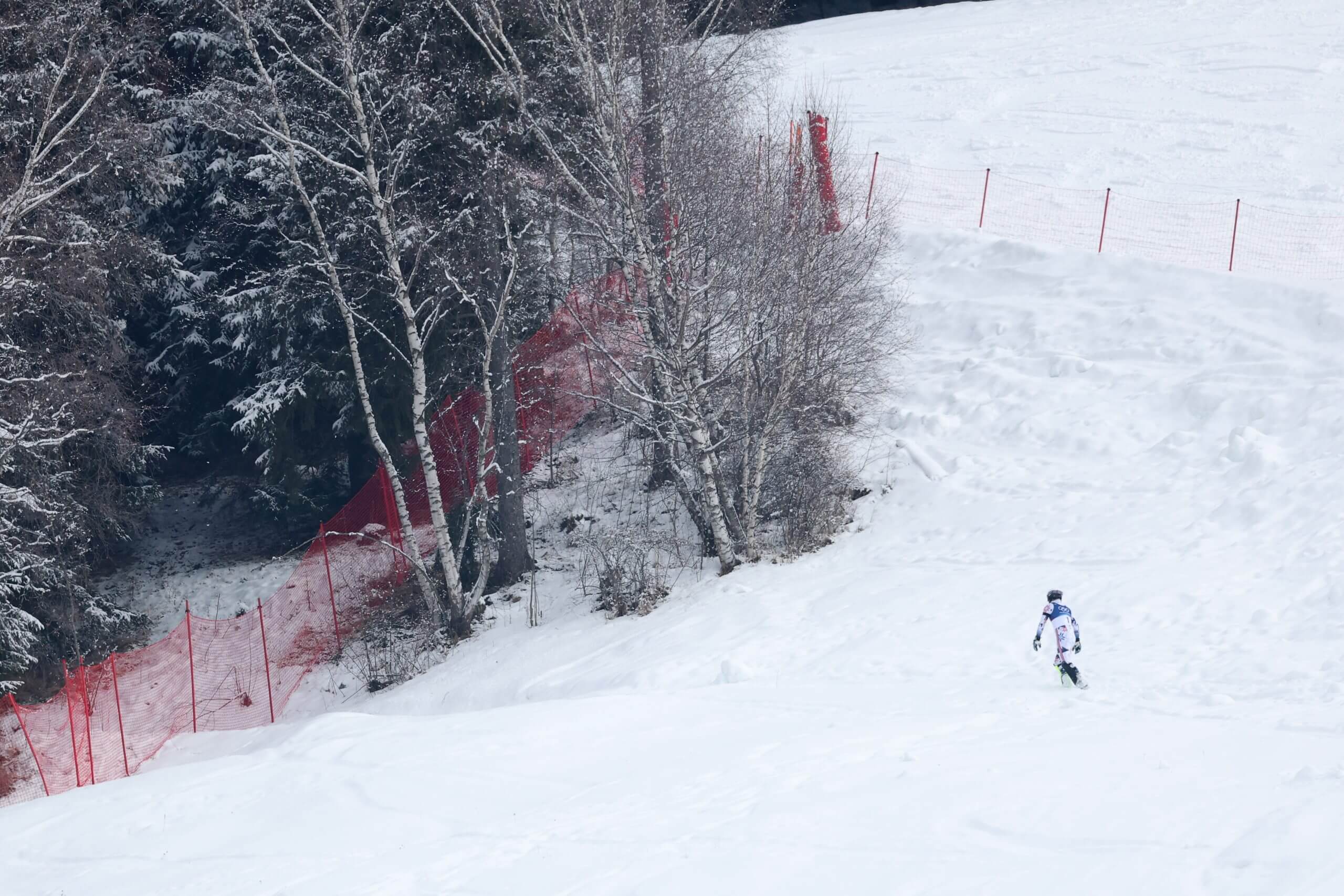
McGrath walked off the course and sat down in the snow near the edge of the woods at left. (Dustin Satloff / Getty Images)
However, the contest didn’t unfold as expected. McGrath didn’t react as expected.
As his teammate Kristoffersen reminded everyone, Olympians are human, too. He, too, had straddled gates before, he said. He had cried after races, too. “We’re all different and we’re allowed to react in our own way,” the Norwegian told reporters.
They were sentiments echoed by the Swiss coach who had celebrated near McGrath as the Norwegian’s world closed in on him. His celebration was “never, never against Atle,” Thierry Meynet said. “I celebrated because Loic won the race, that’s it … It’s a hard discipline. Next time, it will be for Atle and Loic will be out.”
To have your next time occur at the Olympics hits hard. As Meillard was lifted onto the shoulders of members of the Swiss team, golden confetti raining down over him, McGrath was heading for the Norwegian team hotel. He will be 29 in four years’ time, he told reporters. “I skied so great and I still couldn’t get it done, so that’s what really hurts,” he said, according to the Olympic news service.
“Sports-wise, it’s the worst. It’s not the worst moment of my life, but it’s the worst moment of my career, and it’s been one of the toughest moments of my life with everything that’s been going on.”
Born in Vermont to an American father and Norwegian mother, McGrath moved to Norway aged two. His father, Felix, is a former U.S. Alpine skier, while mom, Selma Lie, was a member of the University of Vermont’s NCAA cross-country ski team. However, it was his grandfather who is said to have inspired him.
Once he could bring himself to talk about his grandfather at these Games, he said last week that racing at the Olympics after losing someone so close “felt impossible.”
McGrath raced; He showed up and perhaps that is his victory.